










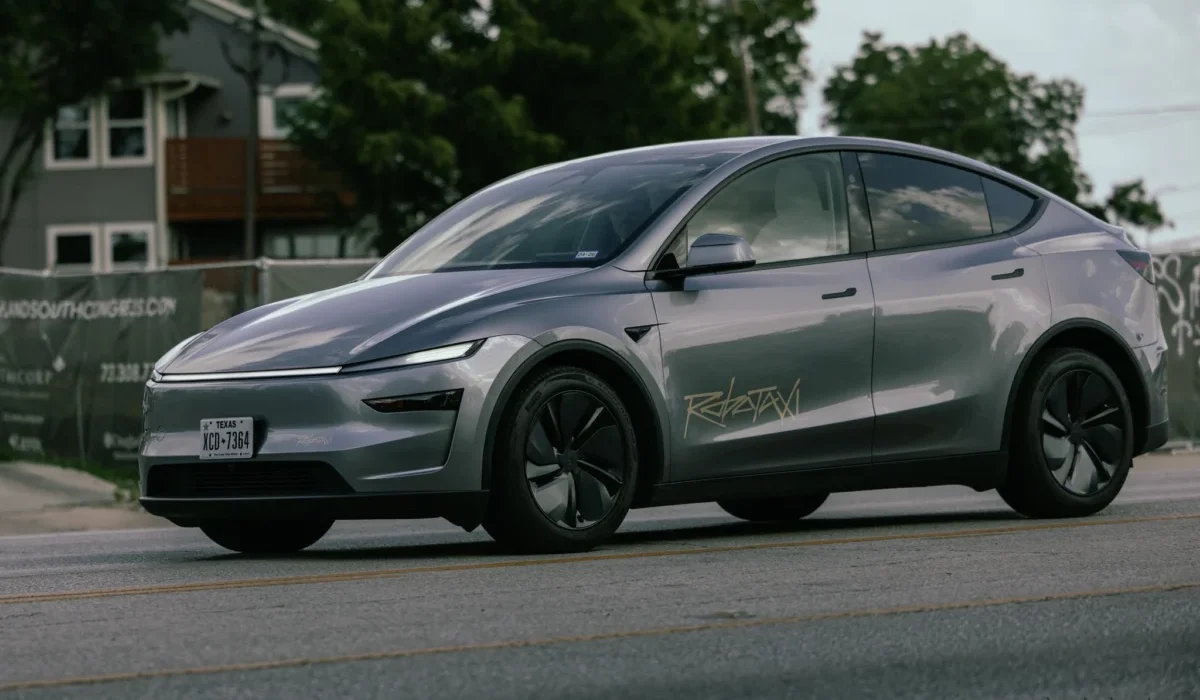
Tesla Inc. has officially confirmed plans to phase out the production of its polarizing, stainless-steel Cybertruck by the middle of 2027. The decision, announced by Chief Executive Officer Elon Musk via social media, marks a significant strategic pivot for the pioneering electric vehicle manufacturer. Rather than dedicating manufacturing bandwidth and capital to low-volume, high-complexity consumer utility vehicles, Tesla intends to reallocate its resources toward scaling the production of its upcoming autonomous vehicle platform, known as the Cybercab. While the automaker insists the decision is rooted in maximizing corporate efficiency and seizing the burgeoning market for autonomous passenger transport, the announcement has triggered a wave of logistical questions, consumer frustration, and broader industry implications.
The announcement brings a definitive timeline to the lifespan of one of the automotive industry’s most unconventional offerings. First unveiled as a prototype in late 2019, the Cybertruck suffered a prolonged and highly publicized development cycle characterized by manufacturing hurdles, stainless-steel engineering complexities, and supply chain bottlenecks. Initial customer deliveries finally commenced in November 2023, turning the angular truck into an instant flashpoint of automotive design discourse.
Despite capturing immense cultural attention and serving as a rolling symbol of the brand, the Cybertruck faced mounting economic realities. Recent pricing adjustments and high production costs meant that the vehicle was manufactured in comparatively low volumes. Musk clarified via X (formerly Twitter) that the vehicle’s impending cancellation is not a symptom of overall unprofitability, as some legacy media outlets have suggested. Instead, he pointed to opportunity cost: the manufacturing complexity of the Cybertruck vastly outweighs the financial and strategic value of the incremental production capacity that can be redirected toward the Cybercab.
With production slated to wind down in approximately eight months from the initial announcement, Tesla finds itself in an unusual operational paradox regarding consumer orders. Musk revealed that the current incoming order rate for the Cybertruck continues to significantly exceed the company’s remaining manufacturing capacity.
This disclosure has sparked immediate criticism from consumer advocates and industry analysts regarding Tesla’s order intake policies. By continuing to accept new reservations and orders for a vehicle that the company already acknowledges it cannot fulfill before the assembly lines halt in mid-2027, Tesla is setting the stage for widespread customer disappointment. Thousands of reservation holders and prospective buyers who place orders in the coming months will inevitably have their deposits returned without ever taking delivery of a vehicle.
From a customer service standpoint, critics argue that a more transparent approach would involve imposing a hard cutoff date for new orders, fulfilling the existing backlog, and subsequently closing the production line. The ongoing acceptance of capital for vehicles destined never to be built creates an unnecessary friction point between the automaker and its loyal base, raising questions about consumer protection and order management transparency. Furthermore, industry observers speculate that early reservation holders who secured lower entry-level pricing tiers, such as the $59,000 all-wheel-drive variants announced earlier in the vehicle’s lifecycle, may bear the brunt of the production wind-down if prioritized queues fail to materialize.
The discontinuation of the Cybertruck leaves a conspicuous void in Tesla’s consumer-facing lineup. Following the sunset of the truck, the company’s mainstream portfolio will consist almost entirely of the Model 3 sedan and the Model Y crossover, leaving the broader public without a dedicated utility or pickup vehicle option.
This strategic retreat by Tesla coincides with a rapidly shifting landscape in the electric truck sector. Competitors have recalibrated their own strategies in response to shifting consumer demand curves and infrastructure maturation. Ford Motor Company previously scaled back its ambitions for the F-150 Lightning amid shifting market adoption rates, leaving room for alternative market contenders. Rivian Automotive continues to cement its foothold with the R1T, while legacy Detroit automakers such as General Motors press forward with entries like the GMC Hummer EV, Chevrolet Silverado EV, and GMC Sierra EV. Additional new market entrants, including upcoming utility trucks from various startups, are poised to capture the market share that Tesla is deliberately vacating.
The absence of a Tesla utility vehicle has also reignited speculation surrounding unfulfilled product promises. While Musk has previously hinted at future vehicle concepts—including statements suggesting the development of larger passenger vehicles or potential platform expansions—the company’s absolute prioritization of ridesharing and autonomous fleets has sidelined consumer trucks and large SUVs. Analysts note that while the business rationale for autonomous robotaxis is clear from a margin perspective, the total abandonment of the work-and-recreation truck segment risks alienating a vital demographic of buyers who require utility, towing capacity, and off-road capability.
The decision to terminate the Cybertruck underscores a fundamental tension unique to Tesla: the friction between cold corporate calculation and deeply emotional consumer investment. Few modern corporations command the level of passionate, community-driven loyalty that Tesla enjoys. Consequently, business decisions that might be viewed as standard corporate restructuring in legacy automakers—such as canceling an underperforming or excessively complex model line—tend to evoke a deeply personal response from the Tesla community.
This dynamic is amplified by the fact that the Cybertruck transcended its status as a mere automobile to become an enduring symbol of the brand’s engineering audacity. For better or worse, the vehicle functioned as a halo product that commanded public attention and drove foot traffic to showrooms, regardless of its actual sales volume relative to high-volume sellers like the Model Y.
As Tesla prepares to dismantle the Cybertruck assembly lines in mid-2027, the company is betting its future on an autonomous transport model that executives believe will redefine urban mobility. While the financial mathematics behind the pivot toward the Cybercab may ultimately prove sound for shareholders, the transition highlights the ruthless efficiency required in the modern electric vehicle landscape—one where cultural icons are routinely sacrificed in the relentless pursuit of scale, autonomy, and margin optimization.