The global textile industry, currently valued at approximately $1.1 trillion, relies on foundational engineering principles that date back over 8,000 years. While modern consumers often prioritize specifications such as denier count, water-repellent coatings, and hardware durability, the fundamental architecture of the fabric—the weave—remains the primary determinant of a product’s performance, longevity, and aesthetic value. From the rugged canvas of military-grade rucksacks to the intricate programmable patterns of high-end jacquard, the methodology of interlacing warp and weft threads represents a sophisticated intersection of human history and material science.
The Engineering Fundamentals: Warp, Weft, and Interlacing
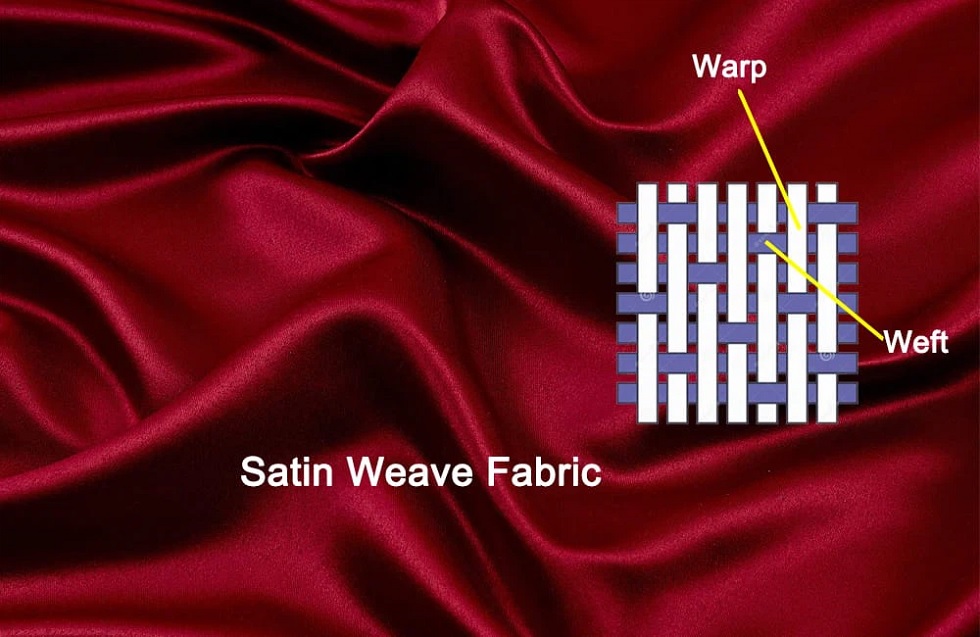
To understand the impact of weaves on the "carry" industry—encompassing backpacks, luggage, and tactical gear—one must first define the mechanical process. Weaving is the interlacing of two distinct sets of yarns at right angles: the warp (lengthwise threads) and the weft (crosswise threads). The manner in which these threads cross over and under one another dictates the fabric’s physical properties, including tensile strength, abrasion resistance, drape, and breathability.
In the context of modern manufacturing, engineers select weaves based on the intended "stress profile" of the bag. A commuter laptop bag requires dimensional stability to protect electronics, whereas a hiking pack requires high abrasion resistance to withstand contact with rock and brush.
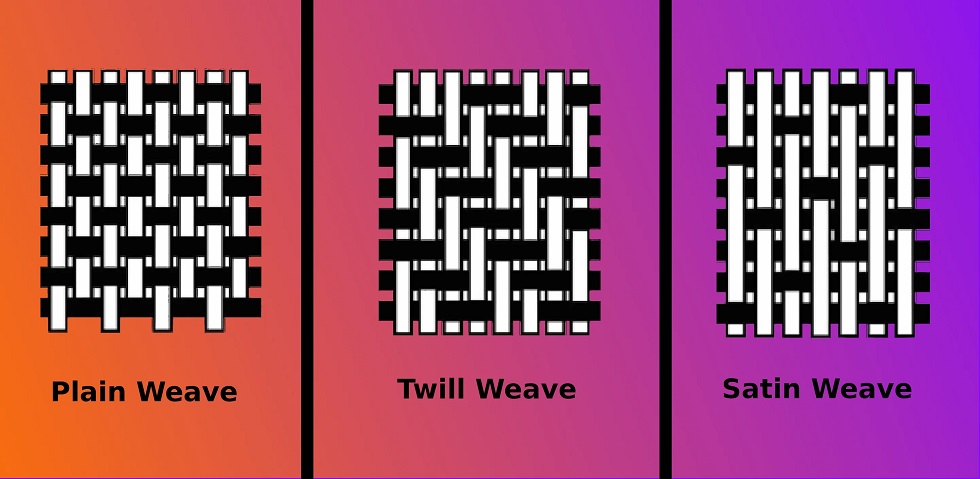
The Historical Evolution of Weaving Technology
The chronology of weaving is a testament to human ingenuity, moving from manual plant-fiber manipulation to digital binary programming.
- Circa 6,000 BCE: Archaeological evidence in the Fertile Crescent suggests the birth of plain weave, likely evolving from basketry and mat-making in regions such as modern-day Turkey and Iraq.
- 3,000 BCE: Twill weave fragments appear in Bronze Age Europe and ancient Asia, marking a shift toward more complex, denser textiles.
- 700–1000 CE: During the Tang Dynasty in China, the satin weave is perfected, creating the first high-luster fabrics that would eventually travel the Silk Road.
- 1804: Joseph Marie Jacquard patents the Jacquard loom in Lyon, France, utilizing punched cards to automate complex patterns—a precursor to modern computing.
- 1853: Levi Strauss utilizes 3/1 warp-faced twill (denim) for miners’ workwear, cementing twill as the standard for high-durability garments and gear.
- 1935–1945: The invention of Nylon by DuPont shifts the focus of weaving from natural fibers to synthetic polymers, allowing for the creation of high-denier technical weaves like Cordura.
Plain Weave: The Foundation of Structural Stability
The plain weave, also known as "tabby weave," is the most basic and common textile structure. It follows a simple "one-up, one-down" pattern where the weft thread passes over one warp thread and under the next.
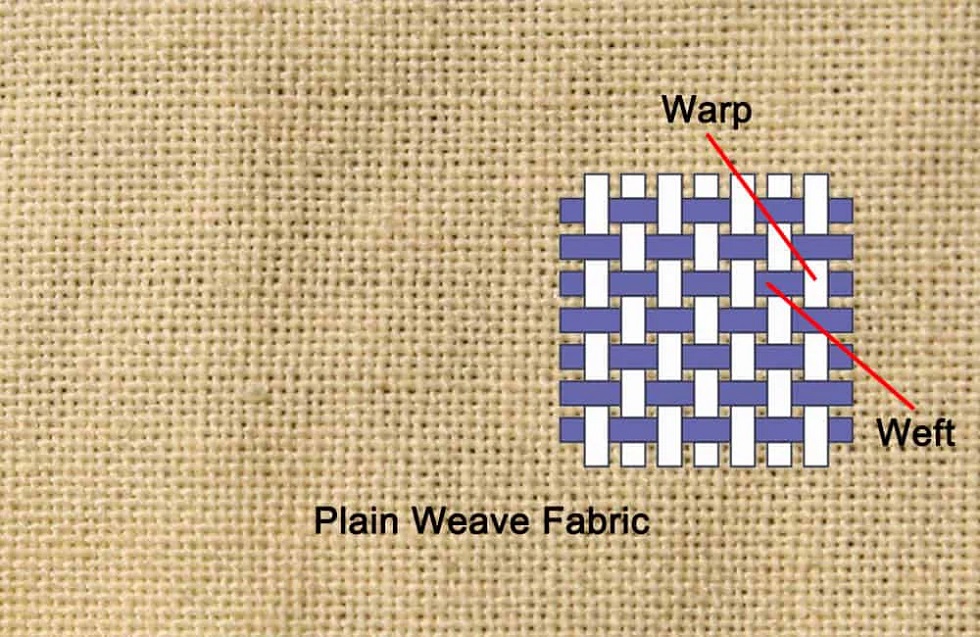
Industrial Applications and Performance
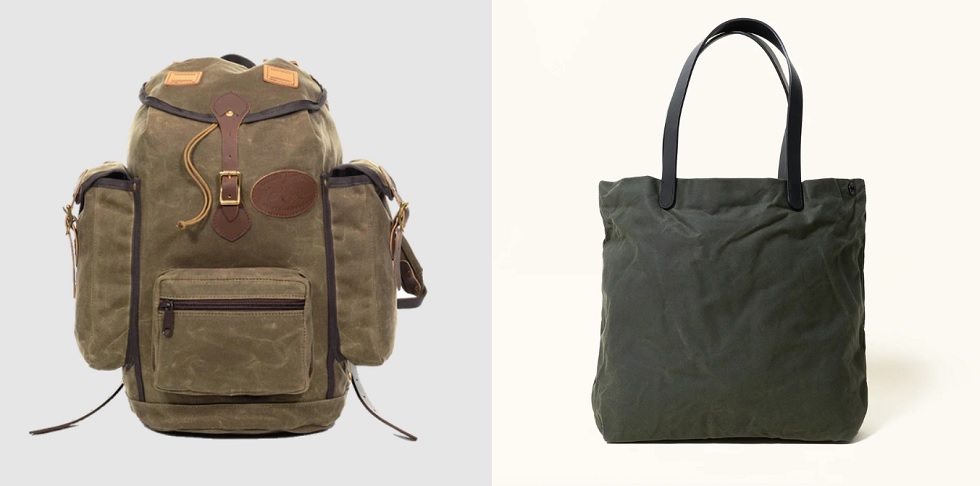
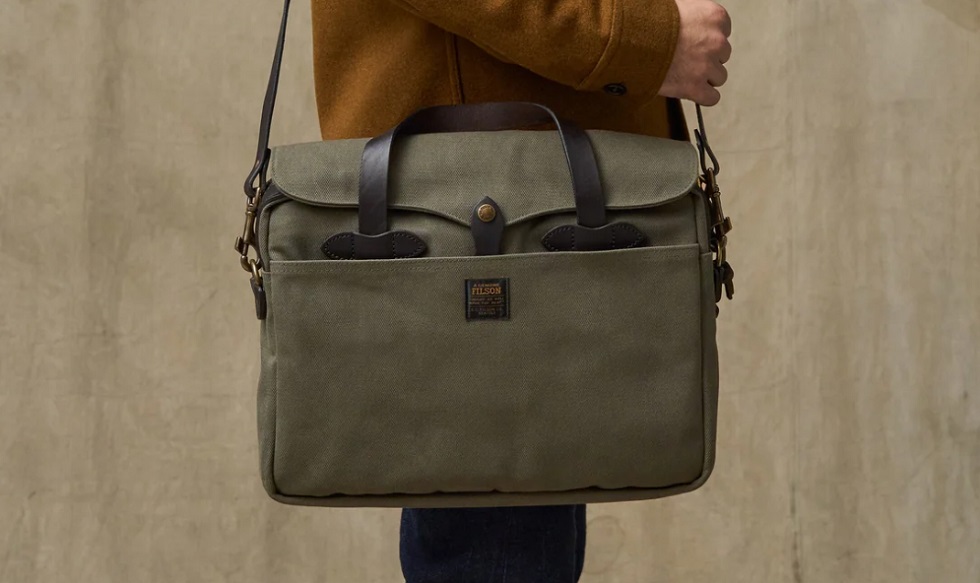
In the carry world, the most recognizable plain weave is canvas. Heavy-duty "cotton duck" or "army duck" canvas has served as the standard for military packs and heritage gear for centuries. Because every thread is interlaced at every possible junction, plain weave offers the highest level of "dimensional stability." This means the fabric is less likely to stretch or distort under the weight of a heavy load.
Technical Limitations
However, the frequency of interlacing creates a relatively stiff fabric. Plain weaves are prone to wrinkling and do not "drape" or conform to complex shapes easily. Furthermore, because the surface is flat and uniform, abrasion is distributed across every thread simultaneously, which can lead to faster visible wear compared to textured weaves.
Twill Weave: The Science of the Diagonal
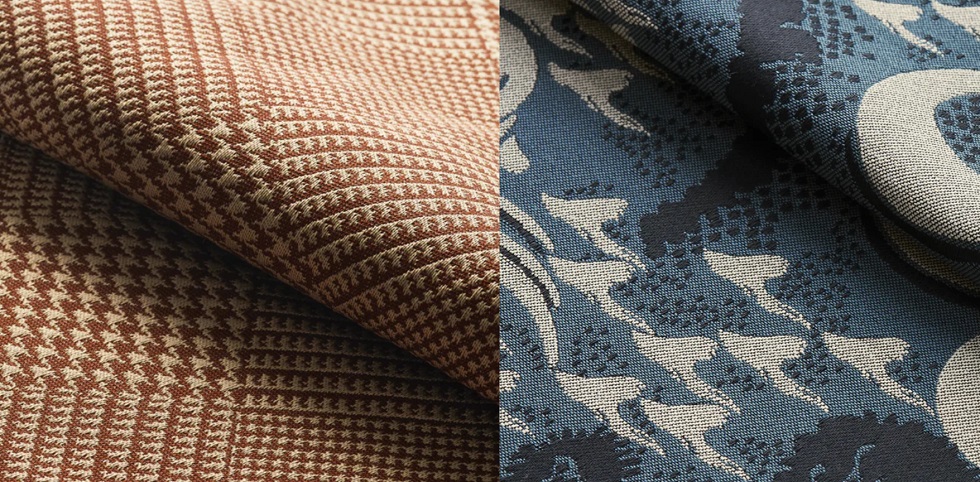
Twill is characterized by its diagonal ribs, known as "wales." This is achieved by floating the weft thread over one or more warp threads and then under two or more, with a step-wise offset in each row.
The Advantage of the "Float"
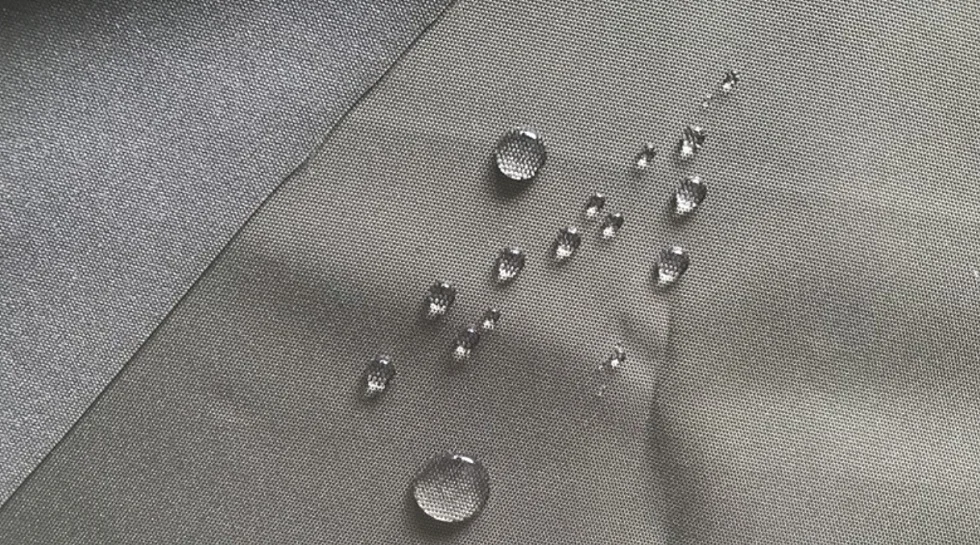
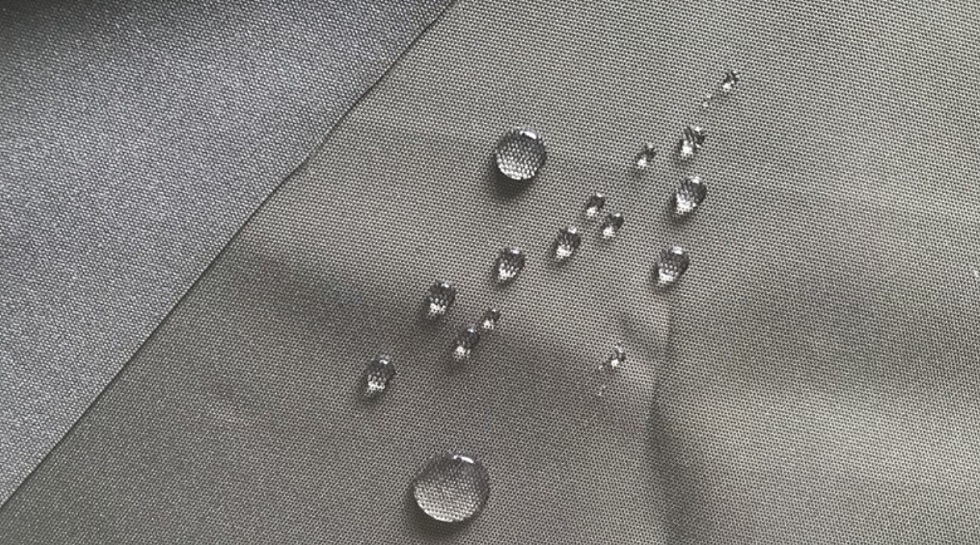
The primary benefit of twill is density. Because the threads are not interlaced at every single junction, they can be packed much more tightly together. A high-count twill is often naturally water-resistant because the gaps between the fibers are microscopic.
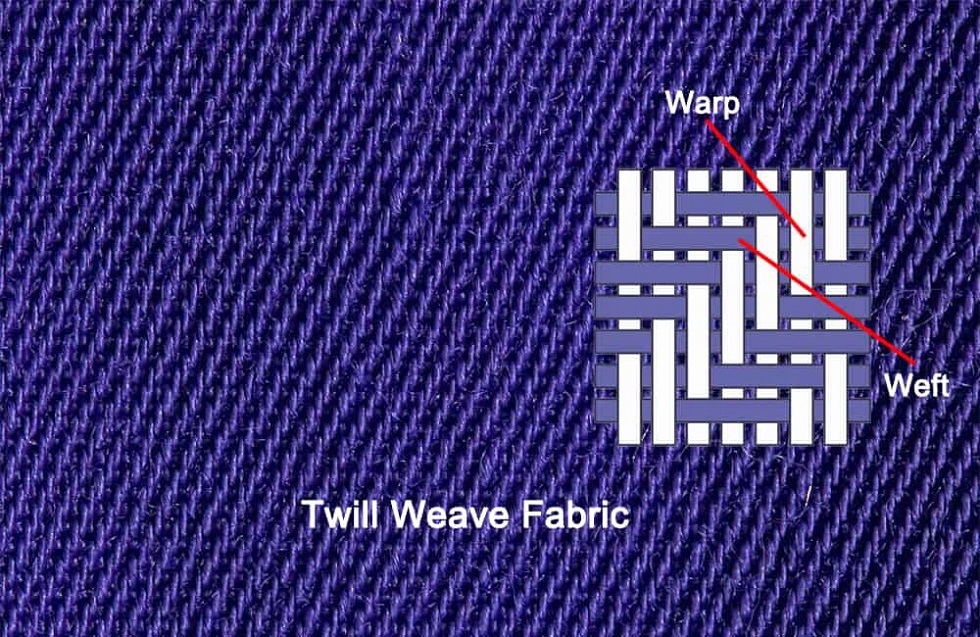
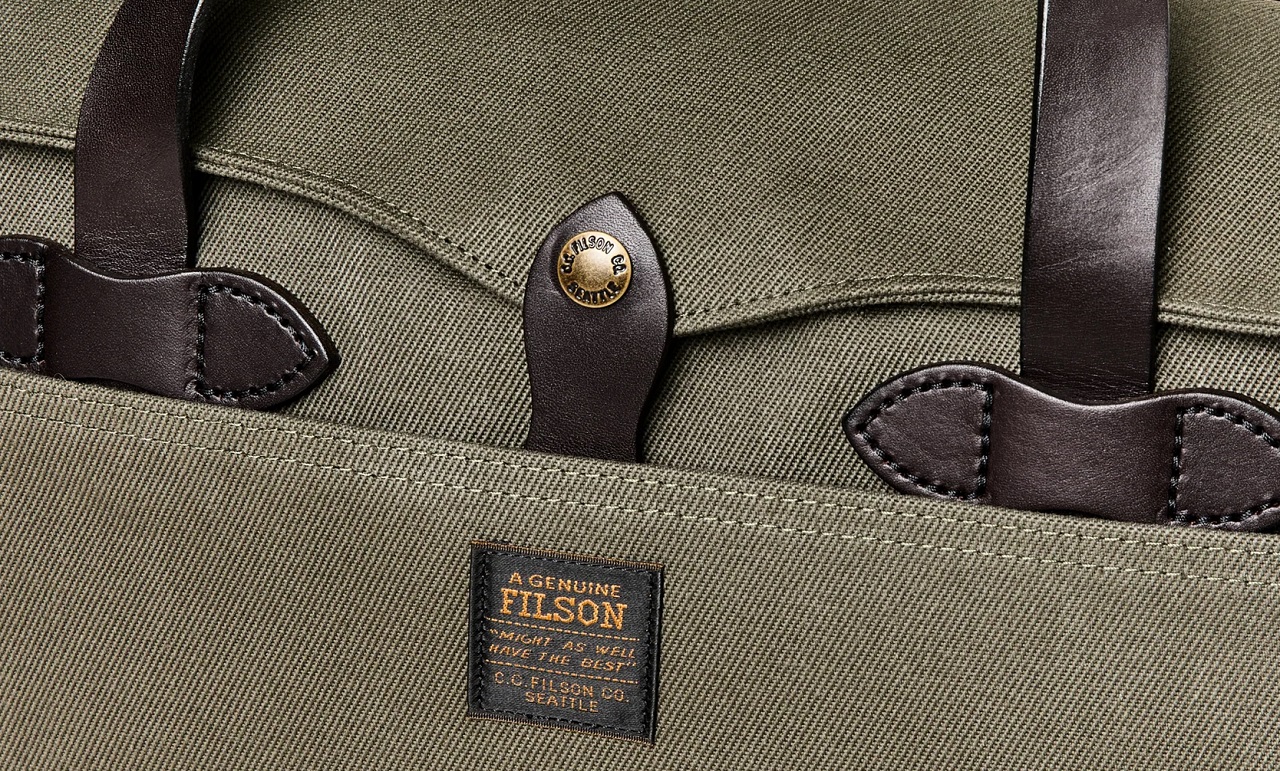
In terms of durability, twill is superior to plain weave for "abrasion shedding." The diagonal texture allows the fabric to hide scuffs and stains more effectively. For brands like Filson or Barbour, "rugged twill" is the preferred material because it offers a supple hand-feel while maintaining extreme resistance to tearing.
Economic Considerations
Twill requires more complex machinery—at least three harnesses on a loom—and generally uses more yarn per square inch than plain weave. This makes twill-based gear more expensive to produce, positioning it typically in the premium or "heritage" market segments.
Oxford and Basketweave: The Commercial Standard
The Oxford weave is a variation of the plain weave, specifically a "basketweave" where two or more yarns are bundled together and woven as one.
The Rise of 600D Polyester Oxford
In the modern mass market, "Polyester Oxford" (often in 600D or 900D weights) is the most prevalent fabric for entry-level and mid-range backpacks. It provides a balance of the plain weave’s stability with a slightly more textured, "premium" look.
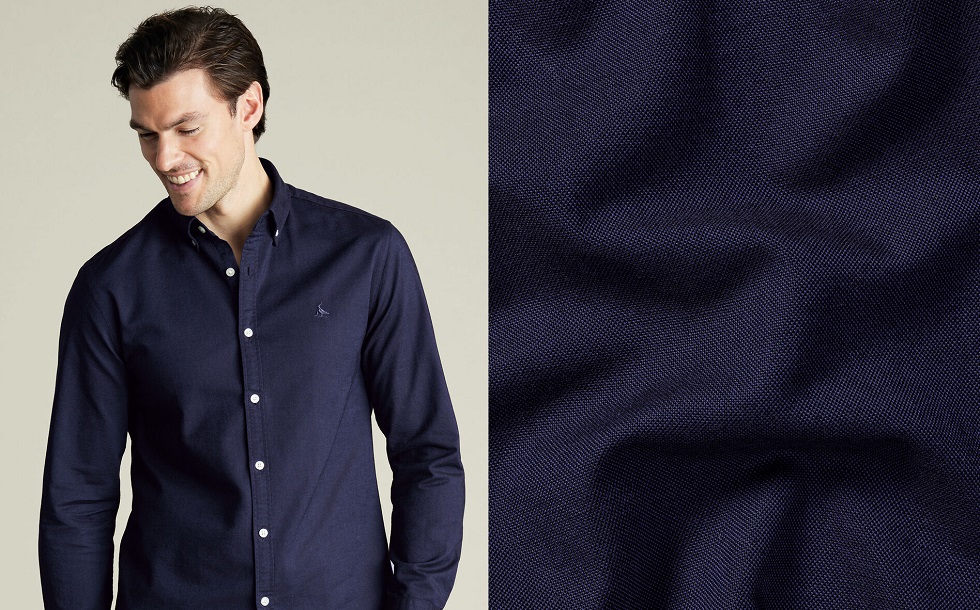
Industry data suggests that nearly 65% of all consumer-grade school and laptop bags utilize some form of polyester Oxford. Its popularity stems from its compatibility with Polyurethane (PU) coatings, which are easily applied to the back of the basketweave structure to provide instant waterproofing.
Satin Weave: Technical Specialization and Composites
Satin weave involves long "floats," where a thread may pass over four to seven threads before interlacing. This creates a smooth, lustrous surface.
Beyond Aesthetics
While satin is rarely used as a primary exterior fabric due to its tendency to snag, it is critical in two areas of the carry industry:
- Linings: The low-friction surface of satin allows items (like laptops or tablets) to slide in and out of bags without resistance.
- Advanced Composites: In high-performance gear, carbon fiber or fiberglass is often woven in a "satin" pattern (such as 4HS or 5HS). The long floats allow the rigid fibers to conform to the tight curves of molded bag frames or protective shells without buckling.
Jacquard: The Programmable Intersection of Textiles and Data
The Jacquard loom is frequently cited by historians as the "grandfather of the computer." By using punched cards to control individual warp threads, Joseph Marie Jacquard created a binary system (hole vs. no hole) that predated modern software.
Structural vs. Decorative Jacquard
In modern manufacturing, Jacquard technology allows logos and complex patterns to be woven into the fabric rather than printed on top. This is a crucial distinction for durability; a woven logo cannot peel or fade.
"Structural Jacquard" is now being used to create "variable density" fabrics. Engineers can program a loom to weave a denser, more abrasion-resistant pattern at the bottom of a bag (where it touches the ground) and a more breathable, lighter weave at the top, all within a single continuous piece of fabric. This eliminates seams, which are the primary failure points in bag construction.
Comparative Performance Metrics
| Weave Type | Abrasion Resistance | Dimensional Stability | Drape/Flexibility | Production Cost |
|---|---|---|---|---|
| Plain | Moderate | Very High | Low | Low |
| Twill | High | Moderate | High | Medium/High |
| Oxford | Moderate/High | High | Moderate | Low/Medium |
| Satin | Low | Low | Very High | Medium |
| Jacquard | Variable | High | Variable | High |
Industry Implications and Future Trends
As the carry industry moves toward sustainability, the science of the weave is adapting. Manufacturers are increasingly utilizing "Recycled PET" (rPET) yarns, but recycled fibers often have shorter staple lengths, which can compromise strength. To compensate, engineers are developing specialized "Ripstop" weaves—a technique where a thicker reinforcement yarn is interlaced at regular intervals in a grid pattern. This prevents a small tear from propagating across the plain or twill base fabric.
Furthermore, the rise of "Smart Textiles" is bringing conductive threads into Jacquard weaves. Future backpacks may feature "touch-sensitive" areas woven directly into the shoulder straps, allowing users to control mobile devices via the weave of the fabric itself.
Conclusion
The selection of a weave is not merely an aesthetic choice; it is a critical engineering decision that dictates the lifecycle of a product. As manufacturing continues to evolve, the ancient logic of the "over-under" interlacing remains the most vital component of human-made objects. Whether it is the 6,000-year-old simplicity of a canvas tote or the binary complexity of a Jacquard-woven technical pack, the weave is the invisible architecture that supports the modern world of carry.