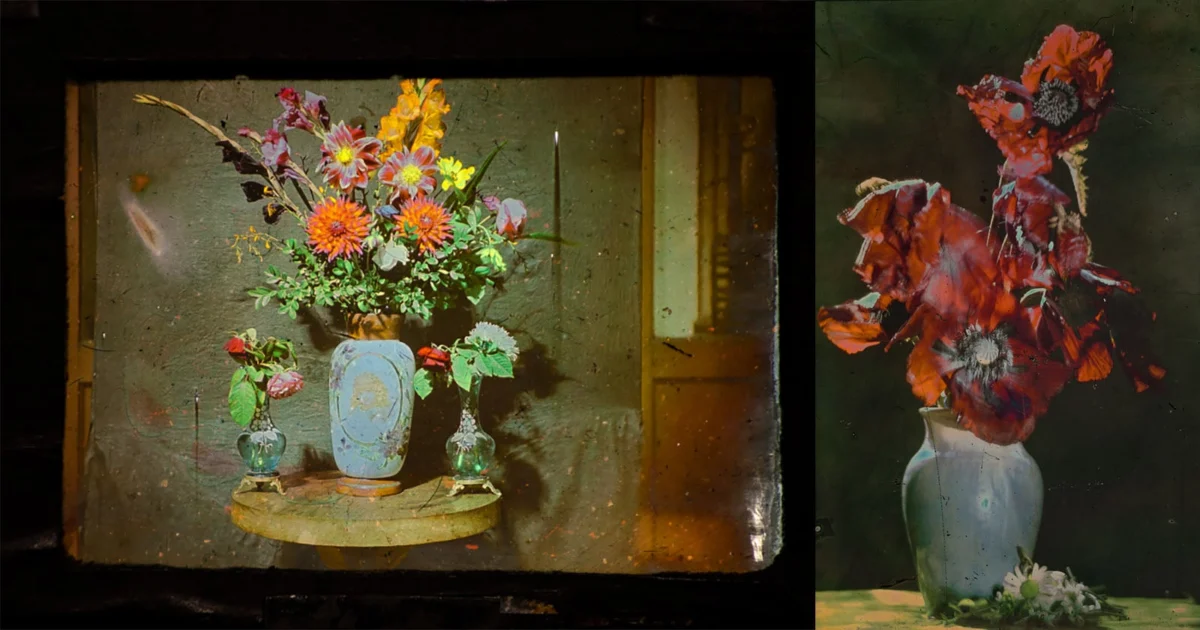
Science educator Steve Mould’s latest video, provocatively titled "You’ve Never Seen a Real Photo," delves into the intricate and often overlooked world of Gabriel Lippmann’s groundbreaking color photography process. While modern digital displays and even conventional color film rely on additive or subtractive color mixing, Mould’s exploration, in collaboration with renowned alternative process photographer Jon Hilty, unveils a method that captures color through a phenomenon akin to microscopic mirrors, offering a fundamentally different and, arguably, more "real" reproduction of light’s full spectrum. The video serves as a crucial educational tool, bringing to light a technique that earned Lippmann the Nobel Prize in Physics in 1908, yet remains largely obscure to the public.
The Genesis of Interference Photography
The Lippmann process, developed in 1891 by Luxembourg-born French physicist Gabriel Lippmann, stands as a testament to early 20th-century scientific ingenuity. Unlike contemporary color photographic methods that sought to replicate color by layering or filtering light, Lippmann’s invention was rooted in the physics of light interference. As Jon Hilty, a leading figure in contemporary autochrome and other alternative photographic processes, explains, the core principle involves placing a panchromatic, fine-grained black-and-white photographic emulsion in direct contact with a reflective surface, typically mercury.
"When a panchromatic fine-grained black and white emulsion is put in direct contact with a mirror, the reflected light interferes with itself and creates an interference pattern," Hilty elaborates. This phenomenon, known as standing waves, occurs when incoming light waves and reflected light waves meet. At specific distances, these waves reinforce each other (constructive interference), and at others, they cancel each other out (destructive interference).
The photographic emulsion, sensitive to light across the visible spectrum, records these interference patterns. "The maxima of this pattern activate the silver halides in the emulsion," Hilty continues. "When developed, the silver in the emulsion reconstructs this pattern when exposed to white light, giving us a color image." This is not a chemical process of pigment or dye, but a physical reconstruction of light itself, based on the precise wavelengths that originally struck the emulsion.
A Nobel-Worthy Revelation: Permanent Spectral Reproduction
What distinguishes Lippmann plates as extraordinary is their ability to permanently reproduce the full spectrum of color. This is not an approximation achieved through filtering or mixing, but a direct encoding of spectral data. The resultant images are not simply colored photographs; they are, in a sense, physical manifestations of light.
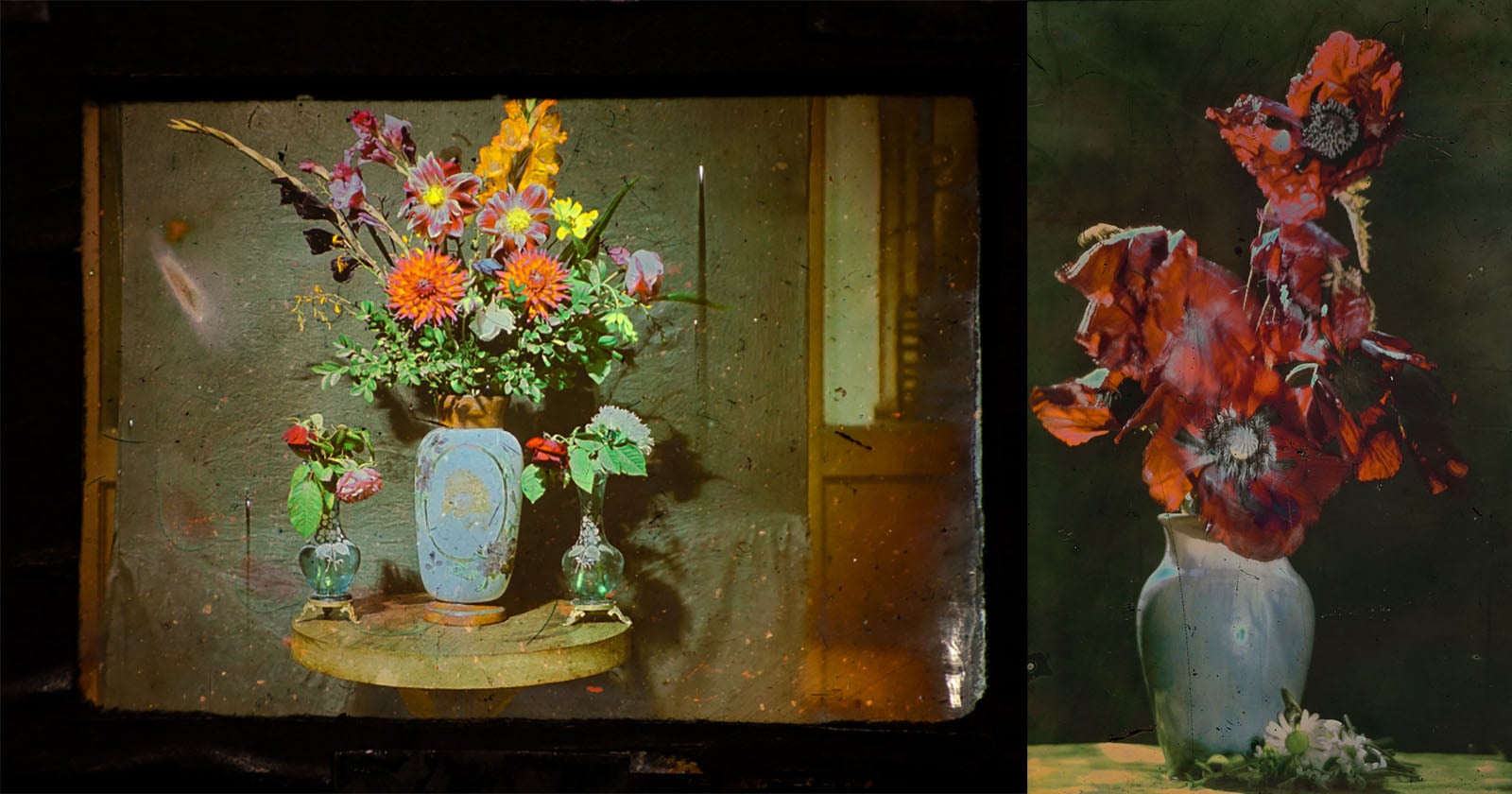
However, this profound accuracy poses a challenge for modern viewing methods. Digital displays, including those used in the video and on computer screens, employ a system of red, green, and blue (RGB) pixels to create the illusion of color. This additive color model, while effective for digital reproduction, is fundamentally different from how Lippmann plates capture and display color. Similarly, conventional color photography, whether film or digital, relies on pigments or filters that absorb certain wavelengths and transmit others, creating color through subtractive or additive mixing.
To truly convey the unique nature of Lippmann plates, Mould utilizes a spectrometer to analyze both typical photographs and the Lippmann plates provided by Hilty. The spectrometer breaks down light into its constituent wavelengths, providing objective spectral data. The disparity observed between the spectral output of a conventional photograph and a Lippmann plate is striking, highlighting the distinct method of color reproduction employed by Lippmann’s process.
The mechanism behind this spectral fidelity lies in the microscopic structure of the developed emulsion. When exposed to light, the interference patterns create an array of minuscule "mirrors" within the emulsion. The distance between these microscopic mirrors is precisely determined by the wavelength of the incident light. This structural arrangement, preserved through the development process, results in what is known as structural color. When white light illuminates the plate, these microscopic structures diffract light at specific angles, recreating the original colors as seen by the eye. This phenomenon is analogous to the iridescent colors seen in peacock feathers or butterfly wings, where physical structure, not pigment, dictates color.
Enduring Scientific Significance and Practical Limitations
The scientific community continues to recognize the profound importance of Lippmann plates, even today. They are considered "the earliest multi-spectral light measurements on record," offering invaluable historical data for researchers studying the evolution of light measurement and photographic technology. Their ability to capture spectral information with such fidelity has also made them subjects of research in fields such as nanophotonics and materials science, exploring the potential of structural color for novel applications.
Despite their scientific marvel and artistic potential, Lippmann plates never achieved widespread adoption for practical photography. Mould and Hilty identify several significant drawbacks that contributed to their decline in popularity.
Key Limitations of the Lippmann Process:
- Reprinting Impossibility: Each Lippmann plate is a unique creation, and direct reprints are not feasible. Creating a duplicate requires re-exposing and developing a new plate from the original subject or negative, a process that is inherently time-consuming and prone to variations.
- Extremely Long Exposure Times: The process demands lengthy exposures, often stretching into minutes. This made it impractical for capturing moving subjects or for general portraiture, as subjects had to remain perfectly still for extended periods.
- Restricted Viewing Angle: The color rendition of a Lippmann plate is highly dependent on the viewing angle. Colors can appear washed out or shift dramatically when viewed from different perspectives, limiting the viewing experience.
- Technical Sensitivity: Achieving accurate color reproduction required meticulous control over the photographic materials, the mercury mirror, and the development process. Minor deviations could lead to significantly desaturated or inaccurate colors.
- Competition from Superior Processes: The development of more user-friendly and practical color processes, most notably the Autochrome Lumière, rapidly eclipsed the Lippmann method.
The Rise of Autochrome and the Legacy of Alternative Processes
Ironically, the photographer who is providing Mould with the Lippmann plates for his video, Jon Hilty, is also one of the few remaining practitioners of the Autochrome Lumière process – the very invention that largely led to the demise of Lippmann photography. Invented by the Lumière brothers in France and launched in 1903, the Autochrome process was a significant leap forward in practical color photography.
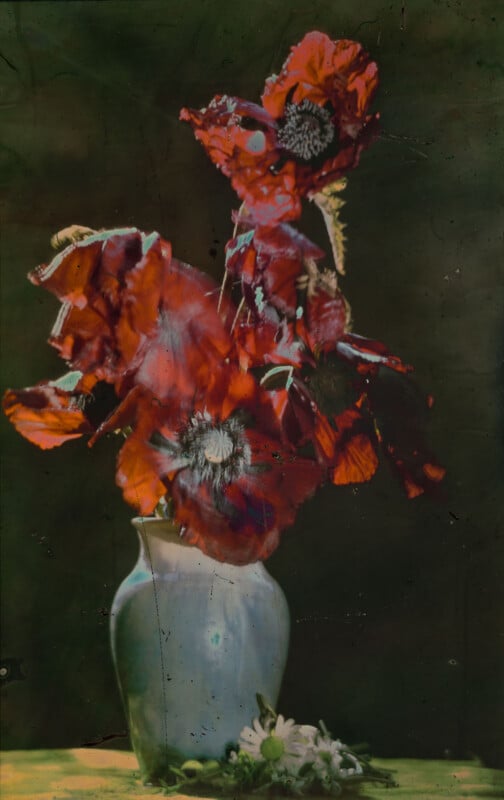
The Autochrome process used a screen of microscopic dyed potato starch grains (red-orange, green, and violet) as a filter layer on a black-and-white photographic plate. These tiny grains acted as a mosaic of color filters, allowing light to pass through and expose the emulsion in specific color densities. While still requiring relatively long exposures compared to modern photography, it was far more accessible and produced vibrant, albeit sometimes impressionistic, color images.
Hilty’s dedication to both Lippmann and Autochrome processes highlights a growing interest in historical photographic techniques. His comprehensive guides for attempting Lippmann plate and Autochrome photography are invaluable resources for contemporary enthusiasts and professionals seeking to explore these lost arts. These guides provide detailed instructions, necessary materials, and insights into the challenges and rewards of working with these pioneering methods.
The Future of "Real" Color
While pigment-based RGB photography, in its myriad digital and analog forms, has become the global standard for color imaging due to its practicality, affordability, and versatility, the legacy of Gabriel Lippmann’s interference photography continues to inspire. Mould’s video and Hilty’s expertise serve as crucial reminders that the pursuit of capturing color has been a complex and multifaceted journey.
The fundamental difference between Lippmann’s process and modern color reproduction lies in their approach: Lippmann captured the physical phenomenon of light’s interaction with matter, while modern methods replicate color through a simulation of perceived color. This distinction, though subtle, underscores the profound scientific achievement of Lippmann’s interference photography and its unique claim to "real" color reproduction, a claim that continues to fascinate and educate those who delve into the history of imaging. As scientific research progresses, the principles behind Lippmann’s work might even find new applications in advanced optical technologies, proving that even the most "forgotten" processes can hold the keys to future innovations.