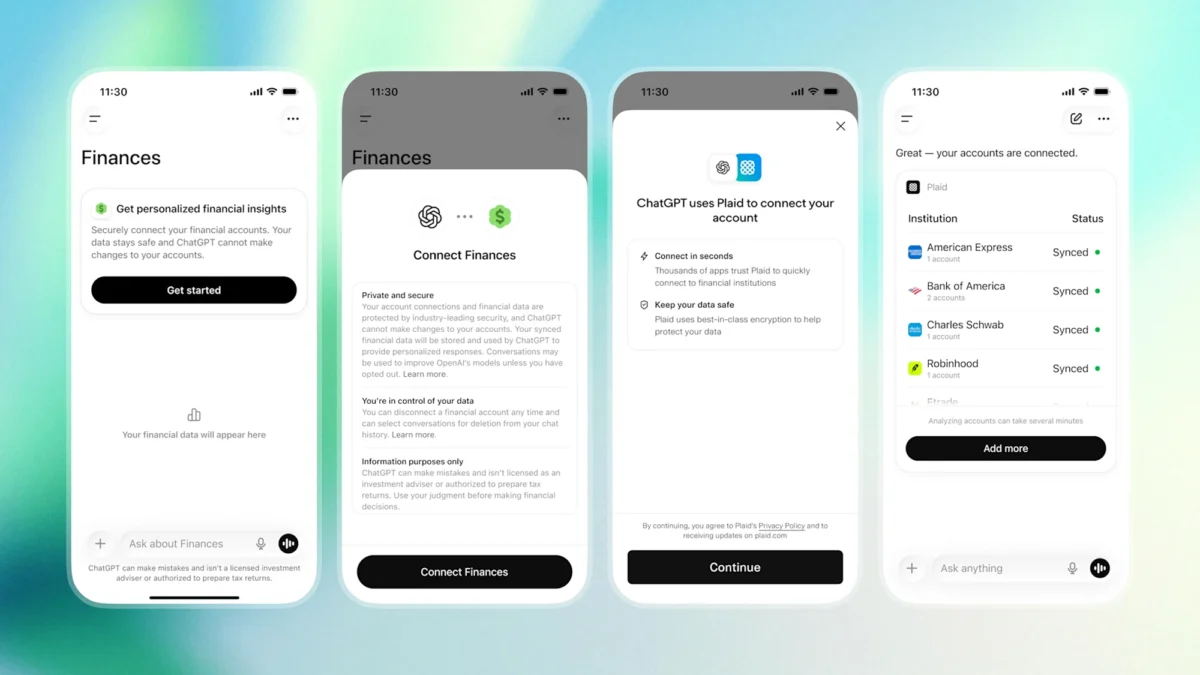
OpenAI has officially launched a pioneering "personal finance experience" within its ubiquitous ChatGPT platform, marking a significant foray into the realm of artificial intelligence-powered financial management. Currently available in preview for Pro subscribers in the United States, this ambitious initiative enables the AI chatbot to securely connect directly to users’ financial accounts, offering personalized insights and responses to a wide array of financial queries. From day-to-day budgeting and tracking expenses to strategizing long-term savings and understanding investment nuances, the goal is to streamline personal finance management by consolidating disparate financial data into a single, interactive interface.
The Genesis of AI in Personal Finance: A Growing Need
The introduction of ChatGPT’s financial capabilities comes at a time when consumers are increasingly seeking simplified, integrated solutions for managing their money. The traditional landscape of personal finance has long been fragmented, requiring individuals to navigate multiple banking apps, investment platforms, budgeting spreadsheets, and other records to gain a holistic understanding of their financial health. This complexity often leads to financial stress, missed opportunities for savings, and a general lack of clarity regarding personal cash flow.
Historically, the evolution of financial technology (fintech) has seen several attempts to address this fragmentation. Early budgeting software like Quicken and Microsoft Money laid the groundwork, followed by web-based aggregators such as Mint (which recently announced its shutdown, underscoring the dynamic nature of this market). More recently, a proliferation of mobile apps has emerged, each offering specialized tools for budgeting, investing, debt management, or expense tracking. However, these tools often require manual data entry or offer limited analytical depth.
The advent of advanced AI, particularly large language models (LLMs) like those developed by OpenAI, presents a new paradigm. These models possess the capacity for sophisticated natural language understanding and generation, making them ideal candidates for transforming complex financial data into digestible, actionable insights through conversational interfaces. OpenAI’s move capitalizes on the existing user base and familiarity with ChatGPT, aiming to embed financial intelligence directly into a widely adopted AI assistant.
Core Functionality and User Experience
At its heart, the new ChatGPT personal finance experience is designed to act as a unified financial co-pilot. OpenAI’s announcement post emphasizes its ambition to help individuals "make sense of their money more easily" by eliminating the need to cross-reference numerous sources. The platform is engineered to combine ChatGPT’s reasoning capabilities with a user’s real financial context—including their shared goals, lifestyle, and priorities—to identify spending patterns, illuminate trade-offs, and facilitate planning for significant financial decisions in a manner that feels both personal and comprehensive.
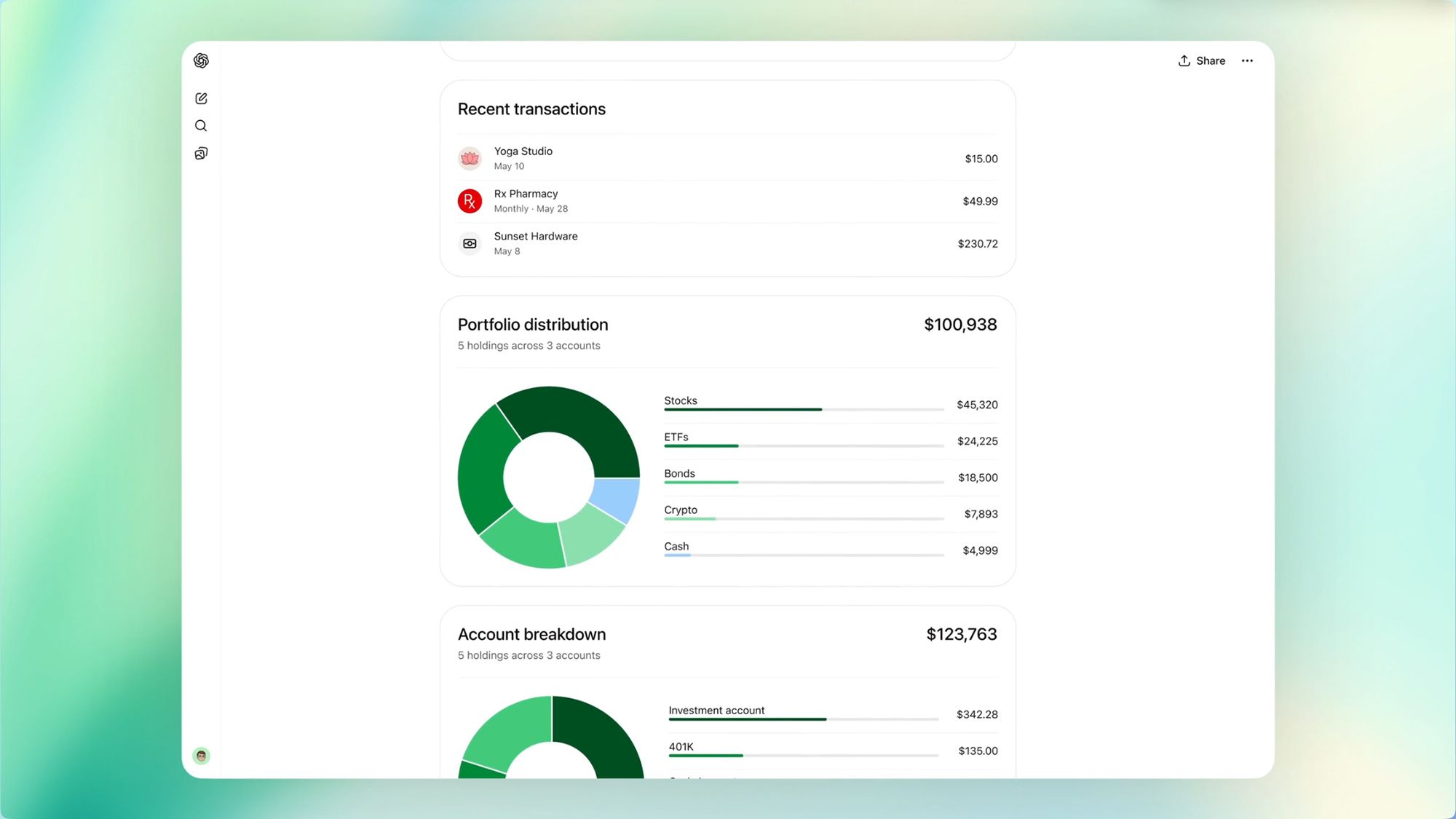
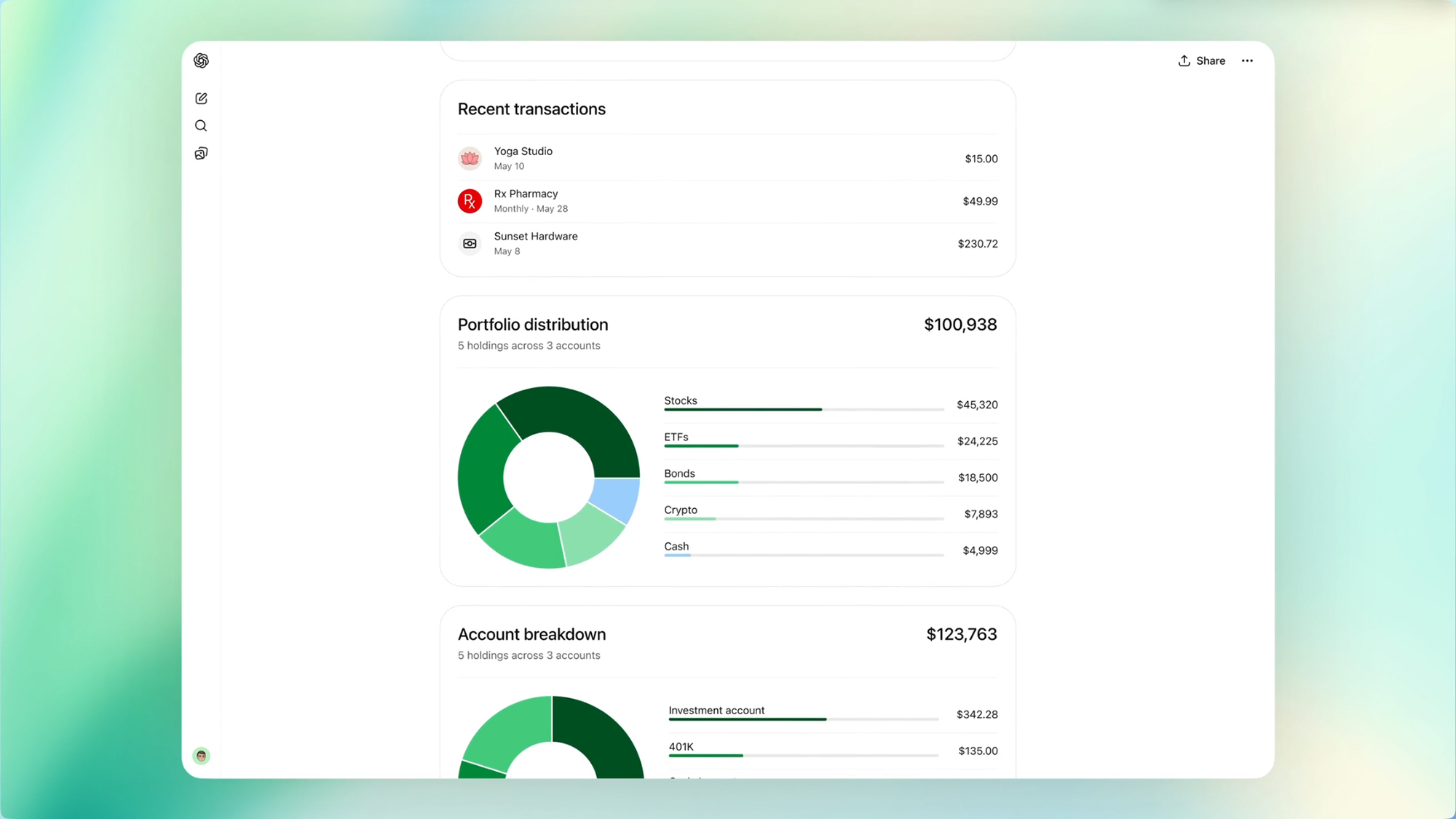
Upon connecting financial accounts, Pro users are presented with an intuitive dashboard. This interface visualizes financial data through sleek tables and charts, reminiscent of advanced spreadsheet analytics, providing a clear breakdown of income and outgoings, as well as historical financial trends. Users can initiate interactions by selecting the "Finances" option in the sidebar or by using a direct prompt like "@Finances, connect my accounts."
The range of queries the system can handle is extensive. Users can inquire about their spending habits over specific periods, receive guidance on saving strategies for major life events like purchasing a home, track recurring subscription expenditures, or even explore the general risks associated with various investment types. For instance, a user might ask, "How much did I spend on dining out last month?" or "What steps should I take to save $50,000 for a down payment in five years?" The AI is designed to process these requests by analyzing linked account data and offering tailored responses.
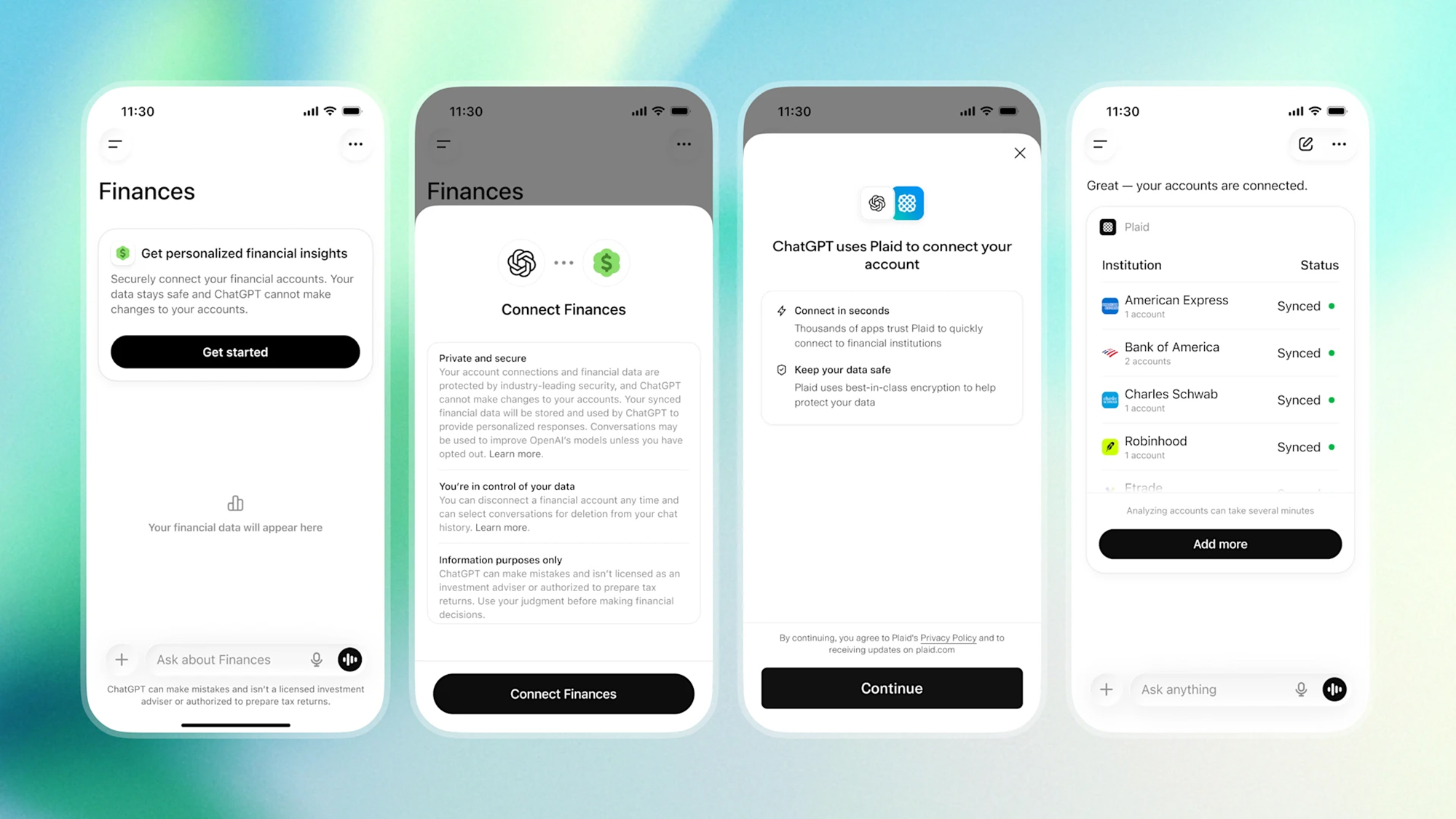
A critical aspect of the design is user control and security. OpenAI states that accounts from over 12,000 financial institutions can be connected, offering broad compatibility. Users retain the ability to disconnect accounts and delete chat histories at any time, ensuring a degree of privacy management. Importantly, the current iteration of ChatGPT’s financial tool cannot initiate or execute any financial transactions, functioning purely as an analytical and advisory interface. This limitation is a deliberate design choice, addressing security concerns and regulatory complexities associated with transactional capabilities.
The Technological Backbone: GPT-5.5 Thinking
The power behind this new financial experience is attributed to "GPT-5.5 Thinking," a designation OpenAI uses to describe an advanced iteration of its foundational large language model. OpenAI claims this model "outperforms earlier models on complex personal finance tasks," suggesting enhanced capabilities in logical reasoning, data synthesis, and context awareness crucial for financial analysis. While the specific architectural details of GPT-5.5 Thinking remain proprietary, the implication is a model trained with a greater capacity for numerical accuracy, intricate pattern recognition across diverse financial datasets, and a more robust understanding of financial terminology and concepts.
However, even with advanced models, the inherent limitations of AI, particularly the potential for "hallucinations" (where the AI generates plausible but factually incorrect information), remain a significant concern. OpenAI itself acknowledges this, implicitly through its strong disclaimers. The company provides an internal benchmark score of 82.5 out of 100 for GPT-5.5 Thinking on financial tasks. While this score suggests a high level of performance by OpenAI’s metrics, the precise nature of this benchmark and its correlation to real-world accuracy and reliability for critical financial decisions are not fully detailed. This ambiguity underscores the need for users to exercise caution and critical thinking when interpreting AI-generated financial insights. The advice, for example, about excessive spending on "iced coffees" or specific investment recommendations, should always be cross-referenced and verified.
Navigating Trust and Data Privacy: Public and Expert Reactions
The announcement has elicited a spectrum of reactions, with a notable degree of skepticism and concern, particularly from the online community. Discussions on platforms like Reddit quickly highlighted anxieties surrounding data privacy and the security implications of linking sensitive financial accounts to an AI platform. Phrases like "sounds like malware" and "clearly insane" reflect a deep-seated apprehension among some users regarding the trustworthiness of AI with their most private information.
These concerns are multifaceted:
- Data Security: The risk of data breaches is paramount. Centralizing sensitive financial information from numerous accounts into one platform, even if encrypted and secured, presents a lucrative target for cybercriminals. Users question OpenAI’s capacity to protect this data against sophisticated attacks.
- Privacy: Beyond security, there are questions about how OpenAI will use the aggregated financial data. While OpenAI typically states it does not use user data for training models without explicit consent, the sheer volume and sensitivity of financial information raise ethical dilemmas about data retention, anonymization, and potential future uses.
- Accuracy and Liability: Given the potential for AI hallucinations, users are wary of making financial decisions based on potentially flawed advice. The disclaimer that the service "is not a replacement for professional financial advice" is crucial, but it places the onus of verification squarely on the user. This raises questions about OpenAI’s liability should incorrect AI advice lead to financial detriment.
- Trust in AI: There’s an ongoing societal debate about the level of trust individuals are willing to place in AI for critical life decisions, especially in areas as sensitive as personal finance where errors can have significant real-world consequences.
Financial institutions and privacy advocates are likely to scrutinize this development closely. Regulatory bodies, such as the Consumer Financial Protection Bureau (CFPB) in the US and international data protection authorities, are increasingly focused on how AI is used in financial services, particularly concerning data handling, algorithmic bias, and consumer protection. OpenAI’s collaboration with over 50 finance professionals in developing this experience suggests an attempt to build a foundation of credibility and expertise, but external validation and ongoing regulatory oversight will be critical for widespread adoption and trust.
Broader Implications and the Future Landscape
OpenAI’s foray into personal finance is not an isolated event but rather a bellwether for the broader integration of AI into financial services. The company’s vision extends beyond mere data aggregation and analysis. The announcement hints at future integrations, where users might be able to inquire about different loan options and potentially even apply for a loan directly within the ChatGPT app. This suggests a future where AI acts as a comprehensive financial marketplace, connecting users with various financial products and services.

This move could have several profound implications:
- Democratization of Financial Advice: By making sophisticated financial analysis accessible through a conversational AI, ChatGPT could democratize access to financial insights, potentially benefiting individuals who previously couldn’t afford or access traditional financial advisors.
- Competitive Pressure: The entry of a tech giant like OpenAI into personal finance will undoubtedly intensify competition within the fintech sector. Existing budgeting apps, robo-advisors, and even traditional banks will need to innovate rapidly to keep pace.
- Ethical AI Development: The sensitivity of financial data and advice will push the boundaries of ethical AI development. Companies will face increased pressure to ensure fairness, transparency, and accountability in their algorithms, particularly concerning potential biases in financial recommendations.
- Regulatory Challenges: Governments and financial regulators worldwide will face the complex task of adapting existing regulations or creating new frameworks to govern AI in finance. Key areas of focus will include data governance, consumer protection, algorithmic transparency, and liability for AI-driven advice.
- Enhanced Financial Literacy: If implemented responsibly, such tools could significantly enhance financial literacy among the general populace by providing immediate, personalized explanations of financial concepts and real-time insights into their spending and saving patterns.
In conclusion, OpenAI’s new personal finance experience in ChatGPT represents a bold step towards an AI-augmented future for managing personal wealth. While promising unparalleled convenience and personalized insights, its success hinges critically on addressing pervasive concerns around data privacy, security, and the accuracy of AI-generated advice. The journey from a preview for Pro subscribers to a universally trusted financial co-pilot will be fraught with technological, ethical, and regulatory challenges, demanding continuous innovation, robust security measures, and transparent communication from OpenAI and its future partners. The financial world is watching closely as AI continues to redefine the boundaries of what’s possible in personal money management.