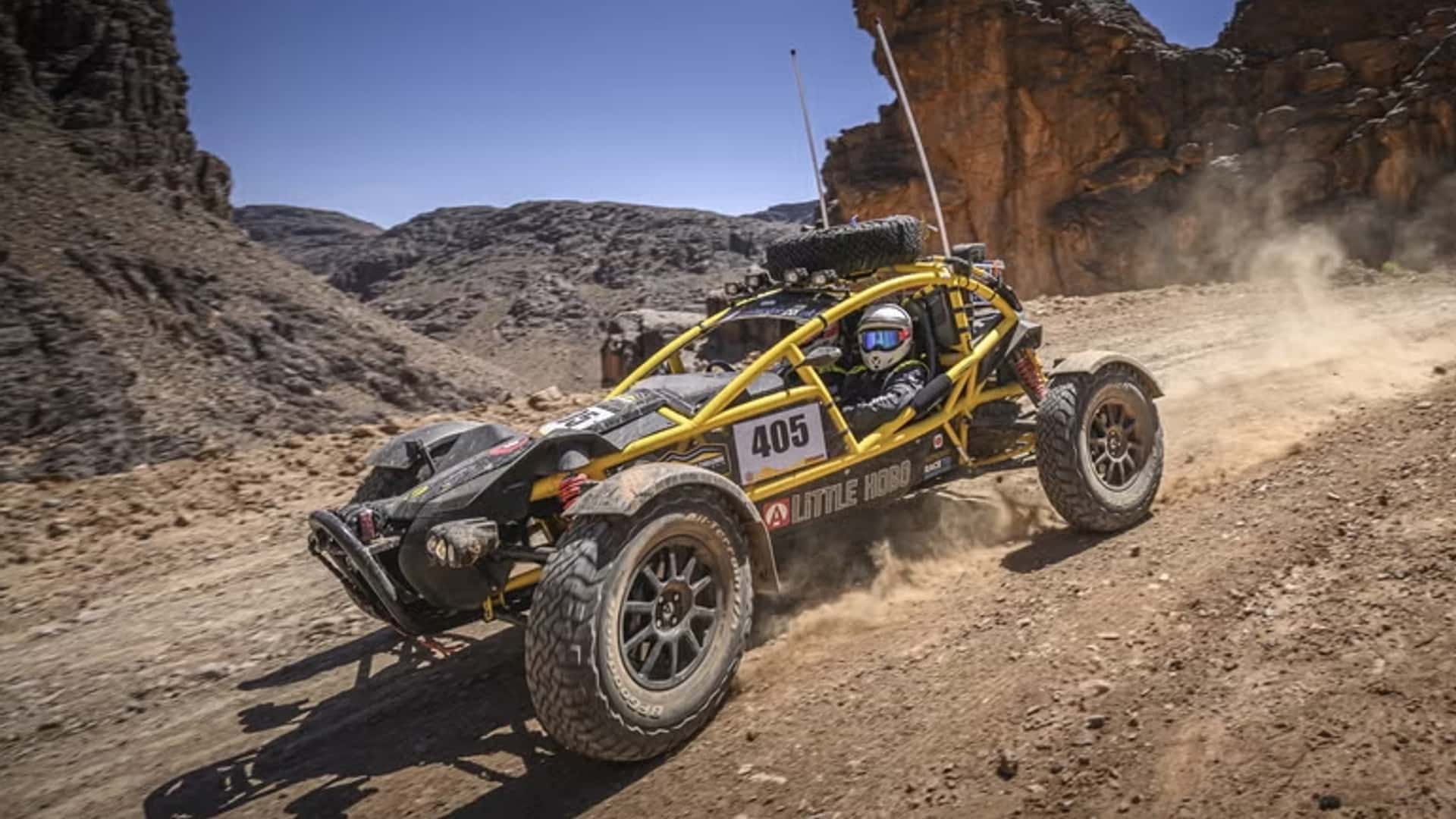
The Ariel Nomad has long occupied a unique niche in the automotive landscape, serving as the rugged, off-road counterpart to the track-focused Ariel Atom. While the Atom is celebrated for its lightweight agility on paved circuits, the Nomad is engineered to thrive where the pavement ends. This capability was put to the ultimate test during the 2026 Morocco Desert Challenge, an eight-day rally raid that serves as one of the most punishing environments for any motor vehicle. In a display of engineering resilience, a modified Ariel Nomad successfully navigated all eight stages, covering over 1,700 miles of treacherous terrain, and crossed the finish line without suffering a single mechanical breakdown.
The Morocco Desert Challenge: A Crucible for Machines
The Morocco Desert Challenge is widely regarded as a benchmark event for rally-raid vehicles. Unlike shorter sprint rallies, the challenge demands sustained durability, logistical precision, and a vehicle capable of maintaining high speeds over varying surfaces, including soft dunes, rocky plateaus, and gravel-strewn mountain passes. The 2026 iteration of the event covered a total distance exceeding 1,700 miles, pushing both man and machine to their physical and mechanical limits.
For the Ariel Nomad, participating in such an event is a significant departure from its standard operating parameters. Originally designed as a road-legal, lightweight off-road buggy, the Nomad relies on a minimalist space-frame chassis and a high-performance engine to deliver its signature driving experience. To prepare for the Moroccan heat and the relentless vibrations of the desert, the vehicle required targeted modifications that bridged the gap between a factory-spec car and a purpose-built rally machine.
Engineering the Desert-Ready Nomad
The project was a collaborative effort between the vehicle’s owner and the engineering team at Ariel Motor Company. The objective was to maintain the core identity of the Nomad while ensuring it could survive the continuous abuse of high-speed desert crossings. The modifications were extensive but remained grounded in the vehicle’s original architecture, demonstrating the robustness of Ariel’s fundamental design.
Key upgrades included a revised suspension system designed to manage high-impact landings and constant undulations. The engineers fitted custom Öhlins dampers, which provided superior heat dissipation and damping consistency compared to standard components. Furthermore, the ride height was increased, and the track width was widened to enhance stability at speed. Perhaps most critically, the drivetrain—specifically the driveshafts—was reinforced to handle the increased torque demands and the friction of deep sand.
Despite these modifications, the vehicle remained remarkably close to its production-line roots. Unlike many factory-backed rally programs that utilize custom-fabricated chassis or experimental powertrains, this Nomad utilized a powertrain and frame configuration accessible to civilian enthusiasts, underscoring the inherent strength of the platform.
A Chronology of Endurance
The 2026 Morocco Desert Challenge spanned eight distinct stages, each presenting unique geological and atmospheric challenges. From the outset, the Nomad was evaluated for its ability to handle "fesh-fesh"—a fine, powder-like sand that can clog intake systems and cause engines to overheat—as well as sharp, jagged rocks that frequently destroy tires and suspension linkages.

Throughout the first half of the rally, the Nomad maintained a consistent pace, allowing the team to monitor mechanical stress in real-time. By the midpoint of the competition, the vehicle had already traversed over 800 miles of varying terrain. During nightly service intervals, the technical team performed only the most essential maintenance.
The maintenance log for the entire 1,700-mile journey was minimal:
- Air Filtration: Regular replacement of air filters to prevent sand ingestion.
- Lubrication: Standard oil changes to combat the extreme heat of the Saharan climate.
- Braking: Replacement of brake pads, which were subjected to intense friction during heavy braking zones in mountainous descents.
- Suspension Service: Routine maintenance of the Öhlins dampers to ensure consistent performance over the final stages.
The absence of any major mechanical interventions—such as transmission failures, electrical gremlins, or chassis fatigue—is a testament to the build quality and the "less is more" philosophy that defines Ariel’s engineering process.
Analytical Perspectives on Performance
The success of the Nomad in Morocco carries implications for the broader automotive industry, particularly regarding the viability of "lightweight" off-roaders in professional-grade competition. Traditionally, rally-raid vehicles are heavy, complex machines laden with massive cooling systems and sophisticated electronic management. The Nomad’s success suggests that a lightweight, rear-wheel-drive or four-wheel-drive platform, when properly damped and tuned, can achieve high levels of reliability without the weight penalty of traditional rally trucks.
Industry analysts suggest that the "Nomad effect"—the ability for a consumer-grade vehicle to perform in a professional rally—may encourage manufacturers to offer "factory-prepared" off-road packages. By demonstrating that the platform can withstand 1,700 miles of desert abuse, Ariel has validated its engineering to a degree that traditional testing in controlled environments cannot replicate.
Official Statements and Future Outlook
While Ariel Motor Company has not officially announced a new rally-raid competition line, the successful completion of the Morocco Desert Challenge has sparked discussions regarding the potential for a limited-run "Morocco Edition" or a dedicated rally-spec trim level.
Representatives from the project noted that the goal was never to win the event outright, but rather to prove the endurance of the Nomad platform. By finishing the race in its entirety, the team achieved the "gold standard" of performance for any debutant in the rally-raid circuit. The feedback loop between the owner and the Ariel factory has provided invaluable data that will likely influence future iterations of the Nomad, including the upcoming electric variant, the E-Nomad.
Broader Impact on the Ariel Brand
The Ariel Nomad’s performance in the desert is more than just a marketing victory; it is a validation of the company’s long-term design language. Since the inception of the Atom, Ariel has focused on the purity of the driving experience, stripping away excess weight and unnecessary electronic intervention. The Nomad takes this philosophy into the dirt, and its success in one of the world’s most difficult endurance tests proves that "simplicity" can be synonymous with "reliability."
As the automotive world shifts toward increasingly complex and heavy electrified platforms, the Ariel Nomad serves as a reminder of the efficacy of mechanical transparency. For the enthusiast, the sight of a stock-based Nomad carving through Moroccan dunes provides a compelling narrative that the spirit of adventure is not reserved for massive, over-engineered SUVs, but can be found in a lightweight, high-performance frame.
Looking forward, the success in Morocco provides a platform for future development. Whether through new performance parts available to existing owners or future factory-built special editions, the "Nomad Morocco" has cemented its place in the history of the company. The vehicle did not just survive the desert; it mastered it, setting a high bar for what a production-based lightweight off-roader can achieve on the global stage. As the industry moves toward 2027 and beyond, the data gathered from this 1,700-mile journey will undoubtedly continue to influence the design and capability of Ariel’s future motorcars.