







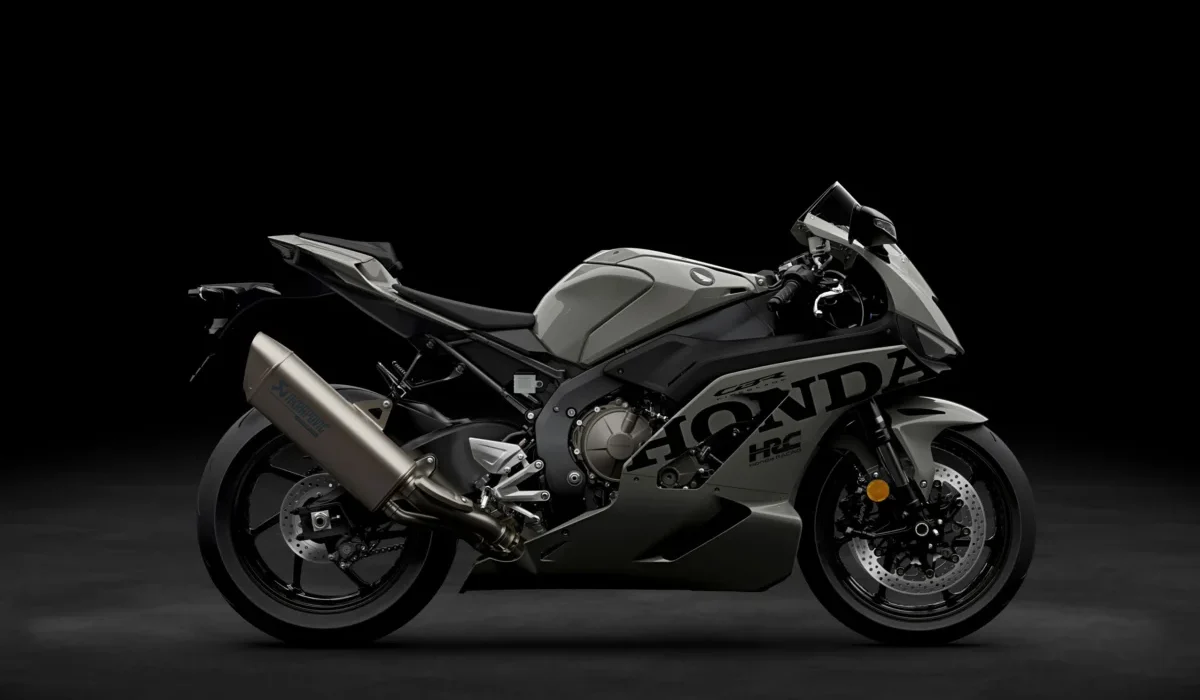
Honda Motor Co., Ltd. has officially pulled the covers off its heavily revised and redesigned CBR1000RR-R Fireblade lineup, introducing three distinct variants for the upcoming model year, highlighted by a race-ready HRC Works Edition directly derived from machines competing in the FIM Superbike World Championship (WorldSBK). The latest iteration of Honda’s flagship liter-class supersport motorcycle aims to address previous critiques regarding mid-corner agility and chassis feedback, incorporating substantial updates to its aluminum frame, suspension architecture, and weight-saving components. Scheduled to hit showroom floors next year, the new Fireblade series represents a concerted effort by Honda’s engineering division to reclaim dominance in both the fiercely competitive consumer superbike segment and international closed-circuit racing.
Main Facts of the 2026 Fireblade Lineup
The newly announced Fireblade family is anchored by comprehensive structural and aerodynamic revisions. At the core of the upgrade is a newly designed aluminum twin-tube frame, which has been re-engineered alongside newly configured bolt-on engine cylinder hangers. According to Honda’s technical briefings, these modifications alter the torsional and lateral rigidity balance of the chassis, specifically designed to enhance front-end feel and stability under heavy trail-braking conditions at maximum lean angles.
Complementing the main frame is a heavily revised aluminum pressed-construction swingarm. Engineers have reduced the diameter of the swingarm pivot shaft, introducing a calculated degree of managed flex to improve rear-wheel traction on corner exit. These structural adjustments are paired with comprehensively recalibrated suspension damping settings across all variants to provide a wider window of adjustability for both aggressive track use and demanding street riding.
Weight reduction has been a primary objective in the development cycle. Among the most notable component changes is the integration of a lightweight titanium fuel tank, replacing traditional steel or heavier alloy alternatives to lower the motorcycle’s overall center of gravity and reduce upper-body weight bias. Power is supplied by a high-revving 999cm³ liquid-cooled, four-stroke inline-four engine. This powerplant retains its championship-winning architecture but incorporates a cutting-edge, two-stage variable-length intake air funnel system—marking the first time such technology has been deployed on a mass-produced Honda motorcycle. This system optimizes volumetric efficiency across the entire rev range, ensuring explosive top-end power without sacrificing midrange tractability.
Chronology and Background of the Fireblade Dynasty
The introduction of the new CBR1000RR-R Fireblade continues a legendary lineage that began more than three decades ago. In 1992, Honda altered the trajectory of the liter-class motorcycle market with the introduction of the original CBR900RR, a machine masterminded by chief engineer Tadao Baba. Baba’s philosophy centered on lightweight agility rather than sheer displacement, proving that a smaller, nimble motorcycle could outperform heavier rivals on both road and track.
Over the decades, the Fireblade evolved through successive generations, transitioning from the 900cc era into the 954cc evolution, and eventually adopting the CBR1000RR nomenclature in 2004 to comply with 1000cc racing displacement limits. For many years, Honda’s approach to the superbike category favored smooth, accessible power delivery and real-world rideability over unadulterated track aggression. However, as European manufacturers such as Ducati, BMW, and Aprilia pushed the boundaries of factory-spec superbike performance, Honda responded dramatically in 2020 with the completely ground-up CBR1000RR-R Fireblade, heavily inspired by the RC213V MotoGP prototype program.
Despite its impressive peak horsepower figures and advanced aerodynamics, the 2020–2024 generations of the RR-R faced constructive critiques from professional racers and automotive journalists alike. Critics noted that the bike’s chassis was exceptionally rigid, optimized primarily for ultra-smooth professional racing circuits rather than undulating public roads or tracks with imperfect tarmac. This latest iteration, slated for release next year, serves as the definitive counter-response, addressing these real-world handling characteristics while pushing the technological envelope even further.

Supporting Data and Technical Specifications
While complete regional pricing and exact curb weight figures will be finalized closer to the official market launch, preliminary technical data released by Honda highlights the depth of the engineering overhaul:
- Engine Type: 999cm³ liquid-cooled 4-stroke 16-valve DOHC inline-four.
- Induction System: Electronic Fuel Injection (PGM-FI) with Throttle By Wire (TBW) and two-stage variable-length intake air funnels.
- Frame Type: Diamond-style, twin-tube aluminum frame utilizing revised casting and extrusion thicknesses with bolt-on engine hangers.
- Swingarm: Pressed aluminum, redesigned for optimized lateral and torsional flexibility with a reduced pivot shaft diameter.
- Fuel System: Titanium fuel tank construction offering significant weight savings over conventional units.
- Electronics Suite: Six-axis Inertial Measurement Unit (IMU) governing Honda Selectable Torque Control (HSTC), Wheelie Control, Engine Brake, and cornering-optimized ABS.
- Variants: Standard road-going model, premium electronically-suspended SP variant, and the flagship HRC Works Edition.
Official Responses and Industry Context
Although specific executive quotes regarding sales projections remain guarded, statements from Honda’s global research and development teams emphasize that consumer feedback from owners and racing telemetry from WorldSBK campaigns played an instrumental role in shaping the new platform.
Industry analysts point out that the decision to introduce an HRC Works Edition directly to consumers underscores a broader industry trend: manufacturers are increasingly bridging the gap between showroom motorcycles and elite-tier racing machines. With strict homologation rules governing world championship racing, offering consumer-accessible variants equipped with race-developed chassis geometry and specialized components allows manufacturers to satisfy both regulatory requirements and the escalating demands of track-day enthusiasts.
"The introduction of chassis-focused updates, rather than a mere horsepower chase, indicates a mature approach to superbike development," notes automotive market researcher Julian Vance. "Today’s liter-class buyers are acutely aware of handling dynamics, electronics integration, and rider-machine synergy. Honda’s focus on frame flex, weight distribution via the titanium tank, and variable intake geometry shows they are listening directly to what riders experience on the tarmac."
Broader Market Impact and Implications
The release of the redesigned CBR1000RR-R Fireblade arrives at a critical juncture for the high-performance motorcycle sector. As global emissions regulations tighten—most notably with the implementation of stringent Euro 5+ standards—manufacturers face immense pressure to maintain or increase power output while reducing environmental impact and noise emissions.
Honda’s ability to refine its high-output inline-four engine while adopting advanced intake and thermal management solutions demonstrates that internal combustion superbikes continue to evolve rather than stagnate in the face of electrification trends. Furthermore, the inclusion of the HRC Works Edition signals Honda’s unwavering commitment to motorsport as a proving ground for commercial engineering.
For dealerships and consumers, the upcoming release is expected to intensify competition within the premium liter-class segment, going head-to-head against flagship offerings from Yamaha, Kawasaki, Ducati, and BMW. As test ride embargoes lift and the official market release approaches next year, the ultimate test for the new Fireblade will be whether its chassis refinements successfully translate the immense power of its inline-four engine into accessible, confidence-inspiring performance across a wider spectrum of riding environments.