









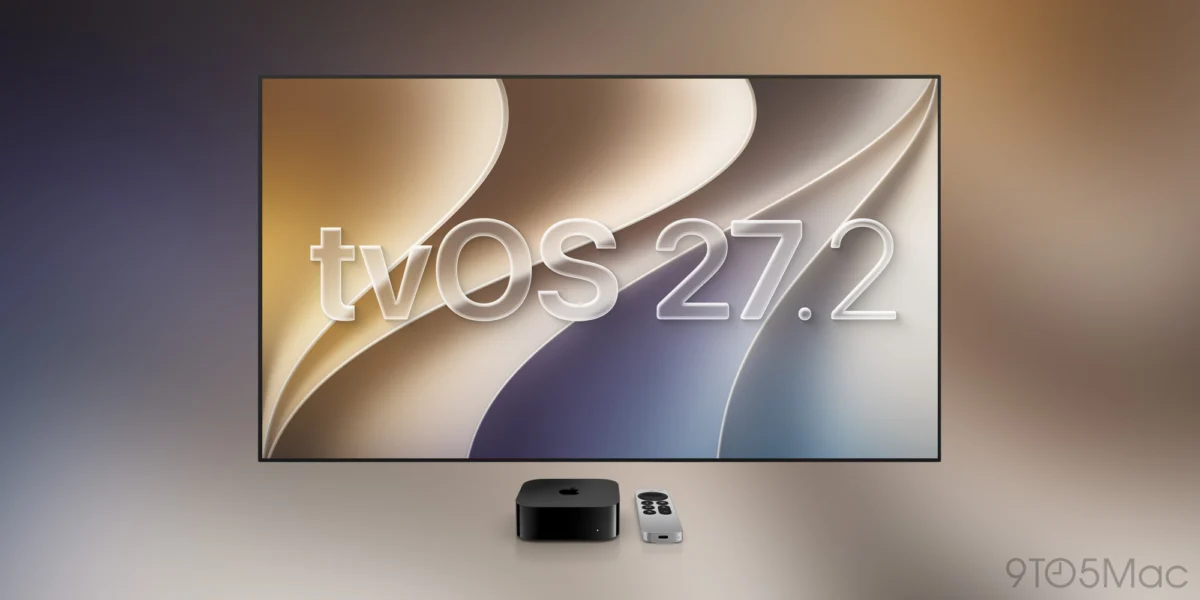
Ahead of the highly anticipated retail launch of the fourth-generation Apple TV 4K on November 13, Apple has deployed an exclusive and updated build of tvOS 27.2 tailored specifically for the new hardware. This specialized software release arrives just weeks after the broader public rollout of tvOS 27.2 across the existing Apple TV ecosystem, bringing crucial day-one optimizations and enabling advanced features that were previously restricted to internal testing environments.
The introduction of this fresh build underscores Apple’s rigorous hardware-software integration process, particularly as the company prepares to introduce its most powerful streaming box to date. Priced starting at $299, the upcoming fourth-generation Apple TV 4K represents a major evolutionary step for the living room platform, incorporating next-generation computational hardware, upgraded audio configurations, and deeply integrated artificial intelligence capabilities.
Chronology of the tvOS 27.2 Deployment
The software rollout path for tvOS 27.2 began in late October, when Apple simultaneously distributed major operating system updates across its entire device ecosystem, including iOS 27.2, iPadOS 27.2, macOS 27.2, watchOS 27.2, and visionOS 27.2.
During the initial public release, existing Apple TV 4K models received build version 24K122. This standard update introduced several user-requested enhancements, such as a brand-new shuffle mechanism for screen savers, granular user controls over which specific photographs appear in rotation, and specialized support for American Sign Language (ASL) and British Sign Language (BSL) overlays within select motion pictures and television series.
However, as consumers began preordering the new fourth-generation hardware ahead of its scheduled November 13 release date, developers and industry analysts noted the necessity for dedicated day-one firmware. To meet this demand, Apple issued a distinct build of tvOS 27.2, designated as build version 24K154, specifically for the upcoming device. While the baseline release notes for build 24K154 initially mirrored those of its predecessor without detailing hardware-specific alterations, subsequent analysis from the developer and security community quickly revealed significant functional differences underneath the hood.

Unlocking Siri AI and Hardware-Specific Enhancements
The primary differentiator in the newly discovered build 24K154 centers around the activation of advanced artificial intelligence features. According to findings shared by prominent system analyst @itspdfu on the social media platform X, the updated tvOS build officially enables Siri AI on the fourth-generation Apple TV 4K.
In earlier pre-release phases and internal builds, Siri AI functionality on the platform was strictly gated, remaining inaccessible to standard users or general testing rings. By unlocking this capability in the retail-ready firmware, Apple is ensuring that customers who purchase the $299 flagship streaming device will have immediate access to contextual intelligence, conversational voice processing, and advanced machine learning tasks right out of the box.
The inclusion of Siri AI acts as a cornerstone for the fourth-generation hardware, which is engineered to handle intensive on-device processing tasks. Unlike previous iterations of the Apple TV, the new device features built-in far-field microphones. This addition eliminates the traditional requirement of holding down a remote button to invoke voice commands, allowing users to interact with their television setup completely hands-free from anywhere in the living room.
Furthermore, the new model introduces an innovative surround sound architecture. The hardware permits users to wirelessly pair up to four compatible HomePod or HomePod mini speakers simultaneously, configuring them dynamically as dedicated front and rear home theater channels. This capability bridges the gap between traditional standalone soundbars and complex multi-speaker discrete audio setups, leveraging Apple’s proprietary spatial audio calibration and wireless audio synchronization algorithms.
Redesigned Siri Remote and Ecosystem Backward Compatibility
Accompanying the fourth-generation Apple TV 4K is the debut of the fourth-generation Siri Remote, an accessory designed to refine everyday navigation while addressing common user pain points like misplaced controllers.
The updated remote control features native support for Precision Finding, a capability powered by Apple’s ultra-wideband technology ecosystem. Users can pinpoint the exact physical location of the remote through their iPhone interface or prompt the device to emit an audible chime to expedite retrieval.

Demonstrating Apple’s continued focus on ecosystem longevity, the manufacturer has confirmed that the fourth-generation Siri Remote is fully backward compatible. Owners of older third-generation Apple TV 4K models, as well as legacy Apple TV HD units, can purchase and pair the new remote independently without needing to upgrade their core set-top box.
Broader Implications and Future Software Outlook
The deployment of a distinct tvOS build for unreleased hardware highlights a recurring logistical challenge and opportunity for consumer electronics manufacturers: synchronizing software maturity with assembly line timelines. Because hardware manufacturing schedules often outpace the final freeze dates of major software branches, companies frequently rely on over-the-air updates or factory-flashed patches to ensure day-one feature parity.
The discovery that build 24K154 unlocks Siri AI specifically for the new hardware has naturally raised questions regarding the software roadmap for legacy devices. At present, build 24K122 remains the active and latest version for older Apple TV 4K generations, and Apple has not formally committed to backporting the full suite of Siri AI capabilities to older silicon architectures. Industry observers speculate that older models may receive a corresponding update build in the weeks following the November 13 launch, though hardware constraints related to neural processing units in older generations could limit the scope of such deployment.
As the retail availability date approaches, consumer interest remains high. The combination of a robust hardware refresh, advanced spatial audio pairing, far-field voice interaction, and the newly confirmed activation of Siri AI positions Apple to capture a larger share of the premium home entertainment market. With the software foundation now established through build 24K154, the stage is set for consumers to experience the next evolution of Apple’s television operating system when shipments begin later this month.