The concept of "Everyday Carry" (EDC)—the collection of essential items a person carries on their person daily—has transcended its origins in tactical and survivalist circles to become a study of professional efficiency. For those working in high-intensity environments like professional kitchens, the requirements for personal gear are dictated by a unique intersection of hygiene standards, physical demands, and the necessity for rapid task execution. A recent submission from a Minnesota-based professional chef highlights how industry professionals curate their daily toolsets to maintain productivity while strictly adhering to safety regulations.
The Anatomy of Professional EDC
At the heart of the professional chef’s gear selection is a distinct separation between tools used for food preparation and those used for general labor. Cross-contamination is a primary concern in any culinary setting; consequently, many chefs maintain a strict policy of using separate blades for kitchen duties and daily tasks.
For the modern cook, the toolkit often includes a variety of folding knives and at least one fixed-blade knife. These tools serve a dual purpose: they must be reliable enough to endure the rigors of opening heavy shipping boxes or breaking down supplies while remaining distinct from the high-carbon steel blades reserved for culinary use. By diversifying their carry, professionals can ensure that their precision kitchen tools remain pristine and sanitary, while their "workhorse" knives handle the abrasive tasks that would otherwise dull a delicate chef’s knife.
Analyzing the Gear Selection
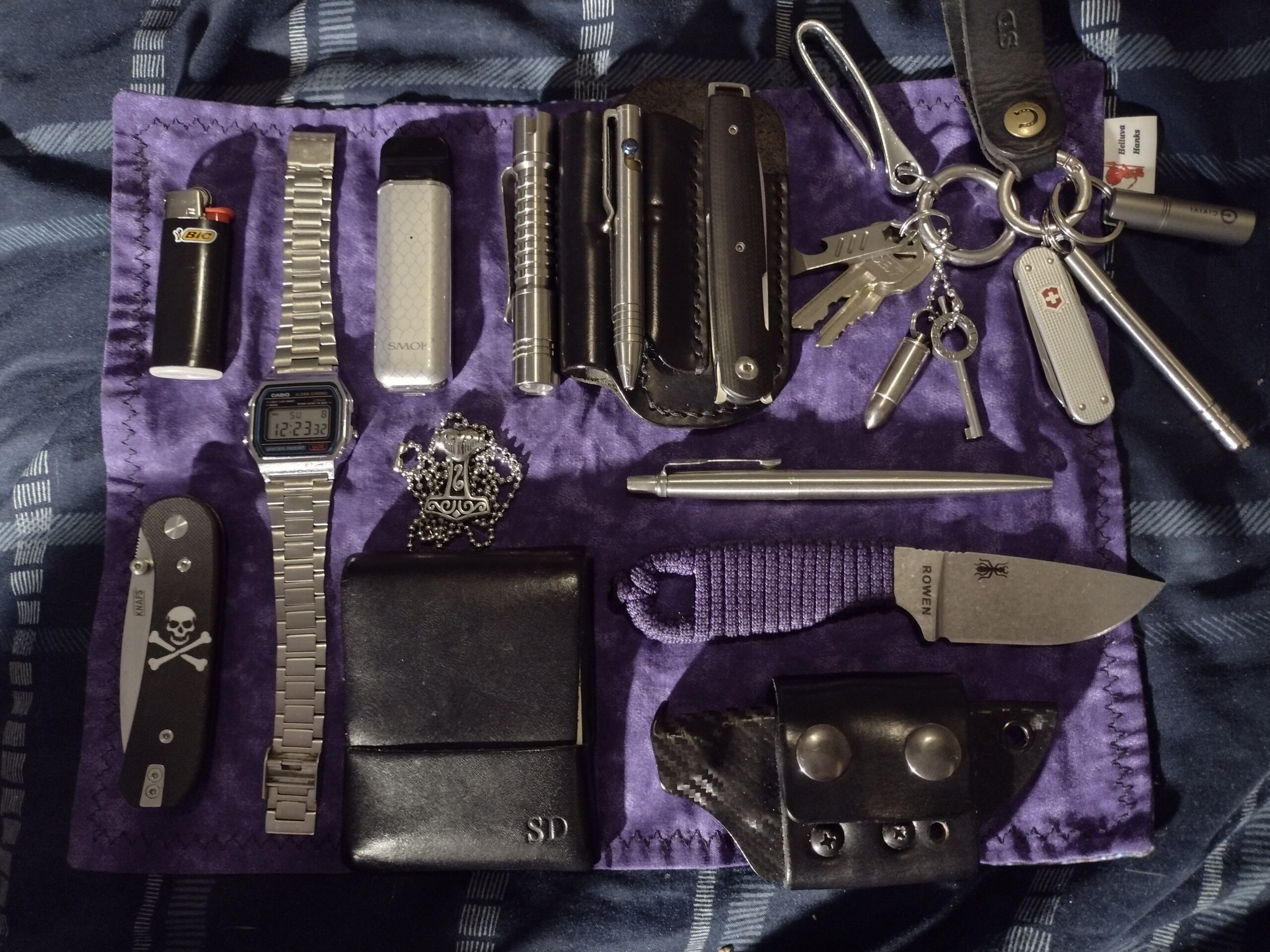
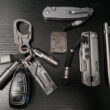
The featured kit from this Minnesota cook demonstrates a sophisticated balance of price and performance. The inclusion of the ESEE Izula S35VN fixed-blade knife is a testament to the prioritization of durability. The ESEE Izula, renowned for its rugged construction and ergonomic design, serves as the primary utility blade. Constructed from high-end S35VN steel, it offers superior edge retention and corrosion resistance—qualities essential for someone working in humid, fast-paced kitchen environments.
Beyond the blades, the carry includes a mix of writing instruments that illustrate the importance of versatility. The juxtaposition of a Parker Jotter—a long-standing icon of utilitarian design—with a premium titanium bolt-action pen reflects a thoughtful approach to tool selection. The Parker Jotter, valued for its reliability and low cost, serves as an everyday workhorse for quick notes and inventory tracking. Meanwhile, the titanium bolt-action pen offers a more tactile, durable writing experience that can withstand the physical demands of a bustling kitchen.
The Logistics of Utility Management
One of the most significant challenges in EDC is maintaining organization without sacrificing accessibility. For professionals in the food service industry, pocket space is often limited, and the weight of multiple knives and tools can become a hindrance.
The use of specialized leather sheaths and modular keychain systems represents an effective solution to these logistical constraints. By utilizing external carry methods—such as attaching tools to a belt or a heavy-duty carabiner system—the chef can keep their gear organized and immediately accessible. This "off-the-body" storage strategy prevents bulky items from cluttering pockets, which is critical when moving through confined spaces or working around kitchen machinery.
Chronology of Culinary Tool Evolution
Historically, the chef’s knife was the singular, all-encompassing tool of the culinary professional. However, the rise of the "modern maker" movement and the increased accessibility of high-quality, compact tools have shifted this paradigm.
- 1980s–1990s: The professional kitchen was defined by a static knife roll, often consisting of a few heavy-duty German or Japanese blades that never left the station.
- 2000s–2010s: The proliferation of mass-market "tactical" gear led to a broader adoption of pocket knives by service professionals for non-culinary tasks.
- 2020s–Present: A shift toward "premium utility," where professionals opt for high-grade steels and modular storage solutions that bridge the gap between aesthetics and function.
This evolution is driven by the realization that a knife is not just a kitchen tool; it is a mechanical device that, when properly chosen, can reduce physical strain and increase the efficiency of non-cooking tasks such as breaking down cardboard, opening plastic packaging, or managing ingredient inventory.
Supporting Data and Industry Standards
In the culinary industry, safety is governed by strict health department regulations, such as those set by the FDA Food Code. These regulations mandate that equipment must be designed, constructed, and maintained to be easily cleanable and to prevent the contamination of food.
The strategy employed by this Minnesota chef—prohibiting the use of general-utility EDC knives for food preparation—is a direct reflection of industry-standard hygiene practices. When a knife is used on non-food items, it becomes a carrier for potential biological or chemical contaminants. By maintaining a clear distinction between tools, the chef effectively mitigates the risk of a health code violation.

Furthermore, the choice of materials in modern EDC gear—such as titanium, S35VN steel, and high-density polymers—is backed by material science research. S35VN, for example, was designed specifically to provide a balance of toughness and edge retention, making it an ideal candidate for a knife that will be used in demanding, unpredictable work environments.
Official Perspectives and Expert Analysis
Industry experts emphasize that the selection of personal gear is highly subjective and depends on the specific demands of the individual’s environment. However, there is a consensus that "less is more" when it comes to the actual weight carried.
"The key to a successful professional EDC is identifying the friction points in your day," notes an industry analyst familiar with modern toolsets. "If you are opening fifty boxes a day, a high-quality fixed blade with a quick-draw sheath is not just a luxury; it is an ergonomic necessity. It reduces the time spent fumbling with equipment and allows the professional to maintain their flow state."
The inclusion of the Knafs and Boker brands in the featured carry also provides insight into current market trends. These brands have gained significant traction among professionals because they offer a "gentleman’s folder" aesthetic—sleek, slim, and unobtrusive—without sacrificing the mechanical integrity required for daily work.
Broader Impact and Future Implications
The integration of high-quality EDC gear into the professional culinary world is more than a trend; it represents a broader cultural shift toward intentionality in the workplace. As the line between professional tools and personal carry continues to blur, manufacturers are likely to see increased demand for products that combine industrial-grade durability with refined, everyday-appropriate designs.
Looking forward, the evolution of materials such as ceramic bearings, lighter weight composites, and improved corrosion-resistant coatings will continue to influence how chefs equip themselves. As these technologies become more affordable, the standard for what constitutes a "basic" EDC will likely rise, with more professionals prioritizing longevity and reliability over short-term savings.
Ultimately, the professional chef’s EDC is a reflection of their dedication to their craft. By carefully curating a kit that separates the tools of the trade from the tools of the workday, they maintain both the sanctity of their culinary output and the efficiency of their personal workflow. This disciplined approach serves as a blueprint for professionals across all sectors who seek to streamline their daily operations through the thoughtful application of modern technology and equipment.