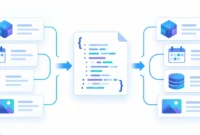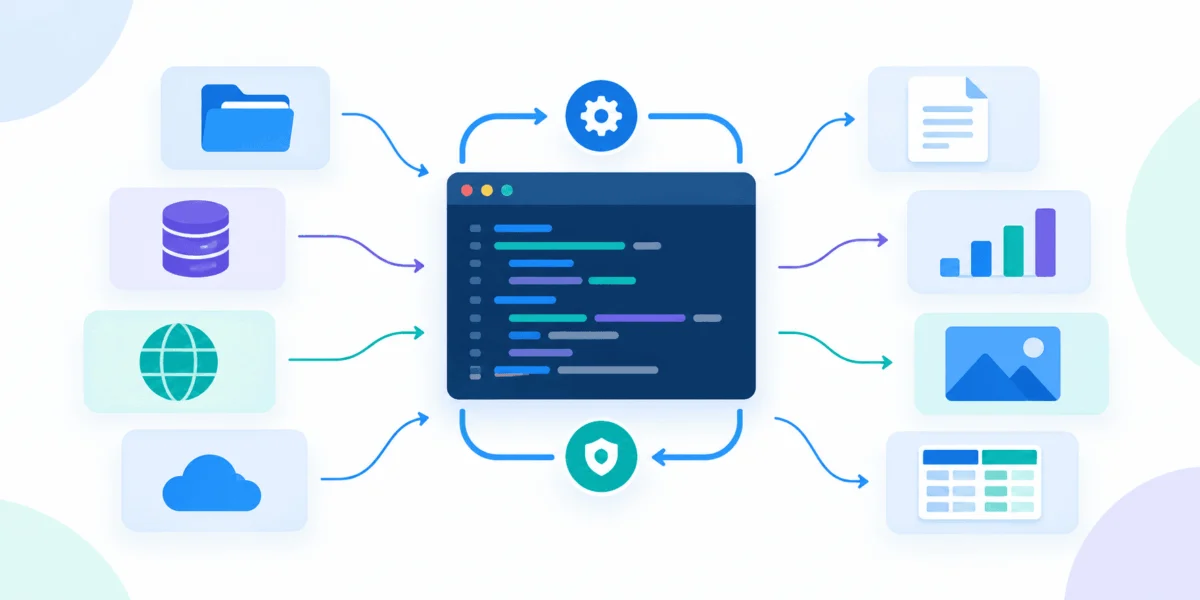
In the world of professional software engineering and machine learning operations, resource management is a critical determinant of system reliability, stability, and security. While many developers are first introduced to Python’s context management capabilities via the ubiquitous with open(path) as f construct—primarily utilized for file input and output operations—the underlying protocol offers a far more powerful paradigm. The Python with statement is fundamentally a structural boundary enforcement tool, establishing a guaranteed execution pathway for setup and teardown routines regardless of whether the intervening block of code completes successfully or terminates via an unhandled exception. This capability extends well beyond simple file input/output, addressing complex initialization and cleanup challenges in data science workflows, model evaluation scripts, distributed processing pipelines, and production infrastructure.
The Architectural Foundations of the With Statement
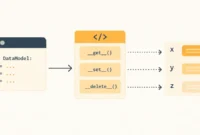
To fully appreciate the versatility of context managers, one must examine the underlying data model specified by the Python language reference. When the interpreter encounters a with statement, it evaluates the expression immediately following the keyword to obtain an object known as a context manager. This object must implement two core magic methods: __enter__() and __exit__().
During execution, the interpreter invokes the __enter__() method before entering the block. Whatever value __enter__() returns is bound to the target variable specified after the as keyword. Following this initialization phase, the indented block of code executes. Upon exiting the block—whether via normal completion, a return statement, or an unexpected exception—the __exit__() method is automatically triggered.
The __exit__() method receives three parameters: exc_type (the exception type, if any), exc_value (the exception instance), and traceback (the traceback object). On a clean execution path, all three parameters evaluate to None. Crucially, the return value of __exit__() dictates how exceptions are handled post-cleanup. If the method returns a truthy value, the exception is intentionally suppressed, and execution continues immediately following the with block. Conversely, returning false, None, or omitting a return statement allows the exception to propagate normally through the call stack.
Understanding this suppression mechanism is paramount for production engineering. An improperly implemented __exit__() method that inadvertently returns a truthy value can silently swallow critical errors, masking underlying data corruption, missing metric scores, or pipeline failures while providing no traceable error logs to system administrators.
Addressing Production Housekeeping Failures
A common failure mode in complex machine learning evaluation scripts involves inadequate resource reclamation. Consider an evaluation script designed to assess a large deep learning model against an extracted test corpus. Such scripts typically perform a series of preparatory tasks: generating a temporary directory for test set extraction, modifying environment variables to direct model caches to high-performance local solid-state drives, lowering third-party library log levels to prevent console flooding, and initiating a high-resolution performance stopwatch.
In a naive implementation, cleanup routines—such as deleting the scratch directory, restoring environment variables, resetting log levels, and printing elapsed time—are placed at the sequential bottom of the script file. However, if a malformed data record causes the core evaluation function to raise an exception halfway through execution, the sequential cleanup code is bypassed entirely. The subsequent execution process inherits a polluted model cache path, a disabled logging framework, and gigabytes of orphaned temporary files consuming valuable disk space.
By refactoring these housekeeping tasks into dedicated context managers, engineers ensure that cleanup operations are strictly coupled to the lifecycle of the code block. This guarantees deterministic resource release under all execution conditions, minimizing systemic drift and preventing resource leakage across shared computational nodes.
Implementing Deterministic Timing and Instrumentation
Precision benchmarking and performance profiling require robust instrumentation that remains accurate even when monitored processes fail. By encapsulating high-resolution timing mechanisms within a custom context manager class, developers can track execution durations reliably while retaining access to performance metrics outside the operational block.
import time

class Timer:
    def __init__(self, label):
        self.label = label
        self.elapsed = None

    def __enter__(self):
        self._start = time.perf_counter()
        return self

    def __exit__(self, exc_type, exc_value, traceback):
        self.elapsed = time.perf_counter() - self._start
        status = "failed" if exc_type else "ok"
        print(f"self.label: self.elapsed:.3fs (status)")
        return False  # Never suppress block exceptions
In this implementation, time.perf_counter() is utilized due to its high resolution and monotonicity on modern operating systems, protecting measurements against system clock adjustments. Because __enter__() returns the timer instance itself, metrics remain accessible in the outer scope even if an exception occurs within the block. This design pattern allows logging infrastructure to record partial execution times for failing workloads, providing vital telemetry for debugging performance bottlenecks or hung batch transformations.
Streamlining Linear Workflows with Generator-Based Context Managers
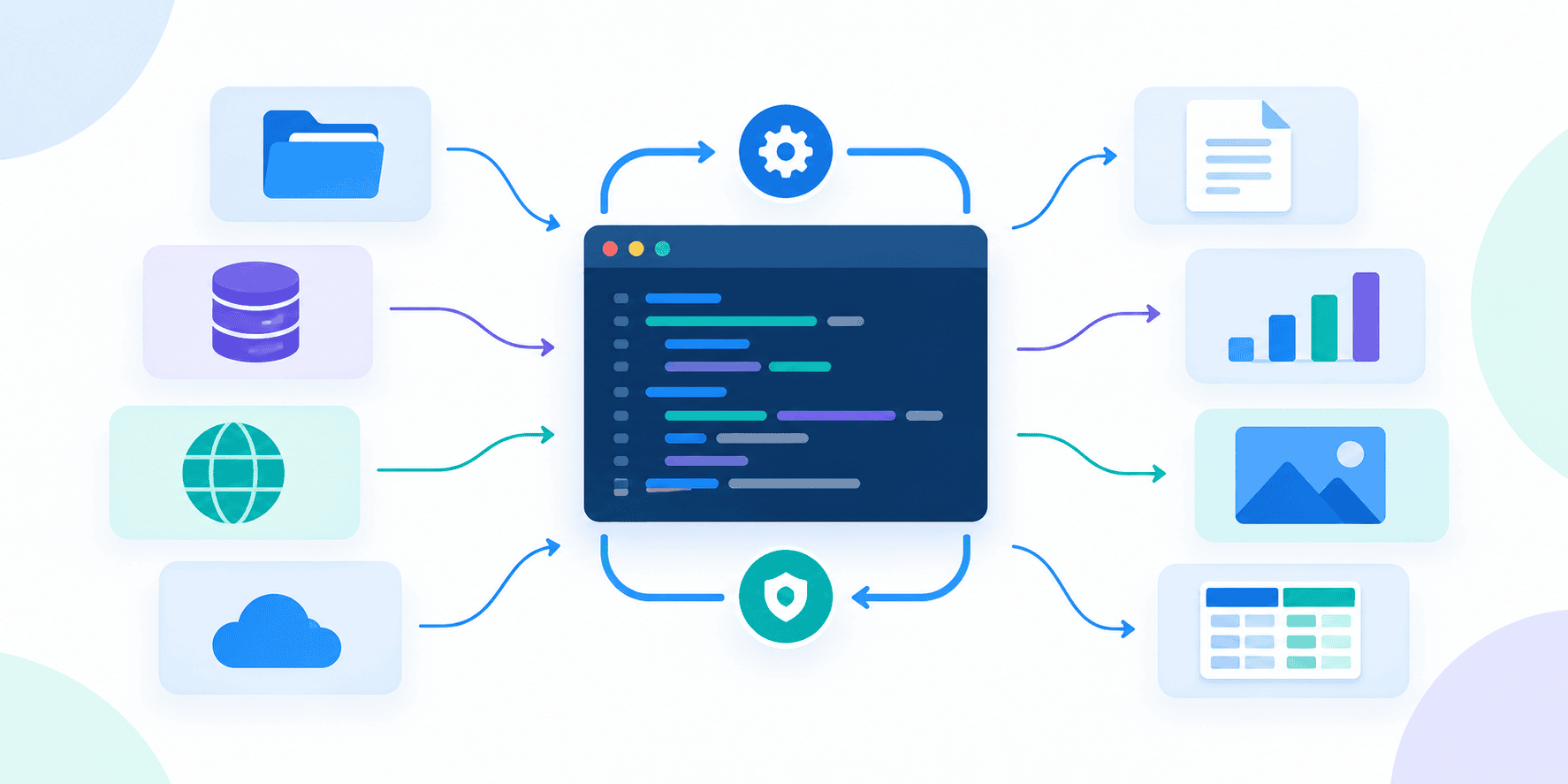
While class-based context managers are ideal for maintaining mutable state that must be accessed post-execution, simpler initialization and teardown cycles often incur unnecessary boilerplate when structured as classes. Python’s contextlib module addresses this through the @contextmanager decorator, which allows developers to construct context managers using standard generator functions.
import logging
from contextlib import contextmanager

@contextmanager
def quiet(logger_name, level=logging.WARNING):
    logger = logging.getLogger(logger_name)
    previous = logger.level
    logger.setLevel(level)
    try:
        yield logger
    finally:
        logger.setLevel(previous)
In this pattern, all operations preceding the yield statement execute upon entering the block. The yield expression hands control over to the managed code block, while any subsequent cleanup logic is placed inside a finally block to ensure execution regardless of exceptions. This generator-based approach integrates seamlessly with the standard library, supporting both traditional block usage and decorator-based function wrapping via underlying ContextDecorator inheritance.
Automating Temporary Directory Lifecycles
In data-intensive applications, handling temporary artifacts safely is notoriously difficult when managed manually. The standard library’s tempfile.TemporaryDirectory class provides an enterprise-ready solution by generating unique directory structures and automatically purging them—along with all contained files—upon exiting the context block.
Using TemporaryDirectory prevents common concurrency and contamination vulnerabilities, such as race conditions where parallel evaluation jobs overwrite shared static directories, or leftover files from failed runs being accidentally committed to version control repositories. For diagnostic post-mortem investigations where artifact preservation is required, modern Python releases offer configuration parameters like delete=False, providing flexible control over persistence without sacrificing code clarity.
Managing Dynamic Resource Sets with ExitStack
Real-world data pipelines frequently encounter scenarios where the number of acquired resources—such as multiple file shards, database connections, or network sockets—is determined dynamically at runtime. Traditional nested with statements require static declarations, making them unsuitable for collections of arbitrary size.
The contextlib.ExitStack class bridges this gap by acting as a programmatic context manager that allows developers to dynamically register resources, context managers, and cleanup callbacks during execution.
from contextlib import ExitStack

def merge_shards(paths, out_path):
    with ExitStack() as stack:
        shards = [stack.enter_context(open(p, encoding="utf-8")) for p in paths]
        out = stack.enter_context(open(out_path, "w", encoding="utf-8"))
        stack.callback(print, f"merged len(shards) shards into out_path")

        for lines in zip(*shards):
            out.writelines(lines)
ExitStack ensures that resources are unwound in strict reverse order of acquisition—mirroring the guarantees of nested with blocks. Furthermore, custom cleanup functions can be registered via callback(), enabling arbitrary teardown logic to participate in the unified exception-handling pipeline.
Managing Reversible State Changes Safely
State modifications, such as altering environment variables, working directories, or global configuration dictionaries, introduce significant systemic risk if left unreversed. Unmanaged state changes can propagate unintended side effects across disparate modules within a monolithic application or long-running worker process.
The unittest.mock.patch.dict utility offers a robust context management pattern for mappings, capturing existing key states before modification and restoring them precisely upon block exit—re-inserting previous values or removing newly introduced keys as appropriate. However, engineers must exercise caution when applying state-reversal context managers to global process attributes, such as os.environ or the current working directory, in multi-threaded or asynchronous environments. Because these states are shared across threads within the same operating system process, concurrent execution models can experience race conditions where overlapping context blocks interfere with one another.
Best Practices for Enterprise Resource Management
Selecting the appropriate context management pattern depends heavily on state requirements, resource cardinality, and lifecycle ownership. Class-based managers excel when callers require access to internal state post-execution. Generator-based @contextmanager functions provide concise solutions for linear setup-and-cleanup tasks. Standard library primitives like TemporaryDirectory and patch.dict eliminate the need to reinvent foundational patterns, while ExitStack handles dynamic collections of resources.
By integrating robust context management principles across software architectures, development teams can eliminate resource leaks, enforce deterministic state restoration, and significantly enhance the resilience of production machine learning pipelines and data processing systems.