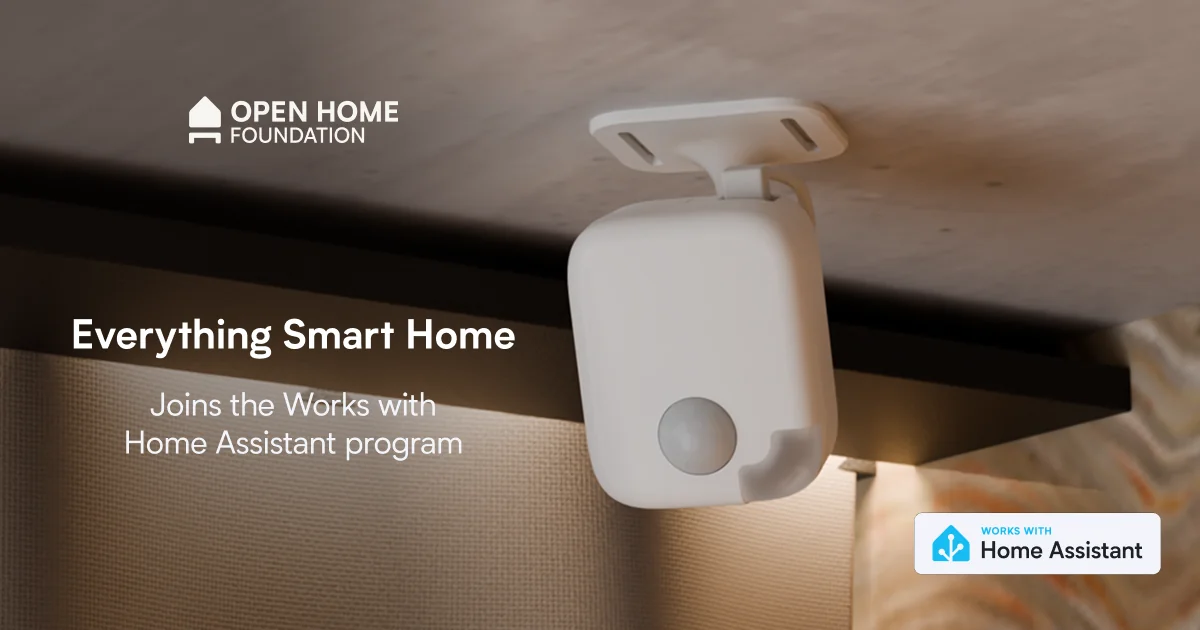
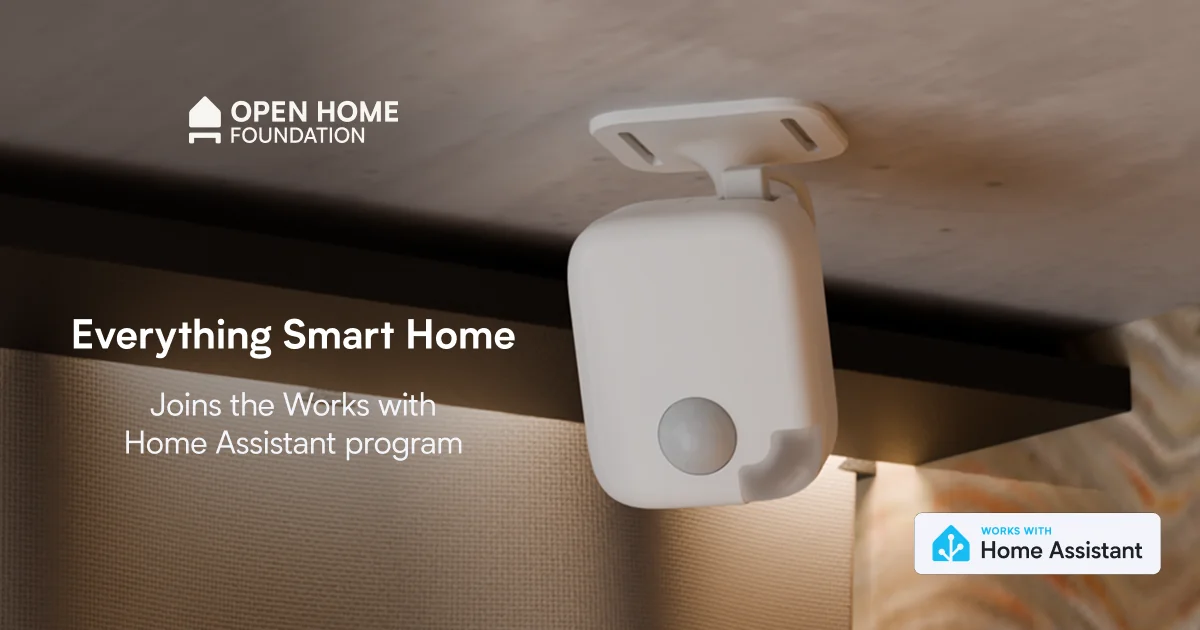
The smart home automation sector has reached a significant milestone regarding local-first hardware integration, as popular UK-based manufacturer Everything Smart Home officially joins the Works with Home Assistant program. Founded by long-term automation enthusiast Lewis Barclay and his father, electrical engineer Dave Barclay, the family-run enterprise brings its flagship Everything Presence sensor series—comprising the Lite, One, and Pro models—into the fold of officially certified local-control hardware. This inclusion highlights a growing industry demand for transparent, cloud-free Internet of Things (IoT) ecosystems where consumer privacy and device longevity take absolute precedence.
The partnership solidifies a long-standing relationship between the hardware manufacturer and the broader Home Assistant ecosystem. What began as an independent educational platform has successfully transitioned into an innovative hardware operation, demonstrating the viability of community-driven product development in the modern tech landscape.
From Community Content Creator to Hardware Manufacturer: A Chronology
The trajectory of Everything Smart Home offers a unique case study in how digital creator economies can pivot into specialized manufacturing. The journey spans several key developments over the past six years:
- 2020: Lewis Barclay launches the Everything Smart Home YouTube channel in the United Kingdom, focusing initially on monthly release recaps, installation tutorials, and foundational home automation guides for the growing Home Assistant community.
- April 2022: Following widespread acclaim and a rapidly expanding audience of DIY enthusiasts, Everything Smart Home becomes an inaugural inductee into the Home Assistant Creator Network.
- Late 2022: Recognizing a gap in the market for hardware specifically tailored to advanced local automation, Lewis and Dave Barclay establish Everything Smart Technology. The venture initially distributes trusted third-party components alongside Nabu Casa official hardware before embarking on proprietary device engineering.
- 2023–2025: The company iteratively designs and releases the Everything Presence hardware line, utilizing millimeter-wave (mmWave) radar technology and ESPHome architecture to ensure absolute local control without relying on external cloud servers.
- Late 2025: Lewis Barclay participates as a featured speaker at the Open Home Foundation Summit in Dublin, engaging directly with core developers and users to align hardware roadmaps with community expectations.
- October 2026: The Everything Presence Lite, One, and Pro models successfully pass rigorous evaluation by the Home Assistant internal testing team, officially earning certification under the Works with Home Assistant program.
Technical Architecture and Local-First Engineering Principles
At the core of the Everything Presence product line is a steadfast commitment to the ESPHome framework. ESPHome allows microcontrollers to interface directly with home automation software over a local area network (LAN) without routing telemetry, voice data, or occupancy states through third-party servers. All three certified devices carry the "Made for ESPHome" designation, which guarantees out-of-the-box compatibility, open-source firmware accessibility, and user-serviceable configuration capabilities that do not require proprietary applications or cloud accounts.
Furthermore, the hardware addresses a notorious shortcoming of traditional home automation: passive infrared (PIR) motion detection limitations. Conventional PIR sensors rely strictly on thermal shifts and motion vectors, frequently failing to detect individuals who remain stationary for extended periods—such as individuals reading, working at a desk, or watching television.
To resolve this, the Everything Presence series incorporates millimeter-wave (mmWave) radar technology capable of detecting microscopic movements, including human respiration. While the Lite model utilizes mmWave technology directly, the One and Pro variants combine mmWave radar with traditional PIR sensors to ensure immediate spatial awareness the moment a room is entered, while maintaining sustained occupancy detection regardless of physical stillness. Additionally, all three units function as integrated Bluetooth proxies, effectively extending the physical range of a home’s Bluetooth-based automation network without requiring additional standalone signal repeaters.
The hardware ecosystem is further diversified by the flagship Everything Presence Pro, which integrates 802.3af Power over Ethernet (PoE) alongside standard connectivity options. By transmitting both power and data over a single Ethernet cable, the Pro model enables flush ceiling installations—similar to commercial Wi-Fi access points or security cameras—completely eliminating the need for nearby alternating current (AC) outlets or vulnerability to wireless interference.
Official Perspectives and Industry Implications
The formal integration into the certification program underscores mutual strategic goals between hardware developers and the Open Home Foundation, the non-profit entity governing Home Assistant and related open-source automation projects.
"Home Assistant has been a huge part of our journey from day one, so joining the Works with Home Assistant program with our Everything Presence sensors feels like a natural next step," stated Lewis Barclay, founder of Everything Smart Home. "The Home Assistant community has been incredibly supportive of me ever since pressing publish on that very first video, and we’re incredibly proud to be part of a program that shares our commitment to open, local smart home tech that puts control—and privacy—firmly in the hands of users."
From an industry perspective, this partnership reflects a broader shift away from proprietary walled gardens. Major consumer electronics manufacturers historically relied on cloud-dependent architectures to process telemetry and monetize user data. By contrast, the Works with Home Assistant program enforces strict compliance metrics: certified devices must operate entirely on a local network, maintain long-term firmware update paths, and provide predictable local integrations.
Economic models supporting these initiatives rely heavily on transparent services such as Home Assistant Link (formerly Home Assistant Cloud), maintained by Nabu Casa. Subscription revenues derived from remote access tools directly subsidize the engineering, maintenance, and expansion of the non-profit Open Home Foundation, creating a sustainable financial loop that protects user privacy while fostering an open marketplace for independent hardware developers like the Barclay family.
Frequently Asked Questions
What constitutes a Works with Home Assistant certification?
The certification confirms that specific hardware products have undergone direct testing by the Home Assistant evaluation team. It guarantees that the device functions natively via local control without requiring internet connectivity, meets established reliability thresholds, and benefits from a manufacturer-backed commitment to ongoing firmware maintenance.
Does uncertified hardware fail to operate within Home Assistant?
No. Thousands of third-party devices operate seamlessly within the ecosystem despite lacking official certification. The certification program specifically highlights select brands that have formally committed to long-term local support and rigorous integration standards, rather than implying that non-certified alternatives are inherently incompatible.
How are certified presence sensors tested by the development team?
Evaluation protocols primarily assess device behavior over standard local Wi-Fi architectures, verifying latency, local API responsiveness, configuration simplicity via ESPHome, and data privacy compliance. The absence of mandatory cloud accounts is a strict prerequisite for approval.
Will the hardware catalog from Everything Smart Home expand within the program?
While future product additions remain subject to independent development cycles and subsequent evaluation phases, the close collaborative relationship established between the manufacturer and the Open Home Foundation positions both entities to review upcoming hardware releases for future integration.