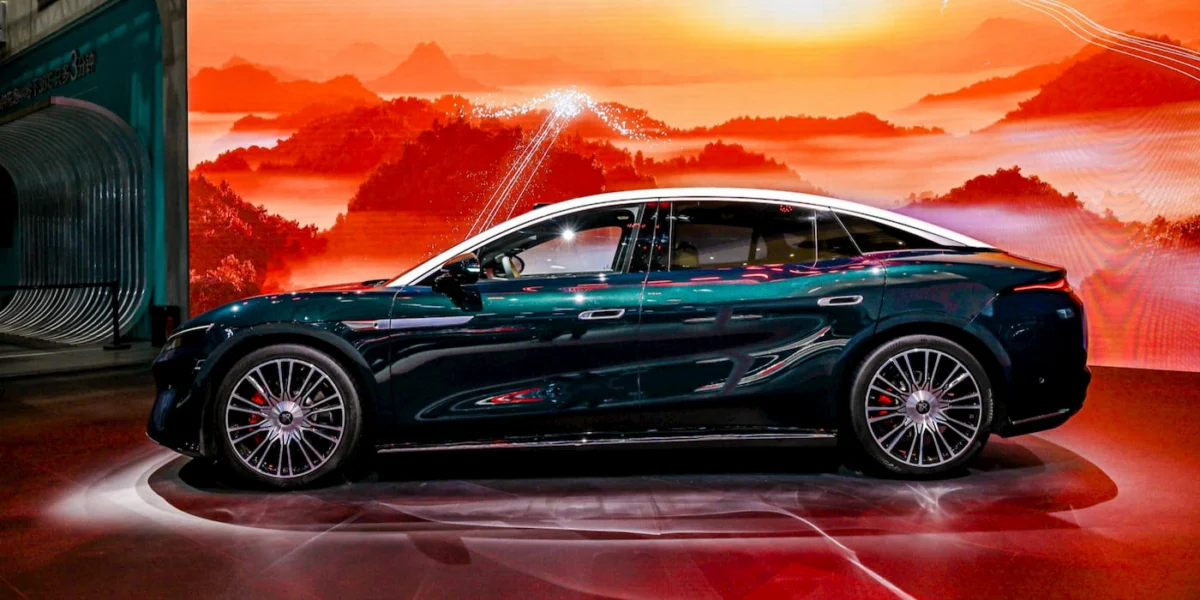
The global electric vehicle landscape is bracing for a significant shift as Chinese automotive giant BYD prepares for the official commercial launch of its newest luxury flagship sedan, the Great Han (known domestically as the Da Han). Confirmed by Lu Tian, general manager of BYD’s Dynasty series, the vehicle will make its market debut on October 13. Pre-orders for the full-size luxury sedan officially opened on August 21 during the Chengdu Auto Show, signaling an aggressive push by the automaker into the upper echelons of the D-segment market.
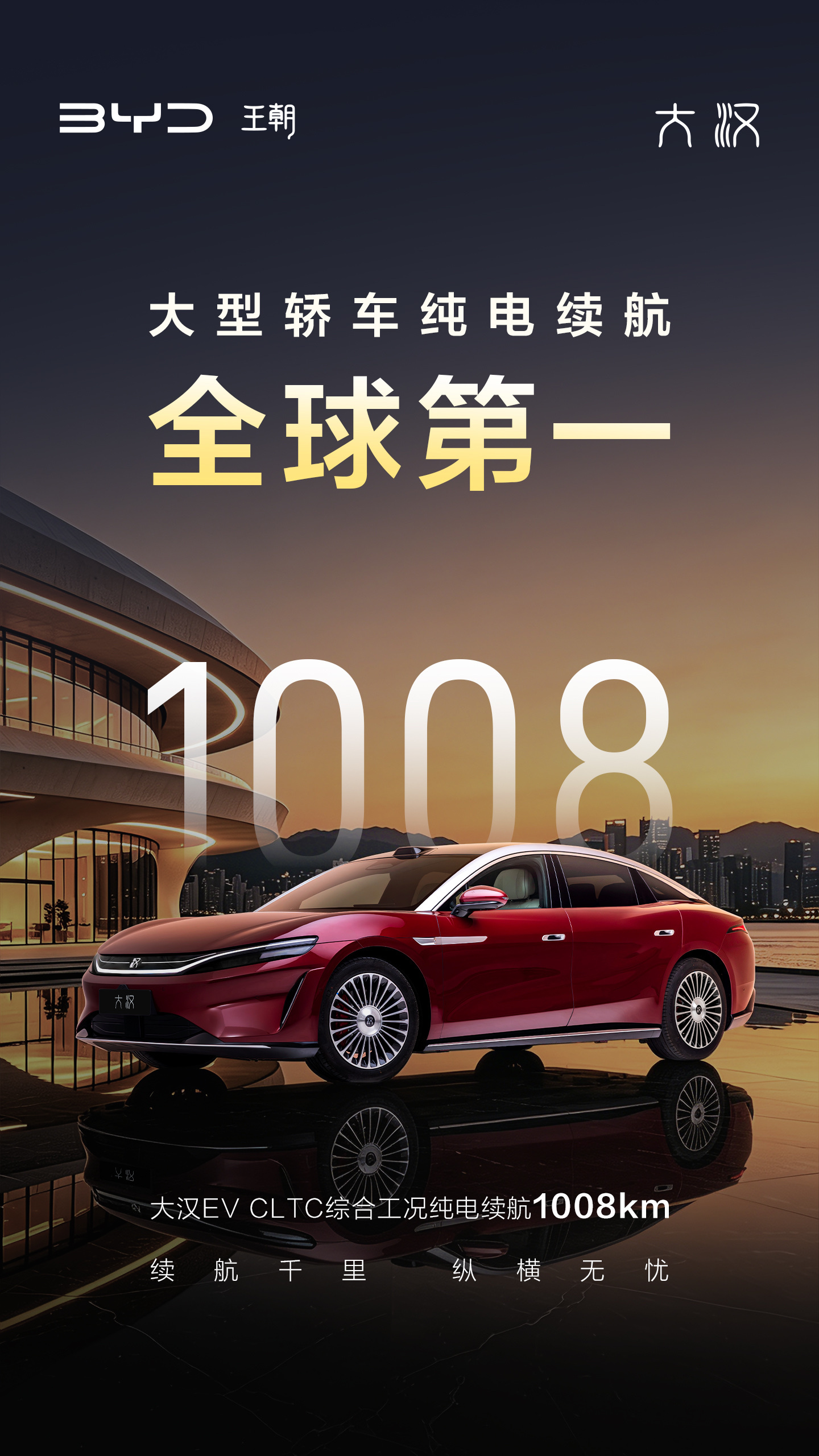
Starting at a remarkably competitive price point of 249,900 yuan (approximately $37,200 USD), the Great Han combines high-end luxury specifications with cutting-edge battery and charging infrastructure. Designed to rival and surpass some of the most established names in the international EV market, the vehicle boasts an impressive driving range of up to 1,008 kilometers (626 miles) under China’s Light Duty Vehicle Test Cycle (CLTC) on its single-motor variants. As legacy automakers and EV startups alike grapple with the dual challenges of range anxiety and cost competitiveness, BYD’s latest engineering feat underscores the accelerating pace of technological innovation originating from China’s domestic automotive sector.
Chronology and Development Path of BYD’s New Flagship
The journey of the Great Han from concept to commercial reality has been closely watched by industry analysts. The vehicle first captured public and regulatory attention in June, when it appeared in a batch of new energy vehicles approved for sale by China’s Ministry of Industry and Information Technology (MIIT). This regulatory disclosure provided the first concrete details regarding the sedan’s monumental proportions and battery specifications, sparking widespread speculation about its market positioning.
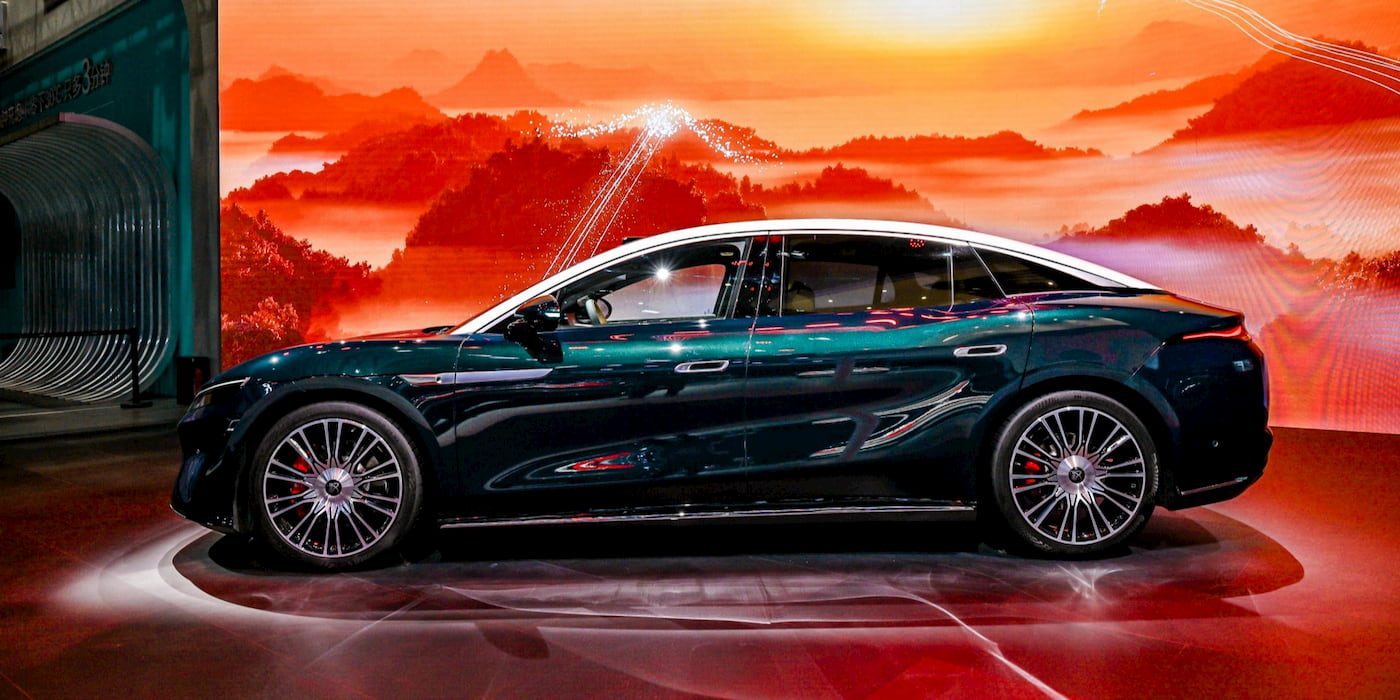
Following the MIIT leak, BYD officially unveiled the vehicle to the public at the Chengdu Auto Show on August 21, simultaneously opening the order books. The launch event scheduled for October 13 represents the final commercial milestone, at which point pricing tiers, final delivery schedules, and regional rollout plans will be fully realized. This rapid progression from regulatory approval to market launch highlights BYD’s streamlined manufacturing capabilities and its aggressive commercial strategy aimed at capturing market share in the high-end vehicle segments, traditionally dominated by German luxury marques and US-based EV pioneers.
Detailed Technical Specifications and Variant Breakdown
The Great Han is being offered in three distinct variants, catering to diverse consumer preferences for powertrain configuration and performance. The lineup is split into two rear-wheel-drive (RWD) options—the Premium and the Flagship—and one all-wheel-drive (AWD) performance variant.
The RWD Premium, priced at 249,900 yuan ($37,200 USD), and the RWD Flagship, priced at 269,900 yuan ($40,200 USD), both utilize a single electric motor capable of delivering an impressive 370 kW (496 horsepower). These variants are equipped with a massive 102.326 kWh battery pack, which facilitates the headline-grabbing CLTC driving range of 1,008 kilometers (626 miles).
For drivers prioritizing performance and traction, the AWD variant introduces an additional front electric motor, elevating the combined output to a staggering 570 kW (764 horsepower). While the AWD model utilizes the exact same 102.326 kWh battery pack as its RWD counterparts, the increased energy demand of the dual-motor setup results in a slightly reduced, yet still formidable, CLTC driving range of 880 kilometers (546 miles).
Revolutionary Charging and Battery Technology
At the core of the Great Han’s technical appeal is the integration of BYD’s proprietary Blade Battery 2.0 architecture paired with advanced Flash Charging technology. As charging speeds remain a critical bottleneck in the widespread adoption of electric vehicles, BYD’s latest thermal and electrical management systems offer a compelling solution.
The vehicle’s ultra-fast charging architecture supports capacities of up to 1,500 kW. According to manufacturer specifications, this technological leap allows the Great Han to replenish its battery from 10% to 70% in a mere five minutes. Furthermore, a complete charging cycle from 10% to 97% requires just nine minutes under optimal conditions. This performance drastically narrows the operational gap between refueling an internal combustion engine vehicle and recharging a battery-electric vehicle, potentially shifting consumer sentiment regarding long-distance travel in an EV.
Dimensions and Exterior Footprint
In terms of physical scale, the Great Han breaks the traditional boundaries of standard sedan classifications, entering territory typically reserved for ultra-luxury limousines. Measuring 5,256 mm in length, 1,999 mm in width, and 1,510 mm in height, with a generous wheelbase of 3,130 mm, the sedan is substantially larger than prominent Western counterparts such as the Tesla Model S and the Lucid Air.

In fact, its physical footprint places it in direct comparison with the long-wheelbase variants of the Mercedes-Benz S-Class. This expansive sizing not only maximizes interior cabin space and passenger comfort but also provides a commanding visual presence on the road, aligning with the aesthetic expectations of buyers in the executive sedan market.
Interior Luxury and Advanced Driver-Assistance Systems
True to its flagship status, the Great Han comes heavily equipped with standard luxury and technological amenities. Drawing parallels to BYD’s flagship Great Tang SUV, the sedan features the DiSus-A dual-chamber air suspension system, which dynamically adjusts damping to ensure a superior ride quality across varying road surfaces. Additionally, the inclusion of rear-wheel steering enhances maneuverability at low speeds while improving high-stability tracking, a crucial feature for a vehicle of this magnitude.
Inside the cabin, passengers are treated to zero-gravity front seats designed to reduce fatigue on long journeys. The ergonomic design is complemented by an array of digital comforts and state-of-the-art infotainment displays.
On the technological front, all Great Han variants are outfitted with BYD’s proprietary "God’s Eye B" smart driving system. This advanced driver-assistance system (ADAS) suite includes sophisticated capabilities such as Navigation on Autopilot (NOA), automated lane changes, and advanced remote parking functions, positioning the vehicle at the forefront of semi-autonomous driving technology.

Strategic Implications and Market Analysis
The introduction of the Great Han is not merely the launch of a new model; it represents a calculated strategic evolution for BYD. Historically recognized for mass-market affordability and volume-driven sales—particularly within the compact and mid-size vehicle segments—BYD has increasingly turned its focus toward higher-end, high-margin market categories.
This upward trajectory is evident in the rollout of the Great Tang SUV, the expansion of the luxury Denza brand, and now, the introduction of the Dynasty family’s premier D-segment sedan. By offering uncompromising specifications—such as a 1,000+ km range, ultra-fast charging, and luxury-tier suspension—at a starting price point that undercuts Western competitors by tens of thousands of dollars, BYD is challenging the global automotive hierarchy.
Industry analysts note that while the Great Han will initially target the domestic Chinese market, vehicles boasting these specifications inevitably exert competitive pressure on global export markets. As international markets grapple with trade tariffs, regulatory approvals, and the shifting dynamics of consumer demand, BYD’s rapid iteration of battery and chassis technology demonstrates that domestic Chinese manufacturers are setting new benchmarks for what consumers can expect from a flagship electric vehicle.
With the official launch event locked in for October 13, all eyes will be on BYD to see how these impressive paper specifications translate into real-world performance, consumer adoption, and potential international availability.