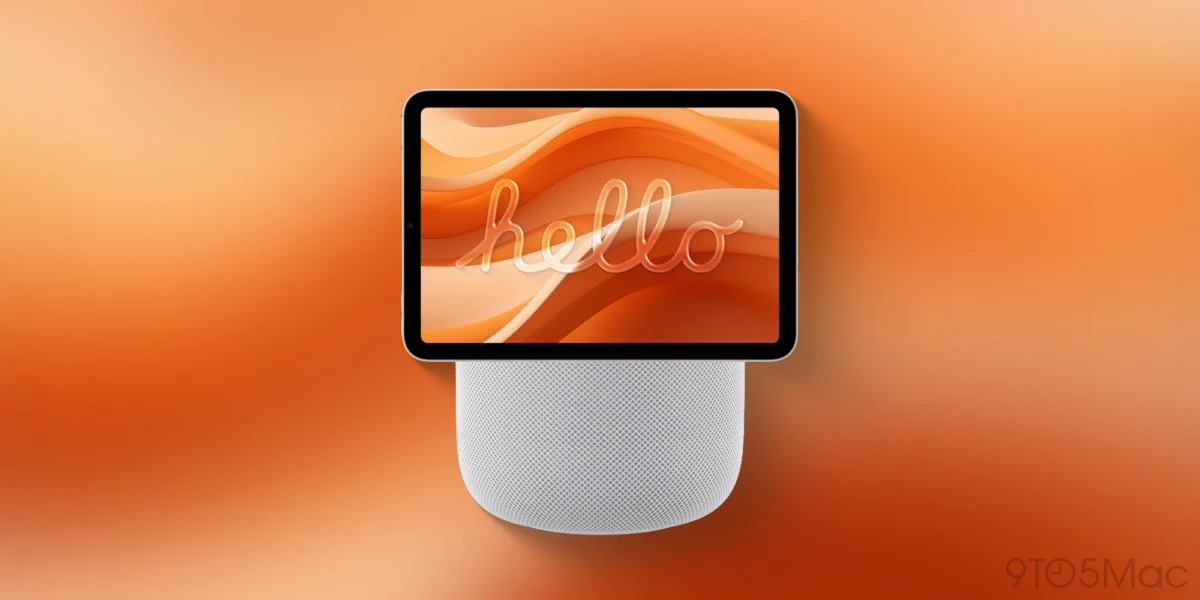
The strategy for Apple’s next major hardware venture has shifted once again, as the company confirms that its foray into the dedicated smart home display market will be contingent upon the maturation of its next-generation AI infrastructure. While the hardware itself is reportedly finalized and ready for mass production, Apple executives have opted to hold the device back, aligning its debut with the anticipated launch of iOS 27 in the fall.
A Strategic Pivot Toward AI-Centric Hardware
For years, the smart home market has been dominated by devices like the Amazon Echo Show and various Google Nest Hub iterations. Apple has largely remained on the periphery of this specific form factor, focusing instead on the HomePod lineup and the iPad. However, internal reports from Bloomberg’s Mark Gurman and corroborating insights from industry leakers indicate that Apple is preparing a device that functions as a "central AI hub" for the domestic environment.
The hardware, which insiders have described as resembling a square iPad, is designed with versatility in mind. It is expected to offer two primary installation methods: a half-domed speaker base for tabletop use or a specialized wall-mounting system. Leaker Kosutami recently suggested that the device may incorporate a "MagSafe-like" snap-to-wall feature, a design choice that underscores Apple’s commitment to seamless home integration and aesthetic minimalism.
The delay, while frustrating for investors and enthusiasts, is rooted in the current state of Apple’s software ecosystem. The device is intended to be the premier showcase for a revitalized Siri, which is currently undergoing a massive overhaul powered by Google’s Gemini AI models.
Chronology of the Development Cycle
The path to this smart home display has been long and iterative. Apple has been experimenting with various home-based displays for over half a decade, oscillating between repurposing existing iPad hardware and building a ground-up, stationary display device.

- Early Development Phase (2021–2023): Apple explored various prototypes, ranging from robotic arm-mounted displays to simpler wall-mounted units. During this period, the project was primarily an internal experimental effort.
- The Pivot to AI (2024): With the surge in generative AI, Apple shifted the project’s focus to become an "AI hub." The decision was made to integrate the hardware with a future iteration of Siri capable of complex reasoning and context-aware interactions.
- The Partnership Announcement (January 2026): Apple officially confirmed a strategic partnership with Google, signaling that Gemini models would provide the underlying intelligence for Apple Intelligence and the next-generation Siri.
- Initial Launch Targets (Early 2026): Reports initially suggested an early 2026 release. However, the complexity of migrating Siri to a cloud-and-on-device hybrid model utilizing Gemini led to successive delays.
- Current Outlook (March 2026): With the announcement of a September window, the company is effectively aligning the hardware launch with the typical release cadence of its major operating system updates, specifically iOS 27.
Technical Specifications and User Experience
The proposed smart home display is set to differentiate itself from competitors through deep personalization. Central to the user experience is an advanced facial recognition system. Unlike standard smart displays that provide generic interfaces, Apple’s unit aims to identify the individual standing before it. Once a user is recognized, the screen will dynamically update to reflect their personal data—calendar events, active reminders, curated news feeds, and music preferences.
The user interface (UI) is reportedly modeled after the watchOS design language. It will feature a grid of circular app icons, allowing users to interact with home automation controls, communications, and media apps through a familiar, touch-first environment. This design language suggests that Apple expects the device to be used both as a passive information hub and an active control center for the broader HomeKit ecosystem.
The Role of Apple Intelligence and Gemini
The delay highlights the critical dependency Apple now has on its AI partners. The "new Siri" is not merely a voice assistant; it is expected to be a comprehensive agent capable of performing cross-app actions, managing complex scheduling, and maintaining long-term memory of user preferences.
Apple’s deal with Google is a testament to the scale of the challenge. While Apple has made significant strides in on-device machine learning, the large language model (LLM) requirements for a fully sentient-feeling assistant necessitate the massive compute power provided by the Gemini infrastructure. The integration is expected to roll out in stages, with preliminary enhancements arriving in iOS 26.5 before the full feature set debuts with the iOS 27 rollout in September.
Market Implications and Competitive Analysis
The smart home display market is currently defined by utility and price sensitivity. Amazon’s Echo Show and Google’s Nest Hub have established a foothold by offering affordable, functional interfaces for smart home control. However, these devices have faced criticism regarding privacy and the lack of a cohesive, high-end ecosystem experience.
Apple intends to occupy the premium segment of this market. By focusing on privacy-centric facial recognition and tight integration with the broader Apple ecosystem—including seamless handoffs between iPhones, MacBooks, and the new display—Apple is betting that consumers will pay a premium for a device that feels like a natural extension of their personal digital workspace.

Financial analysts suggest that this device could act as a "stickiness" factor, keeping users locked into the Apple ecosystem by centralizing their home management. If the device successfully bridges the gap between a tablet and a smart speaker, it could significantly increase the average revenue per user (ARPU) within the home services sector.
Industry Challenges and Future Outlook
Despite the excitement, the road ahead is not without obstacles. The reliance on Google’s Gemini for the core AI experience raises questions regarding data privacy and the long-term independence of Apple’s software roadmap. Furthermore, the "smart home" category has seen cooling demand in recent quarters as consumers become more wary of "always-on" microphones and cameras in their living spaces.
To succeed, Apple must prove that its facial recognition system is not only secure—utilizing the company’s Secure Enclave architecture—but also that it offers a tangible improvement in quality of life that justifies the hardware cost.
As we approach the WWDC keynote in June, more details regarding the specific software capabilities of iOS 27 will likely emerge. Apple will need to provide a compelling narrative during that event to build momentum for the September hardware launch. For now, the tech giant remains in a holding pattern, refining the software that will serve as the heartbeat of its most significant home hardware project in years.
By choosing to wait until September, Apple is signaling a shift away from the "ship it now, fix it later" culture that has permeated parts of the tech industry. Instead, it is prioritizing a cohesive experience where the hardware and software are perfectly synchronized at launch. If successful, this display could redefine the smart home, moving it away from simple voice-activated speakers toward a sophisticated, intelligent control hub that recognizes its owner the moment they walk into the room.