The release of Home Assistant 2026.9 marks a significant milestone for the open-source home automation ecosystem, introducing architectural modernization for industrial communication protocols, major updates to cloud-backed voice processing engines, and an expanded suite of accessibility and diagnostic tools. Developed collaboratively by the Open Home Foundation, Nabu Casa, and a global community of contributors, this September update focuses heavily on closing feature gaps between proprietary commercial hubs and decentralized local automation platforms.
Modbus Modernization and Industrial Protocol Integration
Historically, integrating legacy or commercial hardware—such as solar inverters, geothermal heat pumps, and high-capacity electrical meters—via the Modbus protocol required cumbersome, manual YAML configurations. Users were forced to map hardware registers manually, creating a high barrier to entry that effectively restricted the broader adoption of complex energy management systems.
Home Assistant 2026.9 introduces a modernized framework for Modbus through the integration of the fully typed Python library tmodbus and a new standalone modbus-connection infrastructure layer. Instead of competing for individual serial or TCP sessions, multiple compliant integrations can now share a single connection pipeline.
Initial implementations of this architecture include native support for Fronius solar inverters (via Modbus TCP SunSpec profiles), Sofar Inverter Modbus, and Flexit ventilation units. By abstracting register mapping away from the end user, the platform enables native UI-based device discovery, allowing operators to configure complex energy grids with the same simplicity as standard consumer-grade smart plugs. Developers anticipate that this shift will accelerate the integration of heavy residential infrastructure into centralized home energy management systems.
Cloud Voice Processing Upgrades and Localization Enhancements
Voice control has remained a central pillar of Home Assistant’s roadmap since the introduction of the Voice Preview Edition. In version 2026.9, Nabu Casa has expanded its collaboration with speech recognition provider Soniox to roll out an advanced cloud-based speech-to-text (STT) engine available via the system Labs settings.
Private voice assistants frequently struggle in multi-lingual households, noisy domestic environments, or when processing regional dialects and non-native accents. The newly integrated STT model specifically targets these acoustic vulnerabilities while maintaining strict adherence to user privacy protocols, ensuring zero audio logging, storage, or third-party machine learning model training.
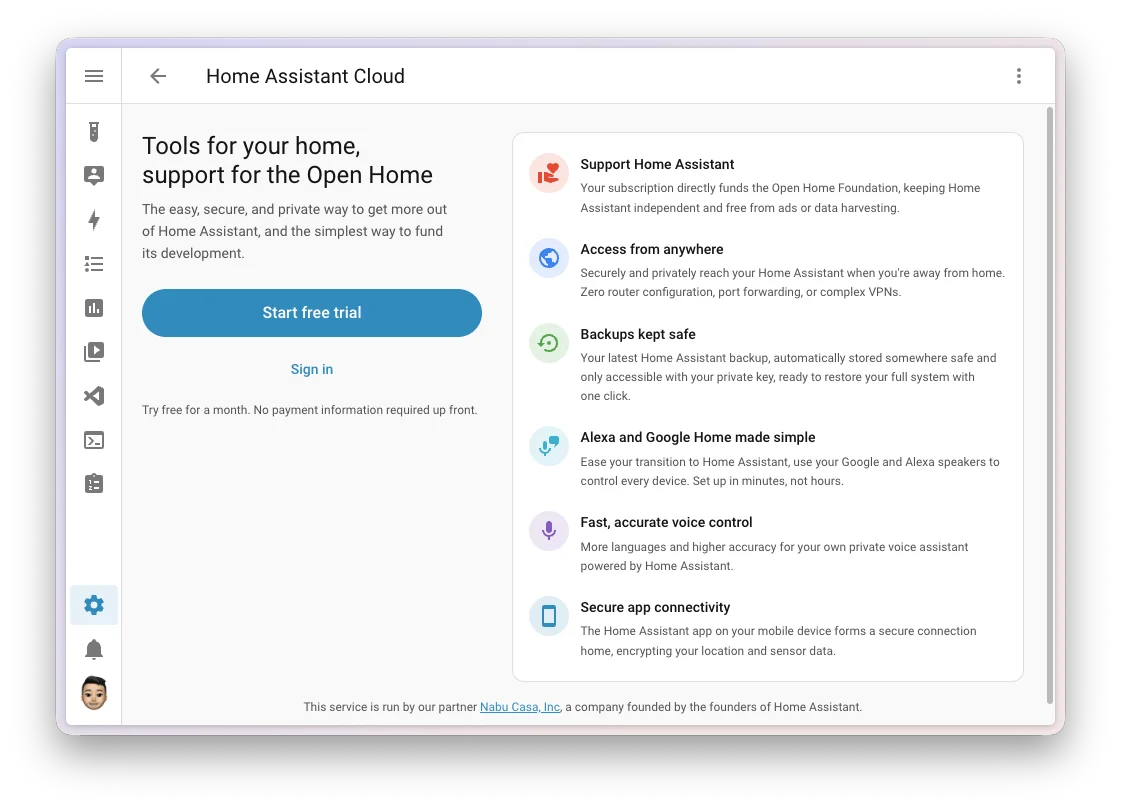
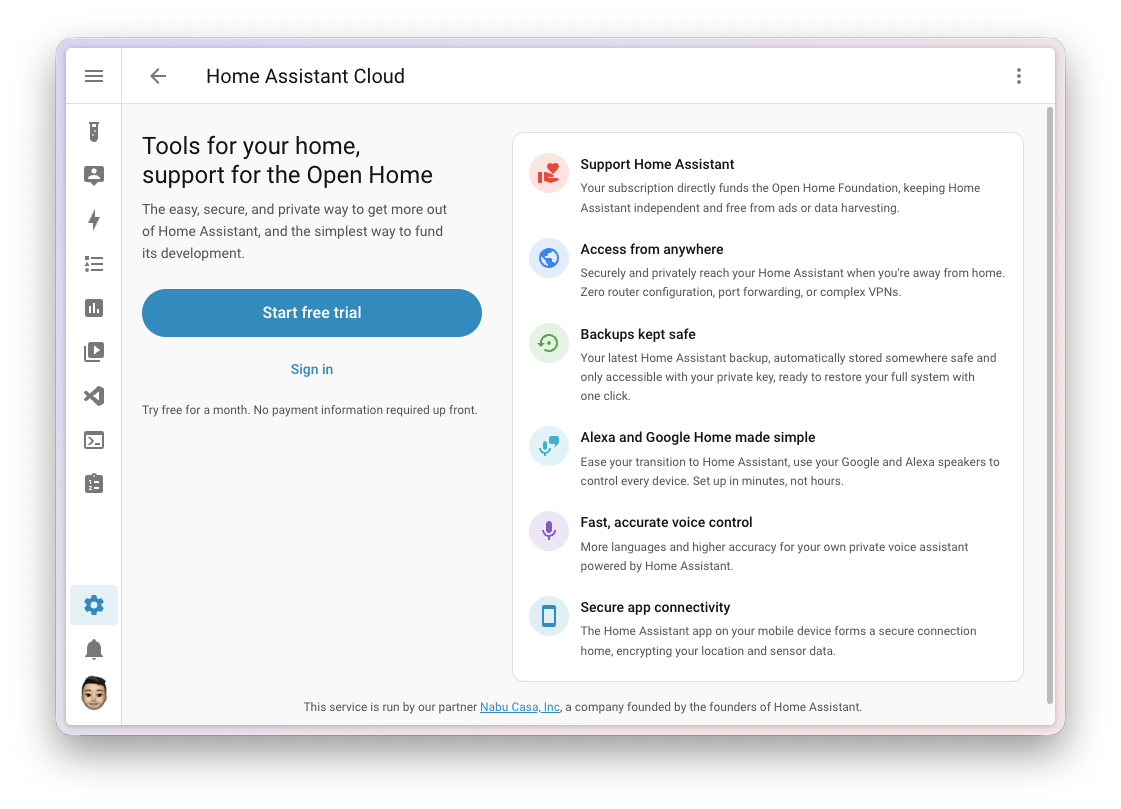
To streamline onboarding, the Home Assistant Cloud registration flow has been redesigned. New subscribers are greeted with a transparent feature overview prior to initiating a 31-day trial, and email verification now automatically authenticates the user session, facilitating immediate remote access setup, encrypted off-site cloud backups, and voice service initialization.
Security Dashboard Enhancements and Network Visibility
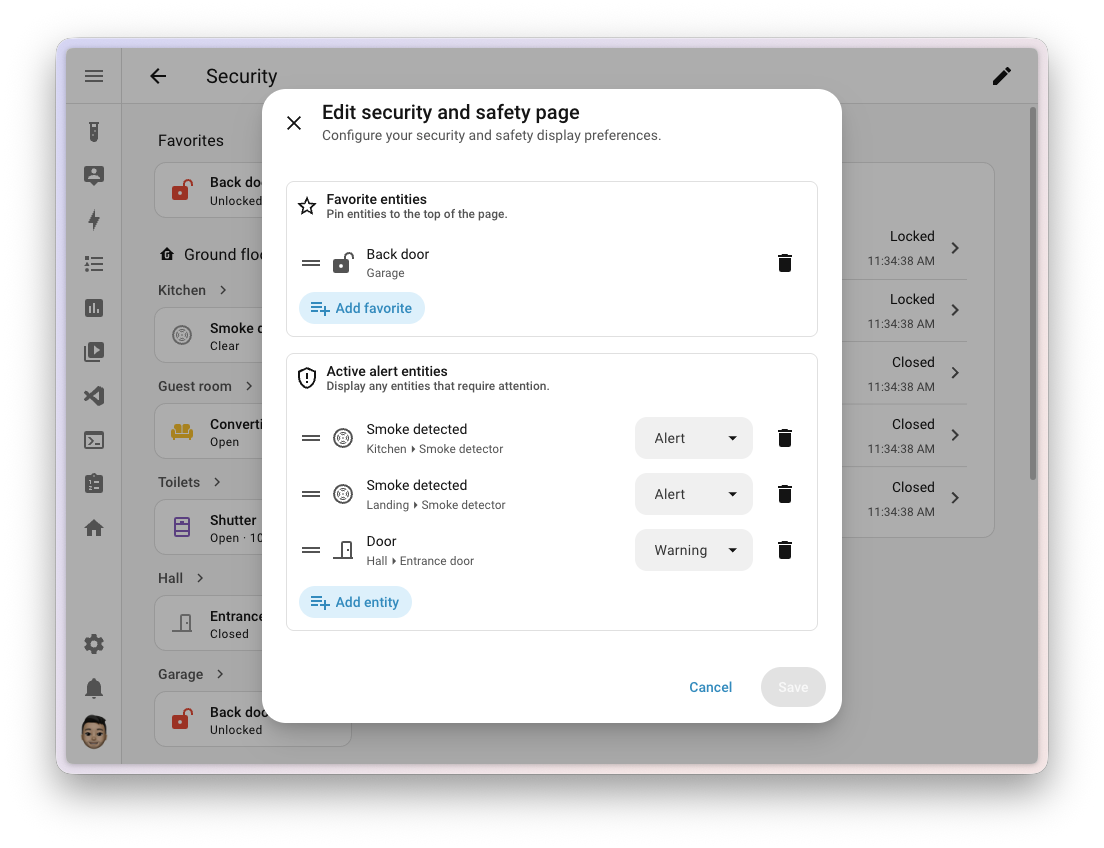
Security monitoring has received substantial upgrades through community-driven design initiatives originating from Open Home Foundation roadmap proposals. The native Security dashboard now incorporates a dedicated "Active alerts" section that remains hidden during normal operating conditions but dynamically scales to display critical domestic warnings—such as unlatched perimeter entries or active smoke detection—complete with severity-based visual cues and pulsing animations. Alongside this, a new "Favorites" panel allows users to pin frequently audited entities to the top of the interface.
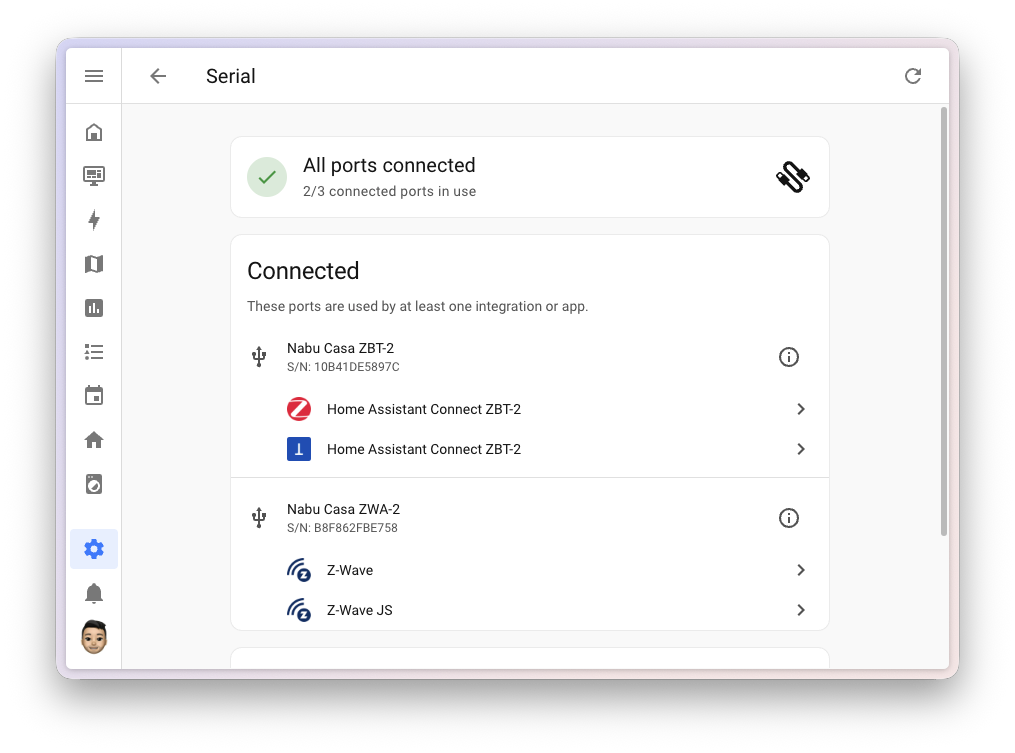
Network observability has similarly expanded across multiple connection layers. Following previous improvements to infrared and radio frequency management, version 2026.9 introduces a centralized "Serial" panel under the system connectivity settings. This interface categorizes physical USB dongles and serial ports into active, connected-idle, and missing device states, preventing orphaned configurations from disrupting automated routines.
Concurrently, the MQTT integration has been decoupled from standard options menus, receiving a dedicated settings page within the connectivity suite. The new interface provides real-time broker health metrics, direct diagnostic packet publishing tools, and formatted payload inspection viewers. Furthermore, the platform’s storage management tools now monitor network-attached storage (NAS) shares in real time, issuing color-coded visual warnings (amber at 85% utilization, red at 95%) to prevent unexpected backup failures.
Accessibility Breakthroughs and Data Visualization
Accessibility remains a core compliance metric for the Open Home Foundation. Home Assistant 2026.9 addresses long-standing usability limitations in data visualization by introducing full keyboard and screen-reader accessibility to historical charts and energy dashboards.
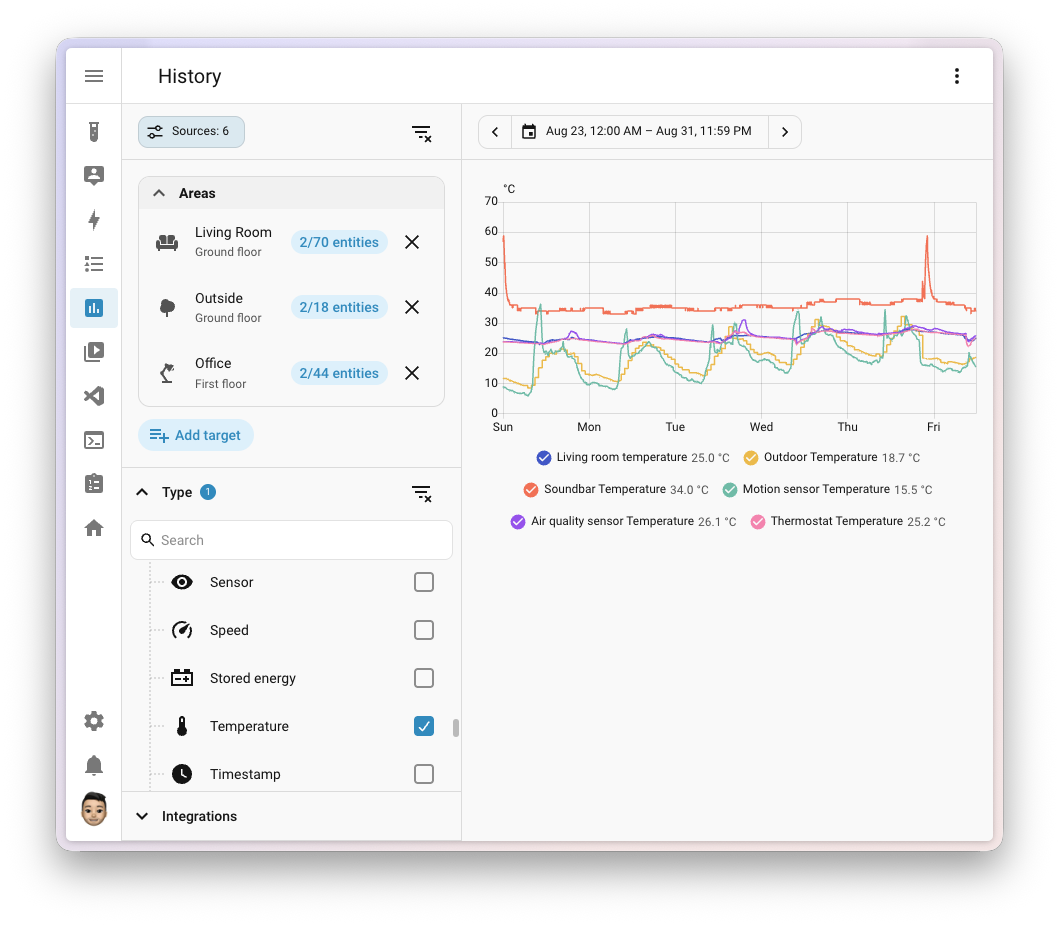
Historically, complex graphical charts were rendered as static images, rendering data points entirely inaccessible to vision-impaired operators utilizing assistive technologies. The updated charting engine now treats individual data nodes as distinct interactive focus stops. Users can navigate chronologically via standard keyboard arrow keys, prompting screen readers to announce precise timestamps and numerical values.
Additionally, the system introduces auditory data rendering: as a user navigates across a timeline, the interface generates a dynamic tonal melody that rises and falls in pitch to reflect data trends. This feature operates automatically across standard line and bar graphs, providing both auditory feedback for screen-reader users and an intuitive macro-level overview of historical system telemetry for all operators.
Expanded Automation Triggers and Ecosystem Reach
Automation logic centered around environmental lighting has been finalized with the integration of four new conditions and eight triggers within the native Sun integration. Building upon solar elevation adjustments introduced in previous releases, version 2026.9 adds dedicated native support for golden hour, blue hour, midnight sun, and polar night parameters. These additions enable precise automation control for automated shading systems and adaptive lighting arrays based on localized meteorological twilight and high-latitude seasonal extremes.
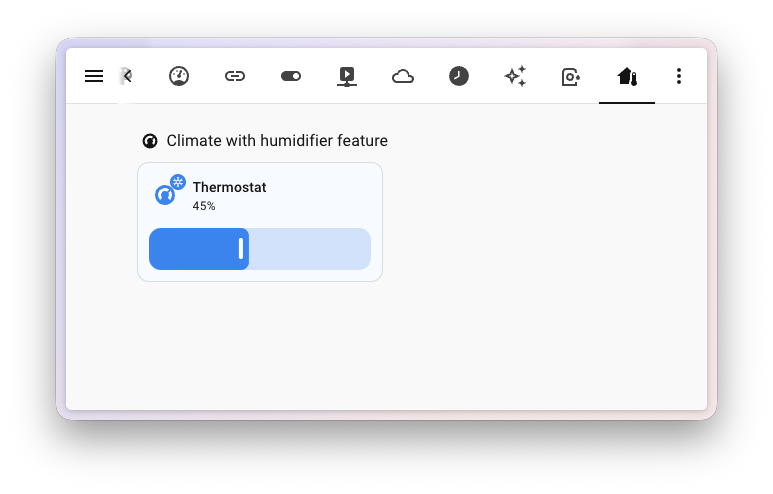
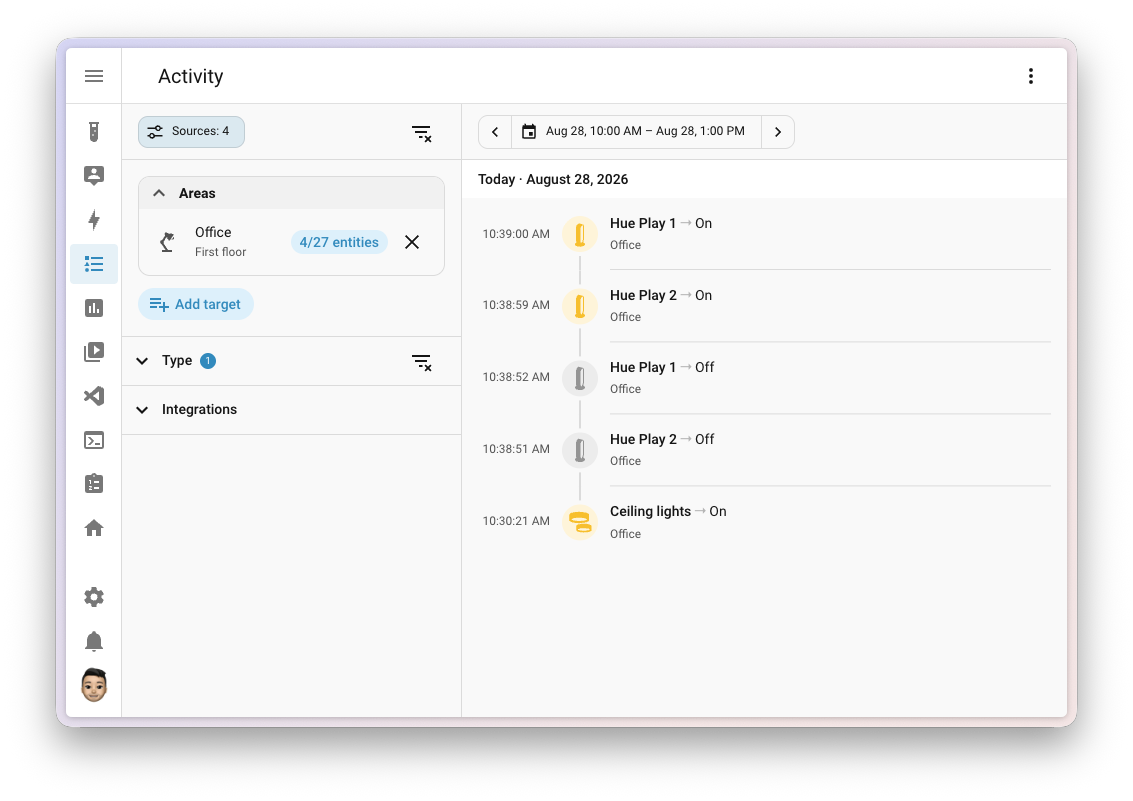
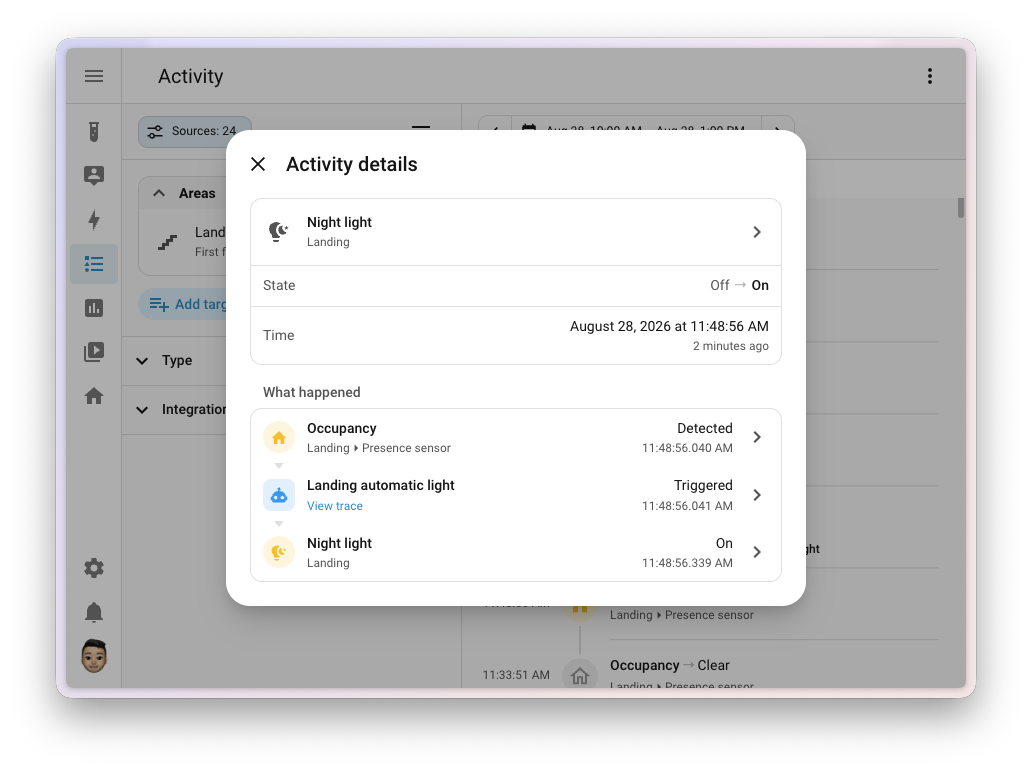
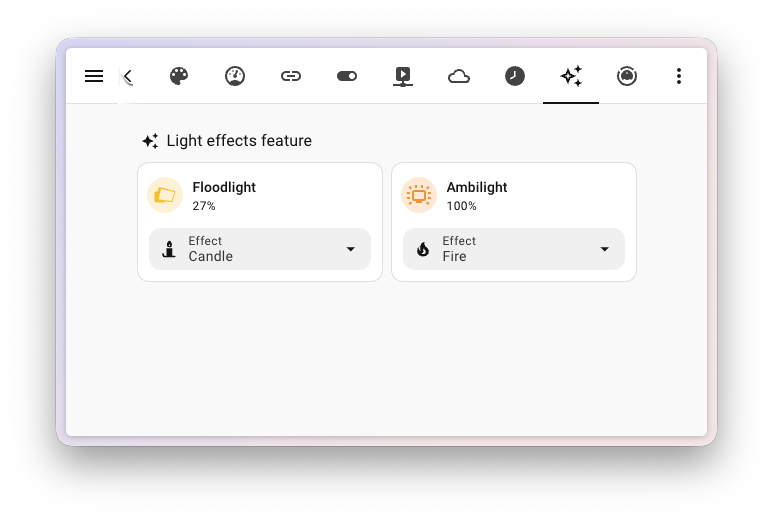
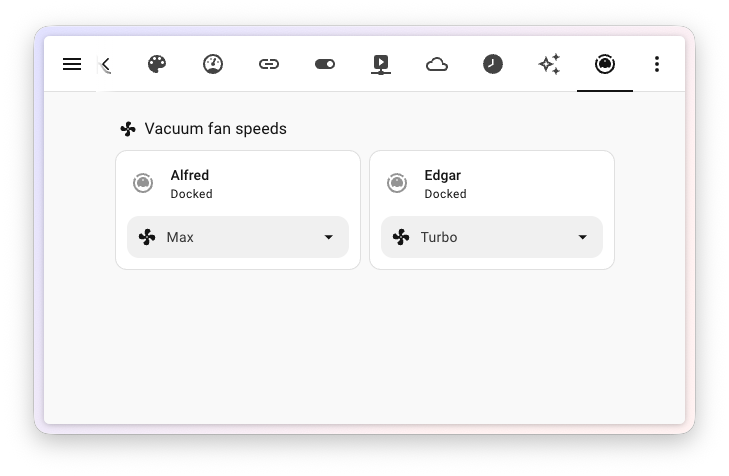
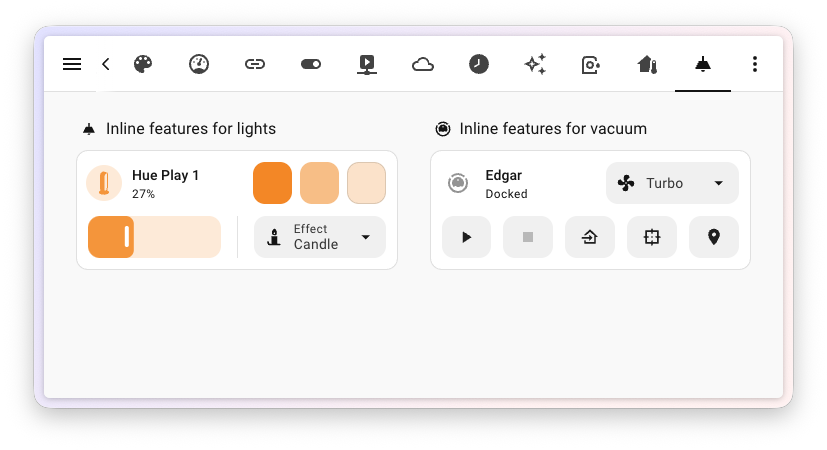
The release also introduces 13 new native integrations, expanded tile card controls for vacuum cleaner fan speeds and lighting animation effects, and a comprehensive "Sources" filter panel for historical data logs. Crucially, the system activity log has been upgraded to provide diagnostic traceback chains, allowing users to inspect the exact causal lineage of an automation event—from the initiating trigger entity through intermediate scripts down to the resulting state change—complete with millisecond-accurate timestamps.
Industry Implications and Community Outreach
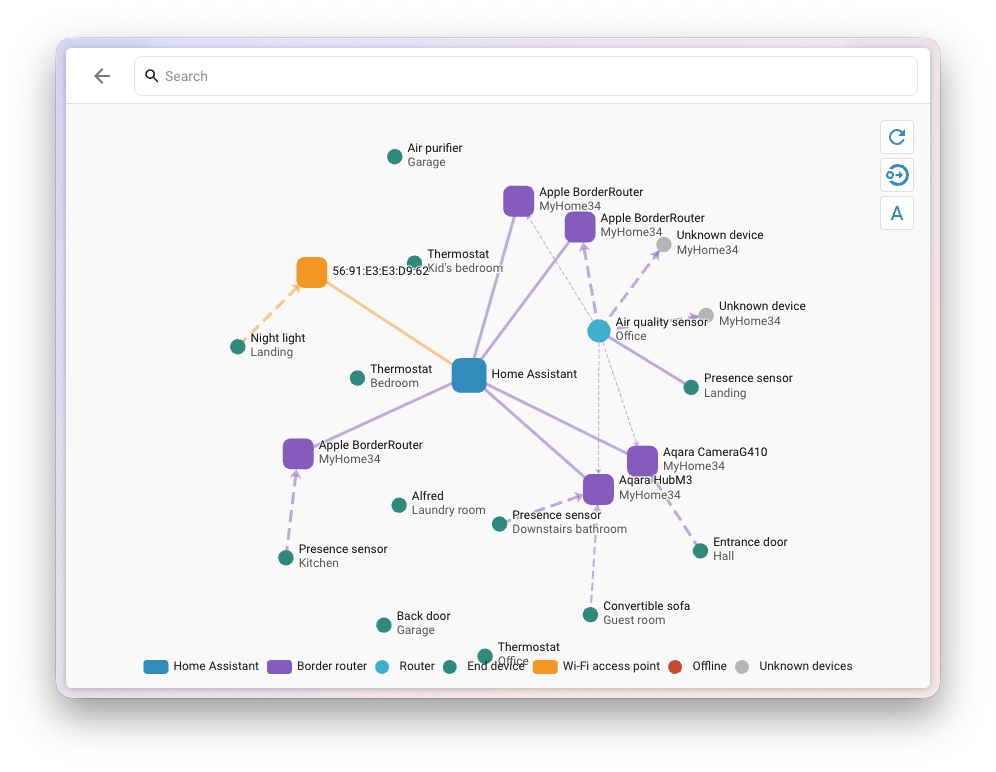
As smart home ecosystems face increasing fragmentation and commercial consolidation around closed-ecosystem standards like Matter, Home Assistant 2026.9 underscores the viability of open-source, locally-controlled infrastructure. By bridging industrial protocols like Modbus with consumer standards like Thread and Matter—which now features a native graphical network topology mapper within the UI—the platform continues to position itself as a unified supervisory layer for heterogeneous hardware environments.
Simultaneously, members of the Open Home Foundation are showcasing these developments at IFA Berlin, highlighting the project’s growing footprint in commercial and enterprise-adjacent smart building deployments.
Users upgrading to version 2026.9 should review documented backward-incompatible changes, particularly regarding updated administrative access restrictions for update installation entities, stricter user-permission requirements for Z-Wave lock management commands, and schema adjustments within the Flexit and KNX integrations. Full installation guides, community support forums, and comprehensive developer changelogs are available through the official Home Assistant documentation portals.