The mundane familiarity of a stretch of Highway 69 outside Muskogee, Oklahoma, often lulls drivers into a state of passive observation. It’s a landscape where the monotonous rhythm of the road can render even striking visual elements as mere background noise. Yet, for photographer [Photographer’s Name – inferred from context as the author], a particular day on this familiar route yielded a profound shift in perception. What initially appeared as a simple, albeit dilapidated, abandoned structure was reinterpreted through a deliberate artistic lens, transforming a forgotten ruin into a potent narrative. This transformation, the author argues, highlights a fundamental principle for contemporary photographers: the power of intent over technical prowess.
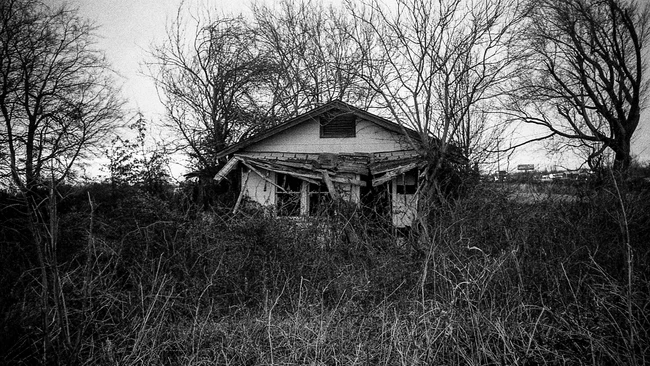
The catalyst for this reevaluation was a collapsing house, partially consumed by encroaching vegetation. It wasn’t a picturesque decay; rather, it was a visceral representation of structural failure. The roofline was fractured, the porch seemed to sag with an almost organic weariness, and the windows gaped like vacant, dark eyes. While many would dismiss such a sight as an unappealing eyesore and continue their journey, this particular structure elicited a different response. The decision to stop, to engage with the scene not as a passive observer but as an active interpreter, marked the crucial divergence between documenting a ruin and crafting a meaningful photographic series.
The Era of Technical Abundance and the Quest for Meaning
In the current photographic landscape, technical perfection is increasingly accessible. Advancements in camera technology provide unparalleled resolution, dynamic range, image stabilization, and sophisticated autofocus systems. However, the author posits that these technical capabilities, while impressive, do not inherently imbue photographs with emotional resonance or narrative depth. The photographers who will distinguish themselves in the coming years, particularly as we approach 2026, will not be those who merely produce technically flawless images. Instead, their impact will stem from their ability to evoke emotion and provoke thought about subjects that might otherwise be overlooked. The "Monster House" series, as it came to be known, serves as a testament to this philosophy, emphasizing that the true upgrade lies not in camera hardware but in the photographer’s capacity to imbue the ordinary with narrative significance. The underlying truth is that while ruins are abundant, compelling narratives are a rarer commodity.
The Psychology of Perception: Why We See Faces in the Unlikeliest Places
A fundamental aspect of human cognition, deeply ingrained in our survival instincts, is the tendency to perceive faces and animate features in inanimate objects. This phenomenon, known as pareidolia, is evident in our interpretations of clouds, electrical outlets, and even the front grilles of automobiles. When applied to architecture, as in the case of the "Monster House," two windows and a door can readily be perceived as eyes and a mouth. This innate human wiring is not merely an artistic observation but a fundamental psychological mechanism.
By labeling the structure "Monster House," the photographer provides viewers with a conceptual anchor, a metaphor that facilitates engagement with the image. This designation moves beyond simple description, offering a gateway into the photograph and encouraging active participation from the viewer. It prompts the fundamental question: "What is this thing?" thereby inviting a deeper inquiry into the object’s perceived character and history.
Anthropomorphism: The Photographer’s Unconscious Tool
Anthropomorphism, the attribution of human characteristics or behaviors to a non-human entity, is a powerful tool in documentary photography. Far from being a superficial gimmick, it serves as a potent means of connecting with an audience. A ruin, for instance, can be interpreted not just as a decaying structure but as:
- A Sentinel: Standing guard against the passage of time, bearing witness to forgotten events.
- A Survivor: Having endured storms, neglect, and the relentless march of change, displaying resilience.
- A Ghost: Haunting the landscape with echoes of past lives and lost inhabitants.
- A Warning: A stark reminder of decay, impermanence, and the consequences of abandonment.
The deliberate choice of such a role transforms the photographic process. Technical decisions, from lens selection to lighting, cease to be arbitrary and become deliberate story-telling choices. The photographer is no longer merely capturing a building but is casting a character, imbuing the subject with a personality and a purpose within the visual narrative.
The Photographer’s Plateau: Beyond Technical Limitations
Many photographers reach a point in their careers, often after mastering the technical aspects of their craft, where they realize that limitations in access, equipment, or stylistic presets are not the primary obstacles to compelling work. The true challenge lies in shifting their perception of the world from a collection of static objects to a dynamic cast of characters.
Abandoned structures, or ruins, serve as exceptional training grounds for this perceptual shift. They are inherently honest, devoid of pretense, and incapable of flattering the photographer. An attempt to simply "collect" an image of a ruin, without a deeper interpretive intent, will likely result in a technically proficient but narratively vacant photograph. The ruin possesses an inherent richness of texture, atmosphere, and history that transcends superficial documentation.
However, when a photographer approaches a ruin with a clear intent to interpret, these structures begin to reveal their latent personalities. The author proposes a simple, actionable framework for photographers to cultivate this interpretive approach:
- What is the mood? This question extends beyond meteorological conditions or exposure settings. It delves into the emotional essence of the scene. Is it hostile, lonely, embarrassed, defensive, or challenging?
- What is the role? Assigning a role – Monster, Ghost, Skeleton, Survivor, Warning Sign – is crucial. Without this designation, the photographer defaults to the generic "interesting building," a label that stifles narrative development.
- What is the point of view? This question addresses the photographer’s position within the scene. Are they a detached witness, a hesitant trespasser, a child experiencing fear, or an adult confronting the indifference of the past?
The point-of-view question is particularly critical, as it shifts camera choices from purely technical considerations to psychological ones. By defining one’s role, the photographer can construct a narrative without resorting to staged elements, effectively translating the existing story within the scene.
The Technical Foundation: Supporting the Narrative Structure
The author emphasizes that technical aspects of photography, while not the sole determinant of a powerful image, are nonetheless essential. They serve as the structural framework that supports the narrative. The approach to film photography, often shrouded in esoteric jargon, is presented here in a straightforward manner: choose tools that align with the subject matter.
The Argus C-44: A Deliberate Choice for a Gritty Narrative
The selection of the Argus C-44 camera for the "Monster House" series was a conscious decision. This camera, described as lacking sleekness and overtly striving for impressiveness, possesses a mechanical ruggedness that complements subjects that have endured significant wear and tear. This tactile quality is more significant than often acknowledged, fostering a slower, more deliberate approach to photography. In environments where mood plays a substantial role, such as the abandoned house, this enforced deliberation becomes paramount.
Furthermore, the 35mm perspective offered by the Argus C-44 strikes a balance. It is wide enough to encompass the surrounding environment – the brush, trees, and winter sky – without diminishing the house’s presence as the central subject. This perspective allows the house to remain the undeniable protagonist of the visual story.
Leveraging Digital as a Precursor to Film
For photographers working with film, the author suggests a pragmatic approach that incorporates digital technology as a preparatory tool. The Canon EOS 6D, used in a "sketch" mindset, allows for rapid testing of angles, compositions, and the most effective ways to convey the "monster" persona. This digital sketching phase helps identify where the house appears most imposing, where its roofline creates the most dramatic impact, and how the surrounding brush functions as a visual barrier. Once these narrative elements are solidified digitally, the photographer can then transition to film to execute the final, intentional captures. This method is presented not as a compromise but as a professional strategy for optimizing the storytelling process.
Pushing Ilford HP5 Plus: Cultivating the "Monster House" Aesthetic
The distinctive aesthetic of the "Monster House" series is not the result of superficial filters but is intrinsically linked to the photographic process. Pushing Ilford HP5 Plus film to ISO 3200 achieves several effects that powerfully align with the "monster" metaphor:
- Shadows as Voids: Pushed film transforms deep shadows into impenetrable voids. Window openings cease to be mere dark spaces and become portals to nothingness, staring back at the viewer and resisting easy interpretation.
- Elevated Grain Texture: At higher sensitivities, film grain becomes a palpable texture rather than a distracting noise. This enhanced grain lends a visceral, almost skin-like quality to the ruin, suggesting a rough, present existence rather than a smooth, inert decay.
- Silhouetted Rooflines: Increased contrast, a byproduct of pushing film, renders the roofline as a stark silhouette against a pale sky, evoking the imagery of a horror movie poster. The architecture itself becomes a shape imbued with intent.
This deliberate manipulation of film characteristics, often described as "film having character," is presented as a conscious application of that character to serve a specific narrative purpose. However, the author cautions that pushing film so aggressively demands respect for its limitations. It is a process that can punish overexposure and underdevelopment, sometimes resulting in unpredictable outcomes. The success of the "Monster House" series, in this regard, lies in the inherent resilience of the subject.
An abandoned structure, already bearing the marks of struggle against the elements and time, can withstand the "brutality" of pushed film. The author notes that such ruins possess:
- Built-in Texture: The decaying wood, peeling paint, and crumbling brick provide a foundation for the aggressive grain.
- Strong Architectural Lines: The skeletal structure of the house offers clear forms that can withstand contrast enhancements.
- Dramatic Shadows: The inherent darkness of vacant interiors and shadowed eaves readily absorb the increased contrast.
This alignment of subject and process demonstrates a crucial lesson for developing a personal photographic style: choose subjects that can harmoniously integrate with your chosen techniques. Attempting to apply aggressively pushed film to a delicate portrait or a serene landscape would likely result in a jarring and inappropriate aesthetic. In contrast, an abandoned house already engaged in a visual battle with its environment can amplify that struggle through a similarly challenging photographic process.
The principle articulated is straightforward: if the narrative is uncomfortable, the photographic process can reflect that discomfort. Conversely, a gentle narrative calls for a less aggressive, more subtle approach. For novice photographers, the author reassures that this is not about memorizing complex formulas but about understanding the emotional direction of the image. The core concept is to select subjects that naturally resonate with a particular aesthetic rather than forcing an aesthetic onto disparate subjects.
Visual Dialogue: The Unspoken Conversation
Elevating photographic work, according to the author, involves shifting focus from technical sharpness to the narrative communication of the image. This "visual dialogue" is the implicit exchange between the photographer and the viewer. In the "Monster House" series, this dialogue unfolds as follows:
- Photographer’s Statement: "This house is not inert."
- Viewer’s Response: "Why does it feel like it’s observing me?"
- Photographer’s Explanation: "Because I photographed it as a portrait, not as a mere property listing."
Framing the Narrative: Camera Height and Foreground Elements
The author identifies specific compositional techniques that contribute to the "monster" narrative:
- Low Camera Height ("The Loom"): Positioning the camera at a low angle imparts a sense of dominance to the subject. This cinematic technique, where the viewer looks up at the structure, makes it appear larger and more imposing, thereby rendering the viewer vulnerable. This enhances the metaphorical power of a seemingly inanimate object wielding undue influence.
- Foreground Brushwork: The encroaching vegetation is not simply a visual distraction but a deliberate narrative element. It creates tension, suggesting:
- Invasion: The natural world reclaiming man-made structures.
- Seclusion: A barrier that hides the subject, intensifying its mystery.
- Trespassing: A visual indication that the viewer is entering forbidden territory.
While foreground clutter can sometimes be a photographic misstep, in this context, it is intentionally employed as a barrier, reinforcing the narrative of intrusion and the illicit nature of the viewer’s gaze.
Archetypes in Rural Ruins: Expanding the Narrative Palette
Beyond the "monster" archetype, the author proposes others that can be effectively employed in the context of rural ruins, enriching the potential for storytelling over an extended period:
- The Ghost (Nostalgia, Absence): This interpretation focuses on the melancholic echoes of past lives. Shooting with an eye-level perspective, softer contrast, and highlighting details like tattered curtains or forgotten furniture conveys a sense of lingering presence. The narrative here is: "This place once held life."
- The Skeleton (Structural Failure, Industrial Tragedy): This archetype frames the ruin as evidence of decay and neglect. Wide, honest compositions, flatter lighting, and an emphasis on exposed beams and broken supports underscore the structural collapse. The narrative conveyed is: "This is what happens when things are left behind."
These distinct archetypes, applied to similar subjects, demonstrate how varied narrative choices can lead to fundamentally different photographic outcomes.
The Enduring Lesson: Interpretation Over Documentation
The prevailing practice among many photographers is to document an interesting subject, select the strongest single frame, and consider the task complete. While this approach yields individual compelling images, a photographic series offers a richer experience through pacing, escalation, and thematic development. To elevate photographic work, the author advocates for a structured approach to sequencing:
- Establishing Frame (Context): Begin by presenting the subject within its environment. Include trees, brush, and sky to establish the stage before the primary subject commands attention.
- The Portrait (Identity): This frame focuses on the subject as a character. A front-on or slightly off-center view with strong lines, akin to a human portrait, emphasizes its perceived personality.
- The Threat Angle (Emotion): Employing a low angle, closer proximity, or a slightly crooked horizon can amplify the viewer’s sense of vulnerability and enhance the feeling of menace.
- The Detail (Proof): Focus on specific elements – rotting wood, splintered window frames, broken beams – that lend authenticity and visceral impact to the narrative. This is where the viewer moves from appreciating composition to understanding the reality of the subject.
- The Release (Aftermath): Conclude by pulling back, allowing the subject to recede into its landscape. This final frame encourages the viewer to reconsider the initial impressions and imbues the series with a humanistic dimension.
The author concludes that the true creepiness lies not in the object itself becoming a monster, but in the viewer’s prior inability to perceive its latent character. The abandoned house on Highway 69 is merely wood and nails until the photographer imbues it with meaning. The photographer’s role extends beyond mere documentation; it is to create an encounter, to present a subject with a distinct personality, history, or inherent threat.
The challenge to photographers is to move beyond superficial technical inquiries. Instead, they should ask: "What is the subject doing?" and "What role is the subject playing?" For those who discover a ruin that evokes a visceral reaction, the author offers congratulations. It signifies not the discovery of an eyesore, but the identification of a compelling character waiting to be revealed.