Kingdom Come: Deliverance 2, the highly anticipated medieval RPG from Warhorse Studios, has garnered significant attention following its nominations for several prestigious awards from Gayming Magazine. These nominations specifically recognize the game’s nuanced portrayal of an optional LGBTQ+ relationship between protagonist Henry and companion Hans, if players choose to pursue it. However, the discourse surrounding these accolades took an unexpected turn when Daniel Vávra, the game’s creative director and a prominent figure known for his outspoken views, publicly commented on the nominations. In a recent social media post, Vávra expressed pride in the game’s achievement but simultaneously articulated a strong "anti-woke" stance, asserting that the representation was handled "naturally" and "without shoving it down anyone’s throat," in contrast to what he perceives as "forced ‘woke’ nonsense" prevalent in the entertainment industry. This statement has ignited a fresh debate within the gaming community, highlighting the ongoing tension between inclusive representation and the broader "culture wars" surrounding identity politics in media.
The Nominations and Vávra’s Definitive Statement
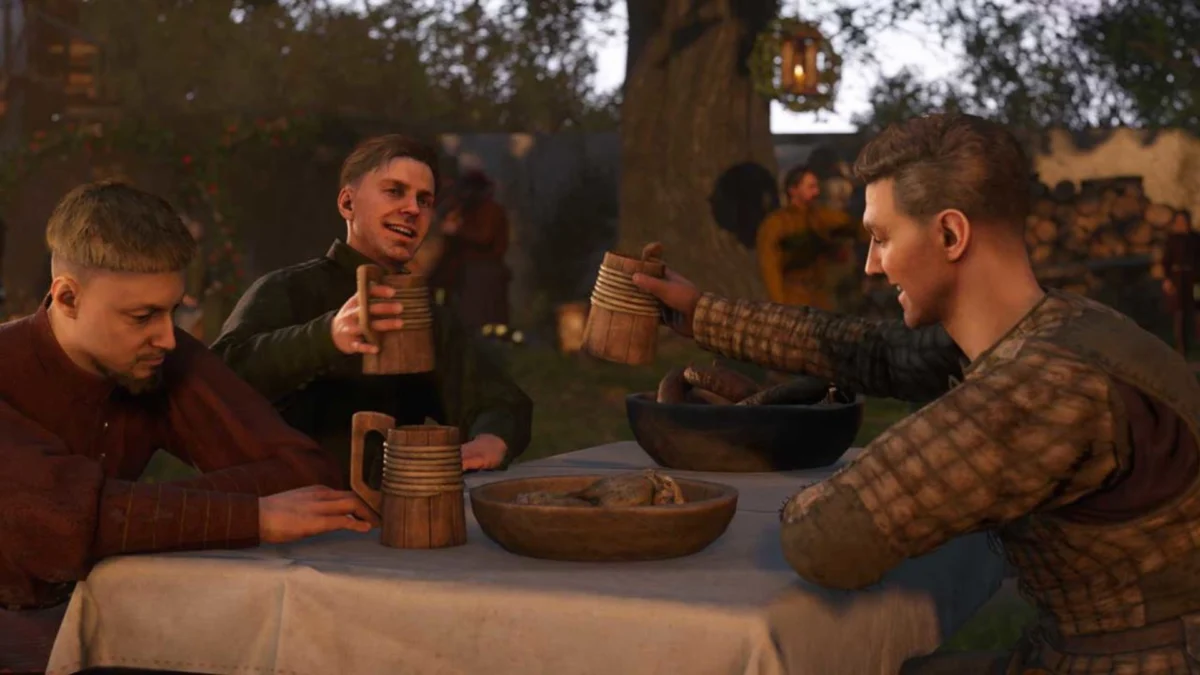
Gayming Magazine, a leading publication dedicated to LGBTQ+ representation and issues within the gaming world, announced its nominations for the upcoming Gayming Awards. Kingdom Come: Deliverance 2 received recognition for its depiction of the relationship between Henry, the player character, and Hans Capon, a young nobleman. This particular narrative arc, lauded by many for its subtlety and player agency, offers an optional romantic pathway that has resonated positively with a segment of the LGBTQ+ gaming community. The nominations underscore a growing appreciation for games that authentically integrate diverse experiences, particularly within historically grounded settings.
Following the announcement, Daniel Vávra, a co-founder of Warhorse Studios and the creative director behind the Kingdom Come: Deliverance franchise, took to social media platform X (formerly Twitter) to address the nominations. His post, which quickly gained traction, articulated a complex position. Vávra stated, "I’m really proud of that, because I absolutely stand by the fact that the way we did it is exactly how something like this should be done. Non-coercively, naturally, and educationally (because we show how things really were in the Middle Ages without idealising them) – and without shoving it down anyone’s throat or trying to re-educate them like so many titles that are rightfully called ‘woke’ these days."
He further elaborated on his vision for the inclusion, asserting, "We made the gay community happy and gave them the CHOICE to be themselves, just like we did for others in other choices and quests, and anyone who isn’t interested probably didn’t even notice. Except, of course, for very small and very loud minority. It was my idea, my decision and my responsibility and I had to convince others to do it." Vávra concluded his initial statement by emphasizing, "none of these words mean he doesn’t ‘find the abundance of forced ‘woke’ nonsense in the entertainment industry annoying at the same time.’" His subsequent engagement with commenters, including a notable exchange with a user impersonating Tony Soprano, further solidified his stance, as he defended the organic integration of the relationship against claims of external pressure or "forcing" content.
Background: The Kingdom Come: Deliverance Franchise and Warhorse Studios
The Kingdom Come: Deliverance series, developed by the Czech studio Warhorse Studios, is renowned for its commitment to historical realism. The first installment, released in 2018, immersed players in 15th-century Bohemia, focusing on an authentic, grounded experience that eschewed fantasy elements common in many RPGs. Players embody Henry, a blacksmith’s son thrust into the turmoil of civil war following the brutal sacking of his village. The game gained critical acclaim for its intricate combat system, detailed historical accuracy, and open-world design, selling over 6 million copies globally by 2023. This success established Warhorse Studios as a significant player in the RPG genre, building a dedicated fanbase eager for the sequel.
Kingdom Come: Deliverance 2, officially unveiled in April 2024, promises to expand upon its predecessor’s foundations, offering a larger, more ambitious open world, enhanced combat, and a deeper narrative experience. The game continues Henry’s journey, further exploring themes of identity, revenge, and the complexities of medieval life. The development team, including Daniel Vávra, has consistently emphasized their dedication to historical authenticity, a principle that forms the bedrock of the franchise’s identity. This commitment to realism often extends to portraying the social norms and power structures of the era, which can sometimes intersect with contemporary discussions about representation.
Contextualizing Daniel Vávra’s Past Remarks and the "GamerGate" Era
Daniel Vávra’s recent comments are not an isolated incident but rather fit within a broader pattern of his public discourse, particularly concerning issues of "wokeness," historical accuracy, and identity politics in gaming. Vávra has historically been a vocal critic of what he perceives as ideologically driven changes to historical narratives or character representations in media. His past statements have often aligned with the "anti-woke" sentiment that gained prominence during and after the "GamerGate" controversy.
GamerGate, which erupted in 2014, was a largely online movement ostensibly concerned with ethics in video game journalism. However, it quickly devolved into a protracted harassment campaign primarily targeting women in the gaming industry, including developers, journalists, and critics. The movement was characterized by a virulent backlash against perceived progressive influences in gaming, often framing diversity and inclusion efforts as "forced" or "political correctness gone mad." Figures like Vávra, who expressed skepticism about or opposition to these perceived trends, found a sympathetic audience among those who felt similar sentiments.
Vávra’s previous remarks on historical accuracy, particularly in relation to the ethnic composition of medieval Bohemia in the first Kingdom Come: Deliverance, drew criticism from those who felt his interpretation minimized the presence of non-white populations in historical Europe. While Vávra maintained his commitment to historical fact, these discussions often became entangled in broader debates about representation and authenticity. This history provides crucial context for understanding his current assertion that KCD2’s LGBTQ+ representation is "natural" and "not woke," as he attempts to differentiate his approach from what he views as problematic forms of inclusion. He has publicly stated that while he is the creative director for KCD2, he is also currently involved in making a Kingdom Come film and will not be leading Warhorse’s next game, indicating a shift in his direct day-to-day involvement with the studio’s future projects, though his influence on KCD2 remains significant.
The Nuance of Representation in Kingdom Come: Deliverance 2
The specific portrayal of the Henry/Hans relationship in Kingdom Come: Deliverance 2 appears to be a key differentiator in Vávra’s argument. According to early details and player experiences, the relationship is entirely optional, integrated into the game’s narrative as a possible choice rather than a mandatory storyline. This approach allows players to engage with the characters and their evolving dynamic at their discretion. Critics and players who have praised this aspect highlight its organic feel, suggesting that it respects player agency and doesn’t disrupt the historical immersion for those who prefer not to pursue it.
This stands in stark contrast to Vávra’s definition of "woke" representation, which he characterizes as "shoving it down anyone’s throat" or attempting to "re-educate" players. His distinction implies that genuine, choice-driven inclusion, even of LGBTQ+ themes, can be harmonious with historical settings and player freedom, whereas mandated or overtly didactic representation is what he opposes. For many LGBTQ+ players, the very existence of such a choice within a major historical RPG like Kingdom Come: Deliverance 2, particularly one known for its realism, is a significant positive step, irrespective of the creative director’s broader political commentary. It offers a sense of validation and belonging in a genre that has historically been less diverse in its romantic options.
Industry Perspectives on "Wokeness" and Representation
The gaming industry, like many other entertainment sectors, is currently navigating complex discussions surrounding diversity, inclusion, and the concept of "wokeness." There is a growing trend among developers and publishers to embrace more diverse casts, storylines, and themes, often in response to evolving societal expectations and the increasingly diverse player base. Major titles and independent games alike have seen success by featuring LGBTQ+ characters, narratives addressing social issues, and protagonists from various backgrounds.
However, this push for diversity is often met with resistance from certain segments of the audience and some creators, who argue that these efforts can lead to "forced" narratives, historical inaccuracies, or a perceived abandonment of artistic integrity in favor of political agendas. The term "woke" itself has become highly politicized, often used pejoratively to dismiss any content or viewpoint perceived as overly progressive or socially conscious. This has created a challenging environment for developers, who must balance creative vision, historical fidelity (where applicable), market appeal, and social responsibility. The debate often centers on how representation is implemented: whether it feels organic and serves the story, or if it appears tokenistic or preachy. Kingdom Come: Deliverance 2‘s nominations by Gayming Magazine suggest that its approach to the Henry/Hans relationship has successfully navigated this delicate balance, at least in the eyes of an organization dedicated to celebrating authentic LGBTQ+ content.
Reactions and Broader Implications
The reactions to Daniel Vávra’s tweet have been predictably varied and illustrate the polarized nature of contemporary online discourse.
- Gayming Magazine and the LGBTQ+ Community: While Gayming Magazine has not issued a direct statement in response to Vávra’s specific comments, their nominations for Kingdom Come: Deliverance 2 stand as an affirmation of the game’s quality of representation. For many within the LGBTQ+ gaming community, the nominations themselves are a victory, signaling that inclusive narratives can thrive even in historically focused titles. Vávra’s subsequent "anti-woke" clarification, however, has been met with mixed feelings, with some seeing it as an attempt to distance himself from the very community whose recognition he is celebrating, or as an unnecessary politicization of a positive development.
- Gaming Community at Large: The broader gaming community has reacted along predictable lines. Supporters of Vávra’s "anti-woke" stance have lauded his comments as a brave and honest assessment of industry trends, appreciating his perceived commitment to "natural" inclusion over "forced" narratives. Conversely, critics have accused Vávra of hypocrisy or performative allyship, arguing that his need to qualify the positive reception of LGBTQ+ content with an "anti-woke" disclaimer undermines the spirit of inclusivity. Some view it as an attempt to appease a specific segment of his fanbase while still taking credit for a progressive element of his game.
- Warhorse Studios: While Vávra is a co-founder and creative director, it’s important to distinguish his personal statements from official studio positions. Warhorse Studios has largely maintained a focus on game development and historical accuracy. However, a prominent figure’s public remarks inevitably reflect, to some extent, on the studio’s image. The nominations for KCD2 are undoubtedly a positive for the studio’s reputation regarding narrative depth and inclusivity. Vávra’s "anti-woke" comments, however, might complicate this narrative, potentially alienating some progressive players or critics who might otherwise have fully embraced the game’s inclusive elements.
- Implications for KCD2: The Gayming Awards nominations will likely boost the visibility of Kingdom Come: Deliverance 2, attracting players interested in diverse storytelling and historical RPGs. The nuanced discussion surrounding Vávra’s comments, while controversial, also keeps the game in the public consciousness, albeit through a lens of social debate. Ultimately, the quality and player reception of the Henry/Hans storyline itself, rather than Vávra’s meta-commentary, will likely dictate its long-term impact on the game’s legacy.
A Fact-Based Analysis of the Contradiction
The central tension in this event lies in the apparent contradiction between celebrating an award for LGBTQ+ representation and simultaneously criticizing "wokeness." From a factual standpoint, Vávra’s statement can be analyzed as an attempt to define and control the narrative around his game’s inclusivity. By emphasizing "choice," "natural integration," and "historical accuracy," he aims to differentiate Kingdom Come: Deliverance 2‘s approach from what he broadly labels as "forced" or "re-educational" content. This distinction allows him to accept praise for a progressive element while maintaining consistency with his previously established "anti-woke" public persona.
One could argue that this stance reflects a genuine belief that there are "good" and "bad" ways to implement diversity, and his game exemplifies the former. Alternatively, critics might suggest it’s a strategic move to appeal to both an increasingly diverse gaming market and a segment of the audience that is wary of perceived social justice agendas in media. Regardless of the underlying motivation, the episode underscores the persistent challenge for creators in navigating complex social issues in their work and public commentary. The very act of a historically grounded RPG receiving nominations for LGBTQ+ representation is a testament to the evolving landscape of gaming narratives. However, the subsequent discourse highlights that the conversation around diversity and its implementation remains fraught with ideological divides.
In conclusion, Kingdom Come: Deliverance 2‘s nominations from Gayming Magazine celebrate its achievement in providing thoughtful and optional LGBTQ+ representation within a historically rich world. Daniel Vávra’s subsequent decision to frame this achievement through an "anti-woke" lens has amplified the ongoing industry-wide debate about the nature of diversity, authenticity, and creator intent in video games. While the nominations themselves are a testament to the game’s narrative design, Vávra’s commentary ensures that Kingdom Come: Deliverance 2 will remain a focal point in the broader cultural discussion surrounding gaming and social issues.