










The release of the remastered Ecstatica and its sequel, published by SNEG, marks a significant moment for video game preservationists and horror enthusiasts alike. Originally developed by Andrew Spencer Studios and published by the now-defunct Psygnosis in 1994, the original title served as a precursor to the modern survival horror genre. By integrating unique spherical graphics—an alternative to the polygon-heavy standards of the mid-90s—and implementing advanced AI-driven stalker mechanics, the game established a distinct identity that has remained a subject of academic interest among gaming historians for three decades.
A Technological Pioneer in the Mid-Nineties
During the early 1990s, the video game industry was in a state of rapid transition. Developers were experimenting with various methods to represent three-dimensional space within the limitations of home computer hardware. While many studios leaned toward the angular, wireframe-heavy aesthetic that would eventually define the PlayStation era, Andrew Spencer Studios took a different technical approach with Ecstatica.
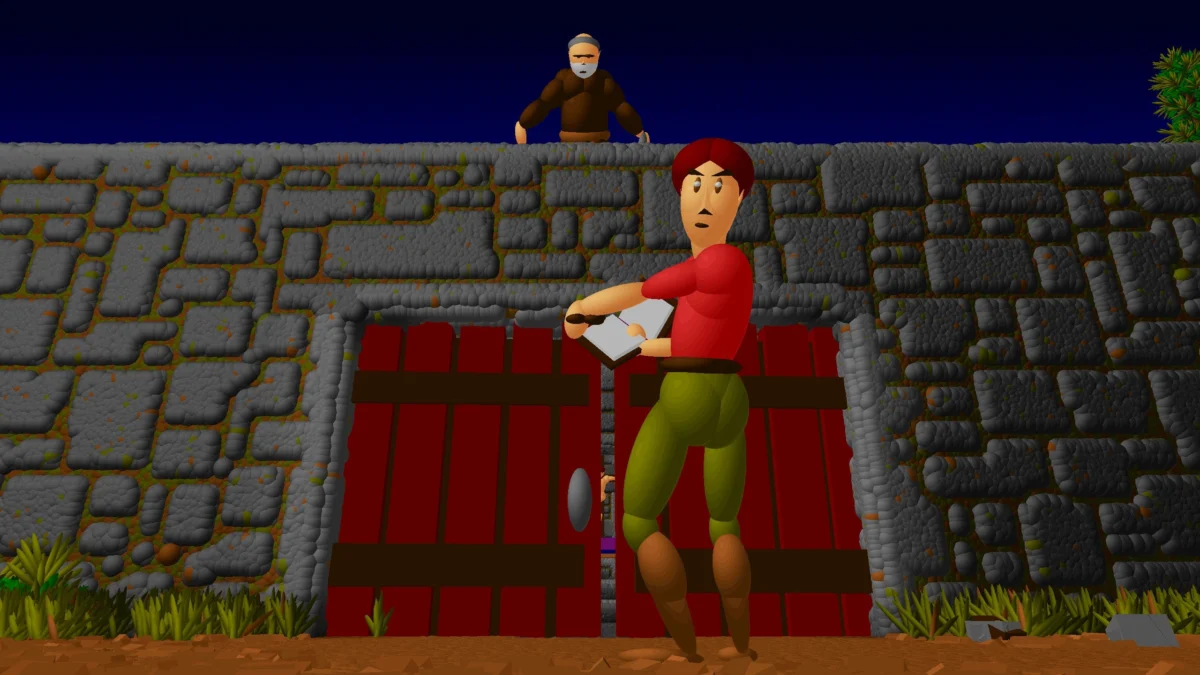
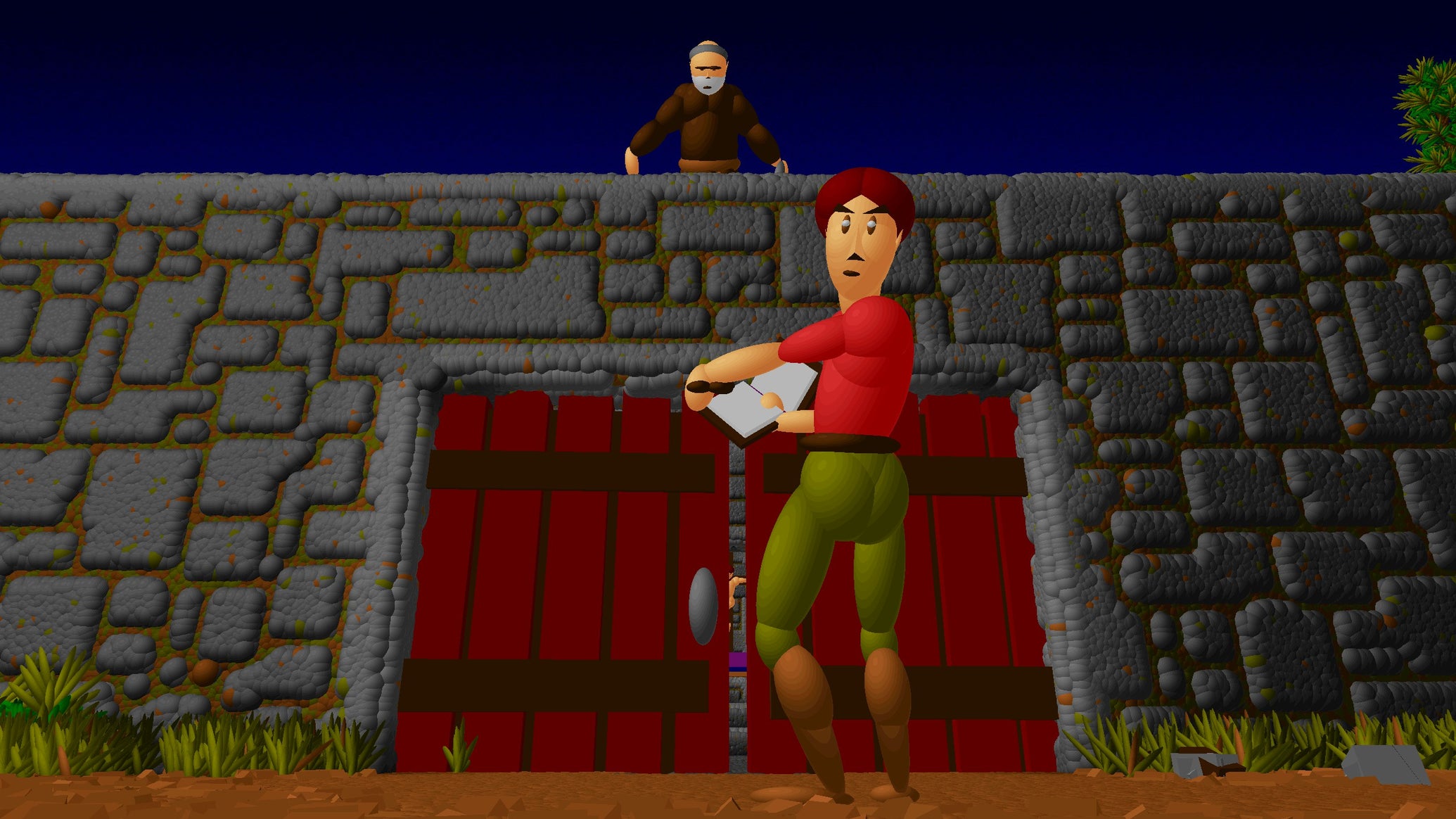
The game utilized a proprietary engine that relied on ellipsoids to construct its characters and environments. This choice provided a softer, more organic aesthetic, allowing the village of Tirih to maintain a fluid, rounded appearance that stood in stark contrast to the rigid, jagged environments of contemporary titles like Alone in the Dark. While the technology was unconventional, it allowed for sophisticated animation cycles that were arguably ahead of their time, giving the game a distinct, albeit sometimes surreal, visual identity.
Chronology of a Cult Classic
The trajectory of the Ecstatica franchise is a brief but impactful one. The release schedule for the series is as follows:
- 1994: The original Ecstatica is released for DOS-based systems, garnering attention for its bold aesthetic and mature, often provocative, visual design choices.
- 1997: The sequel, Ecstatica II, is launched, refining the mechanics of the original while expanding the narrative scope of the cursed village.
- 1997–2024: Following the closure of Psygnosis and the rapid evolution of 3D engines, the series fell into obscurity, becoming inaccessible on modern operating systems without the use of emulation software or specialized patches.
- October 2024: SNEG, a publisher specializing in the restoration of classic titles, announces the official remastering and re-release of both games for modern Windows platforms, timed specifically for the Halloween season.
Stalker Mechanics and the Evolution of Horror
Beyond its visual style, Ecstatica is notable for its implementation of what is now known as the "stalker" mechanic. In contemporary horror gaming, titles such as Resident Evil 2 (the 2019 remake) and Alien: Isolation are celebrated for their use of unkillable, persistent enemies that track the player across multiple zones. Ecstatica introduced an early iteration of this concept with its titular werewolf antagonist.
Unlike many of its contemporaries, where enemies were confined to specific rooms or triggered by static proximity checks, the werewolf in Ecstatica was designed to patrol and react to the player’s presence. This forced a rudimentary form of stealth gameplay upon the user, requiring them to manage their inventory—which was limited by a strict two-handed carry limit—while simultaneously avoiding a threat that could appear from off-camera or from rooftops. This created a level of emergent tension that was rarely seen in 1994, pre-dating iconic titles like Clock Tower by several years.
Contextualizing the Content
The critical reception of Ecstatica in 1994 was heavily influenced by its provocative character design. The game became notorious for its inclusion of adult-oriented anatomical features, a design decision that sparked debate at the time regarding the limits of artistic expression in interactive media. However, viewed through a modern lens, these elements are often categorized by developers as a byproduct of the era’s "giddy" experimentation with new tools. When developers were given the power to render 3D volumes for the first time, the tendency to push these tools to their extreme—even in ways that bordered on the absurd—was a common phenomenon.

Despite the initial focus on these elements, the game’s structural design remains a masterclass in tone management. It successfully balances elements of British slapstick humor with a dark, occult-themed narrative. The ability of the game to transition from a moment of dark, grotesque horror—such as a crucifixion—to a moment of lighthearted, whimsical character interaction is a testament to the tonal tightrope the developers walked, a characteristic rarely captured in the more serious, somber horror titles that followed.
The Role of SNEG in Modern Game Preservation
The re-release by SNEG serves as a critical case study in digital preservation. By updating the engine to support modern display resolutions and operating systems, the publisher has made a piece of gaming history accessible to a new generation. SNEG’s strategy involves not merely porting the files but ensuring that the experience remains faithful to the original, including the, at times, "unwieldy" tank controls and the inventory management system that forces players to navigate spatial limitations.
This approach acknowledges that the "jank"—the clunky, non-intuitive aspects of early 3D design—is an inseparable part of the game’s historical value. By leaving these mechanics largely intact, the remaster allows players to understand the limitations under which Andrew Spencer Studios operated, providing a clearer picture of how the genre evolved from its infancy to its current state.
Implications for the Future of Classic Gaming
The successful return of Ecstatica raises broader questions regarding the lifecycle of software. Many titles from the mid-90s are currently in a state of digital limbo, held back by complex copyright issues or the sheer difficulty of modernizing archaic code. The success of the Ecstatica project demonstrates that there is a viable, albeit niche, market for high-quality restorations of "curio" titles.

Furthermore, the game’s release highlights the importance of archiving titles that, while not always critically acclaimed as masterpieces, were essential in the architectural development of specific genres. The survival horror genre would eventually move toward the cinematic, scripted experiences popularized by the late 90s, but Ecstatica reminds players that there was a period where the genre was defined by exploration, experimental 3D geometry, and systemic, rather than scripted, enemy behavior.
In conclusion, while Ecstatica may be remembered by some for its more irreverent content, its legacy is built upon a foundation of genuine technical innovation. It was a game that dared to experiment with form and function at a time when the rules of 3D gaming were still being written. As it returns to the market, it offers both a nostalgic trip for those who played it in 1994 and a fascinating, if sometimes challenging, educational experience for those interested in the evolution of interactive terror. The "time-to-penis" might be a humorous measurement of developer enthusiasm, but the longevity of the game’s core mechanics proves that the ambition of Andrew Spencer Studios was, in fact, quite serious.