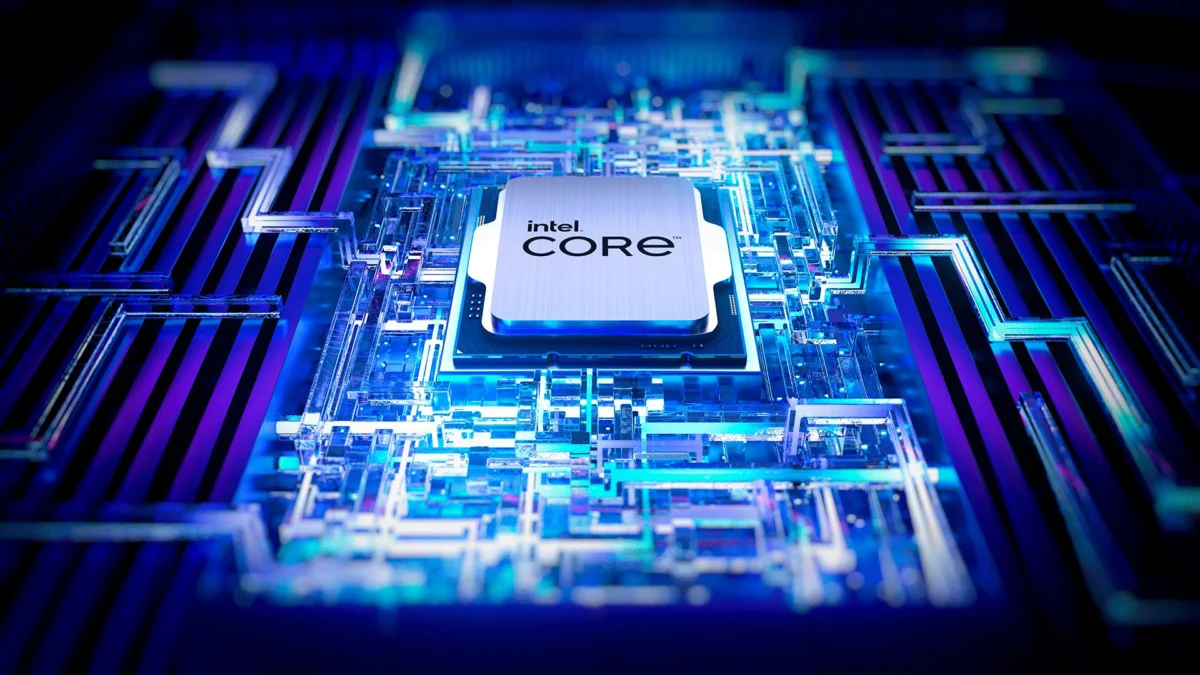
Recent developments indicate that Intel is quietly preparing a strategic maneuver reminiscent of AMD’s long-standing playbook: extending the lifecycle of a budget-friendly desktop platform long after its initial successor has taken the crown. Industry watchers and hardware sleuths have recently uncovered compelling evidence pointing to the development of "Raptor Lake Next" (RPL-NEXT) processors. This upcoming CPU refresh is projected to debut in the first half of 2027, bringing with it a surprising continuation of DDR4 memory support on the mature LGA 1700 socket.
The initial breadcrumbs of this upcoming product stack emerged earlier this year, but recent software updates and supply chain documentation have significantly validated these reports. As the personal computer hardware landscape navigates rising component costs and shifting consumer demands, Intel’s apparent decision to breathe new life into an aging platform underscores a growing industry emphasis on value, longevity, and affordability.
Uncovering the Evidence: Test Drivers and Shipping Manifests
The trail of Raptor Lake Next first crystallized in the public eye when software engineers identified an internal Intel test driver bearing the explicit "RPL-NEXT" label. This nomenclature strongly suggests an upcoming iteration or refresh of the existing Raptor Lake architecture, which first launched in late 2022 and received a refresh in late 2023. Software drivers of this nature typically appear months ahead of silicon validation and public product launches, serving as crucial tools for operating system compatibility and internal benchmarking.
Adding substantial weight to the driver discovery, shipping manifests originating from manufacturing hubs in Vietnam surfaced online courtesy of hardware publication Club386. These logistics documents detailed the export of engineering samples and test units explicitly labeled as "Raptor Lake Next" CPUs. More importantly, these manifests date back as far as August, indicating that physical silicon has been in transit and undergoing early validation phases for months. The logs also reportedly hint at cache configurations and clock speeds, signaling that the project has moved well past the theoretical drawing board and into active supply chain testing.
A Strategic Pivot: Taking a Page Out of AMD’s Playbook
For decades, Intel and AMD have approached platform longevity with contrasting philosophies. Historically, Intel has maintained a rigid cadence of introducing a new motherboard socket every two generations, requiring consumers to purchase a new motherboard whenever they wished to upgrade their processor. This strategy often accelerated technological adoption—such as pushing the industry toward PCIe 5.0 and DDR5 memory—but it also increased the total cost of ownership for budget-conscious builders.
Conversely, AMD famously sustained its AM4 socket for nearly seven years, allowing users to drop cutting-edge processors like the Ryzen 7 5800X3D into motherboards originally purchased for first-generation Ryzen CPUs. This approach earned AMD immense favor among value-driven consumers, system integrators, and budget gamers.
By preparing a Raptor Lake Next refresh for the LGA 1700 socket—complete with anticipated support for both DDR4 and DDR5 memory—Intel appears to be adopting a similar philosophy. For markets where DDR5 adoption has been sluggish due to pricing disparities or where system builders prefer the lower cost of mature DDR4 RAM kits, an LGA 1700 refresh in 2027 offers a compelling drop-in upgrade path. Users currently running older 12th, 13th, or 14th Gen Core processors on H610, B660, B760, or Z690/Z790 motherboards may theoretically be able to update their BIOS and slot in a newer chip without discarding their existing RAM and motherboards.
Chronology of Events and Anticipated Timeline
To understand how the Raptor Lake Next initiative fits into Intel’s broader roadmap, it is helpful to examine the chronological progression of related leaks and platform milestones:
- Late 2022 to Late 2023: Intel launches the Raptor Lake generation (13th Gen) followed by the Raptor Lake Refresh (14th Gen) on the LGA 1700 socket, establishing it as a dominant force in mainstream desktop computing.
- June 2026: Initial industry reports surface suggesting that Intel is actively plotting a surprise return to extended LGA 1700 support under the working title "Raptor Lake Next," targeting a release in the first half of 2027.
- August 2026: Manufacturing and export logs in Vietnam begin tracking the physical transit of "Raptor Lake Next" silicon, providing early details regarding cache sizes and operational frequencies.
- Late October 2026: Intel publishes an internal test driver explicitly featuring the "RPL-NEXT" identifier, confirming that software development and platform optimization are actively underway.
- First Half of 2027 (Projected): Industry analysts anticipate the formal commercial launch of the Raptor Lake Next lineup, aimed squarely at the budget and mainstream segments of the desktop PC market.
Technical Implications and Market Positioning
The decision to lean back into the LGA 1700 ecosystem rather than forcing users entirely onto newer architectures—such as the LGA 1851 socket utilized by Arrow Lake—carries distinct technical and economic implications.
From a manufacturing perspective, refining an existing architecture allows semiconductor companies to leverage mature process nodes. This typically translates to higher yields, lower production costs, and greater supply chain predictability. For Intel, which has been navigating a complex operational turnaround and balancing multiple manufacturing nodes across its foundry and outsourced partners, utilizing established toolsets for a budget refresh is a pragmatic allocation of resources.
Furthermore, the inclusion of DDR4 memory support addresses a massive installed base of global users. While enthusiast markets transitioned rapidly to DDR5, global commercial, educational, and budget-conscious consumer segments continue to rely heavily on DDR4 platforms due to their attractive price-to-performance ratio. By offering a processor option that bridges the gap between older motherboards and modern performance requirements, Intel can capture market share in price-sensitive regions where full platform overhauls are economically unfeasible.
Potential Challenges and Industry Outlook
Despite the clear benefits to consumers, extending the life of an older platform presents certain challenges. Chief among them is market segmentation and potential consumer confusion. If Raptor Lake Next processors debut in 2027, they will exist concurrently with newer generations of silicon designed for subsequent sockets. Clear marketing and transparent motherboard compatibility lists will be essential to ensure that consumers understand which processors work with their existing hardware.
Additionally, while clock speeds and cache adjustments can squeeze extra performance out of a mature architecture, reviewers and consumers will inevitably benchmark these chips against contemporary offerings from competitors. The success of Raptor Lake Next will ultimately depend on its pricing strategy. If Intel positions these processors aggressively, they could become the go-to recommendation for budget gaming rigs and office productivity upgrades throughout 2027 and beyond.
Conclusion
Intel’s emergence of "RPL-NEXT" test drivers and associated shipping manifests signals a calculated shift in the company’s desktop strategy. By extending the lifespan of the LGA 1700 socket well into 2027 and maintaining compatibility with budget-friendly DDR4 memory, Intel is directly answering the demands of cost-conscious PC builders. As the industry awaits official confirmation and detailed specifications from Intel closer to the projected launch window, this unexpected platform extension proves that mature architectures still have a vital role to play in the ever-evolving desktop computing ecosystem.