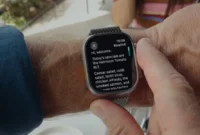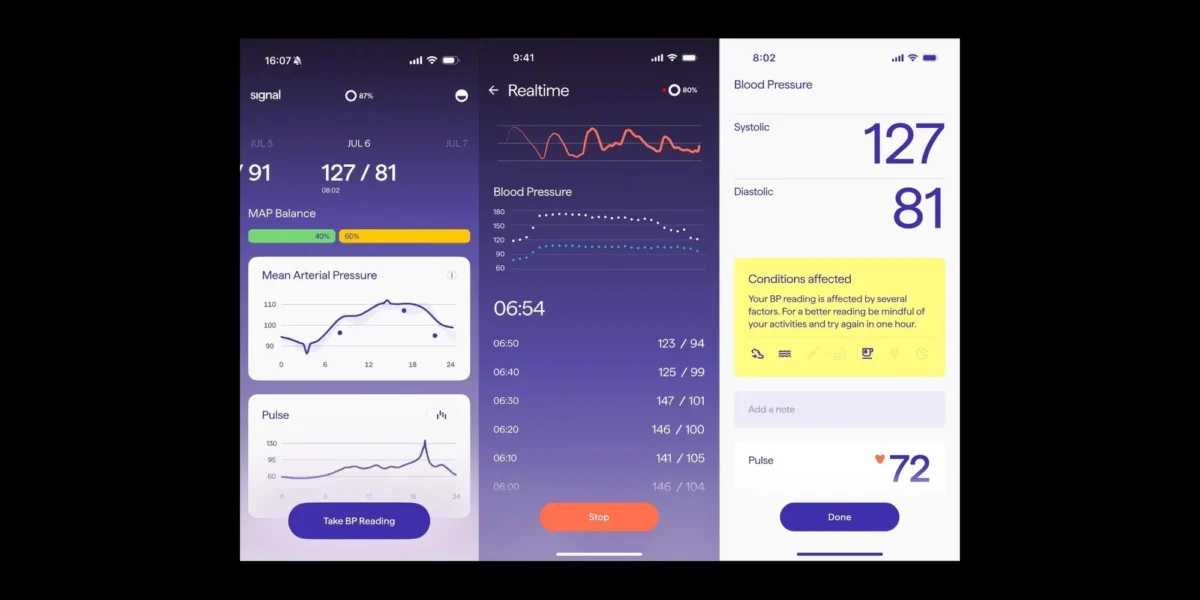
The landscape of consumer health technology is undergoing a significant transformation as startups and established tech giants race to solve one of the most difficult challenges in wearable biometrics: accurate, cuffless blood pressure monitoring. While the Apple Watch has recently expanded its capabilities through watchOS 26 to provide hypertension alerts, it remains unable to provide specific systolic and diastolic numerical readings. This gap in the market has paved the way for Vital Signals, a health-tech startup, to introduce the Signal Ring. Priced at $399 and requiring no ongoing subscription, the Signal Ring claims to deliver medical-grade blood pressure accuracy without the cumbersome need for regular calibration against a traditional inflatable arm cuff—a requirement that has hampered previous attempts by competitors like Samsung and various smaller smart ring manufacturers.
The Clinical Significance of Hypertension Monitoring
To understand the impact of the Signal Ring, one must first consider the medical context of hypertension, often referred to by physicians as the "silent killer." According to data from the World Health Organization (WHO), an estimated 1.28 billion adults aged 30–79 years worldwide have hypertension, and nearly half of them are unaware of their condition. Because high blood pressure rarely presents with outward symptoms until a catastrophic event occurs—such as a myocardial infarction (heart attack) or a cerebrovascular accident (stroke)—consistent monitoring is the primary defense for at-risk populations.
Hypertension causes progressive damage to the endothelium, the inner lining of the blood vessels, leading to atherosclerosis and the stiffening of arterial walls. Conversely, hypotension, or abnormally low blood pressure, can lead to dizziness, fainting, and inadequate oxygen delivery to vital organs. While traditional upper-arm oscillometric cuffs remain the gold standard for home monitoring, their bulk and the "snapshot" nature of their readings mean that many patients fail to track their pressure frequently enough to capture dangerous fluctuations or the "white coat effect," where blood pressure spikes specifically in medical settings.
The Evolution of Wearable Blood Pressure Technology
The journey toward wearable blood pressure monitoring has been marked by incremental progress and significant regulatory hurdles. For years, the industry has relied on Photoplethysmography (PPG), the same light-based technology used to measure heart rate and blood oxygen levels. However, translating PPG signals into blood pressure readings is notoriously difficult due to variables such as skin tone, ambient temperature, and the physical distance between the sensor and the underlying arteries.

Apple’s approach, integrated into five models compatible with watchOS 26, focuses on trend analysis rather than raw data. These watches monitor the user’s baseline and look for anomalies that suggest hypertension, triggering a notification that advises the user to consult a medical professional or use a traditional cuff. This conservative approach is largely driven by the stringent requirements of the U.S. Food and Drug Administration (FDA), which classifies blood pressure monitors as Class II medical devices.
Samsung’s Galaxy Watch series has offered blood pressure monitoring in several regions for years, but it requires users to calibrate the watch with a traditional cuff every four weeks. This process essentially "teaches" the watch’s algorithms what a specific PPG waveform looks like at a known pressure level. Without this calibration, the accuracy of the optical sensor degrades rapidly. The Signal Ring’s claim to bypass this requirement entirely represents a potential paradigm shift in wearable engineering.
Signal Ring: Technical Specifications and Market Entry
Vital Signals, led by CEO Tom Moss, developed the Signal Ring following Moss’s own personal health crisis involving undiagnosed hypertension. Moss, a veteran of the tech industry with leadership roles at Google, Razer, and the drone manufacturer Skydio, sought to create a device that provided the transparency he lacked during his own illness.
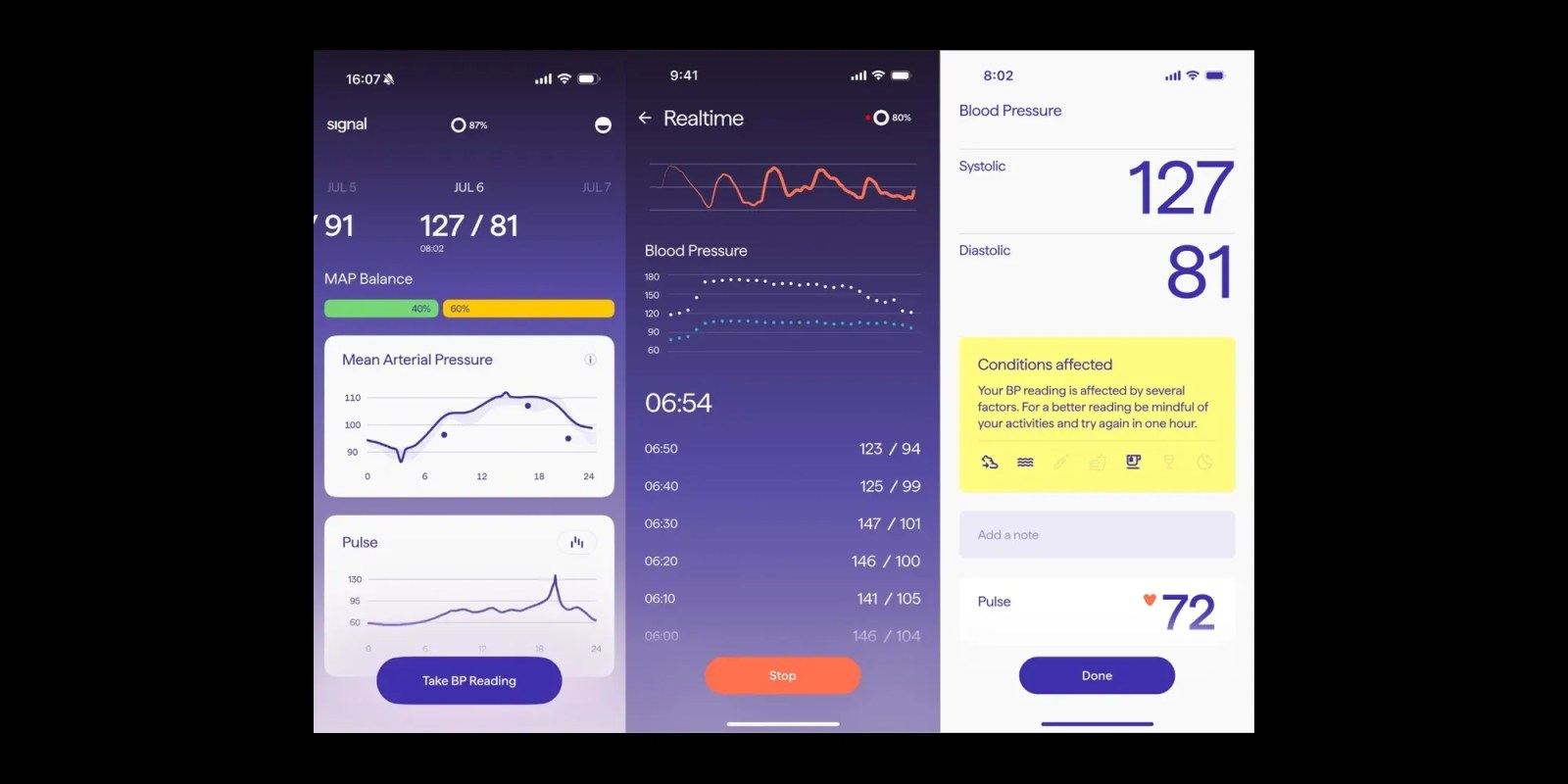
The Signal Ring is designed as a specialized health tool rather than a general-purpose fitness tracker. While it tracks basic metrics, its primary focus is the delivery of live systolic and diastolic readings directly to a companion iPhone app. The device is scheduled for a pre-sale launch with shipping expected to begin in October. Unlike the Oura Ring, which dominates the smart ring market but currently focuses more on sleep and recovery metrics, the Signal Ring positions itself as a clinical-first device.
A pivotal component of the Signal Ring’s value proposition is its data backing. Vital Signals reports that the device has undergone trials involving thousands of participants. These trials were designed to validate the ring’s proprietary algorithms against clinical standards. While the device is still navigating the final stages of formal FDA clearance, the company maintains that the internal and third-party trial data demonstrate accuracy levels comparable to traditional arm cuffs.
Comparative Analysis: Signal Ring vs. Apple and Oura
The competitive landscape for the Signal Ring is divided between the "mass-market" wearables and "specialist" health devices. Tom Moss has been remarkably transparent about the ring’s target demographic, suggesting that younger, healthy individuals may be better served by an Apple Watch or an Oura Ring. This suggests that the Signal Ring may lack some of the lifestyle features—such as advanced sleep stage tracking, GPS integration, or third-party app ecosystems—that consumers have come to expect from $400 wearables.
| Feature | Signal Ring | Apple Watch (watchOS 26) | Oura Ring Gen 3 |
|---|---|---|---|
| BP Method | Optical (Cuffless/No Calibration) | Trend-based Alerts | Trend-based Alerts |
| Numeric Readings | Yes (Systolic/Diastolic) | No | No |
| Subscription | None | None (Apple Fitness+ Optional) | $5.99/month |
| Primary Focus | Hypertension Management | General Health/Ecosystem | Sleep and Recovery |
| Price | $399 | $249 – $799+ | $299 – $549 |
The lack of a subscription model is a strategic move to appeal to older demographics and those wary of the "software-as-a-service" (SaaS) fatigue currently prevalent in the tech industry. By offering a one-time purchase price, Vital Signals positions the ring as a medical investment rather than a lifestyle accessory.
Chronology of the Signal Ring Development
The development of the Signal Ring follows a timeline of increasing sophistication in the "ring-able" form factor:
- 2022-2023: Vital Signals begins R&D into high-fidelity PPG sensors capable of capturing the subtle nuances of arterial pressure waves at the finger.
- Early 2024: Large-scale clinical trials commence, involving thousands of subjects to refine the "calibration-free" algorithm.
- May 2026: Apple announces watchOS 26, bringing hypertension alerts to five Apple Watch models, heightening public interest in wearable blood pressure tech.
- July 2026: Vital Signals officially announces the Signal Ring, backed by Bloomberg reporting and endorsements from industry analysts like Mark Gurman.
- October 2026: Projected delivery date for the first wave of Signal Ring pre-orders.
Industry Implications and Future Outlook
The introduction of a calibration-free blood pressure ring could force a reaction from the industry’s largest players. Apple is known to have been working on non-invasive glucose monitoring and blood pressure technology for over a decade. If a startup like Vital Signals can successfully bring a reliable, calibration-free sensor to market, it proves that the hardware limitations are surmountable, potentially accelerating Apple and Google’s own development cycles.
However, the success of the Signal Ring will depend on long-term reliability and user compliance. Monitoring blood pressure at the finger is sensitive to movement and peripheral circulation. If the Signal Ring can maintain its accuracy across different temperatures and activity levels, it may become a staple for geriatric care and chronic disease management.

From a broader economic perspective, the shift toward proactive, continuous monitoring could significantly reduce healthcare costs by preventing the long-term complications of untreated hypertension. Insurance companies and healthcare providers are increasingly looking at wearable data as a way to manage patient populations remotely. If the Signal Ring achieves FDA clearance as a diagnostic tool, it could be integrated into remote patient monitoring (RPM) programs, where its $399 price tag might even be covered by health savings accounts (HSAs) or insurance reimbursements.
The Signal Ring represents a bold step toward the "invisible" doctor—a device that monitors the body’s most vital signs without requiring the user to change their daily routine. By focusing on the "silent killer" of hypertension, Vital Signals has identified a niche where the stakes are high, and the potential for life-saving intervention is immense. As the device reaches the hands—and fingers—of consumers this October, the medical community and the tech world alike will be watching to see if it can truly deliver on the promise of medical-grade accuracy in a consumer-grade form factor.