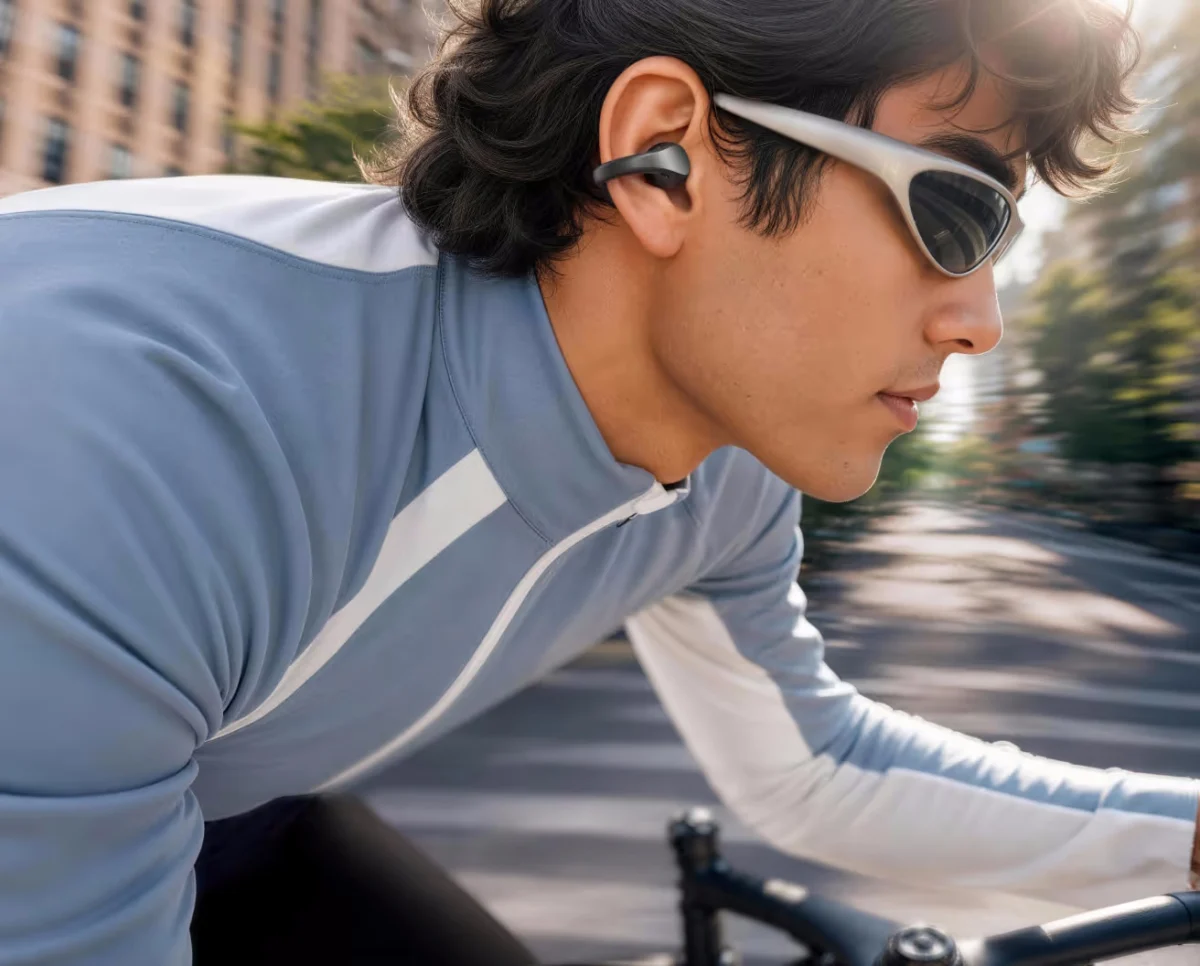
The wireless audio market has long been defined by rigid orientation, where users are forced to pay attention to "L" and "R" markings before inserting their earbuds. OnePlus aims to dismantle this minor but universal friction point with the introduction of its new Buds Clip, a pair of open-ear earbuds that prioritize intuitive usability over the traditional, static hardware design. By leveraging sophisticated sensor technology to facilitate automatic channel reassignment, the company is attempting to standardize a "wear-it-and-go" experience for commuters, athletes, and casual listeners alike.
The Mechanism of Adaptive Orientation
At the core of the OnePlus Buds Clip is a proprietary recognition system designed to eliminate the need for manual ear identification. Unlike conventional TWS (True Wireless Stereo) earbuds, where the internal circuitry is hard-wired to a specific audio channel, the Buds Clip utilize internal accelerometers and gyroscopic sensors to determine their physical orientation relative to the user’s head.

The process, while largely automated, requires a slight user interaction to calibrate accurately. Upon inserting the buds, OnePlus recommends that the user perform a slight tilt of the head. This motion provides the necessary spatial data for the earbuds to verify their position. Once the orientation is established, the internal software dynamically routes the left and right audio signals to the appropriate bud. This functionality extends to single-ear usage, ensuring that if a user decides to wear only one earbud, the audio is automatically switched to mono, preventing the loss of information that would otherwise occur if a track relied heavily on stereo separation.
Design and Ergonomic Development
The industrial design of the Buds Clip reflects a broader industry shift toward "ear-cuff" aesthetics, a category popularized by Sony’s LinkBuds series. Each individual earbud weighs 5.2 grams, a weight profile designed to remain unobtrusive during extended periods of use. The chassis features a flexible nickel-titanium arc, a material choice driven by the need for durability and consistent tension across a wide range of ear morphologies.
OnePlus has emphasized that the design is not merely stylistic but grounded in biometric research. According to official company data, the final geometry of the Buds Clip was refined through the analysis of measurements from more than 3,500 individual ear models. This data-driven approach aims to mitigate the common comfort issues associated with open-ear designs, which must maintain a stable fit without the traditional silicone tips that provide a vacuum-like seal in the ear canal.

Audio Engineering and Acoustic Architecture
Despite their lightweight, open-ear form factor, the internal audio hardware is surprisingly robust. Each earbud features a dual-driver configuration, housing an 11mm woofer and a 9mm tweeter. To manage this complexity, each driver is powered by its own dedicated digital-to-analog converter (DAC). This separation is intended to reduce signal interference and improve clarity, particularly in the high-frequency range, which often suffers in open-ear designs.
Tuning for the Buds Clip has been handled in collaboration with Dynaudio, a partnership that has historically focused on balancing a neutral sound profile with the consumer-friendly bass response OnePlus is known for. For audiophiles using compatible Android hardware, the device supports the LHDC 5.0 codec, allowing for higher-resolution audio transmission compared to standard Bluetooth protocols.
A significant hurdle for any open-ear design is the mitigation of sound leakage—the phenomenon where audio meant for the listener escapes into the environment, potentially bothering bystanders. To combat this, OnePlus has implemented a sophisticated reverse-phase sound wave system. A rear vent emits an inverted sound wave that effectively cancels out the outward-facing leakage, keeping audio playback private even in quiet environments. Furthermore, the communication hardware includes a six-microphone array controlled by a 6nm chip, which employs advanced noise-filtering algorithms to isolate the wearer’s voice during phone calls, even in high-wind or crowded scenarios.

Connectivity, Battery Life, and Technical Specifications
The Buds Clip are designed for modern, multi-device ecosystems. They support Bluetooth 6.1, which offers improved range and stability over previous iterations, and include the ability to maintain simultaneous connections to two devices, such as a laptop and a smartphone.
In terms of power management, the device is rated for approximately 9.5 hours of continuous playback per charge when utilizing the AAC codec. When opting for the higher-fidelity LHDC codec, that figure decreases to roughly eight hours. The charging case extends the total listening time to 40 hours (36 hours with LHDC). The earbuds themselves hold an IP55 rating, certifying resistance against dust and low-pressure water jets, making them suitable for exercise. However, the charging case lacks a formal IP rating, necessitating caution in adverse weather conditions.
Market Context and Availability
While the hardware specifications have been disclosed, the commercial rollout remains in a nascent phase. A listing from an authorized retailer in Hong Kong indicates a price point of HK$1,199, which converts to approximately $153. However, OnePlus has been careful to clarify that this figure is a regional reference and not necessarily reflective of the global Manufacturer’s Suggested Retail Price (MSRP). As of late 2026, the company has not provided a definitive global launch date or a phased release schedule.

The entry of the Buds Clip into the market arrives at a time when consumer interest in "tethered" audio—earbuds that keep the user aware of their surroundings—is at an all-time high. By joining the ear-cuff category, OnePlus is directly competing with established players like Sony. The "either-ear" detection feature is clearly positioned as the company’s primary differentiator, a "quality of life" improvement that addresses the common frustration of fumbling with earbuds while on the go.
Broader Industry Implications
The development of the Buds Clip suggests a shift in how audio hardware is being perceived by manufacturers. For years, the industry focused on noise cancellation—shutting the world out—but the next phase of development appears to be focused on "ambient integration." By making the earbuds easier to put on and more capable of managing environmental sound, companies are attempting to make wearable audio a persistent, all-day accessory rather than a tool used only for dedicated listening sessions.
If the "either-ear" technology proves reliable in real-world scenarios, it is likely to become a baseline expectation for future mid-to-high-tier wireless earbuds. Just as the industry transitioned from wired to wireless, and from bulky headsets to sleek TWS buds, the shift toward intelligent, orientation-agnostic hardware represents the next logical step in the evolution of personal audio.

While the $153 price point places the Buds Clip in a premium bracket, the inclusion of dual-driver architecture, dedicated DACs, and advanced sensor suites suggests that OnePlus is targeting the mid-to-high-end segment. Whether this technology can successfully transition from a niche feature to a mass-market standard will depend heavily on the accuracy of the sensors and the eventual global pricing strategy. For now, the Buds Clip stand as a testament to the industry’s focus on removing minor frictions, proving that even in a mature technology market, there is still room for significant, user-centric innovation.