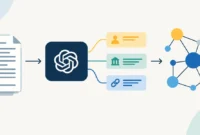
The integration of Artificial Intelligence into enterprise workflows has moved beyond the initial phase of experimental adoption to become a cornerstone of corporate productivity. Over the past three years, businesses have transitioned from using AI as a novelty to embedding it into the very fabric of their daily operations. While early implementations focused on individual productivity—such as drafting emails or summarizing meetings—a significant shift is now occurring. Forward-thinking organizations are moving beyond simple chatbots toward autonomous AI agents capable of transforming the enterprise data ecosystem.
The reality for many corporations is that they have reached a plateau by treating AI merely as a conversational interface. Industry analysts suggest that companies failing to tap into AI’s more transformative, agentic capabilities risk missing the most substantial returns on their technology investments. The next frontier in data management involves a transition from reactive systems to proactive, autonomous agents that can navigate complex data landscapes, execute multi-step tasks, and provide high-fidelity insights without constant human intervention.
The Defining Shift: From Conversational Bots to Autonomous Agents
The distinction between a standard AI chatbot and an AI agent is fundamental to the next generation of data architecture. While a chatbot is designed to generate responses based on a given prompt, an AI agent is defined as an autonomous system that perceives its environment, makes decisions, and takes concrete actions to achieve a specific goal.
In a traditional data environment, a business user’s request—such as identifying which product categories drove revenue growth in Southeast Asia—triggers a manual, multi-step process for a data analyst. This workflow typically involves writing SQL queries, exporting data to a spreadsheet, creating visualizations, and finally explaining the findings. An AI agent, however, automates this entire chain. It retrieves semantic information, generates and executes the necessary code, interprets the results, and delivers a polished, context-aware explanation.

Unlike chatbots, which are limited to text-based interaction, AI agents interact with software tools and databases. They do not just "talk" about data; they manipulate it. This capability has led to the emergence of "data agents," which act as virtual data analysts. Major industry players have already begun integrating these agents into their platforms: Microsoft Fabric features the Fabric data agent, Snowflake has introduced Cortex Analyst, and Databricks offers the AI/BI Genie. For organizations seeking platform-agnostic solutions, tools like Julius AI and Tellius have emerged to bridge the gap between disparate data sources.
A Chronology of AI Integration in Data Platforms
The journey toward the current agentic model has followed a clear chronological path, reflecting the maturation of both large language models (LLMs) and data engineering practices.
- The Pre-AI Era (Pre-2022): Data platforms were designed for storage and reporting. Workflows were rigid, relying on human-managed ETL (Extract, Transform, Load) pipelines and static BI dashboards.
- The Chatbot Inflection Point (2022–2023): With the rise of generative AI, organizations began adding conversational layers to their data. These were primarily used for basic information retrieval and simple natural language-to-SQL tasks.
- The Agentic Integration Phase (2024–Present): Companies realized that "chatting with data" was insufficient for complex business logic. This led to the development of agents that could handle multi-step reasoning, self-correction, and tool interaction.
- The Future of Autonomous Ecosystems: The industry is now moving toward a "three-component" architecture, where data agents, AI-powered Quality Assurance (QA) agents, and robust AI governance frameworks work in tandem to manage the entire data lifecycle.
Despite the promise of these technologies, the transition has not been without friction. Early adopters have reported several recurring challenges, including the delivery of incorrect data (hallucinations), the inability of agents to understand complex business logic, and security concerns regarding data privacy and unauthorized query execution.
Transforming Data Quality Assurance through Machine Learning
One of the most critical applications of AI agents is in the realm of Data Quality Assurance (QA). In sectors such as healthcare, where data accuracy is a matter of patient safety and regulatory compliance, traditional rule-based checks are increasingly seen as inadequate.
Traditional QA relies on predefined rules—checks for null values, duplicate records, or format consistency. However, these methods only catch errors that engineers have anticipated. AI-powered QA adds a layer of "learned" intelligence. Instead of just following a checklist, AI models analyze historical patterns to understand what "normal" data looks like. This allows them to detect subtle anomalies, such as distribution shifts or unusual correlations, that would pass a standard rule-based test.

For instance, in a healthcare dataset, a traditional check might confirm that a lab result is within a numerical range. An AI agent, however, could detect that the average result from a specific clinic has shifted significantly compared to its three-year history, flagging a potential calibration issue or upstream pipeline error. Tools such as Soda, Great Expectations, and AWS Glue Data Quality are now incorporating these ML-powered anomaly detection features, allowing for a hybrid approach that combines human-defined rules with autonomous oversight.
The Trust Gap: Governance, Observability, and Security
As AI agents take on more autonomy, the question of trust becomes paramount. "AI governance" has expanded beyond simple security to encompass the explainability and reliability of every answer an agent provides. If an investment firm’s data agent provides two different answers to the same question a month apart, the organization must be able to trace why that discrepancy occurred.
To address this, modern AI architectures are incorporating several key pillars of governance:
- Prompt Versioning: Treating prompts as software code. By storing prompt versions in Git and logging which version was active during a specific query, engineers can determine if a change in wording caused a shift in results.
- Hallucination Detection: Implementing systems that verify AI-generated numbers against the source data through SQL execution validation and confidence scoring.
- Tracing and Monitoring: Utilizing tools like LangSmith or Phoenix to record every step of an agent’s reasoning process. This "black box" recording is essential for troubleshooting and auditing.
- Advanced Security: Protecting against "query injection," where a user might attempt to bypass security filters through clever prompting, or "data exfiltration," where an agent might inadvertently reveal sensitive information not intended for the user.
Industry experts emphasize that AI governance is not merely a bureaucratic requirement but a technical necessity for moving AI applications from "demos" to production-ready tools.
Strategic Implications and the Human Element
The shift toward an AI-driven data architecture does not eliminate the need for human expertise; rather, it redefines the role of the data professional. Data engineers are increasingly focusing on the reliability and scalability of the underlying infrastructure, ensuring that the "memory" of the system does not become a bottleneck. Data analysts, freed from the repetitive task of pulling routine reports, are moving into roles that require higher-level critical thinking and strategic interpretation.

The adoption of AI agents is also democratizing data access within the enterprise. Business users no longer have to wait days for an analyst to fulfill a ticket; they can receive 24/7 analytical support. Furthermore, proactive agents can "surface" insights—alerting a manager to a sudden drop in regional sales before the manager even thinks to ask.
However, the "human-in-the-loop" remains a vital component. Feedback mechanisms, such as simple thumbs-up/thumbs-down ratings or detailed comments, are essential for refining agent behavior. When a user flags an incorrect answer, that feedback is fed back into the evaluation dataset, helping AI engineers improve prompt engineering and identify confusing business terminology.
Conclusion: Rethinking the Architecture for a New Era
The integration of AI into the enterprise data ecosystem represents a fundamental rethinking of how information is managed and consumed. By moving beyond simple chatbots to a comprehensive architecture involving Data Agents, AI QA, and robust Governance, organizations can build a trustworthy, autonomous collaborator.
The transition is complex and requires a customized approach based on industry scale and technological maturity. There is no one-size-fits-all solution, but the goal remains the same: to transform data from a passive asset into an active, intelligent participant in business decision-making. As these technologies continue to evolve, the companies that successfully bridge the gap between "chatting" and "acting" will be the ones that define the future of the digital economy.