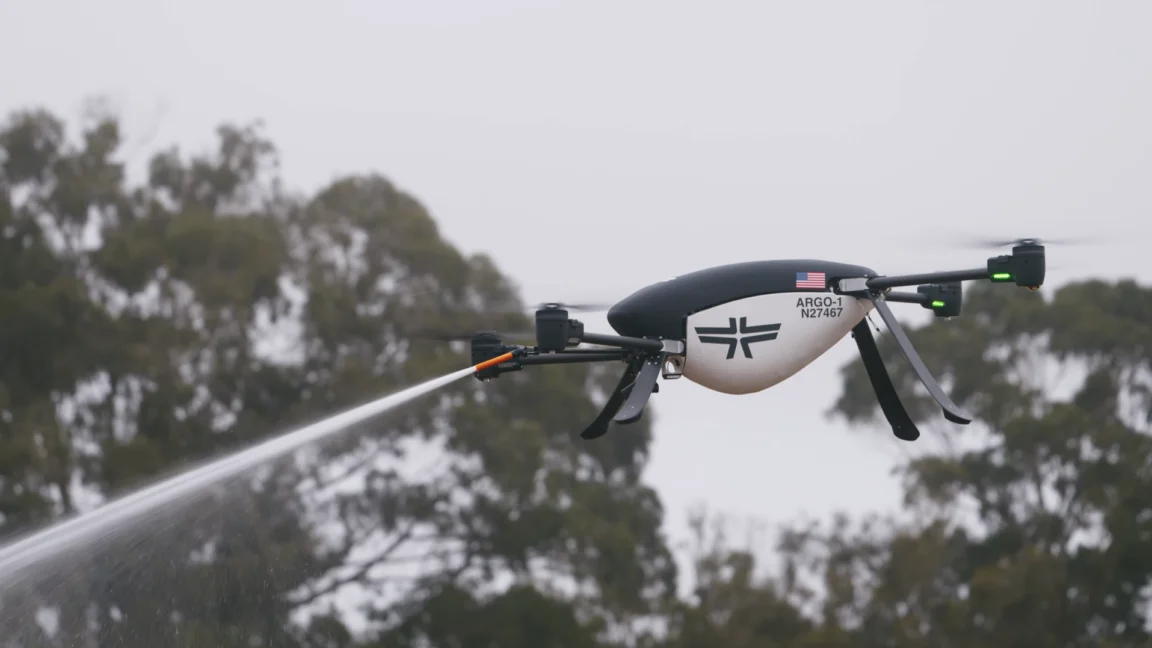
Drones capable of precisely spraying water and fire retardants have been actively practicing their roles in early wildfire suppression efforts across California and Alaska this summer, showcasing a potentially transformative rapid-response tool for firefighting operations as climate change increasingly morphs wildfire season into a nearly year-round existential risk for significant portions of the United States. This innovative approach seeks to address the escalating challenges faced by traditional firefighting methods, which are often overwhelmed by the sheer scale and intensity of modern blazes.
The Escalating Wildfire Crisis and the Need for Innovation
The urgency for new firefighting technologies like autonomous drones is underscored by the dramatic increase in wildfire frequency, intensity, and destructive capacity over the past two decades. According to the National Interagency Fire Center (NIFC), the average number of acres burned annually in the U.S. has significantly risen, with millions of acres consumed each year. For instance, California alone has experienced several of its largest and most destructive wildfire seasons in recent memory, including the 2020 season which saw over 4.3 million acres burned, and the 2021 season which continued the trend of large, complex fires. These events not only devastate ecosystems and property but also contribute to significant air quality issues and economic losses estimated in the tens of billions of dollars annually. Alaska, with its vast wildlands, also faces immense challenges in managing fires, often in remote and inaccessible terrain.
Traditional aerial firefighting, primarily relying on crewed airtankers and helicopters, remains indispensable for delivering massive payloads of water or retardant to large, remote wildfires. However, these assets come with significant limitations. They are expensive to operate and maintain, require highly skilled pilots, are often restricted by visibility and nighttime operations, and carry inherent risks to human life. Furthermore, their deployment can be delayed by the time it takes to reach remote ignition points, a critical factor given that small fires can rapidly escalate into conflagrations within hours under adverse conditions. This "golden hour" for initial attack is where drone technology promises to make a substantial difference.
Pioneering Drone Technology: The Seneca Argo-1 and CAL FIRE’s Field Tests
At the forefront of this technological shift is the Seneca company, based in California, which is developing the Argo-1 autonomous drone system. These drones are designed specifically for rapid, targeted fire suppression. Each Argo-1 drone is capable of carrying approximately 100 pounds of water or fire retardant, operating effectively in coordinated swarms of four to six units. The system leverages GPS waypoints uploaded by a human operator, allowing the drones to navigate autonomously to their designated target area. Once in proximity, onboard sensors detect the heat signature of a fire, guiding the drones to the optimal hovering altitude before they individually line up to spray the fire, one after another, in a precise and systematic manner.
A significant milestone in the development and validation of this technology occurred on July 15 this summer, when the California Department of Forestry and Fire Protection (CAL FIRE) conducted a comprehensive field test. The exercise involved five autonomous drones working in concert to deploy a combined total of between 500 and 1,000 gallons of fire-suppressing foam. This demonstration, organized with the support of the nonprofit FireWERX and Seneca, was meticulously observed and documented by local news outlets, including TV station KPMH, highlighting the potential for these systems to bolster wildfire operations. The test aimed to evaluate the drones’ effectiveness in suppressing small, controlled fires, assessing their operational efficiency, coordination capabilities, and precision in delivery. CAL FIRE officials expressed cautious optimism regarding the potential integration of such systems into their existing arsenal, emphasizing the importance of rigorous testing and validation before widespread deployment. Seneca has announced plans to make the Argo-1 commercially available starting in 2026, signaling a clear path from development to practical application.
Operational Parameters and Logistical Considerations
The operational specifications of the Argo-1 drones underscore both their potential and their current limitations. Fully loaded, each drone has a round-trip range of approximately 10 miles, flying at an average speed of about 30 miles per hour. This range suggests that the drones would be most effective when strategically prepositioned in fire-prone areas or rapidly transported to incident sites by ground vehicles. A key advantage in this regard is their portability: each drone can fit comfortably in the back of a standard pickup truck with the tailgate down, and an empty unit can even be manually carried by two individuals. This ease of transport and deployment makes them highly adaptable for initial attack scenarios, where quick access to remote or difficult-to-reach ignition points is paramount.
However, the current payload capacity and range mean that these drones are not intended to replace large airtankers for massive, sustained suppression efforts on sprawling fires. Instead, their niche lies in rapid initial attack—identifying and extinguishing nascent fires before they can grow into major incidents. This strategy aligns with the "suppression triangle" concept in firefighting, which emphasizes early detection and aggressive initial attack as the most effective means of controlling wildfires.
The XPRIZE Catalyst: Driving Innovation in Wildfire Response
Further accelerating the development and adoption of innovative wildfire solutions is the $11 million XPRIZE competition. This global initiative challenges innovators to develop groundbreaking technologies for faster, more effective, and safer wildfire detection and response. The XPRIZE serves as a powerful catalyst, drawing multidisciplinary teams from around the world to push the boundaries of what’s possible in wildfire management. By offering significant incentives for breakthrough solutions, XPRIZE is instrumental in fostering a competitive environment that encourages rapid technological advancement, particularly in areas like autonomous systems, advanced sensors, and data analytics for predictive modeling. The competition’s focus on rapid response and early suppression perfectly complements the capabilities being demonstrated by systems like the Seneca Argo-1, highlighting a concerted effort across public, private, and philanthropic sectors to revolutionize wildfire fighting.
Statements and Perspectives from Key Stakeholders
Officials from CAL FIRE, while acknowledging the significant potential of drone technology, emphasize the need for continued research, development, and integration planning. "The ability to deploy autonomous assets quickly to an emerging incident, especially in remote or hazardous areas, could be a game-changer for firefighter safety and initial attack effectiveness," a CAL FIRE spokesperson might logically infer. "However, these systems must be robust, reliable, and seamlessly integrated into our existing command and control structures, working in harmony with our piloted aircraft and ground crews."
From Seneca’s perspective, the commercialization in 2026 marks a pivotal moment. "Our vision is to empower firefighters with tools that allow them to get ahead of the fire, rather than constantly playing catch-up," states a Seneca representative. "The Argo-1 is designed for precision, speed, and safety, allowing for targeted application of retardant in critical early stages, minimizing risks to human operators, and potentially saving countless acres from destruction." The company foresees a future where swarms of these drones are strategically positioned across high-risk areas, ready to launch within minutes of a confirmed ignition.
The XPRIZE Foundation highlights the broader societal impact. "Wildfires are a global challenge, and the traditional methods are simply no longer sufficient against the backdrop of climate change," an XPRIZE official could remark. "Our competition is designed to unearth and accelerate solutions that offer a paradigm shift, and autonomous drone technology is certainly a promising avenue that aligns with our goals of scalable, impactful innovation."
Broader Implications and the Future of Wildfire Fighting
The emergence of autonomous drones for active fire suppression carries profound implications for the future of wildfire management.
Enhanced Safety for Firefighters: Perhaps the most immediate and significant benefit is the reduction of risk to human firefighters and pilots. Drones can operate in conditions too dangerous for crewed aircraft or ground personnel, such as dense smoke, high winds, or rugged terrain. This means fewer lives are put at risk during initial attack and ongoing suppression efforts.
Rapid Initial Attack: The ability to launch drones almost immediately upon detection of a fire, especially in remote areas, dramatically shortens response times. This rapid initial attack can prevent small ignitions from spiraling into uncontrollable megafires, saving lives, property, and natural resources.
Cost-Effectiveness: While initial investment in drone fleets may be substantial, the long-term operational costs could prove more economical than traditional air assets. Drones require less fuel, less extensive maintenance compared to manned aircraft, and reduce the need for expensive human pilot training and salaries. Furthermore, preventing large fires saves billions in suppression costs, property damage, and ecosystem restoration.
Scalability and Flexibility: Drone systems can be scaled up or down depending on the incident. Swarms can be deployed for larger initial attacks, while individual units can conduct precision strikes or surveillance. Their portability allows for flexible deployment to various fire-prone regions.
Data Collection and Intelligence: Beyond suppression, drones equipped with advanced sensors (thermal, multispectral, lidar) can provide real-time intelligence on fire behavior, spread, and hot spots. This data is invaluable for incident commanders to make informed strategic and tactical decisions, optimizing resource allocation and predicting fire progression.
Challenges and Considerations for Widespread Adoption
Despite their immense promise, the widespread adoption of autonomous firefighting drones faces several hurdles:
Regulatory Frameworks: Integrating a new class of autonomous aircraft into already complex and highly regulated airspace, especially during emergency operations where crewed aircraft are also present, requires robust regulatory frameworks from bodies like the Federal Aviation Administration (FAA). Deconfliction protocols and air traffic management systems must be meticulously developed and tested to ensure safety.
Payload Capacity and Endurance: While current drones are effective for initial attack, increasing payload capacity and flight endurance will be critical for more sustained operations or larger fires. Advances in battery technology and alternative power sources will be essential.
Autonomous Decision-Making and AI: While human operators set GPS waypoints, the drones’ ability to autonomously detect heat signatures and determine optimal spray patterns relies on sophisticated AI. Ensuring the reliability and safety of these autonomous decisions in dynamic and unpredictable wildfire environments is paramount.
Logistics and Infrastructure: Establishing the necessary infrastructure for rapid deployment, charging, maintenance, and retardant refilling in remote, fire-prone areas will require significant investment and logistical planning.
Public Acceptance and Integration: Gaining public trust and ensuring seamless integration with existing firefighting teams and strategies will be crucial. Training ground crews and incident commanders to effectively utilize and command drone assets will be a continuous process.
Environmental Impact: The composition of fire retardants and foams, and their environmental impact, remains a consideration, regardless of the delivery mechanism. Research into eco-friendly alternatives is ongoing.
In conclusion, the practice runs of autonomous drones in California and Alaska represent a pivotal moment in the evolution of wildfire suppression. As climate change continues to exacerbate the wildfire crisis, the imperative for innovative, rapid-response tools grows stronger. While not a complete replacement for traditional methods, these drone systems offer a compelling vision for a future where technology significantly enhances the safety and effectiveness of firefighters, allowing for earlier intervention and potentially mitigating the devastating impact of wildfires on communities and ecosystems worldwide. The commercial availability of systems like the Seneca Argo-1 in 2026 marks the beginning of a new chapter, promising a more proactive and technologically advanced approach to safeguarding our wildlands.