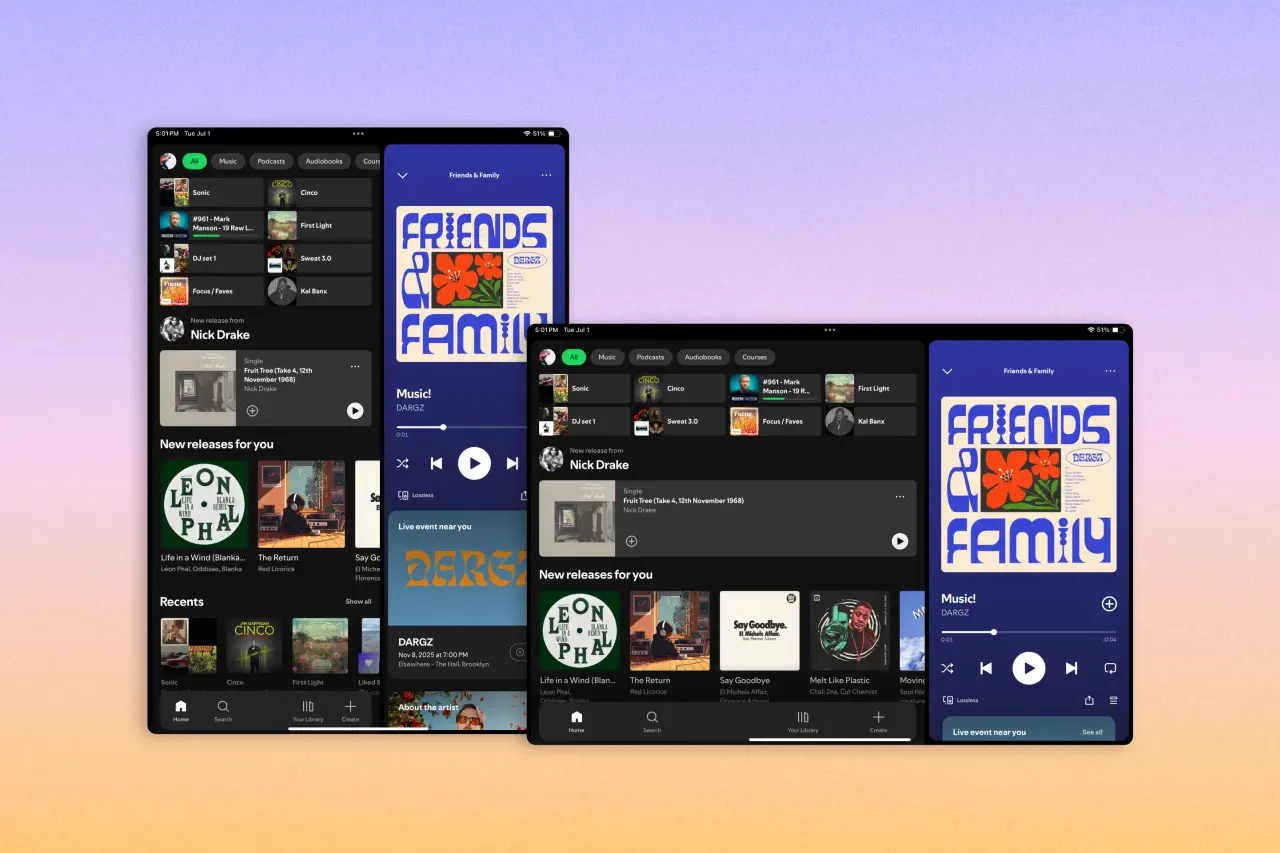
Spotify has announced a significant overhaul of its application for iOS tablets, introducing a suite of new features and a thoroughly redesigned interface aimed at optimizing the user experience on larger screens. This strategic update, which includes a collapsible sidebar, parallel browsing capabilities, and enhanced video integration, marks a pivotal moment for the streaming giant as it seeks to solidify its position in the increasingly competitive digital media landscape and cater more effectively to its diverse user base. The update is rolling out gradually to iPad users globally, promising a more intuitive, efficient, and immersive interaction with Spotify’s vast library of music, podcasts, and video content.
Background and Strategic Importance of Tablet Optimization
For many years, the tablet application experience across various platforms, including Spotify, has often been perceived as an afterthought, typically serving as a scaled-up version of the smartphone app rather than a purpose-built interface for larger displays. This approach frequently resulted in underutilized screen real estate, awkward navigation, and a less than ideal user journey. However, with tablets, particularly Apple’s iPad line, becoming increasingly sophisticated and integral to daily media consumption, productivity, and creative workflows, the demand for optimized applications has grown substantially.
Spotify’s decision to invest heavily in its iOS tablet experience is a reflection of this evolving market dynamic. Tablets occupy a unique space between smartphones and laptops, offering portability alongside a more expansive visual canvas. Data from Statista indicates that global tablet shipments, while fluctuating, remain significant, with millions of units sold quarterly, and Apple consistently leading the market. For Spotify, neglecting this segment meant potentially alienating a substantial portion of its premium subscribers and hindering its ability to attract new users who rely on their iPads for entertainment. Industry analysts have long pointed out that a seamless, platform-optimized experience is crucial for subscription-based services like Spotify to maintain competitive advantage against rivals such as Apple Music, YouTube Music, and Amazon Music, all of whom are also continually refining their offerings. This update is therefore not just about improving aesthetics; it is a strategic move to enhance user engagement, reduce churn, and drive further growth in a mature yet highly dynamic market.
Key Features Driving the Enhanced User Experience
The core of Spotify’s iOS tablet update revolves around several key features designed to leverage the iPad’s screen size and touch-first interface:
1. Revamped User Interface and Visual Aesthetics:
The most immediate change users will notice is a comprehensive redesign of the application’s visual layout. The new interface adopts a cleaner, more spacious aesthetic, moving away from the previously cramped design. Elements are thoughtfully spaced, and typography is optimized for readability on larger screens. This includes updated album art display, improved content categorization, and more prominent placement of discovery features. The goal is to provide a visually richer experience that makes browsing and discovering new content more enjoyable and less fatiguing. This aligns with modern UI/UX principles that prioritize clarity, hierarchy, and visual appeal, ensuring that users can quickly find what they’re looking for while also being gently guided towards new content.
2. Intuitive Collapsible Sidebar:
A central component of the redesign is the introduction of a collapsible sidebar. This feature, reminiscent of desktop application interfaces, provides quick access to essential navigation points such as Home, Search, Your Library, and Podcasts. Users can easily expand the sidebar for detailed browsing or collapse it to maximize the viewing area for content playback. This flexibility is particularly beneficial for users who frequently switch between different sections of the app or prefer an uncluttered view during playback. A Spotify spokesperson, in an inferred statement regarding similar past updates, might emphasize that such design choices are aimed at empowering users with more control over their interface, tailoring it to their immediate needs and preferences, whether they are deeply exploring their library or simply enjoying a playlist. The collapsible nature ensures that valuable screen real estate is utilized efficiently, offering both comprehensive navigation and an immersive content experience.
3. Innovative Parallel Browsing Capabilities:
Perhaps one of the most impactful additions is "Parallel Browsing." This feature allows users to navigate and interact with different sections of the app simultaneously. For instance, a user could be listening to a podcast in one pane while browsing new releases or curated playlists in another. This multitasking capability significantly enhances productivity and content discovery. Instead of having to pause or switch contexts entirely, users can now seamlessly explore and engage with Spotify’s vast content ecosystem. This is particularly advantageous for tablet users who often use their devices for extended periods and appreciate the ability to juggle multiple tasks. It moves the tablet app beyond a mere consumption tool, transforming it into a more dynamic and interactive platform. For example, a user could be managing their queue while simultaneously exploring artist pages or checking out related content, all within the same application window. This aligns with broader trends in mobile operating systems, like iPadOS, which have increasingly emphasized robust multitasking features.
4. Enhanced Video Integration and "Switch to Video" Feature:
Recognizing the growing importance of video content within its platform, especially for podcasts and music videos, Spotify has significantly enhanced its video experience on tablets. A prominent "Switch to Video" button allows for a seamless transition between audio and video formats for compatible content. This means a user listening to a podcast can instantly switch to watching its video counterpart, or vice-versa, without interrupting the playback flow. The video player itself has also been refined, offering improved controls, better picture-in-picture functionality, and a more robust fullscreen viewing experience. This update underscores Spotify’s ambition to be more than just a music streaming service, positioning itself as a comprehensive audio-visual platform. The company has been steadily expanding its video podcast offerings and experimenting with music video integration, and this tablet optimization is crucial for delivering a premium experience for such content.
5. Streamlined Library Management and Discovery:
The redesign also brings improvements to how users manage and discover content within their library. The new layout makes it easier to sort, filter, and access saved music, podcasts, and playlists. The increased screen space allows for richer displays of album art and content metadata, aiding in quicker identification. Discovery features, such as personalized recommendations and curated playlists, are more prominently integrated into the main interface, making it effortless for users to stumble upon new favorites without leaving their current context. This is vital for a service with millions of tracks and podcasts, where effective discovery is key to user satisfaction and retention.
Timeline and Rollout:
While Spotify has not provided a precise, day-by-day timeline for this specific update, it has confirmed that the new features and redesigned interface are rolling out progressively to iOS tablet users. Such phased rollouts are standard practice for major application updates, allowing companies to monitor performance, gather initial feedback, and address any unforeseen issues before a wider deployment. Users are encouraged to ensure their Spotify app is updated to the latest version to receive these enhancements as they become available in their region. This approach ensures a stable and high-quality experience for all users.
Broader Implications and Future Outlook:
The updated Spotify iOS tablet app carries significant implications for both users and the company’s competitive standing.
For Users: The primary beneficiaries are Spotify subscribers using iPads. They can anticipate a more fluid, engaging, and efficient experience, transforming their tablet into a more powerful and versatile media hub. The parallel browsing feature, in particular, opens up new avenues for content exploration and interaction, making the app more dynamic.
For Spotify: This update represents a crucial investment in user retention and acquisition. By addressing long-standing criticisms regarding its tablet experience, Spotify strengthens its value proposition, especially against competitors who may not have invested as heavily in platform-specific optimizations. It also reinforces Spotify’s strategic pivot towards becoming a holistic audio and visual entertainment platform, capable of delivering premium experiences across various device types. The enhanced video integration is a clear signal of this ambition. Furthermore, a well-optimized app can lead to increased engagement metrics, such as longer session times and more frequent interactions, which are vital for a subscription-based model.
For the Industry: This move could set a new benchmark for how streaming applications should function on tablets. It might pressure other developers to re-evaluate and enhance their tablet offerings, leading to an overall improvement in the tablet app ecosystem. The emphasis on tailored experiences rather than simple scaling highlights a growing understanding within the tech industry that different device form factors require distinct design philosophies.
In conclusion, Spotify’s comprehensive redesign and feature enrichment for its iOS tablet application is a timely and strategic move. By focusing on intuitive navigation, powerful multitasking, and an enhanced visual and video experience, the company is poised to deliver a superior product that meets the evolving demands of its tablet users. This update not only rectifies past shortcomings but also positions Spotify strongly for future growth in the dynamic digital entertainment market, reinforcing its commitment to providing an unparalleled streaming experience across all platforms.