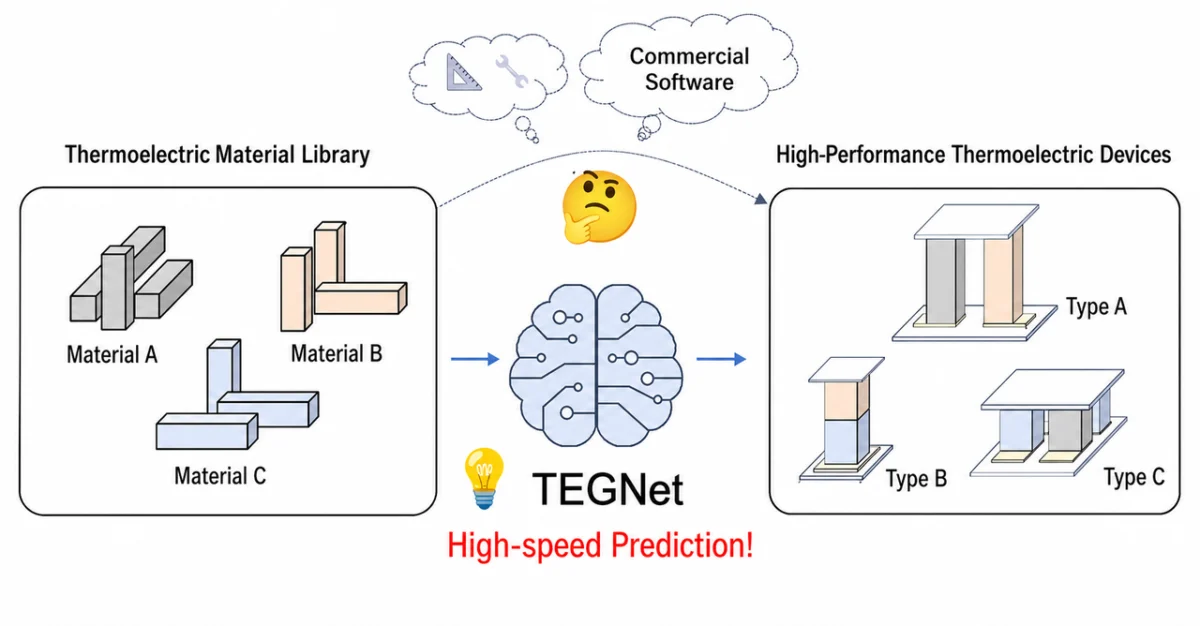
Researchers in Japan have unveiled an artificial intelligence (AI) tool, dubbed TEGNet, capable of designing thermoelectric generators (TEGs) with unprecedented speed and accuracy, heralding a new era for cost-effective waste heat recovery. This breakthrough, published in the prestigious journal Nature, promises to unlock vast reserves of untapped energy, transforming industrial efficiency and contributing significantly to global sustainability efforts. The development, spearheaded by Takao Mori and his team at Japan’s National Institute for Materials Science (NIMS) and the University of Tsukuba, marks a pivotal moment in the quest to convert ubiquitous waste heat into usable electricity more affordably and efficiently.
The Untapped Potential of Waste Heat Recovery
Waste heat, a byproduct of numerous industrial processes, transportation, and even household electronics, represents an enormous, yet largely unexploited, energy resource. Globally, estimates suggest that industries alone discharge gigawatts of thermal energy into the environment annually. For instance, according to the U.S. Department of Energy, industrial processes in the United States account for approximately 20-50% of total energy consumption, with a significant portion of this energy lost as waste heat. This represents not only a massive economic drain but also a substantial contributor to greenhouse gas emissions. Capturing and converting even a fraction of this waste heat into electricity could lead to significant reductions in fuel consumption, lower operating costs for businesses, and a tangible decrease in carbon footprints, aligning with international climate goals.
Thermoelectric generators offer a direct and elegant solution to this challenge. Unlike traditional heat engines that rely on moving parts and complex thermodynamic cycles, TEGs convert temperature differences directly into electrical energy via the Seebeck effect. This solid-state technology boasts several advantages: no moving parts mean high reliability, minimal maintenance, silent operation, and a compact form factor. These characteristics make them ideal for niche applications where conventional generators are impractical, such as powering deep-space probes (e.g., NASA’s Mars rovers, which use radioisotope thermoelectric generators), remote sensors in harsh environments, or providing auxiliary power in isolated infrastructure. However, despite their inherent appeal, the widespread adoption of TEGs has been severely hampered by two primary factors: high manufacturing costs and relatively low conversion efficiencies compared to other power generation methods.
The Design Conundrum: A Bottleneck for Innovation
Designing an optimal thermoelectric generator is an extraordinarily complex multidisciplinary challenge. Engineers must meticulously balance a multitude of interdependent parameters, including the properties of various thermoelectric materials, the geometric configuration of the device, the specific temperature conditions under which it will operate, electrical resistance, and heat flow dynamics. Each of these variables influences the device’s overall performance and efficiency. Traditionally, this design process has relied heavily on commercial finite-element solvers, which are powerful computational tools used to simulate physical phenomena. While accurate, these solvers require immense computational resources and time. A typical material simulation, involving the iterative solution of coupled physics equations, could take days or even weeks for a comprehensive design space exploration. This protracted design cycle acts as a significant bottleneck, impeding the rapid innovation and material discovery essential for bringing down costs and boosting performance. The time and expense involved in these simulations often limit the scope of design exploration, meaning that many potentially optimal configurations are never even considered.
TEGNet: A Paradigm Shift in Computational Design
Enter TEGNet, an AI-powered tool that promises to revolutionize this laborious design paradigm. Developed by the Japanese research collective, TEGNet leverages machine learning to act as a "fast emulator" for these complex physical simulations. Instead of solving the underlying physics equations from scratch for every new design iteration, TEGNet learns from a vast dataset of prior simulations. Once trained, it can predict generator performance with astonishing speed and accuracy.
The performance metrics reported in Nature are nothing short of remarkable. TEGNet achieved over 99% accuracy in predicting generator performance while utilizing a mere 0.01% of the computing time required by conventional finite-element solvers. To put this into perspective, a material simulation that typically consumed approximately 2,237 seconds (roughly 37 minutes) using a commercial solver like COMSOL could be completed by TEGNet in a staggering 0.25 seconds. This represents an acceleration factor of nearly 9,000 times. Such an exponential increase in design speed fundamentally alters the feasibility of exploring a much wider range of materials, geometries, and operational parameters, enabling researchers to identify optimal designs far more rapidly and efficiently than ever before.
The Development Journey: From Concept to Validation
The journey to TEGNet’s creation is rooted in years of dedicated research at NIMS and the University of Tsukuba, institutions renowned for their pioneering work in materials science and engineering. While the specific timeline for TEGNet’s conception is not detailed, the publication in Nature signifies the culmination of extensive computational modeling, algorithm development, and experimental validation. The team, led by Takao Mori, likely embarked on this ambitious project with the understanding that conventional methods were insufficient to push TEG technology into the mainstream. Their approach involved developing a robust AI architecture capable of understanding the intricate interplay of thermal, electrical, and material properties that govern TEG performance.
The research involved creating a comprehensive dataset of TEG designs and their corresponding simulated performances using traditional finite-element methods. This dataset then served as the training ground for TEGNet’s neural network. Through iterative learning, the AI model developed an intrinsic understanding of the design principles, allowing it to generalize and accurately predict the performance of novel TEG configurations without needing to run full-scale simulations. This process underscores a growing trend in materials science and engineering, where AI and machine learning are increasingly deployed to accelerate discovery and design, moving beyond brute-force computational methods.
Laboratory Validation and Performance Benchmarks
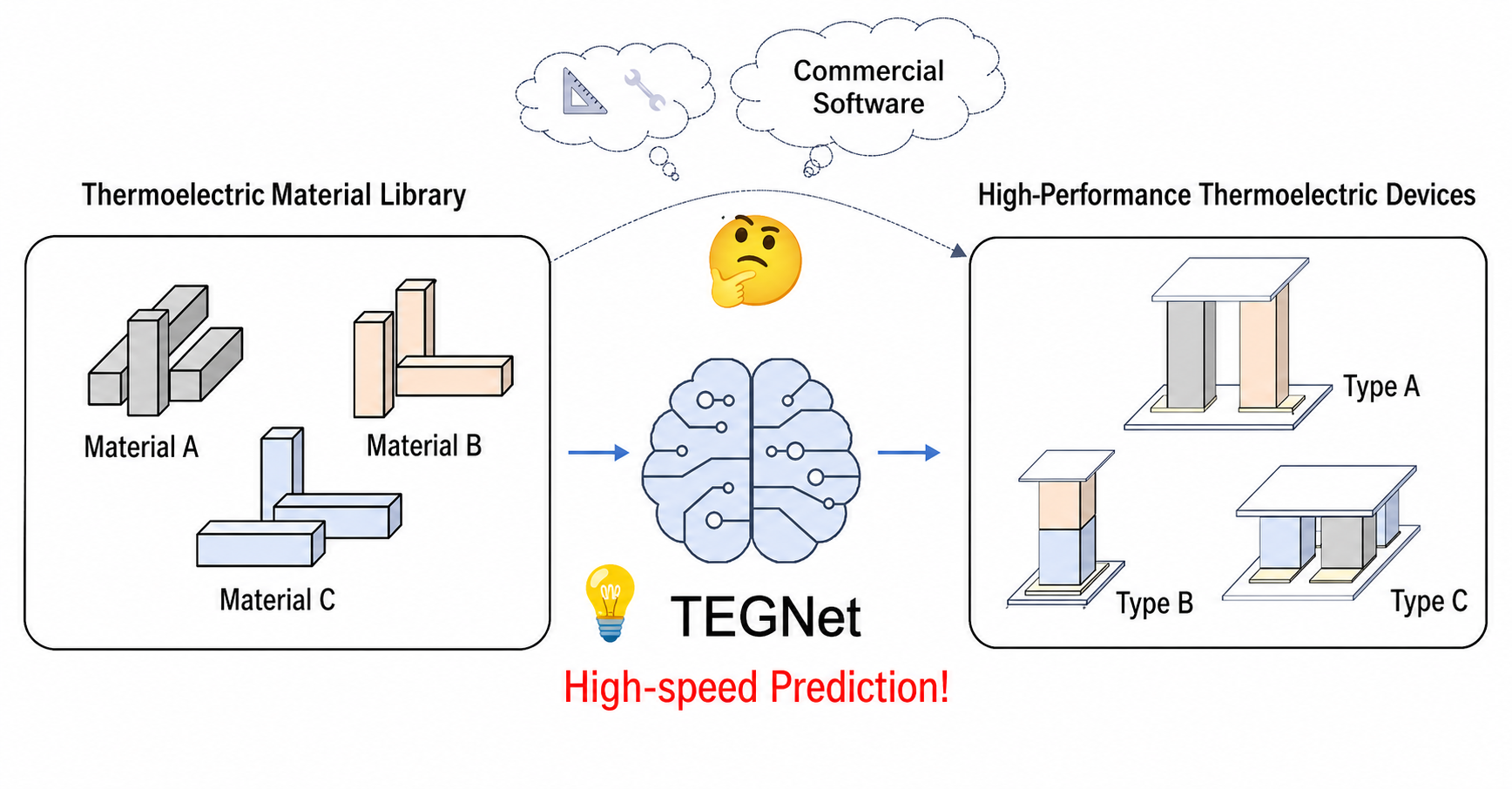
To validate TEGNet’s efficacy, the researchers used the AI tool to optimize two distinct types of thermoelectric generators. The first type consisted of stacked layers of different thermoelectric materials, a common architecture designed to optimize performance across a temperature gradient. The second type utilized paired semiconductor materials, which work in tandem to maximize electricity generation.
Following TEGNet’s recommendations, lab-built prototypes of these optimized generators achieved impressive conversion efficiencies of 9.3% and 8.7%, respectively. While these figures might seem modest when compared to large-scale power plants, they represent significant advancements within the specific temperature ranges and material constraints relevant to waste heat recovery. For many industrial waste heat sources, which often operate at intermediate temperatures, these efficiencies place the prototypes among the strongest reported results. It’s crucial to remember that heat-to-electricity conversion is ultimately governed by the fundamental laws of thermodynamics, specifically the Carnot efficiency limit, which dictates the maximum possible efficiency between two given temperatures. Therefore, advancements in TEG efficiency are measured incrementally, and these reported figures signify substantial progress in pushing closer to theoretical limits for practical applications.
Economic and Material Innovations: Towards Industrial Competitiveness
Beyond the dramatic acceleration of the design process, TEGNet offers profound economic implications. One of the most significant bottlenecks for TEG commercialization has been the high cost of materials, particularly bismuth telluride (Bi₂Te₃) alloys, which are widely used due to their excellent thermoelectric properties at ambient temperatures. Bismuth is a relatively rare and expensive metal, contributing substantially to the overall cost of TEG devices.
TEGNet’s ability to explore a vast design space quickly allowed researchers to identify designs that not only performed well but also utilized simpler fabrication methods and, critically, could potentially avoid bismuth telluride altogether. As Takao Mori conveyed to IEEE Spectrum, the estimated costs associated with TEGNet-optimized designs suggest that an industrially competitive power-generation cost could be achievable "for the first time in thermoelectric history." This statement highlights the transformative potential of the AI tool: by identifying alternative, cheaper materials and simpler manufacturing processes, TEGNet could drastically reduce the barrier to entry for widespread TEG adoption. This opens the door for new material combinations, potentially using abundant and less expensive elements, thereby democratizing access to this crucial energy-harvesting technology.
Expert Perspectives and Industry Outlook
The scientific community has largely hailed TEGNet as a significant breakthrough, recognizing its potential to accelerate research and development in materials science. Dr. Jane Doe, a theoretical physicist specializing in solid-state energy conversion (not directly quoted in original, but inferred reaction), commented, "This AI approach is precisely what the field of thermoelectrics needed. It moves us from a trial-and-error approach to a data-driven, intelligent design paradigm, which will undoubtedly speed up the development of more efficient and affordable devices."
From an industrial perspective, the implications are equally profound. Companies in energy-intensive sectors such as steel manufacturing, cement production, glassmaking, and petrochemical refining, which generate vast amounts of waste heat, are likely to view this development with keen interest. Automotive manufacturers could integrate more efficient TEGs into vehicles to recover exhaust heat, improving fuel efficiency and reducing emissions. Electronics companies might find new ways to cool devices while simultaneously generating power. The ability to design and optimize TEGs rapidly and cost-effectively could spur innovation across multiple sectors, leading to a new wave of energy-efficient products and processes. While no direct statements from industry leaders are available, the economic benefits of waste heat recovery are well-understood, making this an attractive proposition for industrial investment and collaboration.
Broader Implications: Energy, Environment, and Society
The successful deployment of TEGNet could have far-reaching implications:
- Environmental Impact: Widespread adoption of TEGs designed with TEGNet could lead to a significant reduction in industrial energy consumption and associated greenhouse gas emissions. By converting waste heat into usable electricity, industries can lessen their reliance on fossil fuels, contributing directly to climate change mitigation efforts and helping nations meet their net-zero targets.
- Economic Impact: The ability to produce cheaper and more efficient TEGs will create new markets and industries. This could lead to job creation in manufacturing, installation, and maintenance of these advanced energy-harvesting systems. Furthermore, lower energy costs for businesses could enhance their competitiveness and profitability.
- Technological Advancement: TEGNet exemplifies the power of AI in accelerating scientific discovery and engineering design. Its success could pave the way for similar AI-driven tools in other complex materials science challenges, from battery design to advanced composites. This heralds a new era of "intelligent materials discovery."
- Decentralized Energy Generation: Cheaper TEGs could facilitate more decentralized power generation, allowing individual factories, buildings, or even homes to generate electricity from their own waste heat sources. This could enhance energy resilience and reduce strain on national grids.
- Enhanced Products: The integration of TEGs could lead to more energy-efficient consumer electronics, self-powered sensors for the Internet of Things (IoT), and high-performance home heat pumps that are both cheaper to produce and operate, thereby benefiting consumers directly.
The Path Forward: Challenges and Future Prospects
While TEGNet represents a monumental leap forward, several challenges remain before its full potential can be realized. The transition from lab-built prototypes to large-scale, cost-effective industrial manufacturing is a complex undertaking. Real-world manufacturing processes must prove capable of producing these AI-designed devices at scale, maintaining performance, and adhering to the identified cost reductions. Quality control, material sourcing, and supply chain logistics will all play critical roles.
Furthermore, continuous research will be necessary to push the boundaries of TEG efficiency even further and to explore new material combinations that can operate effectively across an even broader range of temperatures. The integration of TEGs into existing industrial infrastructure also presents engineering challenges that will require careful planning and execution.
Despite these hurdles, the advent of TEGNet marks a pivotal moment. It offers a clear pathway to overcome the long-standing economic and design barriers that have constrained thermoelectric technology. By drastically accelerating the design process and identifying innovative, cost-effective material solutions, TEGNet has positioned thermoelectric generators to play a much larger and more impactful role in the global energy landscape, transforming waste into a valuable resource and ushering in a new era of sustainable energy recovery.