Published April 27, 2026, 11:50 AM
The landscape of climbing gear is in constant evolution, and the humble climbing rope, the lifeline connecting climber to belayer and earth, is no exception. In 2026, the market offers a sophisticated array of dynamic ropes, each engineered to meet the demands of diverse climbing disciplines. After months of rigorous testing, encompassing thousands of vertical feet across varied terrains and weather conditions, a select group of six ropes has emerged as the top performers, representing the pinnacle of durability, handling, and long-term value for every style of climbing. From ultralight alpine cords designed for unforgiving mountain environments to robust all-around crag ropes and high-performance redpoint ropes built for demanding sport climbs, these selections have proven their mettle under extreme duress.
The challenge in identifying the "best" climbing ropes in the modern era is compounded by the consistently high quality of offerings. Manufacturers have, for years, been producing ropes that perform admirably right out of the package. The true differentiators, however, reveal themselves only after extensive use: enduring countless pitches in adverse weather, enduring the friction of dirt and sand during coiling and uncoiling, and absorbing the impact of significant falls, or "whippers." It is through this prolonged abuse that a rope’s intrinsic qualities of durability, abrasion resistance, minimal kinking, sustained handling characteristics, and reliable performance through a belay device are truly put to the test. This year’s evaluation focused on nine new and updated climbing ropes, meticulously chosen to represent the three primary categories of modern dynamic ropes: ultralight alpine cords, versatile all-around crag and gym ropes, and high-performance redpoint cords. With prices for premium ropes now frequently falling within the $200 to $300 range, each selection was required to demonstrate exceptional longevity and consistent performance over months of extensive use. The following six ropes have earned their place as the leading choices for climbers in 2026.
Best Climbing Ropes: At a Glance
This section provides a quick overview of the top-performing ropes, highlighting their key strengths and intended use cases.
The Reviews: The Best Dynamic Ropes of Spring 2026
Best All-Around Climbing Rope: BlueWater Xenon 9.2 Standard
Weight: 60g/m
Available lengths: 60m, 70m, 80m
Pros and Cons
- Ideal balance of lightness and durability
- Feeds like butter
- Very smooth clipping
- No middle mark
- Heavy relative to its diameter
The concept of a "Goldilocks" rope—one that strikes a perfect balance, avoiding extremes of stiffness, stretch, diameter, or weight—is highly sought after by climbers. The BlueWater Xenon 9.2 Standard embodies this ideal, consistently earning high praise from testers for its versatile performance across a wide spectrum of climbing scenarios.
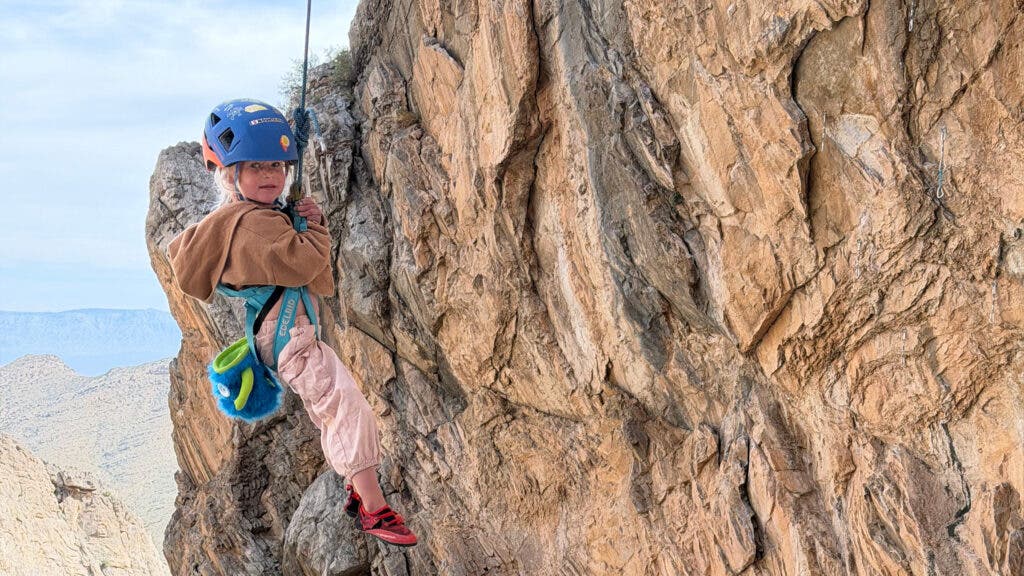
During a family trip to Las Vegas, one tester put the Xenon 9.2 through its paces on the sandstone of Red Rock and the limestone of Nevada, even utilizing it for occasional rope swings for his daughter. He reported that the rope handled exceptionally well from the moment it was uncoiled, exhibiting minimal kinking even in its initial days of use. This consistent handling is a critical factor for climbers, as a rope that kinks easily can lead to frustration and potential safety issues.
What truly distinguished the Xenon 9.2, even without a dry treatment, was its remarkably smooth handling. "It’s easy to feed slack when your partner needs a quick clip, and it’s effortless to take slack back in when your partner needs a panic take," one tester noted. This fluid interaction extended to the lead climber as well, with clipping feeling effortless across a range of quickdraws, from well-worn to stiff, steel-gate models. The rope’s performance during falls was also commendable, hitting a comfortable middle ground: soft enough to mitigate the jarring impact, yet not so stretchy as to result in excessively long or uncontrolled descents.
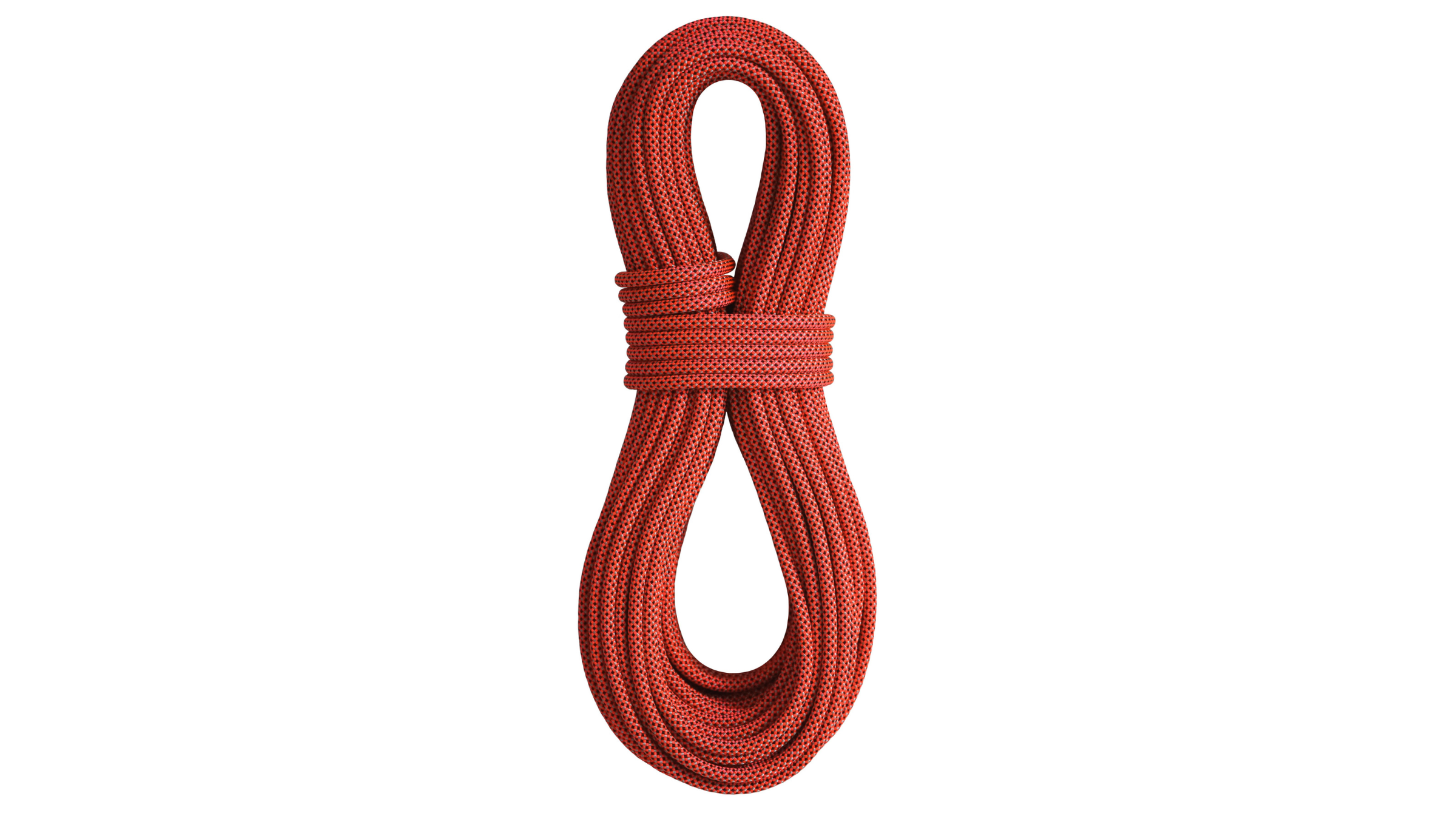
A notable drawback for the standard Xenon 9.2 is the absence of a middle mark, a feature present on more expensive Xenon variants that include bi-color patterns and dry treatments. However, this oversight was largely overshadowed by the rope’s demonstrated durability. Despite repeated falls, hangdogging, and even the aforementioned rope-swing abuse, testers observed only minor fuzzing approximately ten feet from the ends. Crucially, this wear did not necessitate trimming, underscoring the rope’s robust construction and longevity.
Best Sport Climbing Rope: Metolius Monster 9.8
Weight: 65 g/m
Available lengths: 70m
Pros and Cons
- Great value
- Hard-wearing and long-lasting
- Versatile for cragging and multi-pitch
- Quick-feeding
- Might be too thick for the ultralight crowd
True to Metolius’s reputation for producing robust and dependable gear, the Monster 9.8 is a burly, confidence-inspiring rope engineered to withstand significant abuse. For climbers who prefer a slightly thicker cord for cragging—one that feels substantial in hand and reliable when managed through a belay device—this rope is an excellent choice.
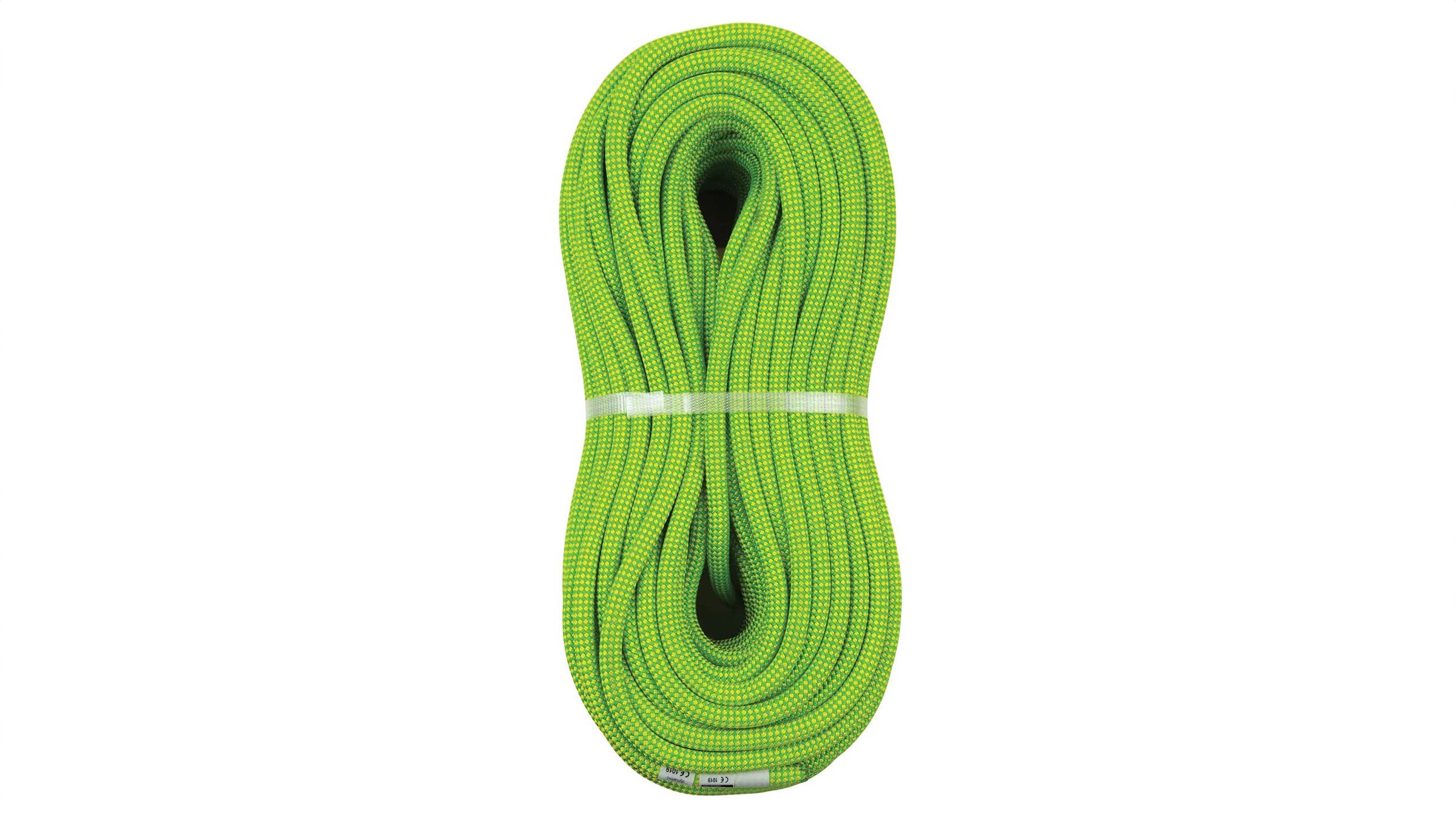
This striking yellow-green rope features a nanotech dry treatment, a process that infuses Teflon Eco particles into the cord’s fibers to enhance its resistance to water and grime. This treatment contributed to a rapid-feeding, sleek-clipping feel right out of the packaging. The sheath’s tight weave, combined with a core design utilizing a half-and-half blend of Z and S twists, also resulted in minimal kinking from the outset of testing.
In practical use, the Metolius Monster 9.8 has performed exceptionally well. The middle mark, subtly integrated through orange threads woven into the sheath, is easily discernible. Falls are met with a slightly soft catch that feels controlled rather than alarming.
The Monster truly earns its name in terms of durability. Early in the testing period, a sharp lip of feldspar and hornblende on a traversing route caused a significant ding in the sheath. While this section ultimately required trimming, a lesser rope might not have survived such an encounter. Even after this incident, the remaining cord has continued to endure substantial wear on local granite with no further issues.
Best Gym and Crag Rope: Sterling VR Eco 9.6 Limited Edition Colombia Rope
Weight: 61g/m
Available lengths: 40m, 60m, 70m, 80m
Pros and Cons
- Bright-yellow base color for high visibility on clips
- Hits the ideal zone of stiffness + friction for single-pitch sport
- Net proceeds support youth climbing in rural Colombia
- Has a "plasticky" feel at first
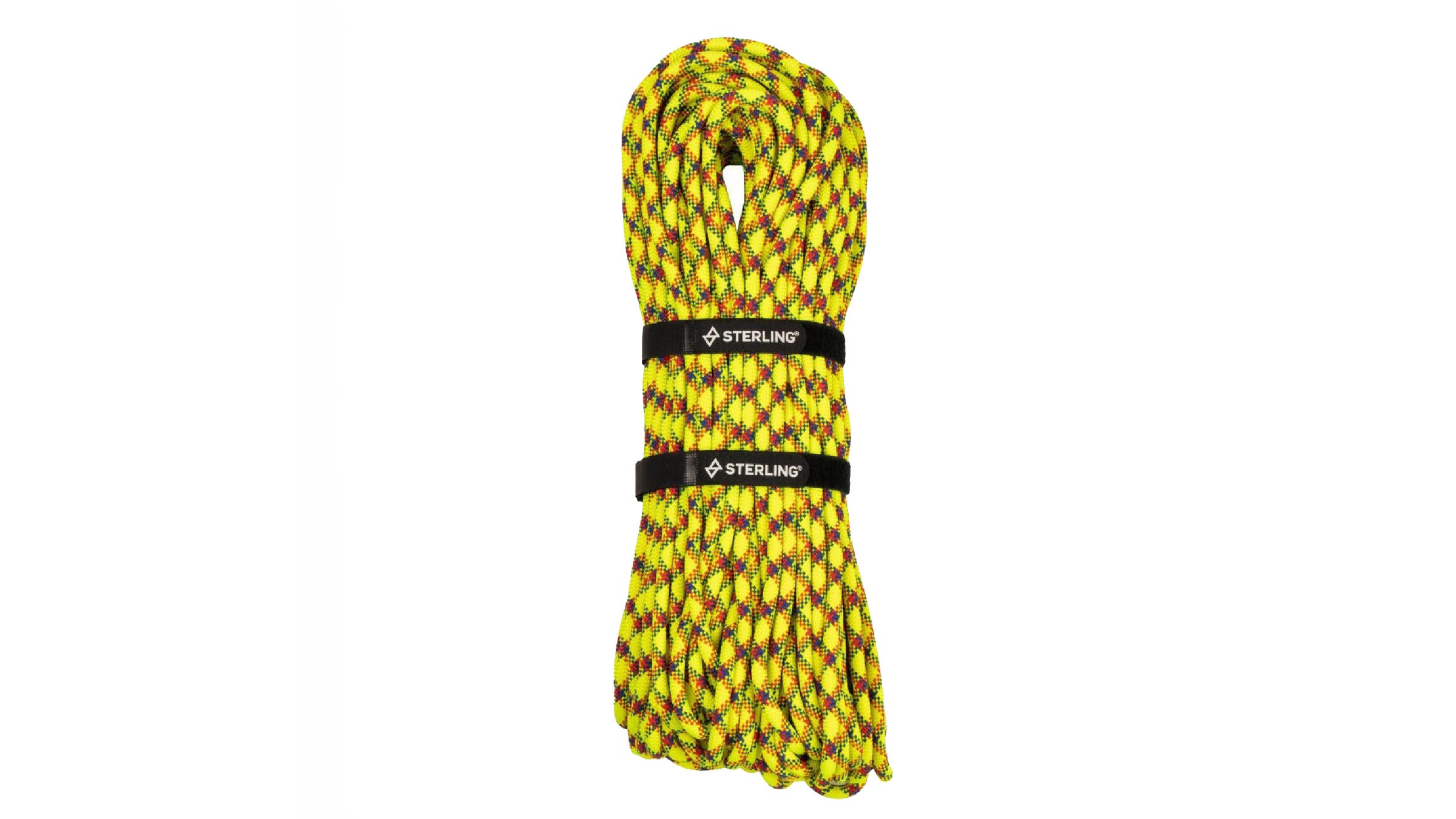
The Sterling VR Eco 9.6 stands out as a supremely balanced rope for sport and gym climbing, offering smooth, intuitive handling coupled with a remarkably soft catch. Its rapid feeding capabilities, ideal for quick clips in the gym, do not come at the expense of excessive slickness. The rope demonstrates excellent kink resistance and strikes an optimal balance between suppleness and structure, making it a strong contender for indoor climbing, projecting new routes, and extended hangdogging sessions.
Upon initial inspection, one tester noted a slightly stiff, almost "plasticky" feel, particularly during the clipping process. However, this characteristic softened after a few climbing sessions, revealing a rope that handled predictably and absorbed falls more effectively than anticipated. "While the rope feels more substantial in the hand than some more supple Sterling ropes, the catch was even softer than the V9 9.8," the tester remarked. "I can’t think of many better balanced lines for working routes." This equilibrium—sufficient elongation to soften falls without excessive rebound—made it particularly well-suited for repeated attempts on challenging single-pitch climbs. The rope also demonstrated solid abrasion resistance, handling a sharp pegmatite lip on a toprope route that had previously damaged other cords in its diameter range.
The rope’s vibrant yellow sheath, accented with subtle red and blue "X" patterns, enhances its visual appeal and functionality. This color scheme improves visibility in peripheral vision, making it easier for climbers to gauge slack during clips. Beyond its aesthetic and performance attributes, the Sterling VR Eco 9.6 also supports a significant social mission. Proceeds from sales of this special edition rope contribute to the Global Climbing Initiative’s Climbing Leadership Fund, which aims to introduce climbing and leadership skills to underserved youth in countries such as Colombia.
Best Alpine Rope: Fixe Pedraforca 8.8
Weight: 54 g/m
Available lengths: 40, 50, 60, 70, 80, 100, 200m
Pros and Cons
- Packaged butterfly coil (vs. mountaineer’s coil) had zero kinking
- Very maneuverable and durable
- Repelled moisture effectively
- Not overly stretchy for a sub-9 mm cord
- Heavy for its diameter
- Not very supple for fast clips
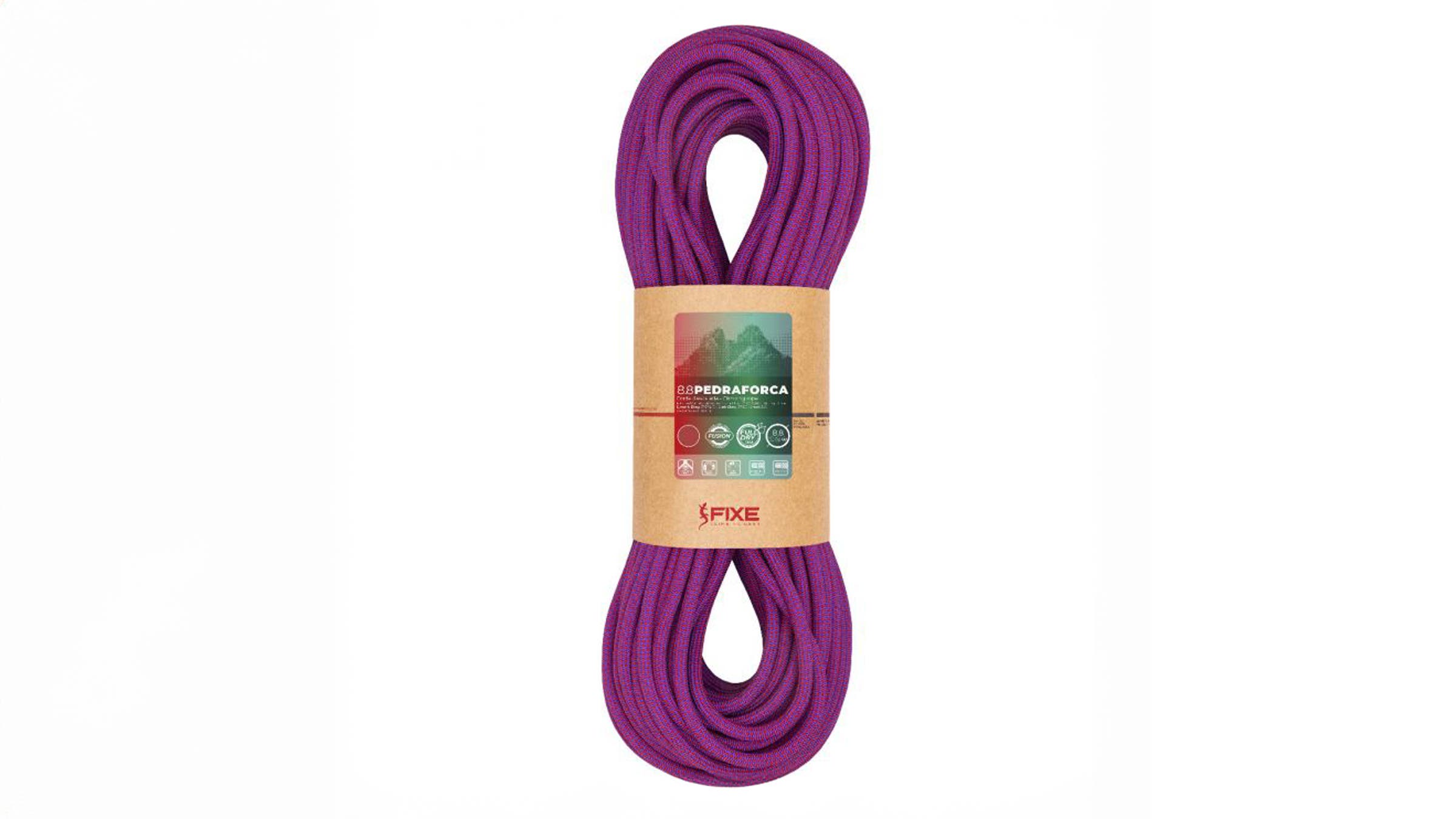
The Pedraforca 8.8 is a specialized alpine rope meticulously designed to prioritize stiffness, durability, and all-conditions reliability—essential qualities for managing ropes at hanging belays, during rappels, or when exposed to sharp rock and unpredictable weather. While not the most supple cord in this test, this characteristic is a deliberate trade-off for a rope that remains tangle-free, handles predictably, and shrugs off abuse.
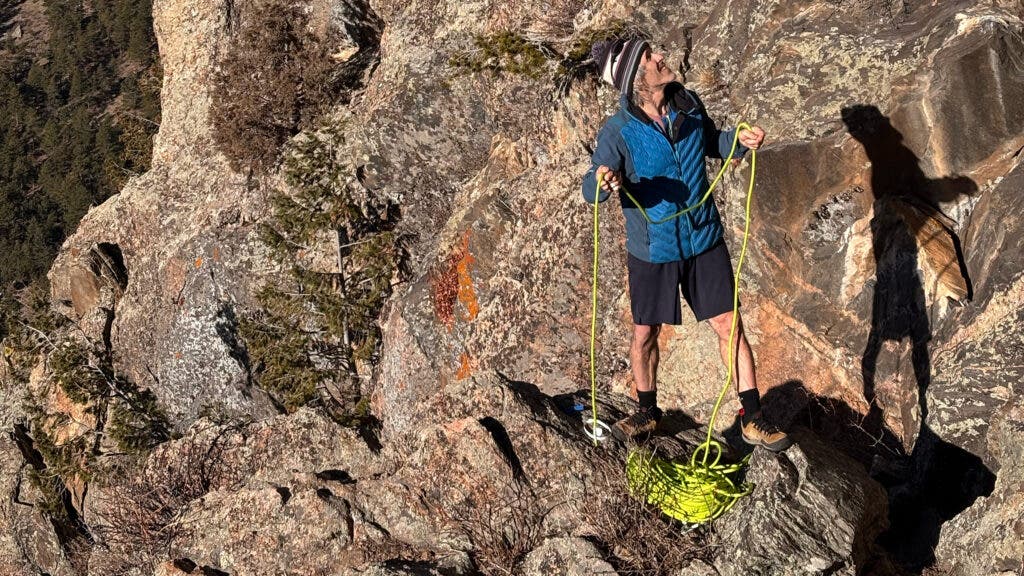
The inherent stiffness of the Pedraforca 8.8 was the first attribute that Climbing editor and tester Anthony Walsh noted and appreciated. Based in the Selkirk Mountains of British Columbia, Walsh subjected the Pedraforca 8.8 to a rigorous testing regimen, including ascents on Mount Athabasca, drytooling crags near Canmore, the sharp quartzite of the Selkirks, and the East Pillar of Torre Egger in Patagonia. In every environment, the rope maintained an impressive lack of snags, even straight out of the coil, significantly simplifying rope management on complex multi-pitch terrain.
Durability emerged as another standout feature. During drytooling on chossy routes near Canmore—which involved pulling loose blocks and turf onto the rope and scraping crampons across it on an M6+ slab—Walsh did not induce any soft spots or damage requiring trimming. The dry treatment also proved effective, shedding moisture even as Walsh ascended Athabasca’s snowy glacier ramp during a stormy, above-freezing day.
Despite its alpine focus, the Pedraforca 8.8 still offers a controlled catch. Walsh’s 185-pound partner reported a soft but not excessively stretchy feel during repeated 20-foot falls on a steep 5.12. Thoughtful design elements enhance its utility, including a triple-stripe middle mark and a bold 8-meter warning band, though both tend to fade with prolonged use. At 54 grams per meter, it is not the lightest rope in the ultralight-alpine category, but the Pedraforca more than compensates with its unwavering reliability.
Best Lightweight Cragging Rope: Mammut Crag Eco Dry 9.5
Weight: 60 g/m
Available lengths: 30, 40, 50, 60 70, 80m
Pros and Cons
- Agile feel in hand while belaying
- Very durable
- Dry treatment more than proved its mettle
- Soft catches
- Some initial sheath wear
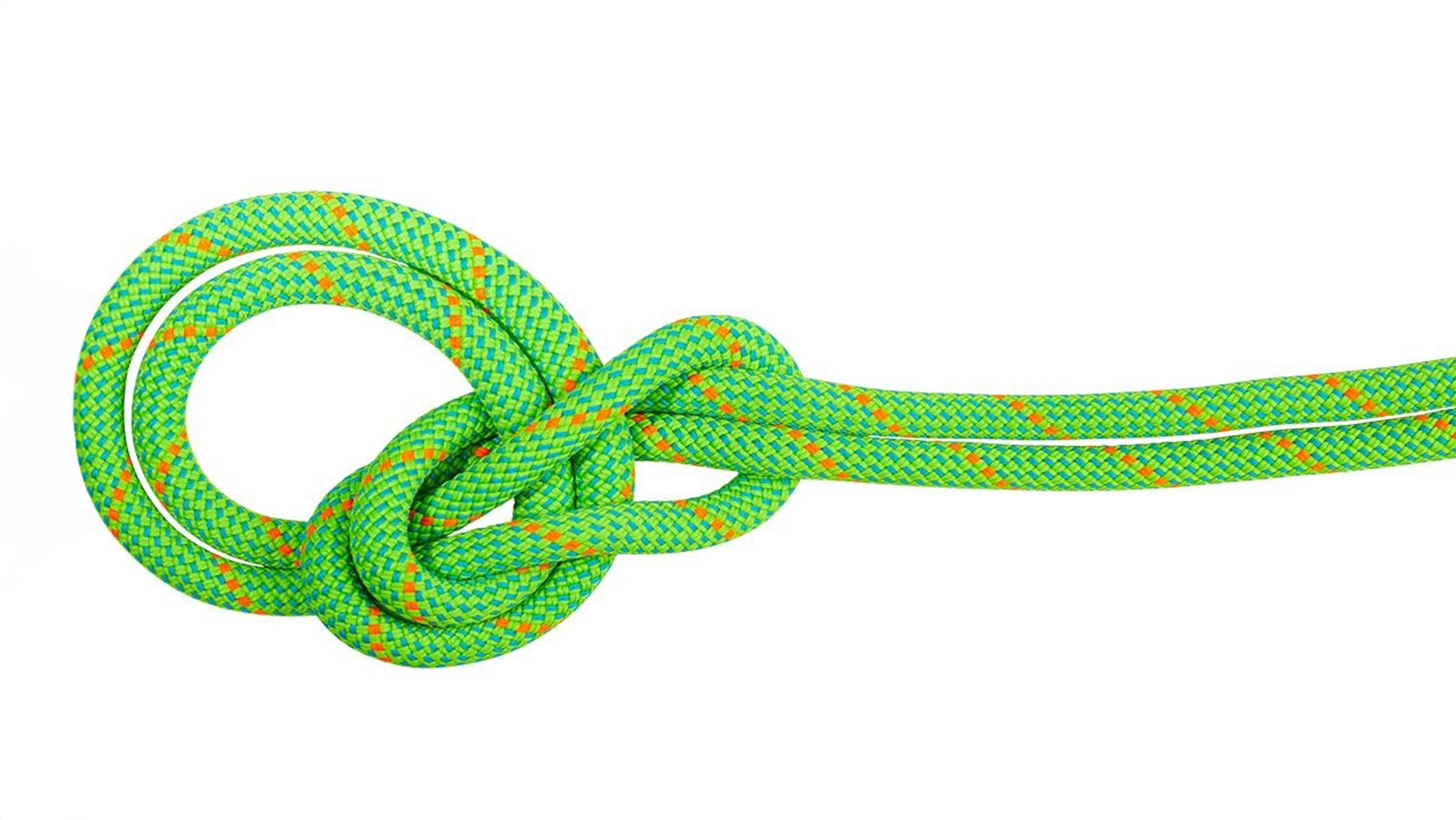
The Mammut Crag Eco Dry is a robust, sport-climbing-oriented rope that strongly emphasizes durability without compromising handling. After a full year of testing, encompassing more significant falls than could be precisely counted, it has proven to be exceptionally resilient—the kind of cord suitable for projecting, whipping, and consistent daily use.
Upon uncoiling, the rope felt slick but not excessively so, and reassuringly free of kinks. Its versatility was highlighted during initial breaking-in at Reynolds Wall in Staunton State Park, Colorado, where long, technical granite pitches showcased the rope’s adaptability. At 9.5 mm, it possesses sufficient thickness to feel secure, yet remains light and manageable in hand, even when more than 100 feet off the ground.
However, it is not entirely impervious to damage. During a toproping session on a 5.13c at The Raven, the sheath sustained some abrasion while being dragged over a sharp, crystalline lip. While the damage was noticeable, the affected end remained usable for several months.
The true measure of its performance came during a cold, rainy November trip to the Red River Gorge. The PFC-free dry treatment ensured the rope did not become saturated, even during climbs in exceptionally wet conditions. After a year of extensive testing and numerous falls, a few meters were eventually trimmed from each end. The remaining portion continues to serve as a reliable 70-meter redpointer and a dependable workhorse.
Best Trad Climbing Rope: Black Diamond 9.4 Dry
Weight: 58 g/m
Available lengths: 70 m
Pros and Cons
- Resists kinks
- Fast, easy clipping
- Tight and light for the diameter
- Dry treated
- Grippy sheath made for slower lowering
- Pricey
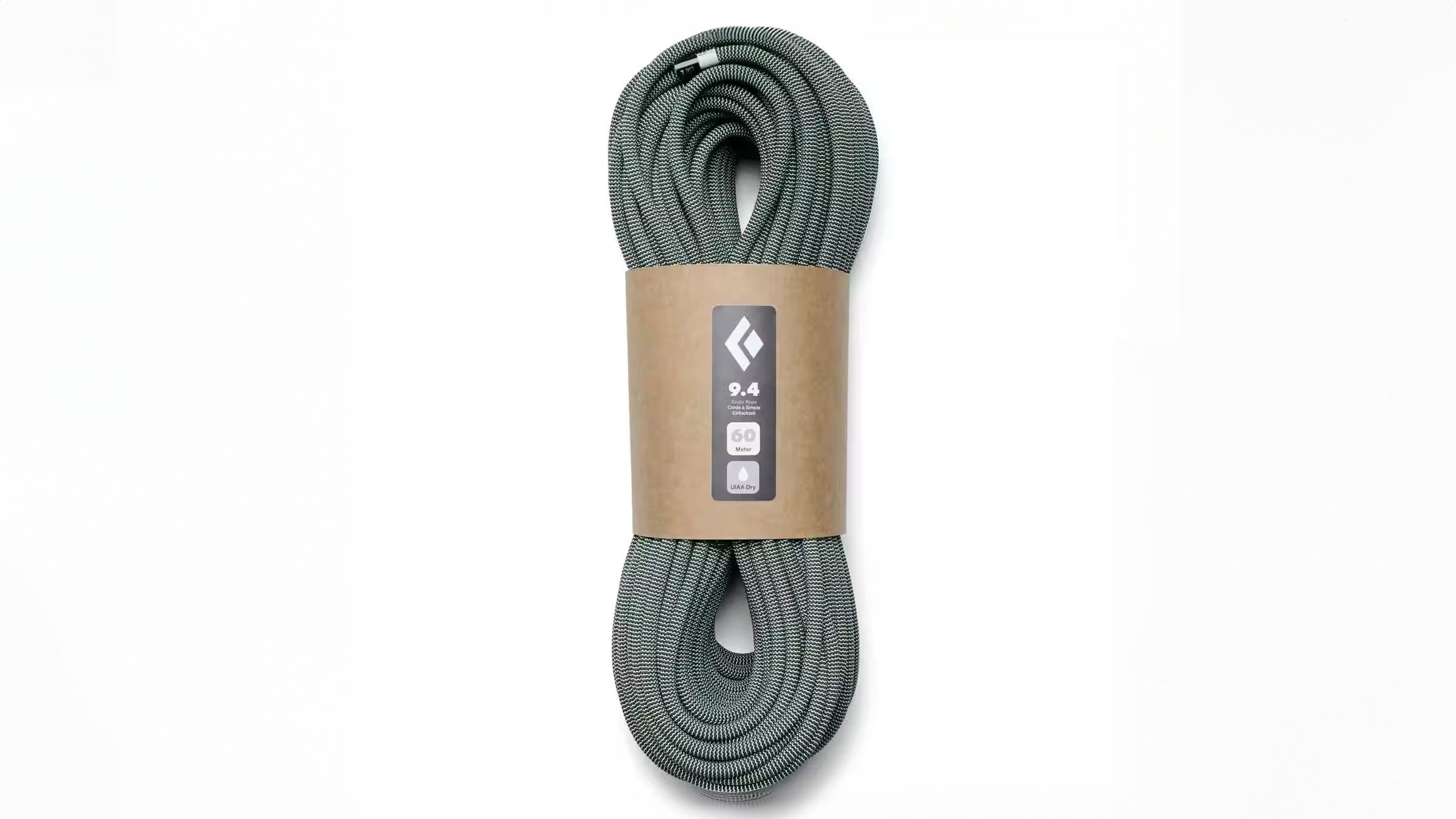
The Black Diamond 9.4 Dry strikes an impressive balance between durability, sleekness, and light weight, making it an ideal choice for sandstone projects around Boulder, Colorado, where it was subjected to extensive testing. Climbers took significant falls, hungdogged on steel permadraws, and did not shy away from allowing dirt to accumulate in the rope. It was also run over grainy lips on sport pitches and across arêtes and edges on mixed and traditional routes. After months of use, the rope showed minimal wear, a remarkable feat for a 9.4 mm cord that feels slender and offers the smooth, airy performance of an ultralight rope. This makes it excellent for mitigating rope drag on extensive sport climbs or on zigzagging trad leads.
One Boulder-based tester, who had previously avoided Black Diamond ropes due to perceptions of bulkiness, stiffness, and susceptibility to wear, became a convert after using this model. He particularly appreciated the rope’s kink-free feeding and its silky 1:1-weave sheath, where each strand interweaves tightly with its neighbors. "For high-end redpointing and projecting, this may very well be one of the smoothest ropes I’ve used," he commented, also noting its hardiness. "Considering the extensive projecting abuse, the sheath remains in impeccable condition."
It is important to note that this rope is relatively stiff, which resulted in a few short, sharp catches during falls near a bolt. While its dynamic elongation (37%) is comparable to similar ropes, belayers with lighter climbers should be prepared to jump up during a fall to soften the impact.
Frequently Asked Questions
How long should climbing rope be?
Climbing ropes are most commonly available in lengths of 60, 70, 80, or even 100 meters, with shorter options (35 to 50 meters) also offered. Climbers should consider the typical crags they frequent to determine the most suitable length, keeping in mind that as the rope ages and wears, sections will need to be trimmed from the ends.
What’s the difference between thin and thick climbing ropes?
Generally, thicker ropes (above 9.4 millimeters) tend to offer greater longevity than thinner ones (9.4 millimeters and below). However, advancements in technology, such as sheath weave patterns and rope treatments, have significantly enhanced the durability of thinner ropes, making them stronger and longer-lasting. Their lighter weight also makes them ideal for optimizing redpoint attempts or minimizing rope drag on complex, wandering pitches common in multi-pitch and trad climbing. Thicker ropes remain the preferred workhorses, capable of withstanding more falls and encounters with sharp rock. A diameter range of 9.4 to 10.2 millimeters is generally considered optimal for these applications, though excellent options exist both above and below this range, depending on specific needs and usage.
What are the different types of climbing ropes?
Climbing ropes are categorized into three main types: single, half, and twin. This guide specifically focuses on dynamic single ropes, suitable for single and multi-pitch climbing where the risk of rope damage from sharp rock is minimized. Climbers tackling arêtes or trad routes, where protection might be placed on either side of the climber, may opt for half ropes (typically 7 to 9 millimeters in diameter). Each half rope is strong enough to catch a fall independently but light enough for use in conjunction with another rope. Twin ropes, usually 7 to 8 millimeters in diameter, are designed to be used exclusively as a pair and are best suited for alpine and ice routes with rappel descents.
Do I need a rope with dry treatment?
Climbers who intend to climb in wet or icy conditions should strongly consider investing in a dry-treated rope. While the price increase can be substantial depending on the brand, the initial cost is justified by the fact that ropes lose up to 30 percent of their energy-absorbing capacity when wet. The International Climbing and Mountaineering Federation (UIAA) has established a standardized testing procedure for dry-treated ropes. To achieve UIAA Water Repellent Certification, a dry-treated rope must absorb less than 5 percent of its weight in water after a 15-minute test. In contrast, untreated ropes can absorb up to 50 percent of their weight in water.
What are important technical specifications for climbing ropes?
Climbing ropes come with a variety of technical specifications. Key metrics for buyers to understand include:
- Diameter: The thickness of the rope, typically measured in millimeters.
- Weight: Usually expressed in grams per meter (g/m).
- Number of Falls: The maximum number of standard impact force falls a rope can withstand according to UIAA standards.
- Impact Force: The maximum force exerted on a climber during a standard fall. Lower numbers indicate a softer catch.
- Dynamic Elongation: The percentage a rope stretches when it catches a standard fall.
- Static Elongation: The percentage a rope stretches under a static load.
- Sheath Slippage: The amount of sheath movement relative to the core during a fall. Lower numbers are preferable.
- UIAA Dry Treatment: Indicates the rope’s resistance to water absorption.
How We Test Climbing Ropes
Our testing protocol for climbing ropes is far from gentle. Over a four-month period, five expert testers subjected ten ropes from leading manufacturers to a wide range of real-world scenarios, from indoor sport climbing sessions to local cragging and high-alpine objectives. Collectively, the team logged nearly 20,000 vertical feet of climbing.
Each rope was evaluated consistently: assessing how cleanly it uncoiled, its handling characteristics during day-to-day use, its durability over time, and its performance during critical fall scenarios. We paid close attention to the feel of clipping, resistance to kinking, abrasion and damage across different rock types, and whether any trimming was required throughout the testing period. For dry-treated models, performance in wet, cold, and mixed conditions was meticulously tracked.
Our testing environments were deliberately demanding. While the gym served as the baseline, the majority of the rigorous testing took place outdoors. This included excursions into the desert limestone of the Mormon Mountains in Nevada and enduring sustained rain and snow cycles at the Red River Gorge in Kentucky.
Meet Our Lead Tester
Matt Samet, a freelance writer and former editor of Climbing magazine, has been a dedicated rock climber since the mid-1980s, a period when climbers sometimes utilized basic goldline ropes. Residing in Boulder, Colorado, his climbing pursuits primarily involve sport climbing, bouldering, and training in the gym and on his home climbing wall. Samet has been a contributor to climbing gear testing and reviews for over two decades, bringing a wealth of experience and insight to his evaluations.