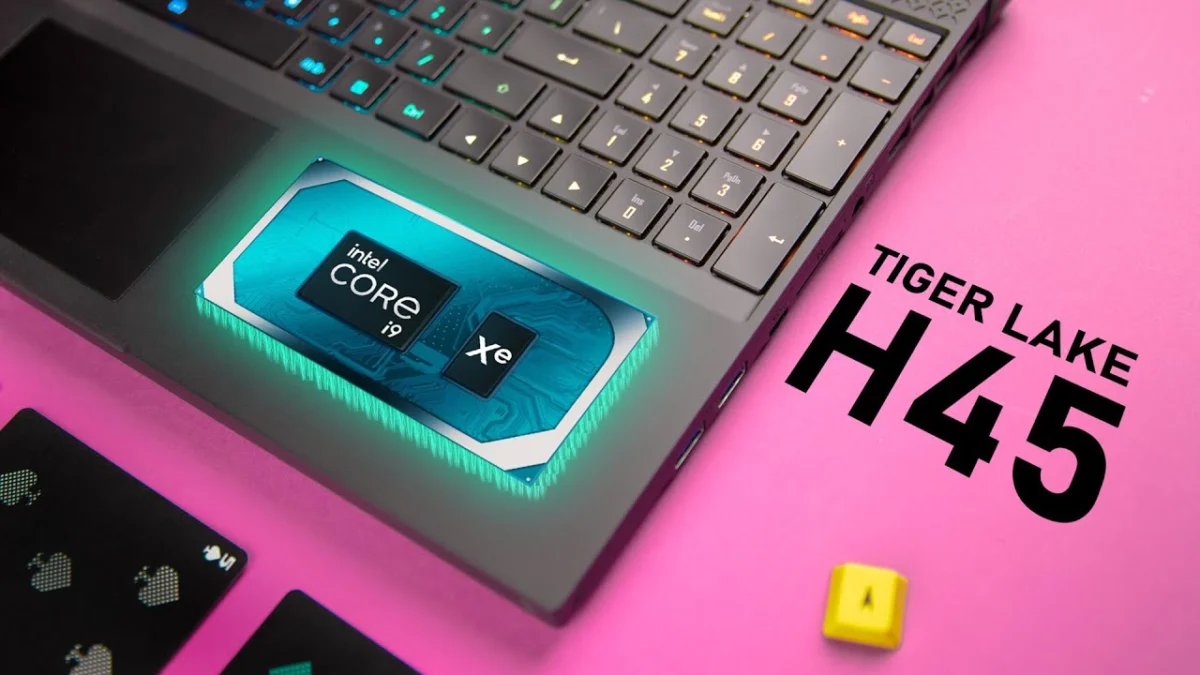
Competition within the semiconductor industry has historically driven rapid technological advancement, preventing monopolies, expanding consumer choice, and stabilizing market prices. For the past several generations, Advanced Micro Devices (AMD) has maintained a commanding lead in the mobile processor segment, largely due to the efficiency and multi-core performance of its Ryzen Mobile 4000 and 5000 series architectures. Meanwhile, Intel Corporation faced persistent challenges in matching AMD’s momentum, particularly within the gaming laptop market, where its 10th-generation Comet Lake processors struggled to compete against heavily favored Ryzen alternatives. However, the introduction of Intel’s 11th-generation Core H-series—codenamed Tiger Lake-H45—signals a concerted effort by Team Blue to reclaim ground in the high-performance portable computing sector.
Background and Context of the Mobile CPU Market
The competitive landscape of the PC processor market underwent a significant paradigm shift following the introduction of AMD’s Zen architecture. While Intel historically dominated desktop and laptop markets, manufacturing delays regarding its 10-nanometer process node allowed AMD to capture substantial market share. On the desktop front, Intel’s Rocket Lake processors received mixed reviews, often criticized as an interim solution combining older manufacturing nodes with new architectural designs.
The situation in the mobile segment proved even more challenging for Intel. The 10th-generation Comet Lake processors lacked the core efficiency and multi-threading prowess demonstrated by AMD’s Ryzen 4000 and subsequent 5000 series mobile chips. Nevertheless, AMD’s manufacturing capacity constraints created a notable bottleneck, leaving many consumers unable to easily purchase Ryzen-powered laptops. This supply limitation provided Intel with a narrow window of opportunity. To capitalize on this, Intel required an architecture capable of matching or exceeding Ryzen 5000 performance benchmarks before AMD’s supply chains fully stabilized.
Architecture and Technological Enhancements of Tiger Lake-H45
The 11th-generation H-series processors represent a fundamental departure from the iterative refreshes seen in previous generations. Built upon Intel’s 10nm SuperFin process, the Tiger Lake-H45 lineup incorporates the Willow Cove microarchitecture and integrated Intel Xe graphics, moving away from the aging 14nm process nodes that defined prior product stacks.
Unlike the ultra-low-power Tiger Lake variants designed for thin-and-light ultrabooks, or the H35 series targeted at ultraportable gaming systems, the H45 processors are scaled to deliver up to 8 cores and 16 threads alongside high thermal design power (TDP) thresholds. The platform introduces several key architectural advancements, including native support for PCIe Generation 4 lanes—a notable upgrade over AMD’s Ryzen Mobile 5000 series, which remained limited to PCIe Gen3 for power-saving considerations.

The inclusion of 20 PCIe Gen4 lanes directly from the CPU enables high-speed peripheral integration, such as advanced NVMe storage arrays configured in RAID. This architecture is designed to support upcoming technologies like Microsoft Direct Storage, an application programming interface aimed at streamlining input/output operations between fast solid-state drives and the GPU, thereby reducing CPU overhead during intensive gaming scenarios.
The 11th Gen Core H-series Lineup and Specifications
Intel’s new mobile lineup spans several configurations designed to cater to varying performance tiers within the gaming and content creation markets. At the apex of the portfolio sits the flagship Intel Core i9-11980HK, an unlocked 8-core, 16-thread processor capable of achieving single-core turbo frequencies up to 5.0 GHz and an all-core boost of 4.5 GHz. Configurable up to 65 watts, the i9-11980HK is fully overclockable using Intel’s Extreme Tuning Utility (XTU) or the automated Speed Optimizer feature.
Beneath the flagship model, Intel introduced the Core i9-11900H and the Core i7-11800H. Both chips feature an 8-core, 16-thread architecture and 24MB of L3 cache—surpassing the cache capacity found in some desktop counterparts. Industry analysts have identified the Core i7-11800H as a potential sweet spot for performance-per-dollar, benchmarking closely behind the flagship HK variant within a standard 45W envelope.
For mainstream configurations, Intel announced two 6-core, 12-thread processors: the Core i5-11400H and its counterpart. These models feature a reduced L3 cache of 12MB and are designed for more accessible gaming laptop price points. Across all 11th Gen H-series processors, native memory support has been upgraded to DDR4-3200, replacing the previous standard of DDR4-2933.
Platform Connectivity and Extended Features
Beyond raw processing cores, the Tiger Lake-H platform introduces comprehensive infrastructure upgrades designed to enhance overall system capability. The platform provides a grand total of 44 PCIe lanes—20 originating from the CPU (Gen4) and an additional 24 from the Platform Controller Hub (Gen3)—offering extensive connectivity for high-speed storage and peripheral expansion.
Intel has also integrated native support for Thunderbolt 4, providing 40Gbps bidirectional bandwidth capable of driving multiple high-resolution displays and supporting power delivery standards. Furthermore, the inclusion of Killer Wi-Fi 6E introduces support for the 6GHz wireless spectrum, offering wider channels and reduced signal congestion in dense network environments compared to legacy 5GHz standards.

Performance Metrics and Comparative Analysis
According to benchmark data provided by Intel, the 11th Gen H-series demonstrates competitive performance gains over both predecessor architectures and AMD’s current Ryzen 5000 mobile lineup. In comparative gaming workloads, the Core i9-11980HK paired with an NVIDIA GeForce RTX 3080 mobile graphics processor frequently surpassed systems equipped with the AMD Ryzen 9 5900HX.
Additionally, mid-tier offerings such as the Core i5-11400H demonstrated competitive performance against higher-tier Ryzen 5000 hardware in select gaming scenarios, despite featuring fewer physical cores. However, independent hardware reviewers emphasize that real-world performance in modern laptops heavily depends on specific thermal design power configurations, chassis cooling solutions, and power delivery limits implemented by individual original equipment manufacturers (OEMs).
Market Implications and Industry Outlook
The commercial success of Intel’s 11th Generation H-series will ultimately depend on several critical market factors, including retail pricing, OEM design implementation, and supply chain availability. While technical specifications indicate that Intel has successfully closed the performance gap with AMD, pricing parity remains essential. Given the strong market penetration achieved by Ryzen Mobile laptops paired with high-end discrete graphics, OEMs must price Intel-based systems competitively to attract value-conscious consumers.
Furthermore, physical chassis design and thermal management will play a decisive role in consumer adoption. Historical precedents demonstrate that impressive internal specifications can be undermined by poor thermal throttling or restrictive form factors. If Intel and its manufacturing partners can ensure robust supply availability ahead of peak buying seasons while maintaining competitive pricing and effective thermal designs, the mobile processor market is expected to enter a highly contested phase. This renewed competition ultimately benefits consumers by driving technological innovation and expanding high-performance choices across price spectrums.