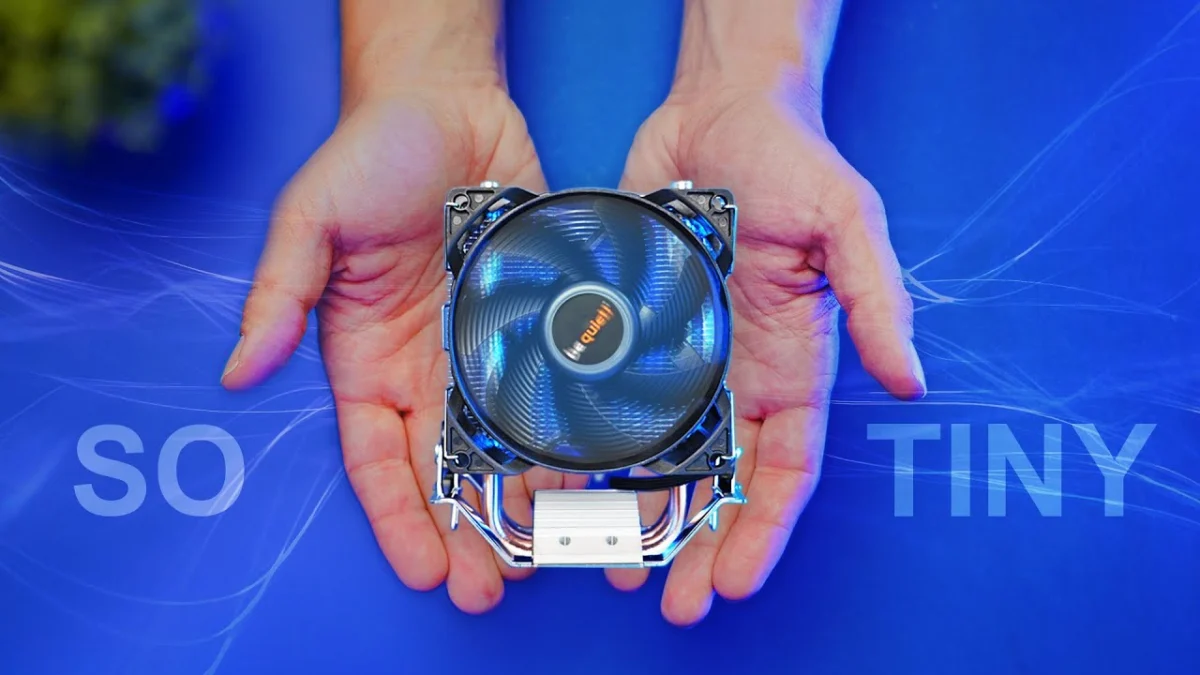
The modern custom PC building market is perpetually dominated by monolithic cooling solutions. Enthusiasts and system builders frequently gravitate toward massive, dual-tower heatsinks or complex liquid-cooling loops featuring 240mm and 360mm radiators. While these behemoths offer exceptional thermal dissipation capacity for high-end, overclocked processors, they often introduce significant drawbacks: inflated price points, complex installation procedures, chassis clearance conflicts, and potential interference with tall memory modules. However, recent market analysis and hardware testing indicate that a vast majority of mainstream consumers do not require extreme thermal headroom. Recognizing this efficiency gap in the entry-level segment, German hardware manufacturer be quiet! has released an updated iteration of its budget-oriented cooling lineup: the Pure Rock Slim 2. Priced competitively at an MSRP of $25, this compact 92mm tower cooler aims to bridge the divide between ultra-budget stock coolers and oversized aftermarket heatsinks, delivering high-end acoustic and thermal efficiencies in a remarkably small footprint.
Background and Evolution of the Pure Rock Slim Series
The introduction of the Pure Rock Slim 2 arrives at a critical juncture in the consumer hardware industry. Over the past several cycles, both Intel and Advanced Micro Devices (AMD) have pushed power densities higher, resulting in increased thermal loads even within mid-range and entry-level processors. Historically, system builders seeking quiet operation and reliable temperatures outside of stock thermal solutions had to invest in 120mm tower coolers, such as the legendary Cooler Master Hyper 212 series or the premium Noctua NH-U12S.
While these 120mm options remain industry staples, they frequently present physical limitations in smaller form-factor (SFF) builds or compact mid-tower enclosures. Recognizing the burgeoning demand for space-efficient yet high-performing components, be quiet! initially launched the original Pure Rock Slim to capture the budget-conscious and space-constrained demographic. The evolution into the Pure Rock Slim 2 represents a targeted refinement of this concept. Rather than reinventing the architecture, the German engineering team focused on modernizing socket compatibility, extending the rear fin array for marginally improved surface area, refining the direct-touch base plate, and upgrading the included fan. This iterative progression allows the $25 cooler to leverage advanced thermal technologies typically reserved for higher-tier product lines, making sophisticated heat-dissipation methodologies accessible to budget-focused builders.
Design Architecture and Technical Specifications
At first glance, the physical dimensions of the be quiet! Pure Rock Slim 2 underscore its intended application. Standing at a height of 135mm, with a depth of 82mm and a width of 97mm, the heatsink is engineered explicitly for compatibility and clearance. This diminutive vertical profile ensures that it fits effortlessly into a wide array of compact chassis—such as popular small form-factor cases like the Cooler Master NR200, which enforces strict limitations on CPU cooler height—while avoiding interference with standard case airflow dynamics.
The structural design incorporates a dense aluminum fin array traversed by three 6mm copper heat pipes. These heat pipes utilize a Heatpipe Direct Touch (HDT) base, meaning the copper tubes make direct contact with the integrated spreader of the CPU to facilitate rapid thermal transfer. Factory-applied thermal paste is included on the base plate to streamline the initial assembly process for novice builders.
Cooling the fin stack is a 92mm Pure Wings 2 fan, a staple of be quiet!’s acoustic engineering philosophy. Operating at a maximum speed of approximately 2,300 RPM, the fan utilizes rifle-bearing technology designed to minimize operational friction and maximize longevity. Despite the high rotational speed relative to larger 120mm fans, the Pure Wings 2 model is specifically calibrated to maintain a subdued acoustic signature, balancing static pressure requirements with stringent noise-reduction goals. Furthermore, due to the extreme slenderness of the heatsink tower, the Pure Rock Slim 2 guarantees absolute 100% RAM compatibility, eliminating any potential obstruction of populated memory slots regardless of the height of the heat spreaders.
Installation Procedures and Socket Compatibility
One of the most notable points of friction for entry-level PC builders has historically been the complexity and frustration associated with cooler mounting mechanisms. With the Pure Rock Slim 2, be quiet! has completely overhauled the installation process, yielding markedly divergent experiences depending on the host platform.
Addressing the massive market share captured by AMD’s Ryzen processors over recent years, be quiet! pre-installs the AMD mounting bracket directly onto the heatsink out of the box. For systems utilizing AMD sockets (such as AM4), the installation process relies on the stock retention module supplied with the motherboard. The procedure requires positioning the cooler over the retention bracket, engaging the side clips sequentially, and applying even downward pressure. While this tool-free mounting approach utilizes a spring-clip mechanism rather than traditional rigid screws—allowing for a minute degree of lateral play—the engineering ensures sufficient and uniform mounting pressure without risking damage to the motherboard PCB.
Conversely, the Intel installation process relies on a different methodology. Builders transitioning the cooler to an Intel motherboard must unscrew the pre-installed AMD hardware and substitute it with dedicated Intel brackets. For Intel sockets, be quiet! employs the traditional push-pin retention system. While this method requires no tools and allows for rapid deployment, industry feedback frequently notes that push-pin systems can sometimes lack the precise, uniform mounting pressure achievable with screw-down backplate designs. Nevertheless, once secured, the overall installation footprint remains remarkably user-friendly compared to multi-piece bracket assemblies found on larger thermal towers.
Thermal Performance and Acoustic Benchmarks
To evaluate the efficacy of the Pure Rock Slim 2, rigorous thermal and acoustic testing must examine its behavior across varying wattage thresholds. Operating within its designed specifications, the cooler is rated for a Thermal Design Power (TDP) threshold of up to 130 watts.
Under light-to-moderate loads, such as a baseline 95W thermal load, the Pure Rock Slim 2 demonstrates exceptional competence. Acoustic testing reveals a remarkably low noise floor; the 92mm Pure Wings 2 fan operates with such discretion that noise levels remain virtually imperceptible at 70% PWM duty cycle. Even when driven to its maximum rotational velocity of 2,300 RPM under sustained load, the entire assembly peaks at approximately 40 decibels. This acoustic profile allows the budget cooler to favorably compare against significantly larger and more expensive alternatives, occasionally matching the cooling efficiency of higher-end units like the Noctua NH-U12S while maintaining a quieter acoustic signature than traditional entry-level rivals like the Cooler Master Hyper 212 Evo.
When pushing the thermal load to 125W—situating the processor near the upper ceiling of the cooler’s 130W TDP rating—the Pure Rock Slim 2 continues to maintain structural thermal integrity. Comparative benchmarking indicates that it successfully manages heat dissipation on par with established mid-range single-tower coolers, suppressing temperatures effectively while keeping noise output under 37 decibels in standard operational scenarios.
However, hardware limitations become apparent when the thermal load is escalated to 150W. At this wattage, the cooler rapidly reaches its maximum thermal dissipation threshold, entering thermal throttling territory. Consequently, while the Pure Rock Slim 2 is an exemplary solution for standard gaming processors, office systems, and non-overclocked mid-tier CPUs, enthusiasts utilizing high-end, power-hungry workstation processors or aggressively overclocked silicon will inevitably need to step up to a larger dual-tower heatsink or a liquid cooling solution.
Market Pricing, Availability, and Industry Implications
Priced officially at $25 USD, the be quiet! Pure Rock Slim 2 occupies a fiercely contested segment of the hardware ecosystem. In retail markets where entry-level components frequently experience price fluctuations, third-party resellers on major e-commerce platforms like Amazon and Newegg occasionally inflate newly launched hardware prices. Consequently, consumers are advised to verify standard retail pricing to secure the product at its intended budget threshold.
Despite minor marketplace variance, the implications of the Pure Rock Slim 2’s performance-to-price ratio are substantial. For the average consumer assembling a cost-effective gaming rig or productivity machine, the data suggests that expensive, oversized cooling systems are largely unnecessary. By packing advanced heat pipe configurations, premium acoustic engineering, and broad hardware compatibility into an aggressively priced package, be quiet! has established a compelling benchmark for entry-level thermal hardware. The Pure Rock Slim 2 demonstrates that builders on a strict budget no longer need to compromise between acoustic tranquility and reliable thermal performance, cementing its status as a highly recommended solution for mainstream PC architectures.