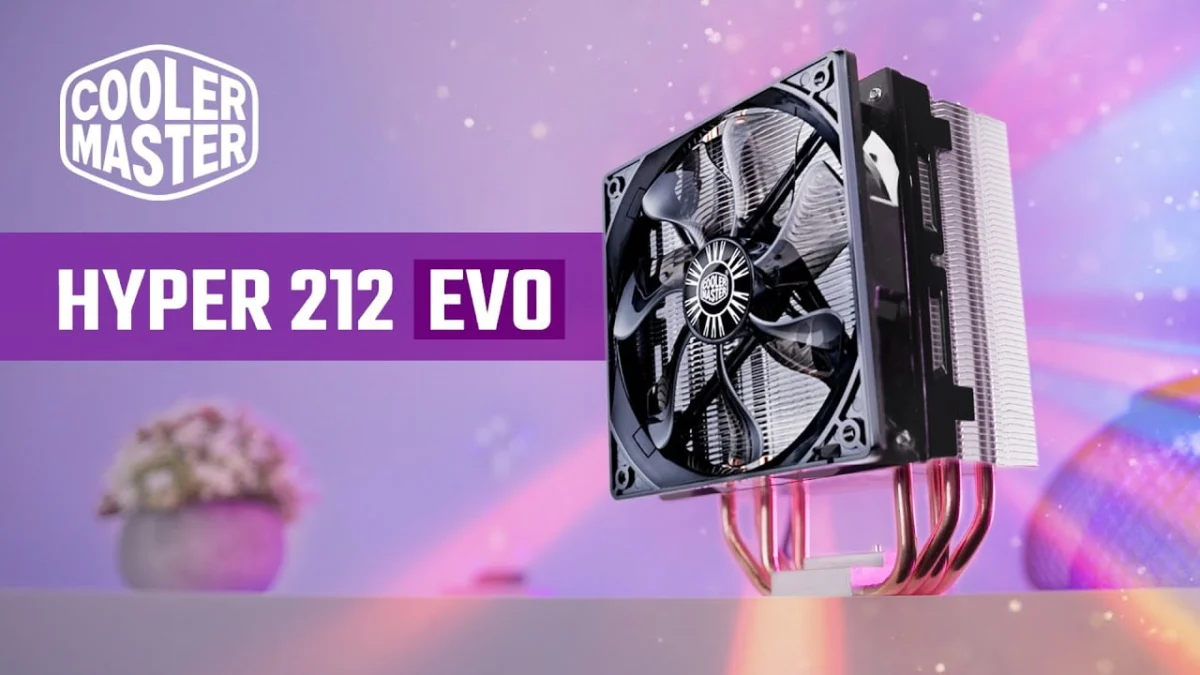
In the current landscape of consumer PC hardware, attention is frequently dominated by multi-hundred-dollar graphics cards and flagship processors that routinely suffer from severe supply shortages and inflated aftermarket pricing. However, a significant sector of the enthusiast community continues to champion practical, high-value components capable of delivering tangible improvements to everyday computing without breaking the bank. Amidst persistent viewer requests, hardware analysts recently re-evaluated the Cooler Master Hyper 212 EVO—an air cooler that has maintained a prominent market presence for a decade. Originally launched in 2012, this budget-oriented heatsink has become a ubiquitous baseline for entry-level thermal management. This retrospective examination seeks to determine whether a ten-year-old design can still compete in modern thermal testing environments against contemporary hardware demands.
Specifications, Architectural Design, and Pricing Strategy
To understand the longevity of the Hyper 212 EVO, one must examine its core engineering and market positioning. The cooler is not engineered to rival high-end, dual-tower flagship solutions manufactured by industry specialists such as Noctua, be quiet!, or Arctic. Instead, its primary market objective has always been to serve as a superior aftermarket replacement for standard stock box coolers bundled with mid-range processors.
Dimensionally, the Hyper 212 EVO measures 120mm in width, 158.5mm in height, and 77mm in depth with the stock fan installed. Retailing consistently between $30 and $35 USD—and frequently subject to promotional discounts—the cooler represents an exceptional value proposition for budget-conscious builders.
From an architectural standpoint, the design reflects the prevailing engineering trends of 2012, most notably the utilization of Heatpipe Direct Technology (HDT). HDT involves flattening the copper heat pipes so that they make direct physical contact with the integrated spreader of the central processing unit. While more commonly found today on budget-friendly heatsinks due to lower manufacturing costs, HDT was once widely adopted across various segments of the air-cooling market. This design philosophy aims to accelerate thermal transfer under lower thermal loads—a critical performance characteristic for entry-level and mid-range processors. These exposed heat pipes route thermal energy upward into a traditional array of aluminum cooling fins.
The accompanying cooling fan follows a similarly pragmatic design philosophy. Devoid of addressable RGB lighting, the stock fan operates at a maximum speed of 2000 RPM while generating approximately 36 decibels of acoustic output. Notably, Cooler Master opted for non-standard plastic fan mounting clips rather than traditional wire brackets. While occasionally debated for their durability, these plastic fasteners simplify the physical installation and removal of the fan during maintenance.
Evolution of the Hyper 212 Lineup: V2 and Black Edition
Over its ten-year lifecycle, Cooler Master has introduced several iterations and parallel models to address evolving motherboard layouts and user feedback. Among these is the Hyper 212 EVO V2, positioned alongside the original model rather than as a direct replacement.
The V2 variant introduces several meaningful revisions, including a stepped-back heatpipe design specifically engineered to eliminate the memory clearance conflicts that occasionally plagued the original model on compact motherboards. Furthermore, the V2 incorporates a revised mounting mechanism designed to alleviate the installation friction associated with older Cooler Master hardware, alongside an updated SickleFlow series fan optimized for improved acoustics and static pressure at lower rotational speeds. Generally commanding a $15 to $20 premium over the base model, the V2 targets users willing to pay slightly more for modernized compatibility and acoustics.
Concurrently, the Hyper 212 Black Edition offers an aesthetic overhaul with a dark nickel-plated finish, a larger base, and an upgraded fan, while maintaining a price point comparable to the original EVO during promotional periods. However, consumer feedback on the Black Edition’s mounting hardware has historically been mixed, with many builders expressing a preference for the simpler, tool-light fasteners of the original model.
The Evolution of Installation Challenges
While the thermal performance of the Hyper 212 EVO has endured, its installation procedure clearly reflects its decade-old heritage. Modern hardware has largely standardized intuitive, tool-less, or captive mounting systems, making the legacy AMD and Intel installation kits of the original EVO feel increasingly cumbersome.
The installation process on an AMD motherboard, for instance, requires users to remove the stock retention module, invert the motherboard, and meticulously align Cooler Master’s universal metal backplate. Ensuring correct orientation—such as verifying that the feet featuring green protective stickers face away from the printed circuit board—is critical. Builders must then thread mounting studs through the motherboard, secure them with minuscule, fastener nuts, and utilize a specialized adapter wrench to tighten the assembly.
This multi-part assembly is frequently cited by users as a primary point of friction. If pressure is unevenly distributed during the initial tightening phase, the backplate can shift, complicating the subsequent placement of the heatsink block. Furthermore, the crossbar mechanism used to secure the heatsink to the retention bracket requires constant stabilization to prevent shifting while individual screws are torqued down. Industry analysts note that Cooler Master’s resolution of these mounting hurdles in the V2 variant represents a substantial quality-of-life improvement, justifying the marginal price increase for builders prioritizing ease of assembly.
Modern Performance Benchmarks and Thermal Stress Testing
To rigorously assess the Hyper 212 EVO in 2021, hardware reviewers deployed a standardized testing methodology utilizing a high-end AMD Ryzen 9 5950X processor housed within a closed-chassis environment. Because stock processors vary significantly in power draw, the test chip was configured to operate under three distinct thermal loads:
- 95 Watts: Representative of lower- to mid-range processors operating at stock frequencies.
- 125 Watts: Corresponds to slightly overclocked mid-range CPUs or high-end processors running at factory specifications.
- 150 Watts: A demanding threshold designed to test the absolute limits of entry-level air cooling solutions.
The Hyper 212 EVO was benchmarked against established baselines, including Noctua’s premium NH-U12S air cooler, the Cooler Master Hyper 212 Black Edition, and AMD’s stock Wraith Spire box coolers.
At the 95W thermal load, the Hyper 212 EVO delivered surprisingly robust thermal metrics. While high-end alternatives like the Noctua NH-U12S maintained a marginal four-degree Celsius advantage at exceptionally low fan speeds, the performance gap narrowed significantly as acoustic thresholds increased. Notably, the legacy EVO matched or slightly outperformed the newer Black Edition across repeated trials, keeping test systems well below thermal throttling limits.
At the 125W threshold, the limitations of the older fan design became apparent. To achieve competitive cooling figures comparable to the NH-U12S or the Black Edition, the EVO’s stock fan was required to operate at higher RPMs, resulting in elevated acoustic output.
As anticipated, the 150W thermal load overwhelmed the Hyper 212 EVO. Operating at maximum fan velocity, the heatsink lacked the mass and surface area required to dissipate heat at this elevated wattage rapidly enough to prevent thermal throttling. However, industry experts emphasize that a $30 entry-level cooler was never engineered to manage extreme overclocking loads, making this limitation entirely expected.
Fan Upgrades and Real-World Implications
To quantify the potential performance uplift offered by modernized engineering, testers paired the original Hyper 212 EVO heatsink with a modern Cooler Master SickleFlow fan—spec-matched to the fan included with the V2 variant.
The implementation of the updated fan yielded a consistent two-to-three degree Celsius reduction in temperatures at the 95W load under low acoustic profiles. However, these thermal gains plateaued as fan speeds increased, mirroring the diminishing returns observed at higher wattages. This data suggests that while modern fan iterations improve acoustic efficiency and low-load performance, the underlying aluminum fin stack and heat pipe configuration remain the primary bottleneck under extreme thermal stress.
Broader Market Impact and Conclusion
The enduring viability of the Cooler Master Hyper 212 EVO offers a compelling case study in product lifecycle management within the PC hardware industry. Ten years after its commercial debut, the foundational engineering of the heatsink continues to provide adequate thermal performance for budget-oriented system builds.
While the installation process remains an undeniable hurdle—and one that has been markedly improved in subsequent iterations like the V2 and competing modern entries—the sheer economic value of a $30 cooling solution that outperforms stock box coolers is difficult to ignore. For budget-conscious consumers assembling entry-to-mid-range systems, the Hyper 212 EVO remains a viable, time-tested recommendation, provided builders are prepared to navigate its legacy installation hardware.