The Evolution of Personalized AI at Google
The introduction of Gems in 2024 was a pivotal moment in the democratization of generative AI. At the time, the ability for non-technical users to provide custom instructions and system prompts to an LLM was seen as a major competitive advantage. Users could define a Gem, name it, and rely on it to maintain a consistent persona or methodology across multiple chat sessions. However, as the Gemini platform evolved, the limitations of this "destination-based" approach became increasingly apparent.
To interact with a Gem, users were required to navigate to a specific manager in the side panel of the Gemini application, locate the desired tool, and initiate a fresh chat thread. This friction often discouraged power users who preferred a more continuous, multi-modal workflow. The shift toward "skills"—a feature debuted alongside the Gemini Spark platform—seeks to rectify this by embedding custom capabilities directly into the primary conversational stream.
Understanding the Transition Timeline
The migration process is set to commence on November 17, 2026. According to internal notices appearing in the Gemini Gems manager, Google has scheduled an automated transition for existing user-created Gems. This ensures that users do not lose their custom instructions; instead, those instructions will be repackaged into the new skills architecture.
Key milestones in this transition include:
- 2024: Original launch of Gems as specialized custom agents.
- 2026 (Early Q3): Introduction of Gemini Spark and the "skills" framework.
- November 17, 2026: Formal commencement of the migration from Gems to skills.
- Post-November 2026: Sunset period for legacy Gems functionality, with all custom logic moved to the slash-command system.
While the "Learn more" documentation and the official "Create skills" buttons currently display placeholder or non-functional status in some regions, the impending deadline suggests that Google is in the final stages of a phased rollout. Subscribers to the Google AI Pro and AI Ultra tiers have already gained early access to the new interface via the Gemini Spark tab, providing a glimpse into the future of the platform.
Functional Differences: Gems vs. Skills
The core difference between the two systems lies in accessibility and interoperability. Gems operated as independent "instances" of the Gemini model. While they supported advanced configurations—such as defining a default tool like "Create image" or "Canvas" and attaching specific file contexts—they were essentially static, siloed entities.
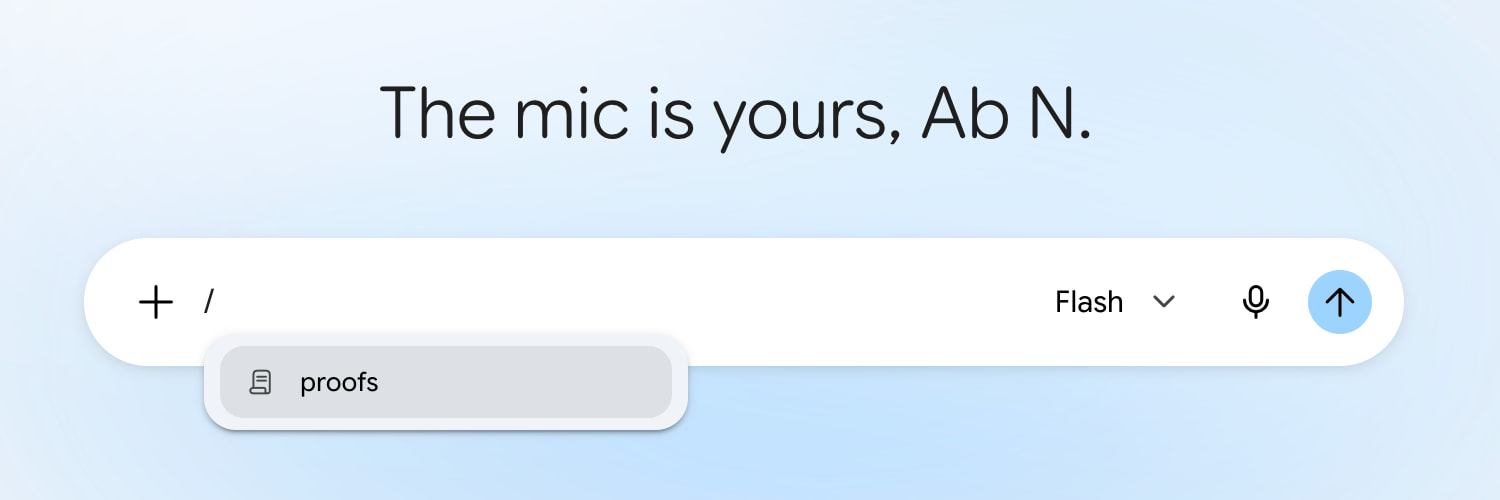
Skills, by contrast, are designed to be dynamic. The most significant UI/UX change is the adoption of the forward-slash (/) command syntax. By typing "/" in the main chat prompt box, users can trigger specific skills without leaving their current context. This represents a departure from the "application-like" feel of Gems toward a "plugin-like" model that feels more akin to how developers interact with command-line interfaces.
Furthermore, skills allow for multi-modal, simultaneous execution. A user can potentially invoke multiple skills in a single prompt or chain them together, creating a more sophisticated, multi-step workflow that was previously difficult to achieve without manual copy-pasting between different Gem threads.
Technical and Operational Implications
For the enterprise and power-user segments, the implications of this change are profound. By moving to a command-based architecture, Google is effectively optimizing for velocity. The "slash-command" paradigm is well-established in productivity software, ranging from Slack and Notion to integrated development environments (IDEs). By adopting this standard, Google is lowering the barrier to entry for users who want to switch between different AI "modes" mid-conversation.
However, the transition also brings potential challenges regarding metadata and file management. Gems were highly effective at maintaining long-term context through attached files and specific persistent instructions. Google must ensure that the migration process correctly preserves the file-context associations that users have built into their current Gems. If these associations are lost or improperly indexed during the transition to skills, it could lead to a temporary dip in productivity for users who rely on Gemini for complex document analysis.
The Role of Gemini Spark
Gemini Spark serves as the architectural foundation for this new system. As the successor to the standard Gemini conversational interface, Spark is engineered to handle more complex task chaining and faster context switching. The integration of skills into Spark suggests that Google intends to make these personalized instructions a native part of the "reasoning" process of the AI, rather than a separate, secondary layer.
For Google AI Pro and AI Ultra subscribers, this is a clear value-add. These tiers often attract professional developers, data scientists, and creative writers who require granular control over AI behavior. By allowing these users to build and test skills within the Spark environment, Google is creating a tighter feedback loop between the user’s intent and the model’s output.
Market Context and Strategic Alignment
Google’s decision to sunset Gems aligns with broader industry trends in AI agent design. Competitors, including OpenAI’s GPTs and Anthropic’s Projects, have experimented with various forms of "custom agents." Google’s move to unify these under a "skills" banner suggests a strategy of simplification. By moving away from "named" agents toward "invokable" skills, Google is betting that users prefer a single, powerful, and adaptable AI interface over a collection of discrete, specialized tools.
Industry analysts suggest that this consolidation is essential for scaling AI products. As the number of available tools, plugins, and custom instructions grows, a cluttered interface becomes a liability. A command-based system provides a cleaner, more scalable UI that can accommodate hundreds of potential "skills" without overwhelming the user.

Official Stance and User Readiness
While official support documentation is currently in a state of flux—reflecting the early stages of the global rollout—the directive is clear: Google is moving to deprecate the Gem brand in favor of the skills framework. Users who have invested significant time in crafting complex system prompts for their Gems are advised to review their settings as the November deadline approaches.
Although Google has not released specific usage data regarding the volume of Gems currently in existence, the move is widely viewed as a necessary cleanup of the Gemini ecosystem. The company aims to ensure that the AI experience remains consistent across its various hardware and software integrations, including the mobile app, web interface, and future hardware implementations.
Looking Ahead
As of late 2026, the artificial intelligence landscape is shifting from "chat-based" interaction to "agentic" workflows. The transition from Gems to skills is a microcosm of this trend. We are moving away from the era where we "talk" to a specialized version of an AI and toward an era where we "invoke" specific, modular capabilities that work alongside us in real-time.
For the end-user, the shift will require a brief period of adjustment to the new slash-command interface. However, the long-term benefits—increased speed, the ability to layer multiple skills, and a more integrated conversational experience—are likely to outweigh the inconvenience of the migration.
As the November 17 deadline draws near, Google is expected to provide further updates on the migration process, including tools to help users audit their existing Gems and ensure that their custom instructions are successfully translated into the new skill format. Whether this change will fundamentally improve the utility of Gemini remains to be seen, but it is undoubtedly a bold step in the direction of a more seamless and responsive AI experience. Users should remain vigilant for prompts within their Gemini interface and ensure their current configurations are backed up or documented before the automated transition begins.