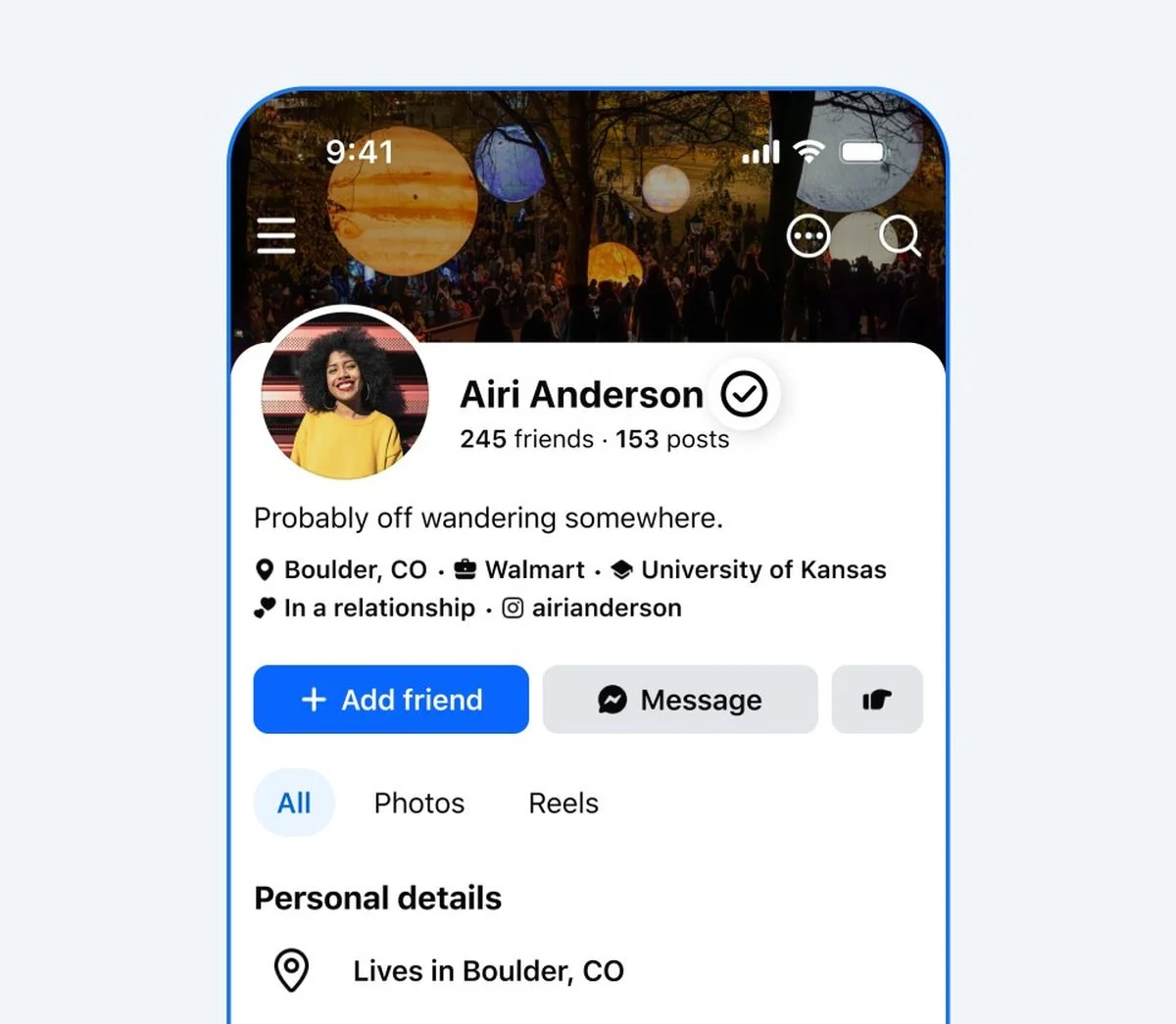
Today, Meta officially launched Facebook Verified, a new, free badge designed to provide users with a clear indication that a real person is operating an account. This initiative represents a significant step in the company’s ongoing efforts to combat inauthentic behavior and enhance user trust across its vast social media ecosystem. The verification process leverages a selfie-based video submission, where users record a short video that the system then cross-references with existing profile pictures to confirm identity. This streamlined procedure is designed to be completed within a few minutes, making it accessible for a broad user base.
Upon successful verification, the badge will initially be prominently displayed across key Facebook functionalities, including Facebook Marketplace, Dating profiles, Groups, and on the user’s main profile page. Meta has also outlined plans for future integration, indicating that the badge will eventually appear in Feed posts, expanding its visibility and utility. It is crucial to note, as Meta explicitly states, that the presence of this badge does not signify an endorsement of the user or guarantee their trustworthiness. Instead, its sole purpose is to affirm the fundamental premise that a genuine human being is behind the digital identity.
The New Verification Mechanism and Its Operational Scope
The core of Facebook Verified lies in its innovative selfie-video verification. Users are prompted to record a brief video of themselves, which Meta’s proprietary systems analyze using advanced facial recognition technology. This technology compares the submitted video against the user’s existing profile pictures to establish a match. The objective is to ensure that the individual attempting to verify the account is indeed the person depicted in their profile, thereby mitigating the risk of impersonation and fake profiles. The reported swiftness of the process, taking only "a few minutes," is a key design choice aimed at minimizing user friction and encouraging widespread adoption.
Initially, the visibility of the Facebook Verified badge will be concentrated in areas where trust and authenticity are paramount for user interaction. Facebook Marketplace, a platform for buying and selling goods, often grapples with issues of scams and fraudulent listings. The presence of a verified badge could significantly reduce buyer and seller apprehension, fostering more secure transactions. Similarly, in Facebook Dating, where personal safety and genuine connections are critical, the badge offers an additional layer of assurance. Its appearance in Groups and on individual profiles further solidifies the perceived authenticity of interactions within these communities. The planned expansion to Feed posts underscores Meta’s intent to integrate this trust signal into the very fabric of daily Facebook engagement, potentially influencing how users perceive and interact with content.
Eligibility for Facebook Verified is restricted to users who meet specific criteria. Applicants must be over 18 years of age and maintain good standing with the platform’s Community Standards. Particular emphasis is placed on adherence to guidelines prohibiting fraud, scams, and deceptive practices, and the absence of any "inauthentic behavior." This strict adherence to community guidelines is foundational to the program’s integrity, ensuring that verification is not granted to individuals with a history of malicious activity. Importantly, the feature is not extended to Pages or ProMode accounts, indicating a clear focus on individual user authenticity rather than business or creator identities, which are often covered by other verification schemes. The rollout is commencing in an unspecified number of "select markets" before a planned global expansion, a common strategy for Meta to test and refine new features before a broader deployment.
Background and Context: Meta’s Ongoing Battle for Authenticity
The introduction of Facebook Verified arrives against a backdrop of persistent challenges for Meta and the broader social media industry regarding authenticity, misinformation, and online safety. For years, platforms like Facebook have grappled with an influx of fake accounts, bots, and sophisticated scam operations that undermine user trust, compromise data security, and distort public discourse. These issues have not only eroded user confidence but have also attracted significant regulatory scrutiny and public criticism, impacting Meta’s reputation and financial performance.
The Broader Challenge of Digital Identity: In the digital age, establishing and verifying identity online remains one of the most complex and critical challenges. The anonymity afforded by the internet, while beneficial in some contexts, has also been exploited by malicious actors to engage in identity theft, financial fraud, and the spread of harmful content. Studies consistently show that a significant percentage of internet users have encountered fake profiles or scams, leading to substantial financial losses and emotional distress. According to reports from the FBI’s Internet Crime Complaint Center (IC3), online fraud schemes, often leveraging social media platforms, result in billions of dollars in losses annually. The ease with which fake profiles can be generated, sometimes using stolen identities or sophisticated AI-generated imagery, necessitates robust verification mechanisms.
Meta’s History with Verification: Meta’s journey with verification has evolved significantly. Initially, the iconic "blue checkmark" on platforms like Facebook and Instagram was reserved for public figures, celebrities, journalists, and brands, signifying authenticity and prominence. This system was designed to prevent impersonation of high-profile individuals. However, as the digital landscape became more complex, and the problem of general account authenticity grew, Meta began exploring broader solutions.
A pivotal development in this timeline was the launch of Meta Verified in early 2023. This distinct, paid subscription service offers a blue verification badge, proactive impersonation monitoring, direct account support, and increased visibility for creators and businesses. While Meta Verified primarily targets creators seeking to build their professional presence and protect their brand, Facebook Verified is positioned differently. It is free and focuses specifically on confirming the humanity behind an account for general users, rather than offering enhanced features or brand protection. This clear differentiation is essential: Meta Verified is a premium service for a specific segment, while Facebook Verified is a foundational trust layer for the general user base. The co-existence of these two programs reflects Meta’s multi-pronged strategy to address different facets of online authenticity and trust.
The pressure on Meta to enhance platform integrity intensified following controversies such as foreign interference in elections, the Cambridge Analytica scandal, and ongoing battles against hate speech and misinformation. These events highlighted the urgent need for more stringent identity verification processes to prevent bad actors from exploiting the platform’s scale and reach. This new free verification badge can be seen as a direct response to these pressures, aiming to build a more transparent and accountable online environment for everyday interactions.
The Imperative for Trust: Supporting Data and Industry Trends
The decision to introduce a free verification badge is not arbitrary; it is underpinned by compelling data illustrating the widespread impact of inauthentic accounts and the growing demand for trust signals from users.
Statistics on Online Scams and Fraud: The prevalence of online scams and fraudulent activities remains a significant concern. Reports from various cybersecurity firms and government agencies consistently show that social media platforms are frequently exploited for phishing, romance scams, investment fraud, and identity theft. For instance, the Federal Trade Commission (FTC) in the United States reported billions of dollars in losses due to fraud, with social media being a primary contact method for scammers in a substantial percentage of cases. Fake profiles are often the first point of contact, making it imperative for platforms to help users discern genuine accounts from deceptive ones. A verified badge, even if it only confirms human presence, can serve as an initial deterrent and a crucial trust signal for users navigating these potentially dangerous interactions.
User Perception of Trust: User surveys frequently reveal a strong desire for greater authenticity and safety online. Many users express apprehension when interacting with unknown accounts, particularly in transactional contexts like online marketplaces or dating apps. A 2023 Pew Research Center study, for example, indicated that a majority of social media users are concerned about misinformation and fake accounts. Providing a simple, visible indicator of a real person can directly address these anxieties, making users feel more secure and confident in their online interactions. This, in turn, can lead to increased engagement and satisfaction with the platform.
Competitive Landscape: Meta’s move also reflects broader industry trends. Other major social media platforms have implemented their own verification systems, with varying degrees of success and controversy. X (formerly Twitter), for instance, has undergone significant changes to its verification model, moving from a legacy system for notable accounts to a paid subscription service (X Premium) that includes a blue checkmark. While X’s approach has been met with mixed reactions, it underscores the industry’s struggle to balance accessibility, authenticity, and monetization. TikTok offers a verification badge primarily for creators and public figures. LinkedIn, a professional networking site, offers several free verification options, including email, work ID, and even government ID verification, recognizing the critical importance of authentic professional identities. By offering a free verification for general users, Meta is positioning itself to address a fundamental trust issue without creating a paywall for basic authenticity, a strategy that could differentiate it from some competitors.
Official Stance and Strategic Intent
Meta’s official communications emphasize the company’s unwavering commitment to user safety and the fostering of genuine connections. While specific direct quotes from Meta spokespeople beyond the source are not provided, the inferred messaging aligns with the broader corporate narrative of building a responsible metaverse and enhancing the quality of online interactions. The introduction of Facebook Verified can be seen as a proactive measure to address long-standing issues that detract from the user experience.
The company’s explicit disclaimer that the badge "doesn’t mean that Facebook endorses the user or guarantees their trustworthiness" is a critical point. It manages user expectations by clarifying the specific scope of the verification. It is not a character endorsement or a guarantee against future misconduct; rather, it is a technical confirmation of human presence. This nuanced distinction is vital for maintaining the integrity of the system and preventing potential misuse or misinterpretation of the badge’s meaning. By focusing on the "real person" aspect, Meta aims to create a baseline of authenticity that can then serve as a foundation for more meaningful and secure interactions. This initiative aligns with Meta’s broader strategic goals of cleaning up its platforms, improving content moderation efficiency, and ultimately retaining and attracting users who prioritize a safer and more authentic online environment.
Implications and Potential Impact
The rollout of Facebook Verified carries significant implications for users, the platform itself, and the broader digital ecosystem.
Enhanced User Trust and Safety: For individual users, the most immediate benefit is an increased sense of trust and security. When browsing Facebook Marketplace, for example, seeing a verified badge could significantly reduce concerns about interacting with a scammer. In Facebook Dating, it provides an initial filter against catfishing or fake profiles, allowing users to engage with greater confidence. This enhanced trust could lead to more vibrant and active communities, as users feel safer participating in discussions and transactions. It may also empower users to report unverified suspicious accounts with more conviction.
Challenges for Malicious Actors: The verification process, particularly the selfie-video requirement, presents a significant hurdle for malicious actors. Creating convincing fake profiles becomes considerably more difficult when a dynamic, biometric verification step is involved. This could lead to a reduction in the number of spam accounts, bots, and fraudulent profiles, making the platform a less fertile ground for scams, phishing attempts, and coordinated inauthentic behavior. While sophisticated actors may still attempt to circumvent the system, the added friction will undoubtedly deter a large segment of opportunistic fraudsters.
Content Moderation: From Meta’s perspective, Facebook Verified could indirectly assist its content moderation efforts. By reducing the overall volume of inauthentic accounts, the moderation teams might be able to focus more effectively on genuine instances of harmful content, hate speech, or violations of community standards originating from real users. It simplifies the initial filtering process, allowing resources to be allocated more efficiently.
Privacy Considerations: The use of biometric data (selfie video) for verification raises important privacy considerations. Users submitting such data will naturally be concerned about how it is stored, used, and protected. Meta will need to maintain robust data security protocols and transparent privacy policies to assure users that their sensitive information is handled responsibly. The company’s communication around these aspects will be crucial for user adoption and trust. Assurances that the data is solely for verification and not for other purposes, and that it is encrypted and securely stored, will be vital.
Accessibility and Equity: While the process is designed to be quick, potential accessibility issues might arise. Users without modern smartphones capable of recording clear selfie videos, or those with limited internet access, might face barriers to verification. Meta will need to monitor these aspects to ensure the system does not inadvertently exclude segments of its user base or create a digital divide in terms of trust signals.
Effectiveness and Limitations: It is important to acknowledge that no verification system is entirely foolproof. Highly determined and sophisticated actors may still attempt to find loopholes or employ social engineering tactics to bypass the system. The badge’s disclaimer is therefore vital; it reminds users that while the account is operated by a real person, personal judgment and caution remain essential in online interactions. The continuous evolution of AI and deepfake technology also presents ongoing challenges to biometric verification systems, requiring Meta to constantly update and refine its methods.
Future Development: The phased rollout strategy suggests that Meta will be closely monitoring the initial impact and user feedback. This data will likely inform future enhancements, potential expansions to other Meta platforms (like Instagram or WhatsApp), or even integration with broader digital identity initiatives as Meta continues to build its metaverse vision, where verifiable digital identities will be paramount.
Broader Industry Ramifications
Meta’s move to offer a free verification badge for general users could set a new precedent in the social media industry. While paid verification has gained traction, a free, accessible option focused purely on confirming human presence might pressure other platforms to re-evaluate their own trust-building strategies. This could lead to a broader industry shift towards more robust, foundational identity verification for all users, rather than just for creators or public figures.
The ongoing debate about the balance between user privacy, platform safety, and free speech online is also influenced by such initiatives. Stronger verification can enhance safety and reduce anonymous abuse, but it also touches upon concerns about surveillance and the potential for reduced anonymity, which some users value for expressing dissenting opinions or operating in sensitive contexts. Meta will need to navigate these complex ethical considerations carefully as the system evolves. Ultimately, this initiative underscores Meta’s long-term commitment to creating a more authentic and trustworthy digital environment, a critical component for its sustained growth and the realization of its ambitious metaverse vision, where verifiable digital identities will be the cornerstone of interaction and commerce.
In conclusion, Facebook Verified represents a significant strategic pivot for Meta, moving beyond celebrity verification and paid subscriptions to offer a foundational layer of authenticity for its vast general user base. By making this essential trust signal free and accessible, Meta aims to tackle the pervasive issues of fake accounts and online fraud, thereby fostering a safer, more transparent, and ultimately more engaging online experience. While challenges related to privacy, accessibility, and the ongoing battle against sophisticated malicious actors will persist, this initiative marks a crucial step towards rebuilding user trust and fortifying the integrity of the world’s largest social network.