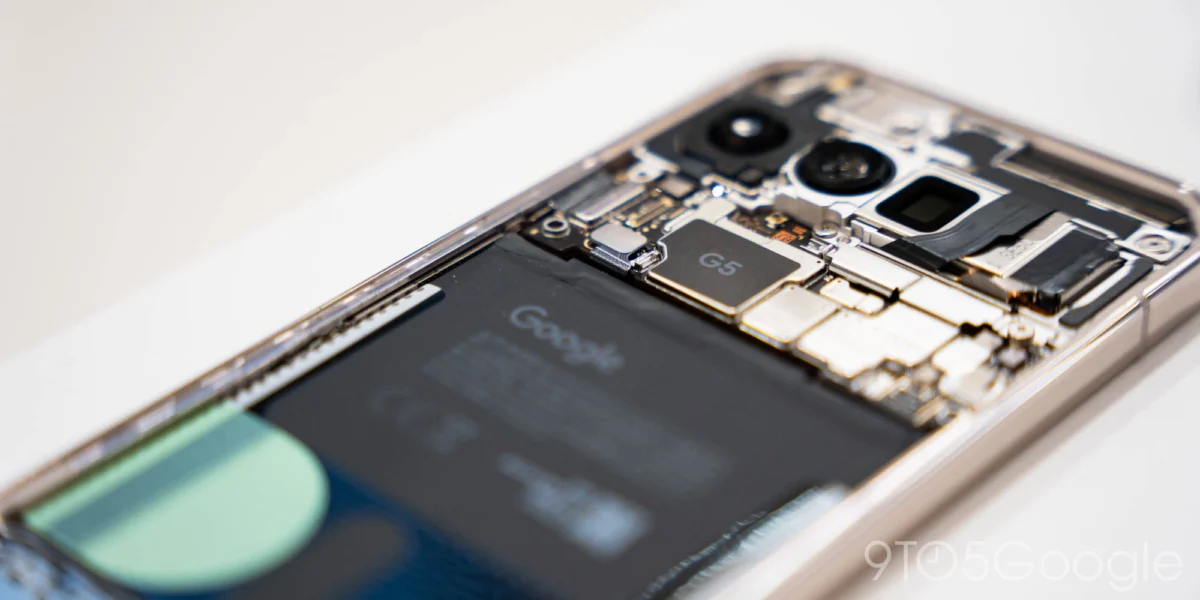
The Google Pixel lineup has long been celebrated for its sophisticated computational photography, clean software interface, and aggressive commitment to multi-year support. However, the hardware engine driving these devices—the Google Tensor processor—remains a subject of intense industry scrutiny. As Google transitions into its fifth and sixth generations of custom silicon, the industry is increasingly comparing the company’s trajectory to the historical struggles of Advanced Micro Devices (AMD) during the early 2010s. For Google to maintain its competitive edge against industry leaders like Apple and Qualcomm, analysts suggest the company requires a paradigm-shifting breakthrough in architectural efficiency and raw performance, a milestone reminiscent of AMD’s landmark “Ryzen moment” in 2017.
![The Google Pixel is fine and all, but still needs a ‘Ryzen moment’ [Video]](https://9to5google.com/wp-content/uploads/sites/4/2025/08/pixel-10-repair-tensor-g5-1.jpg?quality=82&strip=all&w=1600)
The Historical Context: Lessons from the Bulldozer Era
To understand the current discourse surrounding the Tensor G5 and G6 chips, one must look back at the state of the desktop CPU market in 2011. AMD introduced the "Bulldozer" architecture, which sought to prioritize high clock speeds and a unique multi-core design. The result was a commercial and technical failure: the FX-series processors were notorious for excessive power consumption, thermal throttling, and underwhelming performance compared to Intel’s contemporary Core processors.
For nearly a decade, Intel maintained a near-monopoly on high-performance computing, as AMD lacked the architectural leverage to compete effectively. The turning point came with the development of the "Zen" architecture. When AMD finally launched its Ryzen 1000 series in 2017, the company delivered a massive leap in multi-threaded efficiency and performance-per-watt. This allowed AMD to reclaim its status as a market leader, effectively forcing Intel to accelerate its own innovation cycles.
![The Google Pixel is fine and all, but still needs a ‘Ryzen moment’ [Video]](https://9to5google.com/wp-content/client-mu-plugins/9to5-core/includes/obfuscate-images/images/9to5google-default.jpg)
Google currently finds itself in a similar position. While the software experience on Pixel devices is highly optimized, the underlying silicon has frequently been criticized for thermal instability and lagging behind the raw performance metrics of Qualcomm’s flagship Snapdragon series.
Chronology of the Tensor Evolution
Google’s foray into custom silicon began with the ambition to tailor hardware specifically for machine learning and AI-driven features. However, the reliance on Samsung Foundry’s manufacturing processes during the early years—specifically for the Tensor G1 through G4—presented significant challenges.
![The Google Pixel is fine and all, but still needs a ‘Ryzen moment’ [Video]](https://9to5google.com/wp-content/uploads/sites/4/2026/08/App-drawer-on-Pixel-11-Pro-XL-and-iPhone-17-Pro-Max.jpg?quality=82&strip=all&w=800)
- 2021: The launch of the Pixel 6 introduced the original Tensor chip, signaling Google’s departure from Qualcomm. While lauded for its AI capabilities, the chip faced criticism for battery drain and modem efficiency.
- 2022–2024: Successive generations, including the Tensor G2, G3, and G4, provided incremental improvements. However, these chips remained largely iterative, failing to close the performance gap with rival flagships.
- 2025–2026: The transition to TSMC manufacturing for the Tensor G5 and G6 marked a critical shift in strategy. By moving away from Samsung’s nodes, Google aimed to address the efficiency issues that had plagued earlier models. Despite the move to a superior manufacturing node, the performance gains have remained modest, falling short of the "quantum leap" many industry observers anticipated.
Data-Driven Performance Analysis
The current performance disparity is measurable. While benchmark scores for Tensor chips in standard tasks like social media browsing and messaging are adequate for the average user, the delta becomes apparent under sustained load. In scenarios involving 4K video recording, high-fidelity gaming, or complex AI-driven background processes, Tensor chips often reach thermal limits faster than their counterparts.
Furthermore, industry benchmarks consistently place the latest Snapdragon and Apple A-series chips ahead of Tensor in both single-core and multi-core throughput. For a device carrying a $1,000 price tag, this performance gap creates a marketing disadvantage. While Google has successfully positioned the Pixel as an "AI-first" device, there is a growing consensus that AI features cannot forever compensate for hardware that struggles with basic computational heavy lifting.
![The Google Pixel is fine and all, but still needs a ‘Ryzen moment’ [Video]](https://9to5google.com/wp-content/uploads/sites/4/2022/09/tensor-g2.jpeg?quality=82&strip=all&w=800)
The Implications for Long-Term Software Support
One of the most significant challenges for Google is its promise of seven years of OS and security updates. Hardware longevity is directly linked to thermal headroom and processing overhead. A chip that is considered "sufficient" in 2026 may struggle to handle the more demanding versions of Android anticipated for the early 2030s.
If the processor lacks the architectural "breathing room" to evolve alongside software, the seven-year support window could become a liability rather than a selling point. As consumers hold onto their smartphones for longer cycles—with many now expecting five or more years of daily use—the demand for sustained performance efficiency becomes paramount.
![The Google Pixel is fine and all, but still needs a ‘Ryzen moment’ [Video]](https://9to5google.com/wp-content/uploads/sites/4/2025/08/pixel-10-repair-tensor-g5-2.jpg?quality=82&strip=all&w=800)
The Broader Ecosystem: Toward a Desktop Paradigm
The industry is moving toward a convergence of mobile and desktop computing. Apple’s recent integration of its A-series silicon into fanless, high-performance laptops illustrates the potential of highly efficient, powerful mobile chips. Google’s ongoing development of Android’s desktop windowing mode suggests that the company envisions a future where a smartphone could serve as the primary engine for a docked desktop experience.
However, for this vision to materialize, Tensor must transcend its current status as a mobile processor. It requires the raw power to handle desktop-grade multitasking without turning the device into a "pocket-warmer." If Google intends to compete with the ecosystem flexibility offered by Apple’s unified silicon architecture, the next generation of Tensor chips cannot simply be "good enough." They must provide a level of performance that enables a seamless transition between mobile, tablet, and desktop environments.
![The Google Pixel is fine and all, but still needs a ‘Ryzen moment’ [Video]](https://9to5google.com/wp-content/uploads/sites/4/2026/04/macbook-neo-citrus-0002.webp)
The Path Forward: A Call for Architectural Innovation
While there has been no official statement from Google regarding the specific architectural roadmap for future Tensor generations, the company’s ongoing investment in TSMC fabrication suggests a commitment to refining the hardware foundation. The current iteration is stable and efficient, but the industry expects more.
The "Ryzen moment" that critics and enthusiasts are calling for does not require Google to win every benchmark battle overnight. Rather, it requires a definitive, generational leap in efficiency and power that proves the Tensor platform is no longer "playing catch-up" with the rest of the industry.
![The Google Pixel is fine and all, but still needs a ‘Ryzen moment’ [Video]](https://9to5google.com/wp-content/uploads/sites/4/2026/08/Tensor-G6.jpg?quality=82&strip=all)
As Google continues to integrate its Gemini AI models deeper into the Android OS, the demand for local compute will only increase. If the hardware can keep pace with these demands while maintaining thermal efficiency, Google will have succeeded in creating a truly vertical, differentiated product. Until then, the Pixel remains a testament to software brilliance being held back by a hardware strategy that has yet to reach its full potential. The foundation has been poured, and the blueprints are set; the next phase for the Pixel division must be a decisive step toward architectural parity with the industry’s top-tier silicon.