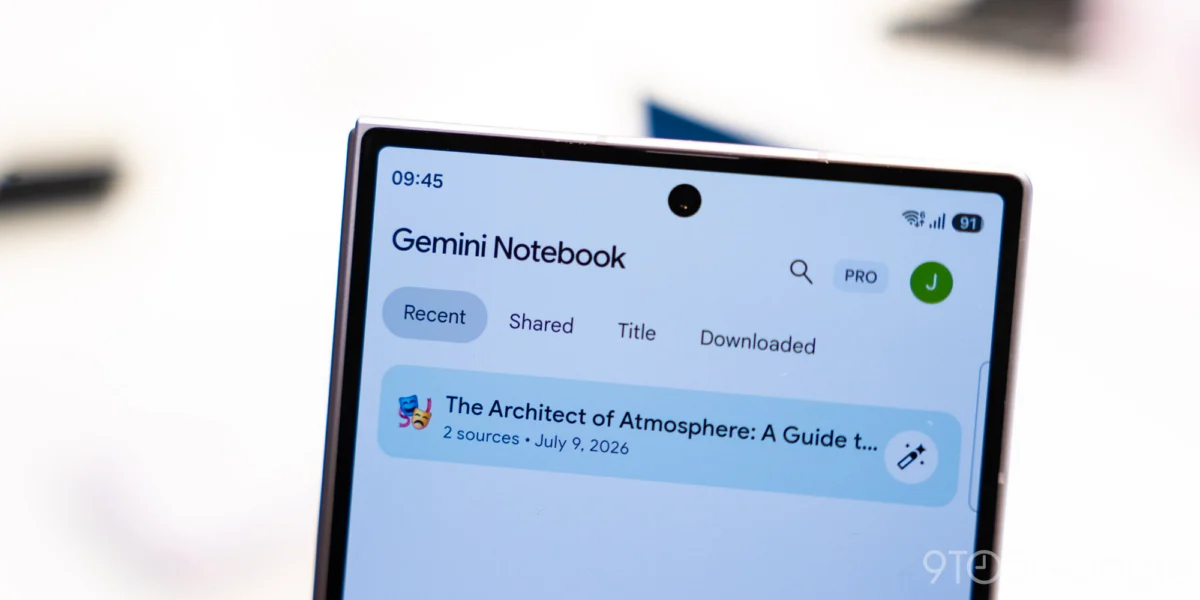
Gemini Notebook has officially expanded its feature set with the widespread rollout of a native audio recording tool, marking a significant step in Google’s broader strategy to transform its AI-powered note-taking platform into a comprehensive, multimodal workspace. The new functionality, which began arriving on Android and iOS devices this week, allows users to capture lectures, meetings, and spontaneous thoughts directly within the application, bridging the gap between passive listening and active synthesis.
This latest update follows a rapid succession of enhancements to the platform, including the recent introduction of "Connected App" integration and a real-time "Live" voice conversation feature. As Google continues to iterate on its AI ecosystem, the inclusion of a high-fidelity audio recorder positions Gemini Notebook as a direct competitor to established productivity suites like Notion, Evernote, and Microsoft OneNote, specifically by leveraging its proprietary large language models to process raw audio into structured, actionable insights.
Functional Mechanics of the Audio Recorder
The integration is designed with a focus on seamless user experience, minimizing friction between the intent to record and the start of the capture process. Users will now observe a microphone icon situated prominently between the camera shutter and the "Create New" floating action button (FAB) at the bottom of the mobile interface.
When triggered, the recorder presents a minimalist interface characterized by a Gemini-branded waveform that provides visual feedback on audio input. Functionally, the tool supports background recording, meaning users are not tethered to the app while capturing audio. This allows for the simultaneous use of other applications or the locking of a device screen, provided the capture session remains within the designated one-hour limit per file.
The integration into the platform’s hierarchy is context-sensitive. If a user initiates the recorder from the homepage, the resulting audio file automatically spawns a new, dedicated notebook. Conversely, if the recorder is launched from within the "Sources" tab of an existing notebook, the audio file is ingested directly into that project. This architectural decision reinforces the platform’s core philosophy: that notes, sources, and audio recordings should exist in a unified environment where they can be cross-referenced, cited, and summarized through Gemini’s conversational AI.
Chronology of Development and Strategic Rollout
The deployment of the audio recorder is the latest milestone in a roadmap that Google outlined earlier this year. The company first signaled its intent to introduce native audio capture capabilities during a product announcement in September, framing it as an essential component for mobile-first knowledge workers.
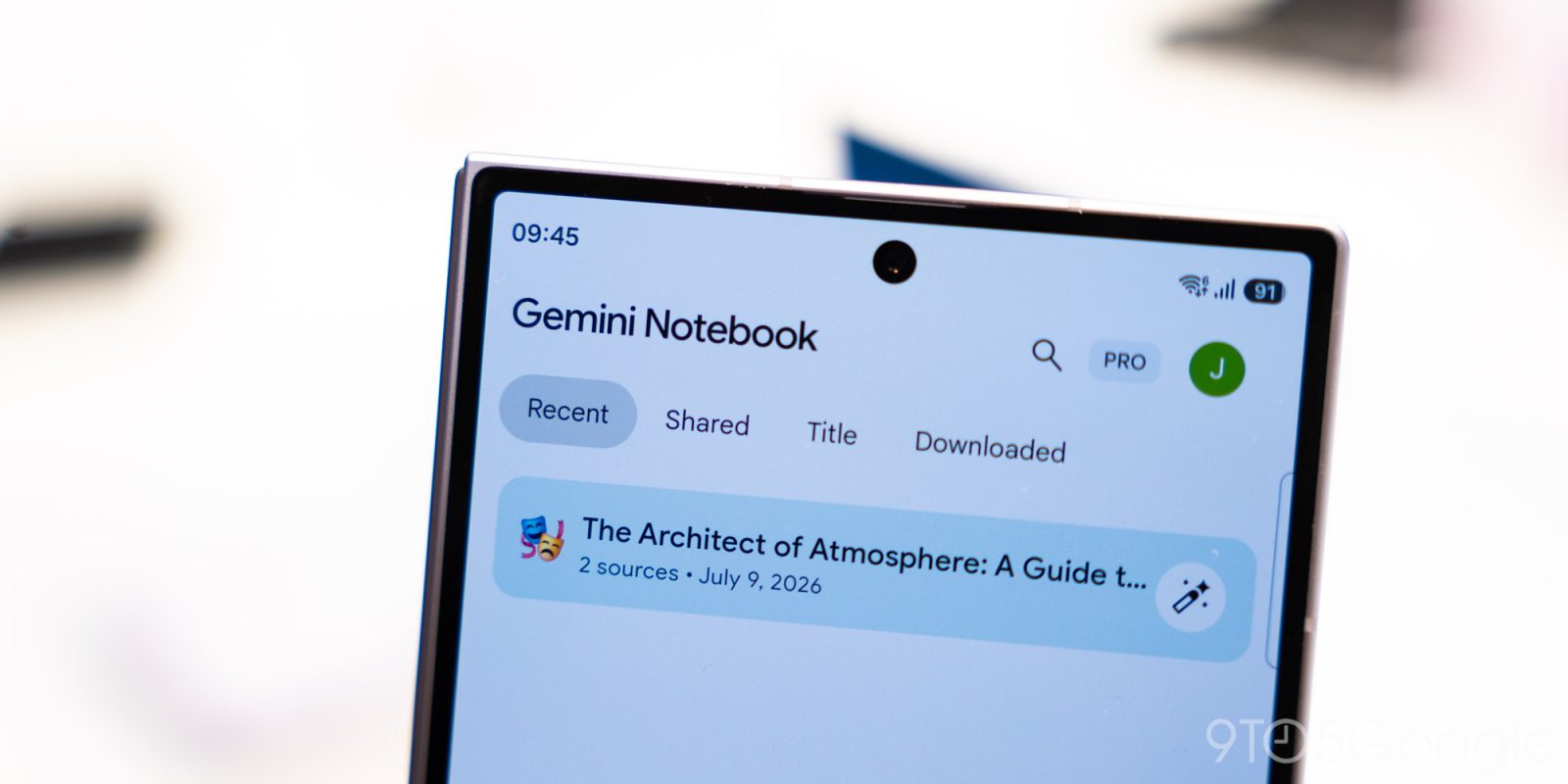
The timeline of the platform’s evolution over the last several months highlights Google’s aggressive development cycle:
- September 2026: Google formally announces the intention to integrate audio recording into Gemini Notebook, promising an AI-first approach to transcribing and summarizing voice data.
- Early October 2026: The company releases "Connected App" integration, allowing users to pull data from various sources into their notebooks, signaling a move toward interoperability.
- Mid-October 2026: A "Live" button is added to the Chat tab, enabling real-time, fluid verbal interaction with AI-generated notes.
- Late October 2026: The native audio recorder begins its global rollout on the Google Play Store and Apple App Store, accompanied by UI adjustments to the platform’s primary navigation.
The rapid implementation of these features suggests that Google is prioritizing a "mobile-first" strategy for its AI tools. By optimizing the application for smartphones, the company is addressing the use case of field researchers, students, and professionals who require the ability to record audio in environments where laptops are impractical.
Broader Implications for the AI Productivity Sector
The integration of audio recording into an AI-native notebook represents a shift in how information is synthesized. Traditional note-taking applications often require a two-step process: recording audio via a separate app, then manually transcribing or summarizing that content. Gemini Notebook removes this middleman, effectively turning raw audio into a "source" that the AI can instantly analyze.
Industry analysts note that this capability holds significant implications for the knowledge management sector. By allowing users to chat with their recordings, Google is shifting the value proposition from "storage" to "analysis." Instead of simply archiving an hour-long meeting, the user can ask the AI, "What were the action items from the budget meeting?" or "Summarize the key points from the lecture."
Furthermore, the recent UI tweak—where the "Create New" button now initiates a fresh notebook rather than opening a source-selection panel—indicates that Google is trying to simplify the user journey. By reducing the number of taps required to start a project, the platform aims to capture the fleeting nature of inspiration and spontaneous meeting data.
Market Context and Technical Limitations
While the new features are robust, they exist within the constraints of current mobile AI processing capabilities. The one-hour limit on individual recordings is likely a guardrail designed to manage both battery consumption and the heavy compute requirements associated with real-time audio-to-text processing.
From a competitive standpoint, Google is vying for dominance in a crowded market. Applications like Otter.ai have long dominated the transcription space, while Notion and Obsidian have built loyal followings through modularity and customization. Gemini Notebook’s advantage lies in its deep integration with the Google Workspace ecosystem and the underlying Gemini model’s ability to reason across multiple sources—documents, PDFs, web links, and now, audio files.

The reliance on these AI models for summarization means that the quality of the "notes" generated from audio is entirely dependent on the sophistication of the prompt engineering and the model’s context window. As the model continues to evolve, the utility of these recorded files is expected to increase, allowing for more nuanced extraction of sentiment, speaker identification, and complex thematic mapping.
Official Stance and User Experience
Google has not issued a formal press release detailing the backend technical specifications of the recorder, but documentation provided via the app’s update notes emphasizes the "collaborative" nature of the tool. The ability to "chat, cite, and build" from recorded sources is the central value proposition the company is pushing to its enterprise and student user bases.
For users who have not yet seen the update, Google recommends force-closing the application and checking for updates in the respective app stores. This ensures that the device is pulling the latest manifest, which includes the new microphone interface and the streamlined FAB functionality.
As the platform matures, the industry will be watching to see how Google handles the privacy and security of these recordings. Given that these files are stored in the cloud to facilitate AI processing, clear transparency regarding data retention, encryption, and the use of user-generated content for model training remains a critical factor for enterprise adoption. Currently, the platform emphasizes that notes and sources live together in a "living" document, suggesting that the company views these records as active participants in the user’s cognitive workflow rather than static archives.
Future Outlook
The integration of audio recording is likely just the beginning of a broader push toward multimodal input. As Gemini continues to integrate more deeply with mobile hardware, we may see further innovations such as real-time language translation of recorded audio, integration with visual input via the camera for immediate object-to-note conversion, and more advanced offline processing capabilities.
For now, the combination of the audio recorder and the existing chat-based interface provides a compelling argument for users to centralize their workflows within the Gemini ecosystem. Whether this feature will be enough to displace legacy tools remains to be seen, but the trajectory of these updates indicates a clear intent: to make the smartphone an extension of the user’s intelligence, capable of recording, synthesizing, and acting upon the information encountered in the physical world.
As of late October 2026, the rollout is considered complete, with global availability across all supported regions. The rapid pace of these updates serves as a reminder of the competitive intensity in the AI landscape, where the speed of feature delivery is as critical as the quality of the underlying technology. With the foundation of audio-to-text integration now in place, the focus will undoubtedly shift toward enhancing the accuracy and utility of the summaries these tools produce, ensuring that as the volume of captured data grows, the quality of insight keeps pace.