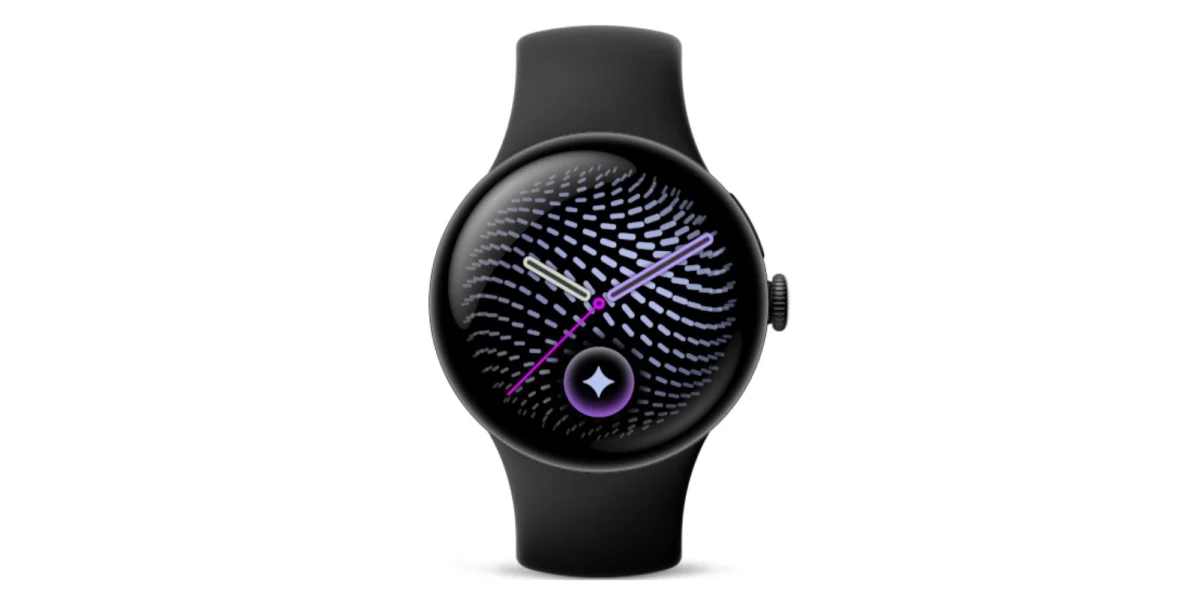
Recent information from the Google Play Console, a consistent source of pre-release device specifications, reveals the Pixel Watch 5, internally codenamed "godric," will largely mirror the design language of last year’s model. This continuity in industrial design aligns with Google’s established aesthetic for its wearable line, emphasizing a minimalist, pebble-like form factor that has defined the Pixel Watch since its inception. While the exterior is expected to remain consistent, the internal specifications indicate a strategic focus on performance and advanced software capabilities, particularly with a notable increase in Random Access Memory (RAM).
Design Consistency and Evolution
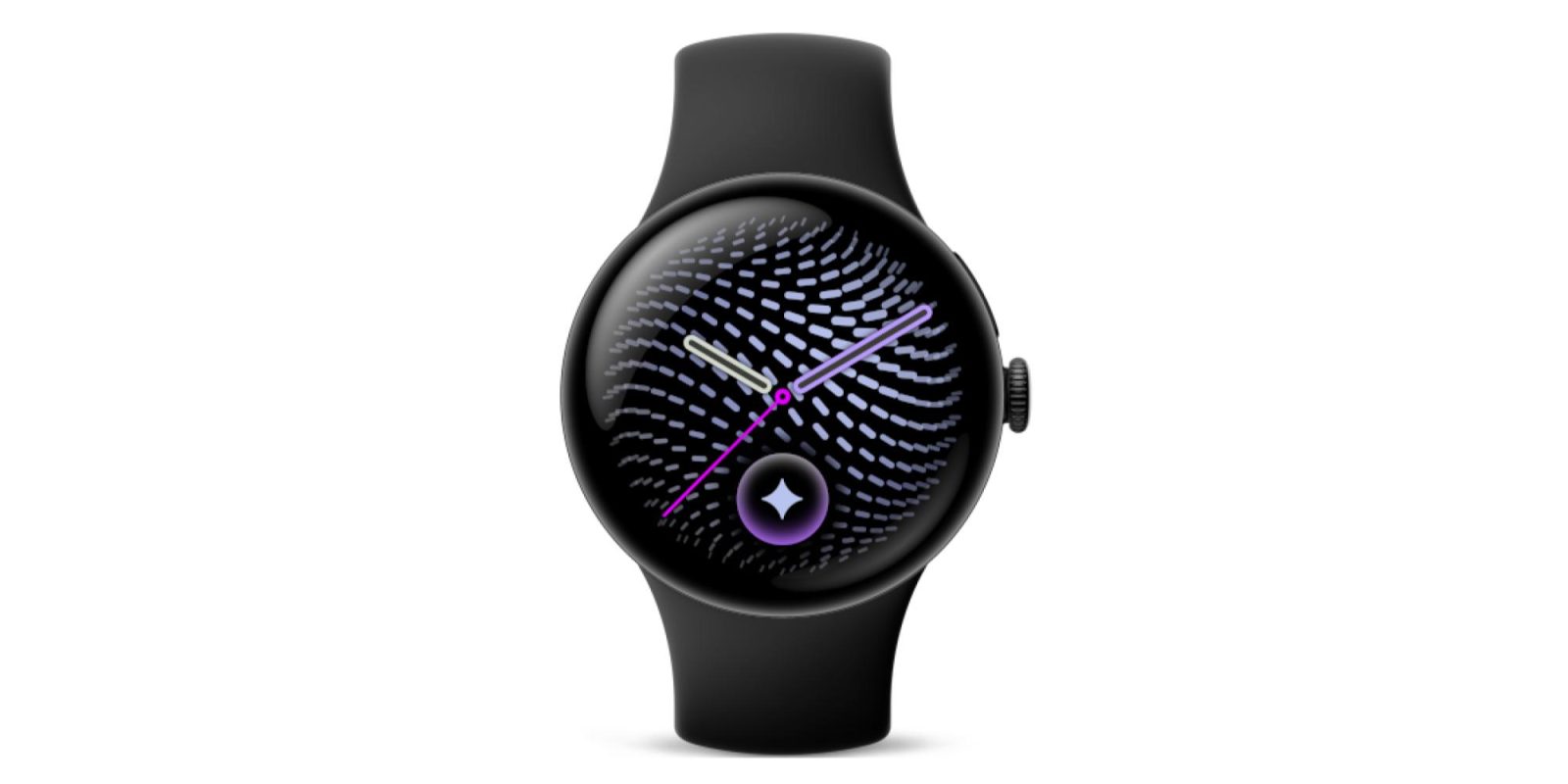
The leaked image, consistent with prior renders, depicts a device indistinguishable from the Pixel Watch 4, suggesting Google’s commitment to its established design identity. The circular, domed glass and integrated crown have become signature elements of the Pixel Watch series. This adherence to a consistent aesthetic could be interpreted in several ways. From a manufacturing perspective, maintaining the same external components can streamline production processes and potentially reduce costs, allowing resources to be reallocated to internal innovations. From a brand identity standpoint, it reinforces a recognizable look, akin to how Apple has evolved its Watch series with incremental design tweaks rather than radical overhauls.
However, design continuity does not imply stagnation. The listing notably features a new analog watch face, incorporating what is described as Gemini’s "Neural Expressive design language." This suggests that while the hardware form factor remains constant, Google intends to infuse the user experience with fresh visual elements driven by its artificial intelligence initiatives. Such a strategy allows for a familiar and comfortable physical interaction while offering dynamic and personalized software experiences, a hallmark of modern smart devices. This subtle yet significant software-driven aesthetic update could be the primary visual differentiator for users upgrading from previous generations.
The Enduring Core: Qualcomm SW5100 and Its Iterations
Perhaps the most discussed aspect of the Pixel Watch 5 leak is its reported reliance on the "Qualcomm SW5100" platform. This designation suggests the device will utilize the same base chip architecture as the Pixel Watch 2, 3, and 4. To fully understand the implications, it is crucial to trace Google’s journey with Qualcomm’s Snapdragon Wear platforms.
Google’s first-generation Pixel Watch, launched in October 2022, notably employed the older Samsung Exynos 9110 chip, which had been previously featured in the Galaxy Watch 3 from 2020. This choice led to some criticism regarding performance and battery life, as the chip was considered outdated even at the time of the Pixel Watch’s debut. Recognizing the need for a more modern and efficient solution, Google made a significant shift with the Pixel Watch 2, released in October 2023. This model integrated the 4nm Snapdragon W5 Gen 1, marking a substantial upgrade in processing power and power efficiency. The Snapdragon W5 Gen 1 (often identified with the SW5100 part number) brought a much-needed boost, utilizing ARM Cortex-A53 cores and a dedicated co-processor for low-power tasks.

Subsequent iterations, the Pixel Watch 3 and Pixel Watch 4, continued to build upon this foundation. The Pixel Watch 4, for instance, saw an upgrade to the Snapdragon W5 Gen 2, specifically to enable advanced features like Satellite SOS communication. While the "Gen 2" implies an evolution, the core architecture (SW5100 base) likely remained similar, with optimizations for specific functionalities and potentially minor performance tweaks. The co-processor also saw an upgrade from ARM Cortex-M33 to M55, further enhancing efficiency for always-on tasks and sensor data processing.
For the Pixel Watch 5 to reportedly stick with the "Qualcomm SW5100" base chip, with unchanged CPU and GPU specifications from the previous year, suggests a strategy of refinement rather than a ground-up silicon overhaul. While the Google Play Console listing does not specify the co-processor version for the Pixel Watch 5, an upgrade in this component remains a possibility, crucial for battery longevity and efficient background processing.
This decision contrasts sharply with Google’s primary competitor in the Wear OS space, Samsung. The recently unveiled Galaxy Watch 9, for example, is confirmed to feature the cutting-edge 3nm Snapdragon Wear Elite platform. This advanced chip boasts a more powerful configuration, including 1x Cortex-A78 and 4x Cortex-A55 cores, representing a significant leap in raw processing capability and energy efficiency due to its smaller manufacturing process. The Snapdragon Wear Elite is designed to deliver desktop-class performance to wearables, setting a new benchmark for what’s possible on the wrist.
Google’s choice to remain on the W5 platform for the Pixel Watch 5 could stem from several strategic considerations. It might indicate a focus on optimizing the existing hardware for peak performance with Wear OS, leveraging established software optimizations and supply chain efficiencies. Alternatively, Google might be waiting for an even more significant leap in chip technology, perhaps a custom-designed Tensor chip for wearables, similar to its smartphone strategy, which could debut in future generations. However, in the immediate term, it places the Pixel Watch 5 at a potential disadvantage in terms of raw compute power compared to its closest rival.
RAM Upgrade: A Catalyst for Gemini Intelligence
Where the Pixel Watch 5 truly distinguishes itself, according to the leak, is in its memory configuration. The device is expected to ship with 3 GB of RAM, marking the first upgrade from 2 GB since Google’s foray into the wearable market. This is a substantial 50% increase and represents a critical development for the Wear OS ecosystem.
For years, 2 GB of RAM has been the standard for premium Wear OS smartwatches, including previous Pixel Watch models and Samsung’s Galaxy Watch series. While sufficient for basic operations and a handful of applications, this memory ceiling often limited the complexity of multitasking, the responsiveness of the user interface, and the potential for advanced on-device processing.
The implications of 3 GB of RAM are profound, particularly in the context of Google’s overarching strategy for artificial intelligence. The leak explicitly states that this upgrade "presumably helps unlock Gemini Intelligence capabilities." Gemini, Google’s multimodal AI model, requires significant computational resources to operate efficiently, especially for on-device processing. With more RAM, the Pixel Watch 5 could:
- Enhance On-Device AI: Facilitate more complex and faster on-device AI operations, reducing reliance on cloud processing for certain tasks. This could translate to quicker responses for voice commands, more sophisticated health data analysis, and proactive, context-aware suggestions directly from the watch.
- Improve Multitasking: Allow users to seamlessly switch between more applications without encountering slowdowns or app reloads. This creates a smoother, more fluid user experience, essential for a device meant for quick, glanceable interactions.
- Boost Wear OS Responsiveness: Contribute to a snappier overall operating system, with faster app loading times, smoother animations, and more immediate feedback to user input. This addresses a common pain point for many smartwatch users.
- Future-Proofing: Prepare the device for more demanding Wear OS updates and third-party applications that are likely to emerge as AI integration becomes more prevalent across the smart device ecosystem.
This RAM upgrade is particularly noteworthy when compared to the competition. Samsung’s latest wearables, despite their cutting-edge processor, are reported to stick with 2 GB of RAM. This decision by Google could position the Pixel Watch 5 as a leader in AI-driven experiences on the wrist, prioritizing intelligent features and a highly responsive software environment over raw CPU benchmarks. It suggests a strategic decision by Google to differentiate its wearable not just on hardware, but on the depth and speed of its AI integration.
Software Integration and Ecosystem
The mention of Gemini’s Neural Expressive design language and the focus on Gemini Intelligence capabilities underscore Google’s commitment to weaving its advanced AI seamlessly into the Pixel Watch experience. Wear OS, which has seen a significant resurgence in recent years due to Google’s renewed investment and collaboration with Samsung, serves as the foundation for these innovations.
The Pixel Watch series is Google’s flagship hardware for Wear OS, designed to showcase the platform’s full potential when integrated with Google’s services and AI. The increase in RAM, combined with an optimized co-processor (should it be upgraded), will be crucial for managing the continuous flow of data from health sensors, location services, and user interactions, all of which feed into AI models for personalized insights and proactive assistance.
Health and fitness tracking, a core function of modern smartwatches, will undoubtedly benefit from enhanced processing power. While the leak doesn’t specify new sensors, improved RAM allows for more sophisticated real-time analysis of heart rate, sleep patterns, activity levels, and potentially even more advanced biometric data. This could lead to richer, more actionable health insights delivered directly to the user.
Market Positioning and Competitive Landscape
The leaked specifications paint a picture of Google’s evolving strategy in the highly competitive smartwatch market. By maintaining design consistency and focusing on RAM and AI, Google appears to be prioritizing user experience, software intelligence, and ecosystem integration over a pure spec race in processor speed.
Against Apple, the Pixel Watch continues to carve out its niche as the premium Android smartwatch, deeply integrated into the Google ecosystem. While Apple Watch remains dominant, Google’s continuous refinement of Wear OS and its hardware aims to offer a compelling alternative for Android users.

The direct comparison with Samsung’s Galaxy Watch series is particularly illuminating. Samsung’s choice of the Snapdragon Wear Elite highlights a focus on raw performance and bleeding-edge silicon, potentially appealing to users who prioritize the fastest possible app launch times and graphical capabilities. Google’s emphasis on 3 GB RAM and Gemini integration, however, suggests a different priority: a more intelligent, responsive, and AI-driven user experience that can anticipate needs and offer proactive assistance. This creates a fascinating dichotomy in the Wear OS market, offering consumers distinct choices based on their priorities.
Ultimately, Google’s strategy with the Pixel Watch 5 seems to be about refining the core experience and unlocking the full potential of its AI capabilities on the wrist. It’s a testament to the idea that hardware specifications, while important, are only one part of the equation; seamless software integration, intelligent features, and a fluid user experience are equally, if not more, critical for a successful wearable device.
Anticipated Release and Official Confirmation
Historically, Google unveils its new Pixel Watch models alongside its flagship Pixel smartphones, typically in October. Given the Google Play Console listing, which often precedes official announcements by a few months, a launch around this timeframe is highly probable. It is important to reiterate that these details, while sourced from a reputable platform, remain unconfirmed until Google’s official presentation. However, the consistency of these leaks with previous product cycles lends them significant credibility.
The Pixel Watch 5, with its blend of familiar aesthetics and crucial internal upgrades, particularly in RAM for enhanced AI capabilities, signifies Google’s continued commitment to shaping the future of Wear OS. It suggests a strategic evolution that focuses on intelligence and responsiveness, aiming to deliver a truly smart and personalized experience on the wrist.