Published July 17, 2026 04:28 PM
The advent of Patagonia’s Free Wall Kit marks a significant development in the world of multi-pitch rock climbing, directly addressing the evolving needs of climbers who embrace techniques like "fix and follow." This methodology, which has gained prominence over the last decade, aims to enhance comfort and athletic performance during extended ascents by allowing the leader to rest at anchors while the second climbs on a top rope. While acknowledging that this technique is not universally applicable and has its own set of considerations, its widespread adoption underscores the demand for gear that optimizes efficiency and enjoyment on challenging routes.
Josh Wharton, a climber whose innovations have deeply influenced modern multi-pitch strategies, is the architect behind both the "fix and follow" tactic and the Free Wall Kit. His initial explanation of the "fix and follow" method profoundly impacted climbers, transforming arduous multi-day expeditions into more manageable and enjoyable experiences. By enabling leaders to conserve energy at belay stations, the focus shifts from endurance to sustained performance, making large rock climbs feel more accessible. The Free Wall Kit, in essence, is designed to further refine this experience, ensuring that both leader and follower are as comfortable, protected from the elements, and well-supplied as possible, thereby mimicking the ease of shorter cragging days even on the most demanding routes.
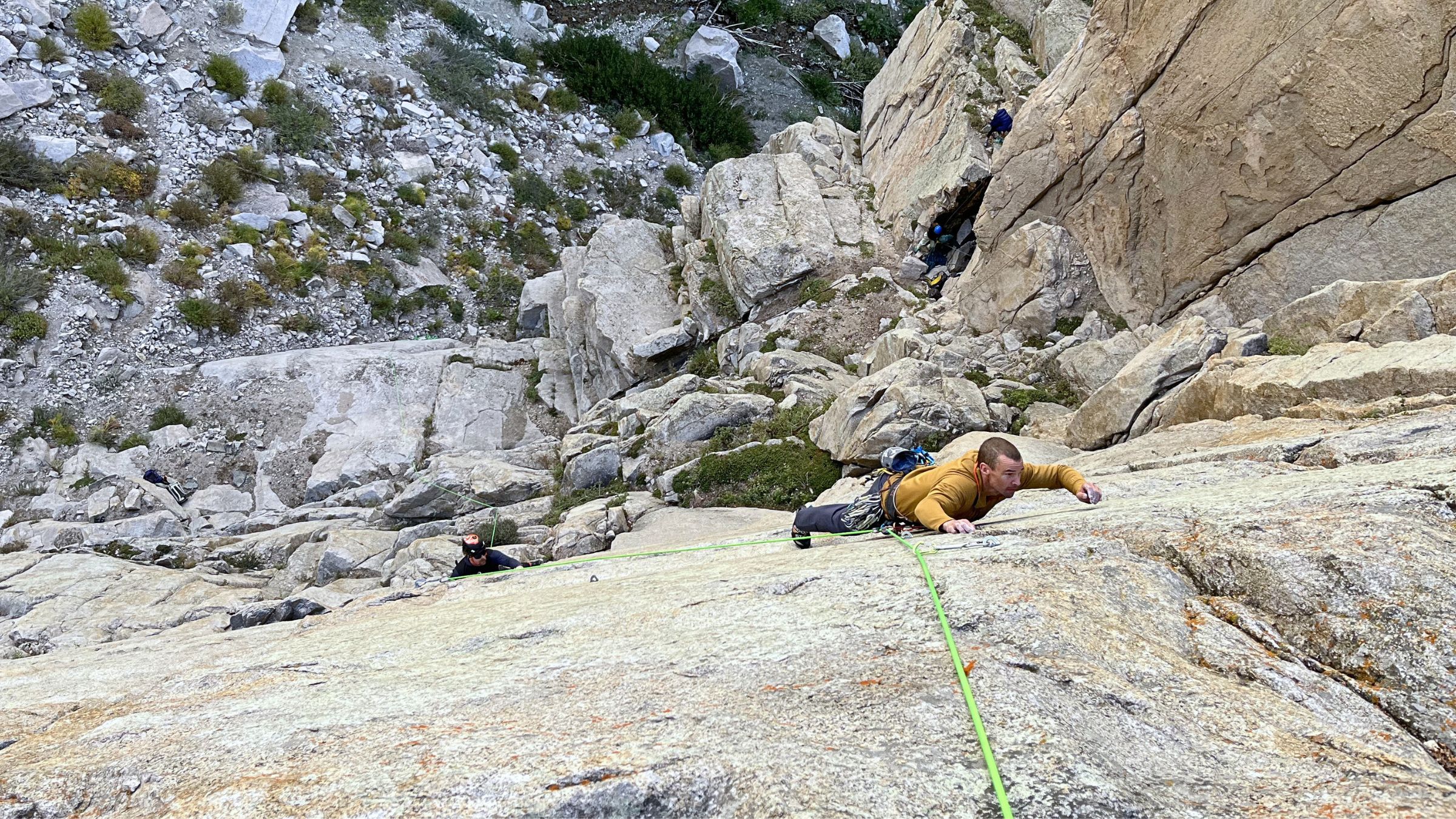
While the necessity of each individual component within the six-piece Free Wall Kit may be a subject of debate, the overarching philosophy it represents is invaluable. When a climber of Wharton’s caliber, recognized as one of America’s premier all-around climbers, offers guidance on dressing for multi-pitch rock climbing, it warrants careful consideration. This review delves into the practical application and performance of each item within the Free Wall Kit, providing a detailed assessment for the discerning climber.
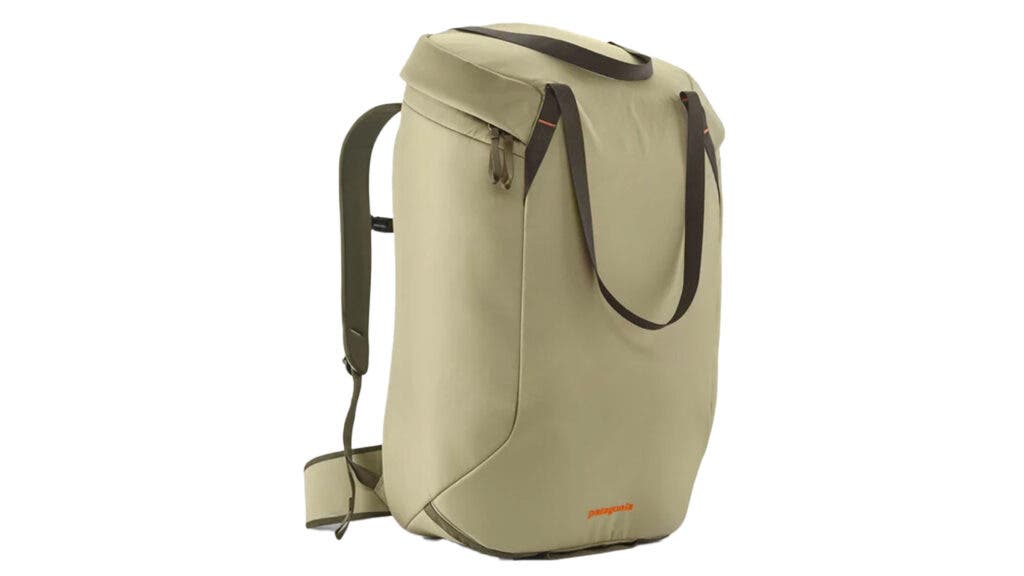
Patagonia Free Wall Pack 44L: The Versatile Haulbag and Crag Companion
Weight: 1,180g
Volume: 44L
Size: S, M, L (unisex)
Pros:
- Serves a dual purpose as a haulbag and an everyday crag pack.
- Features color-coded pockets and clip-in loops for streamlined organization.
Cons:
- The carrying system lacks sufficient support for extended approaches.
The Patagonia Free Wall Pack 44L has been rigorously tested on a variety of challenging rock climbs, including the 455-meter El Sendero Luminoso (5.12+) in Mexico’s El Potrero Chico and the similarly demanding King of Swords (5.12-) on the Diamond of Longs Peak. Testers also utilized the pack on numerous routes in western Canada, such as the 160-meter Squamish classics The Gremlin (5.11d) and Babies in Kailand (5.11b). Unlike traditional big-wall haulbags, which often feature a single, capacious compartment, the Free Wall Pack is engineered for on-the-wall accessibility. It incorporates two internal pockets, two gear loops – all color-coded for collaborative organization – and a generous external lid pocket.
Maury Birdwell, a tester, noted the pack’s exceptional performance when clipped off and suspended at a belay: "It lays flat against the wall; the lid design, plus the rigid structure, make it easy to get inside the pack and find what you need." This accessibility is a significant advantage on multi-pitch routes where time and efficiency are paramount.
Constructed from a highly durable, recycled nylon with a polyurethane coating and a Durable Water Repellent (DWR) finish, the pack demonstrated remarkable resilience during over 2,000 feet of hauling, sustaining only minor scuffs. However, as with any haulbag, care should be taken to avoid sharp objects pressing against the external fabric. The primary drawback of the Free Wall Pack is its minimalist suspension system and lack of substantial padding. While this design is understandable for a pack intended for hauling, it compromises comfort during long approaches, making it less ideal for extensive hiking to remote crags.
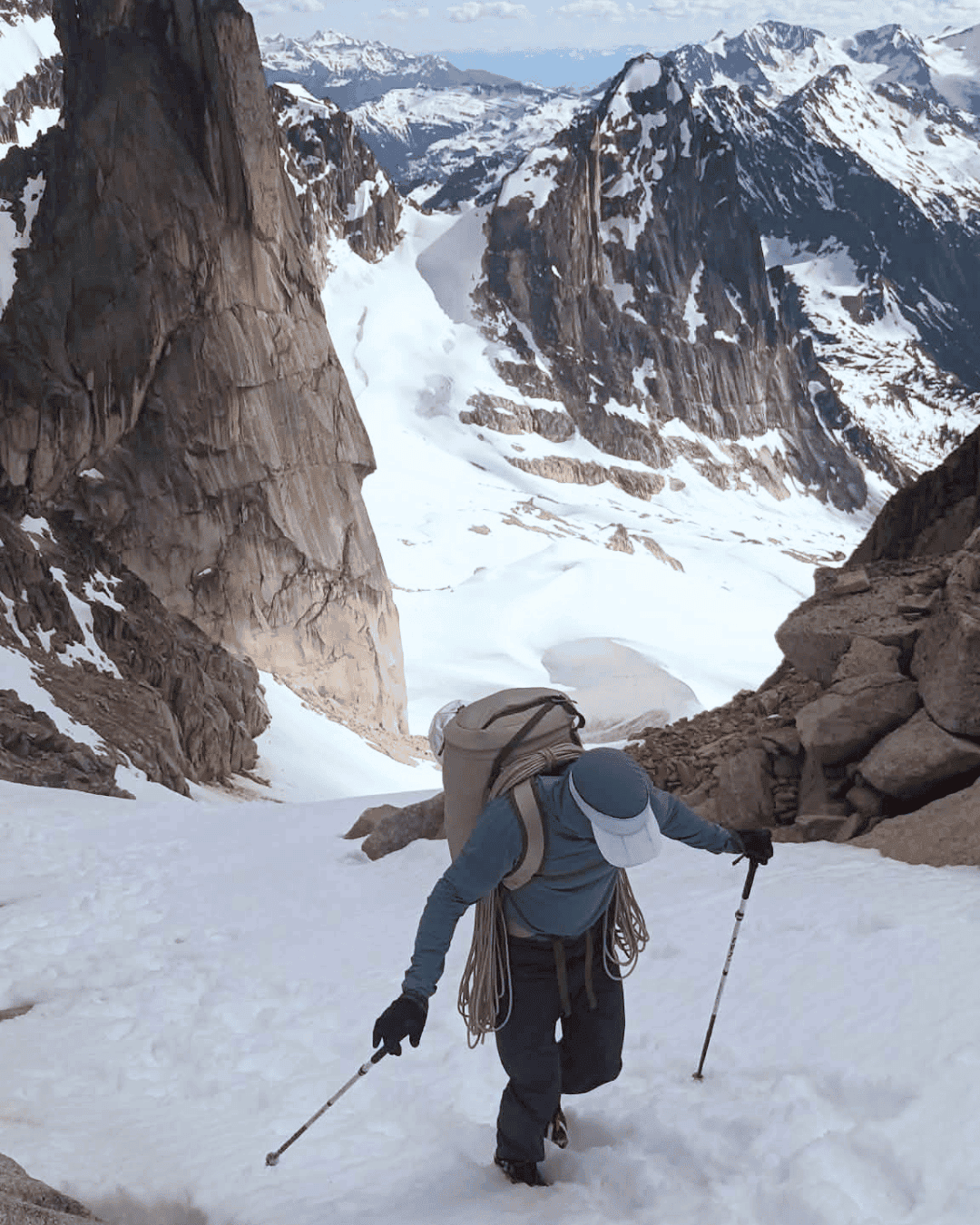
Despite this limitation, the pack proved its worth on a six-hour approach into the Bugaboos’ East Creek basin, carrying bivvy gear, a substantial rack, and provisions for a weekend. While the shoulders did express fatigue on the latter half of the approach, the Free Wall Pack offered comparable comfort to a superlight alpine pack previously used, and it seamlessly transitioned into a robust haulbag for subsequent ascents of Fingerberry Jam (5.12-).
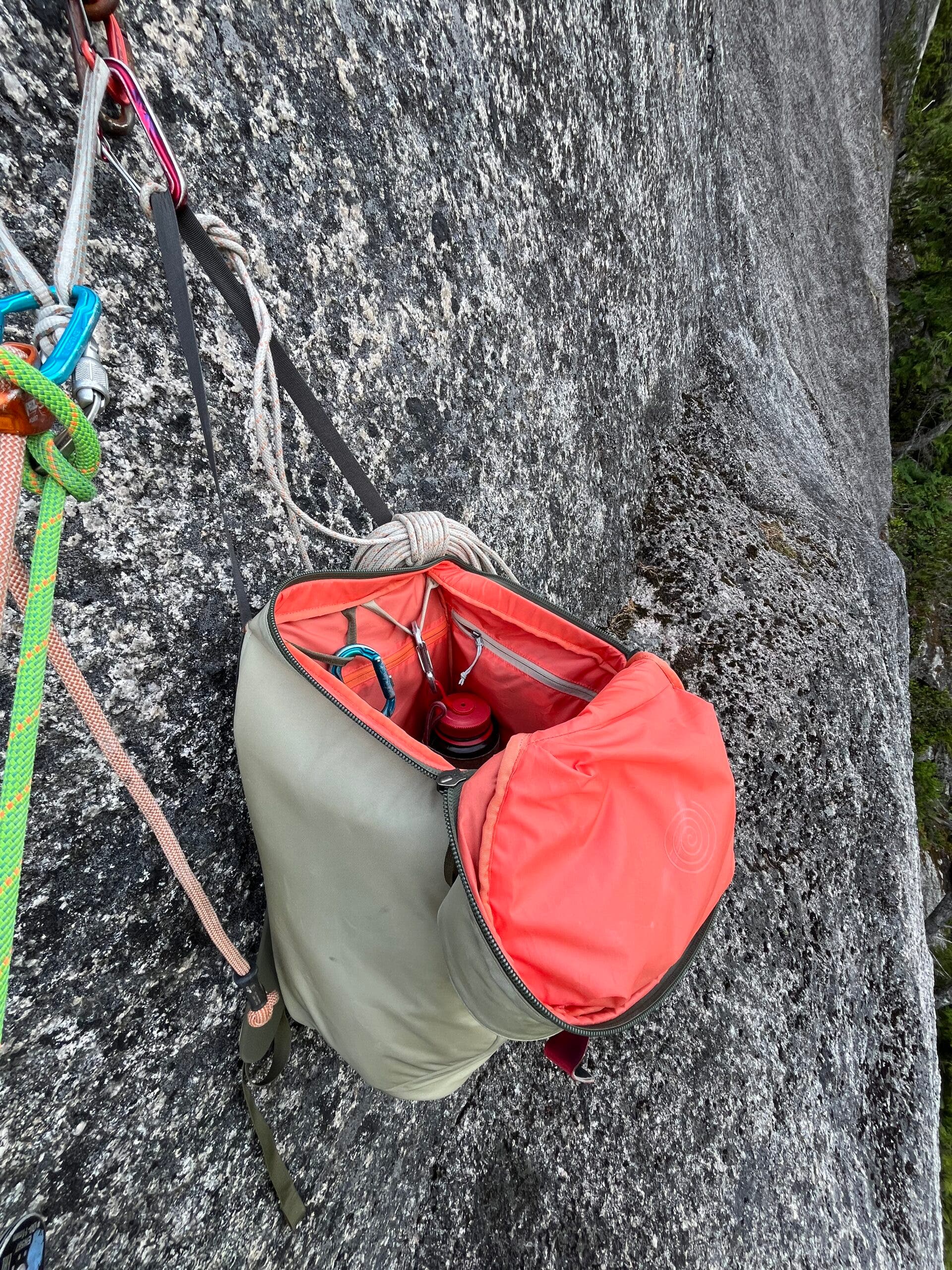
Bottom Line: For multi-pitch climbers who prioritize efficient access to their gear during bag-hauling operations, the Free Wall Pack stands out as a unique and effective solution.
Durable Down Parka: Robust Warmth with Room for Refinement
Weight: 595g (men’s M); 507g (women’s M)
Sizes: XS-XXL
Pros:
- Extremely durable face fabric.
- Good warmth-to-weight ratio.
Cons:
- Lacks a hem cinch, leading to drafts at belays.
- The hood cannot be tightened when not wearing a helmet.
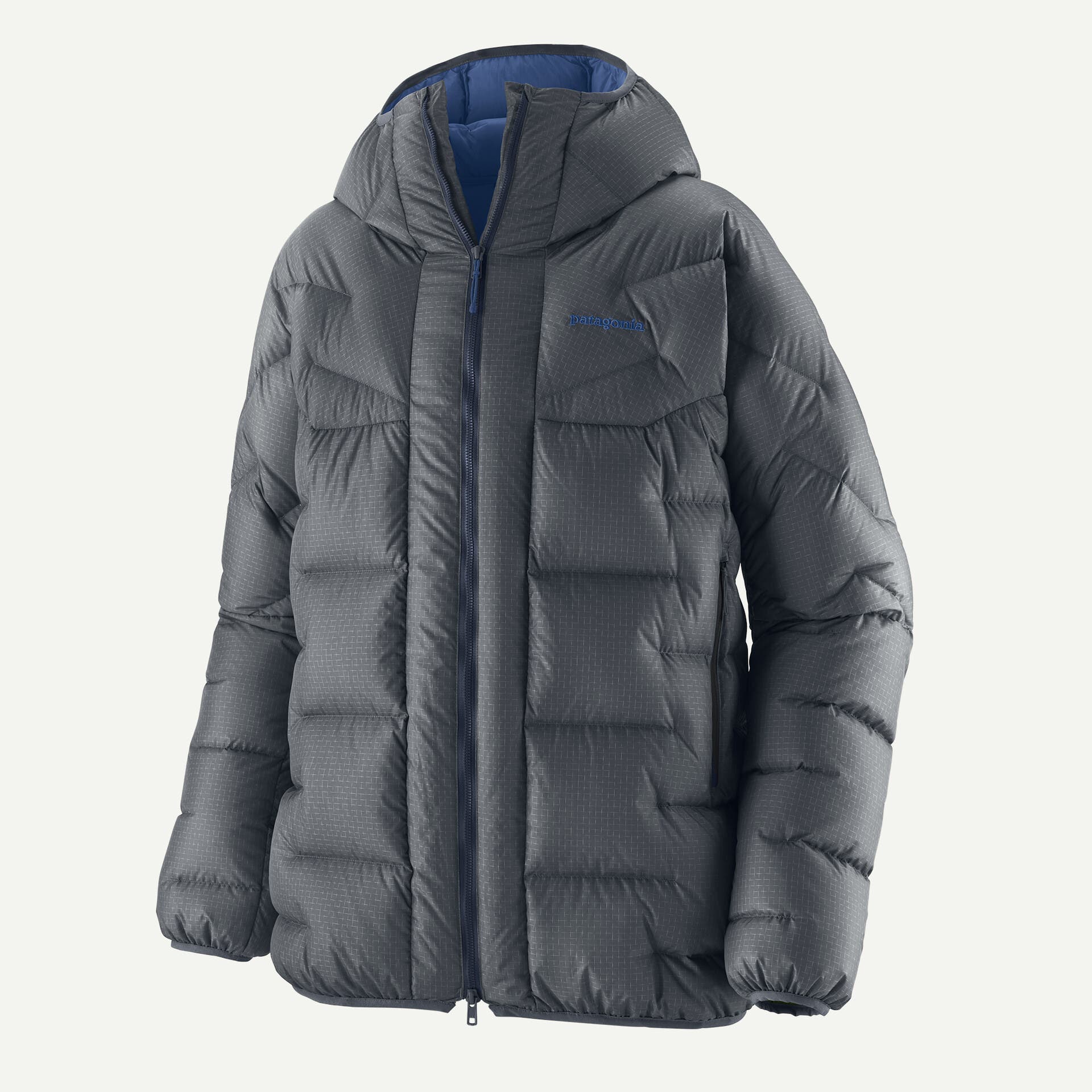
The Patagonia Durable Down Parka initially impressed with its plush 800-fill down insulation, oversized fit, and comfortable interior. However, its performance in the windy conditions of California’s Pine Creek Canyon revealed certain limitations. During a test on the exposed second-pitch anchor of Stone’s Throw (5.11d; 170m) at Bighorn Wall, the first blast of cold wind penetrated the parka, causing discomfort. The absence of a hem-cinch cord was immediately noticeable, as was the lack of a chest pocket for stashing essential items like belay glasses.
Despite these shortcomings, the parka provided adequate warmth during belays in various conditions, including mid-summer snowstorms, ice climbing, and windy rock crags. Its innovative offset baffles effectively prevent down migration, ensuring consistent warmth, and the exceptionally tough face fabric offers protection against abrasions. However, compared to the thoughtfully designed Free Wall Pack, the Durable Down Parka felt notably pared down. The addition of features such as a breast pocket, hood cinch, and hem cinch would enhance its functionality without significantly impacting its weight, especially considering it does not aim for ultra-lightweight status.
Bottom Line: The Durable Down Parka offers significant warmth and impressive durability, but its omission of key features leaves room for improvement, particularly for climbers seeking a more versatile piece of outerwear.
Houdini Rock Jacket & Pants: Lightweight Wind Protection Redefined
Weight: 130g (men’s M jacket); 120g (women’s M jacket); 110g (unisex M pants)
Sizes: XS-XXL
Pros:
- Exceptional warmth-to-weight ratio in windy conditions.
- Surprisingly durable for its weight.
- Half-length jacket zipper avoids pressure points under a harness.
- Zipped pant cuff allows for easy donning and doffing at hanging belays.
Cons:
- The jacket is priced higher than comparable wind layers.
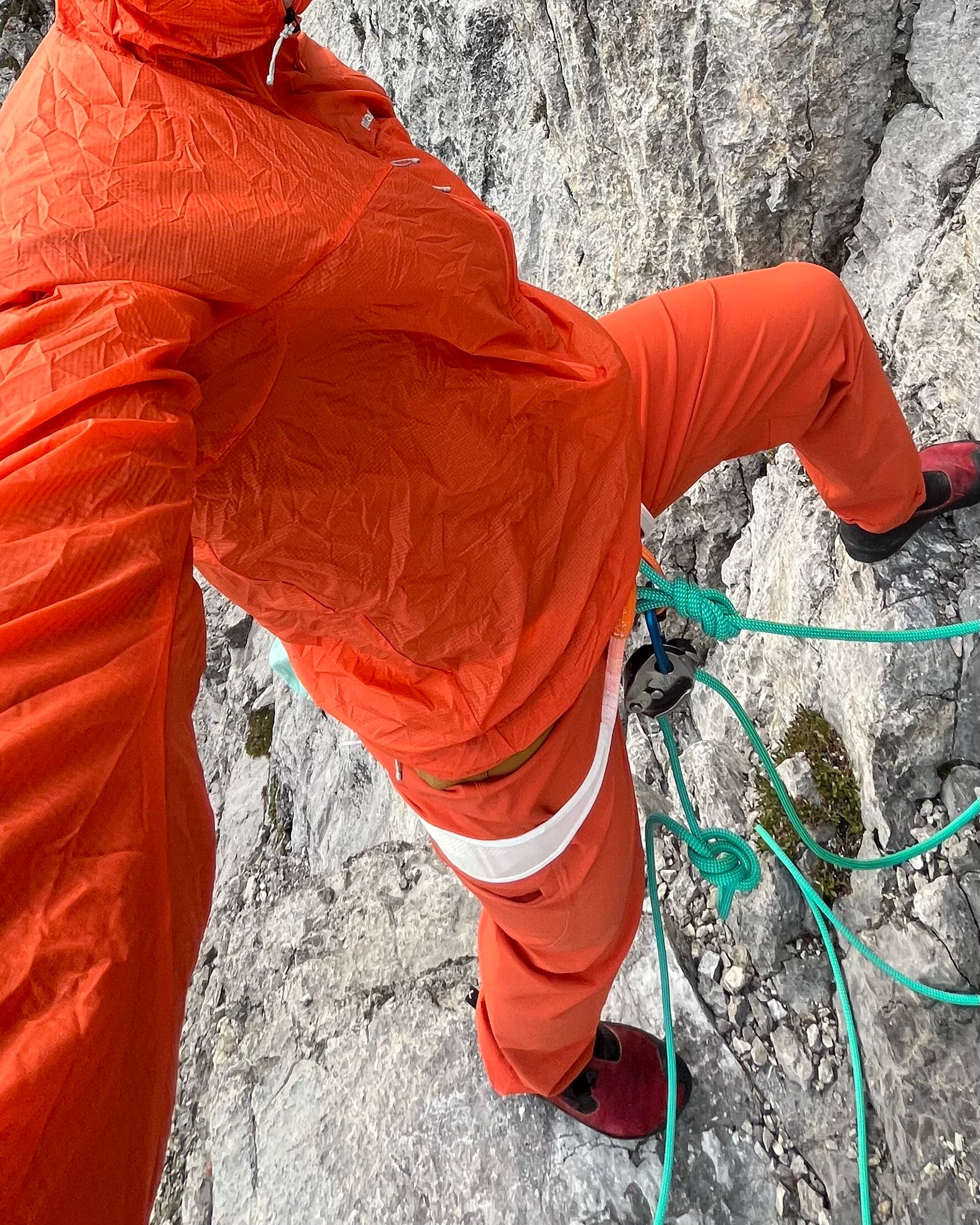
The Houdini Rock Jacket and Pants represent a crucial element of Josh Wharton’s recommended multi-pitch layering strategy. For multi-pitch ascents, a fully waterproof jacket is often unnecessary, whereas a lightweight wind layer can provide significant warmth with minimal weight penalty. The Houdini Rock Pants, in particular, emerge as a standout item. While climbers often prioritize upper body insulation, lower body warmth is equally critical.
The pants proved invaluable after a demanding lead of the 5.11d second pitch of Fingerberry Jam (5.12-) in the Bugaboos. Faced with 30 mph winds and blowing snow, donning the Houdini Pants and Jacket immediately regulated body temperature, demonstrating the effectiveness of this lightweight system. The pants, available in a unisex cut, were found to fit well by both male and female testers, offering excellent freedom of movement and a secure fit over the hips due to their elasticated waistband.
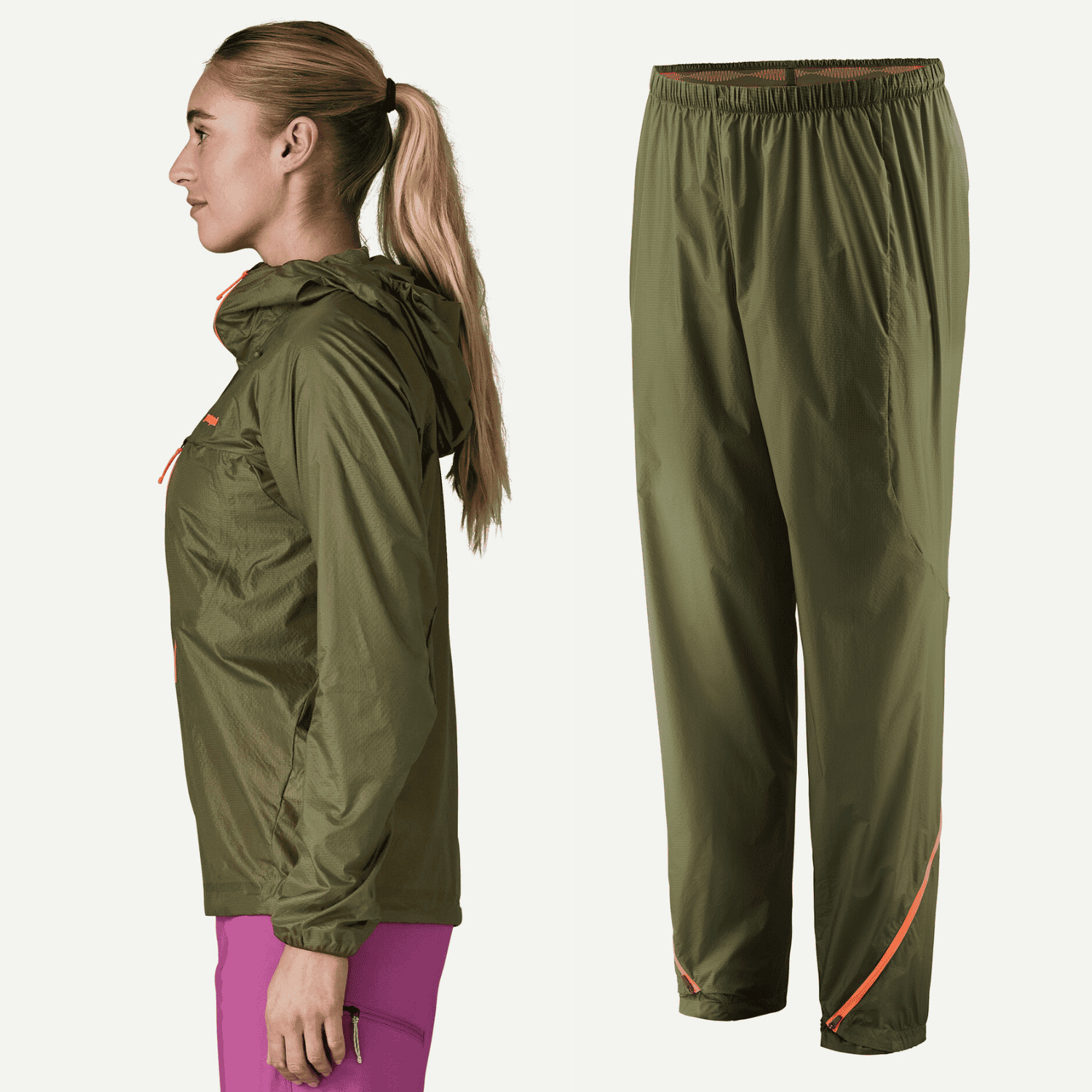
The Houdini Rock Jacket, constructed from the same robust 1.2-oz recycled nylon ripstop as previous iterations, is specifically tailored for multi-pitch climbing. Its half-length zipper eliminates pressure points under a harness, and its generous cut allows for dynamic movement without restriction. While the jacket performs admirably, its $199 price tag is a consideration. A potential cost-saving measure involves opting for the regular Houdini Jacket (sized up), which offers similar wind protection, weight, and durability for approximately $80 less.
Bottom Line: The Houdini Rock Jacket and Pants offer unparalleled lightweight wind protection. While the standard Houdini Jacket can serve as a more budget-friendly alternative, the Rock Pants are considered a unique and essential piece of gear.
R1 Ultralight Hoody: A Capable Midlayer with Limitations
Weight: 280g (men’s M); 220g (women’s M)
Sizes: XS-XXL
Pros:
- Soft interior fabric is comfortable against the skin.
- Two chest pockets provide convenient storage for essentials.
Cons:
- The under-the-helmet hood limits its versatility.
- Durability is a concern, particularly for crack climbing.
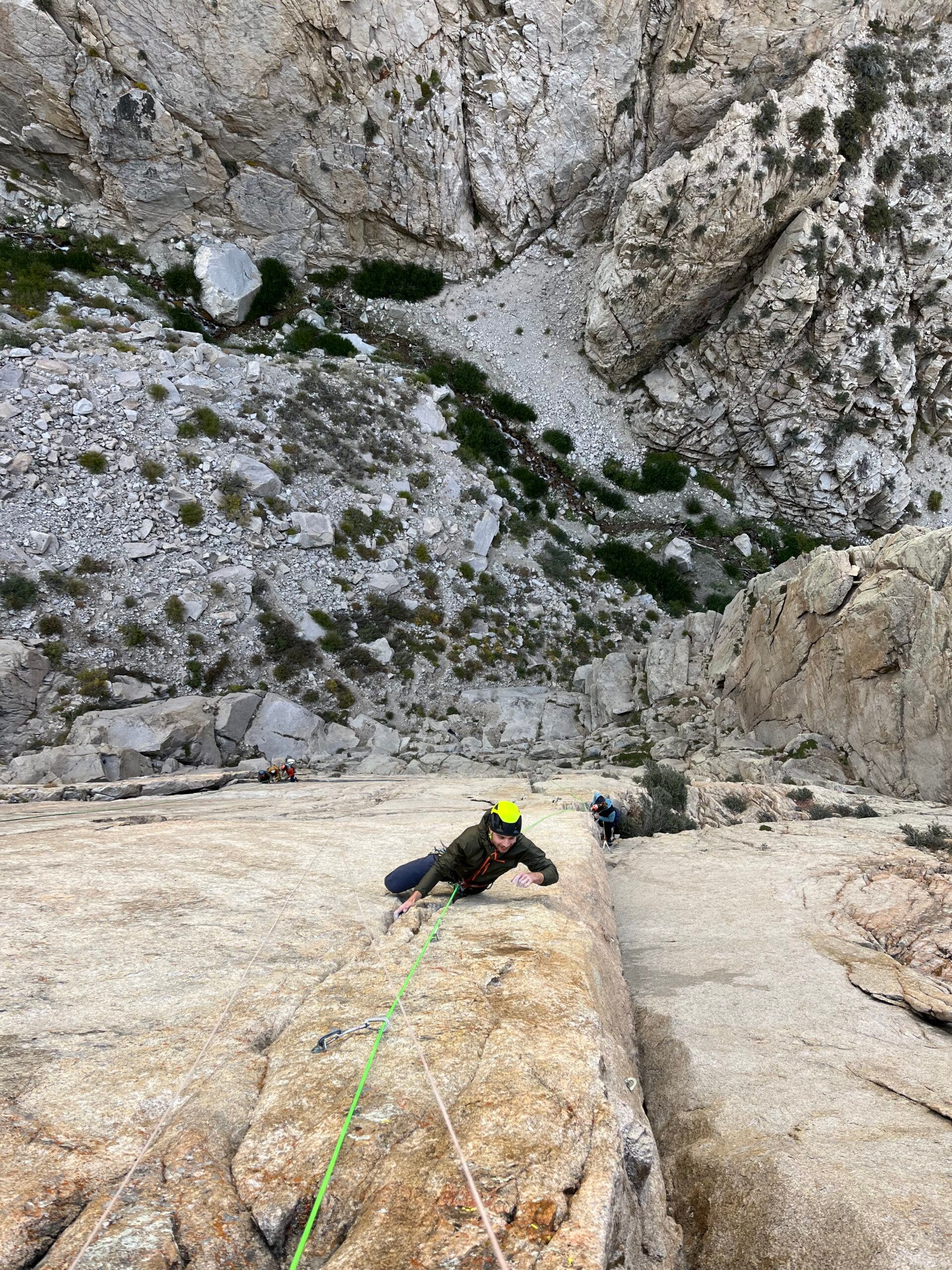
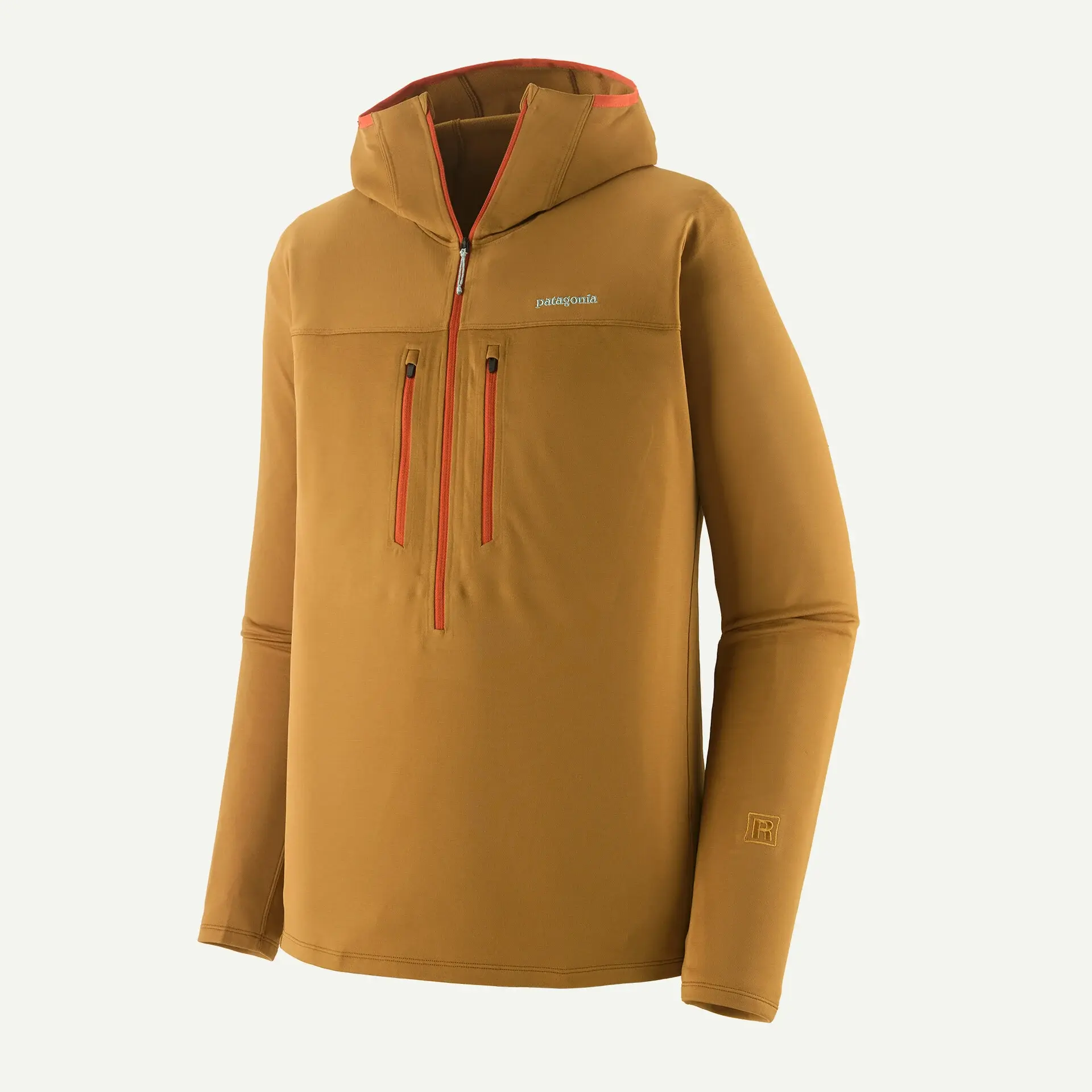
The Patagonia R1 Ultralight Hoody is perhaps the least remarkable item in the Free Wall Kit. It functions as a decent midlayer: soft against the skin, breathable, and comfortable under a harness due to its half-length zip. However, it lacks the innovative features of other components. The hoody’s cuffs showed premature pilling and tearing after only a few crack climbing sessions. Furthermore, its snug, baselayer-like fit made it cumbersome to put on over a sun hoody, and the hood itself, designed to fit under a helmet, presented a dilemma: choose between a warm head and a cool head for a given pitch, with no easy way to adjust once climbing.
Bottom Line: This hoody is suitable for climbers who do not regularly wear helmets and primarily engage in climbing styles that minimize abrasion on the cuffs.
Free Wall Pants: Durable Cold-Weather Performance
Weight: 380g (men’s M); 370g (women’s M)
Sizes: 28-44 (men’s); 00-22 (women’s)
Pros:
- Excellent range of motion.
- Low-profile, adjustable waistbelt ensures comfort under a harness.
Cons:
- Men’s model lacks a fly.
The Free Wall Pants come remarkably close to fulfilling the ideal for alpine rock climbing. Their thicker material, while potentially warm for coastal regions like Squamish, excels in colder, higher-altitude environments where retaining warmth is crucial. The durable fabric provides excellent protection in thrutchy wide cracks and during knee-barring sequences. Two thigh pockets, positioned for easy access below a harness leg loop, and a rear pocket offer convenient storage, although the latter can impede high-stepping. The most significant drawback is the absence of a fly on the men’s model, which can be an inconvenient issue at hanging belays. A similar consideration applies to the women’s model, lacking a crotch zip.
Bottom Line: The Free Wall Pants are highly durable and mobile cold-weather rock pants. They are an excellent choice for climbers who do not require or prefer the convenience of a fly.
Do You Really Need the Complete Free Wall Kit?
While the Free Wall Kit offers a curated selection of gear for multi-pitch climbing, purchasing the entire ensemble may not be the optimal choice for every climber. Significant modifications might be necessary to elevate the performance of the entire lineup to a stellar level. However, the kit effectively highlights the types of essential items that contribute to a successful and enjoyable multi-pitch experience.
The overarching takeaway is to prioritize a robust haulbag, a warm and protective jacket, and effective wind pants. While the Free Wall Kit may not constitute a mandatory uniform for all lengthy rock climbs, it represents a significant step forward in specialized gear for this demanding discipline. The emphasis on "fix and follow" and the development of complementary equipment underscore a broader trend towards optimizing comfort and performance, allowing climbers to focus on the vertical challenge and the inherent beauty of the alpine environment. The kit, in its current iteration, offers a strong foundation, but individual adaptation and careful selection remain key to maximizing its utility for specific climbing objectives and personal preferences.