The plight of the northern bald ibis, a creature once thought to be a relic of prehistoric times, is a stark reminder of the fragility of biodiversity. With a population that has dwindled to critically low numbers, this iconic species faces an uphill battle for survival. However, a dedicated team of biologists, driven by a passion for conservation and a touch of audacious innovation, is embarking on a groundbreaking mission: to guide these last remaining birds along an entirely new migratory path, a venture fraught with challenges but brimming with the potential for a significant conservation victory.
The story of this ambitious undertaking begins in the picturesque, yet ecologically sensitive, landscape of southern Austria. Here, amidst the rugged beauty of the mountains and the verdant expanse of the valleys, a crucial phase of this conservation effort has unfolded. It was here, in April 2023, that Barbara Steininger, then a twenty-five-year-old biologist, found herself on the precipice of a unique responsibility. Standing mere meters from an aviary, she was preparing to become a foster mother, not to a human child, but to a clutch of featherless, vulnerable chicks – northern bald ibises, destined to carry the torch for their endangered species.
The weight of this responsibility was palpable. "Not an everyday occurrence," Steininger remarked, her voice laced with a mix of apprehension and excitement, "especially if your fosterlings are birds." Moments later, a zookeeper from Wildlife Park Rosegg entrusted her with two fragile, downy chicks. Her freckled face, illuminated by the dawning realization of her role, broke into a radiant smile. This was just the beginning; two chicks secured, thirty-three more to go.
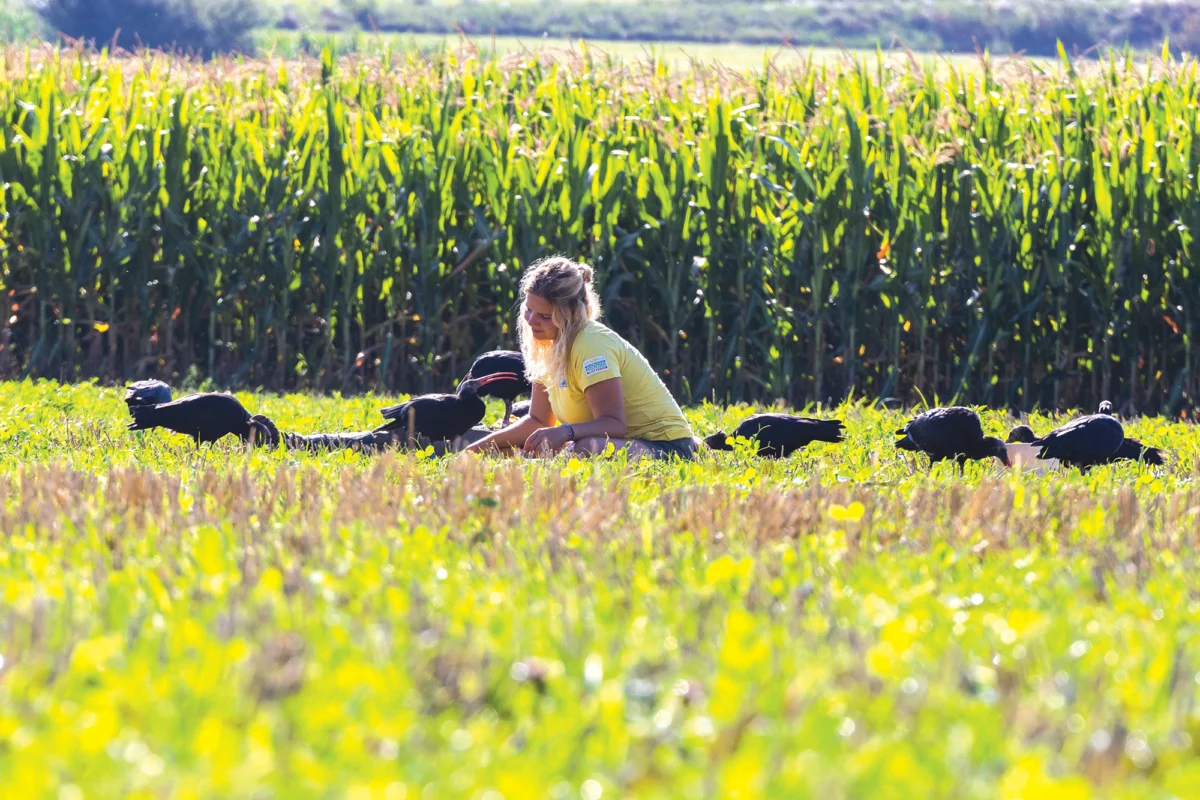
From that chilly April day, Steininger, alongside her colleague Helena Wehner, a twenty-eight-year-old biologist, would dedicate themselves entirely to the well-being of these nascent ibises. Their role transcended that of mere caretakers; they became surrogate mothers, their days dictated by the demanding rhythm of feeding and nurturing. The process mirrored that of raising human infants, involving constant cuddles, words of encouragement, and affectionate baby talk. Eight times a day, they meticulously hand-fed the chicks, a diet that, while not breast milk or formula, was crucial for their survival. "Just that it’s not breast milk or formula," Wehner explained, detailing the carefully prepared mixture of shredded beef hearts and mice that formed the chicks’ sustenance. This level of unwavering devotion is reserved not for any ordinary bird, but for some of the very last northern bald ibises on Earth.
The Northern Bald Ibis: A Species on the Brink
The northern bald ibis (Geronticus eremita) is a species with a rich and ancient lineage, once a common sight across Europe, North Africa, and the Middle East. Its distinctive appearance, characterized by a long, curved beak, a bare, wrinkled head, and glossy black plumage, has captivated observers for centuries. Ancient Egyptian hieroglyphs depict the ibis, and it was revered as a symbol of Thoth, the god of wisdom and writing.
However, this once widespread avian species has experienced a catastrophic decline. Habitat loss and degradation, driven by agricultural expansion and deforestation, have significantly reduced its foraging grounds and nesting sites. Hunting and poisoning, often due to mistaken identity with pest species or direct persecution, further exacerbated the population crash. By the mid-20th century, the northern bald ibis had vanished from most of its historical range.
A Desperate Measure: Re-establishing a Migratory Route
The core of the current conservation effort lies in a bold, almost audacious, strategy: to teach a new generation of northern bald ibises a migratory route that has been lost to them for generations. For decades, the species has been confined to a few isolated breeding colonies, primarily in Morocco and Syria, with a small reintroduced population in Europe. The European population, which historically migrated south to overwinter in Africa, had lost its traditional migration corridors due to human encroachment and the disappearance of established stopover sites.
The project, spearheaded by organizations like the Waldrappteam, a non-profit dedicated to the conservation of the northern bald ibis, aims to re-establish a viable migratory population in Europe. This involves breeding ibises in captivity and then imprinting them with a new migration path. The juvenile birds, once they reach a certain age and stage of development, are introduced to a small team of human caretakers who, clad in distinctive orange suits to mimic the appearance of their natural parents, guide them through their first migratory journey.
The Imprinting Process: A Human-Led Migration
The training process is a testament to the intricate bond between humans and animals in conservation. From the moment the chicks hatch, they are raised in isolation from other ibises, their primary caregivers being Steininger and Wehner. This ensures that the birds develop a strong imprinting on their human "parents," a critical factor for the success of the guided migration.
The hand-rearing involves not only feeding but also constant interaction and encouragement. The biologists mimic the calls and behaviors of adult ibises, fostering a sense of belonging and security. As the chicks grow, they are gradually introduced to larger enclosures, allowing them to develop their flight muscles and coordination.
The crucial phase begins when the young ibises are ready to fly. The human caretakers, equipped with ultralight aircraft or hang gliders, lead the birds on short practice flights within the vicinity of the aviary. This is where the image captured in the provided photograph likely originates – a scene of juvenile northern bald ibises, guided by Johannes Fritz and the "bird moms," practicing their aerial maneuvers. These initial flights are short, designed to build confidence and familiarize the birds with following their human guides.
The ultimate goal is to lead these birds on a multi-thousand-kilometer journey from their European breeding grounds to a suitable overwintering site in Italy. This journey is not a spontaneous flight but a carefully orchestrated series of stages, with planned stopovers for rest and feeding. The human guides act as living compasses, demonstrating the direction and pace of travel. The success of this endeavor hinges on the birds’ ability to imprint on the human-led route and, crucially, to retain this knowledge for future migrations.
Supporting Data and Scientific Basis
The scientific rationale behind this human-led migration stems from ethological studies on imprinting and learned migration. Imprinting, a form of learning in which an animal develops an attachment to the first moving object it sees after birth, is particularly strong in precocial birds like the ibis. By acting as the first moving object, the human caretakers become the birds’ surrogate parents and, therefore, their guides.
Furthermore, research has shown that migratory behavior can be learned. Birds that accompany experienced migrants, whether of their own species or another, can learn migratory routes, stopover sites, and even the timing of migration. The Waldrappteam’s approach leverages this by providing a consistent, reliable migratory stimulus in the form of their human guides.
The survival rates of reintroduced and translocated bird populations are often bolstered by such intensive human intervention. For species with critically low numbers and lost migratory traditions, direct guidance can provide the necessary impetus to re-establish or create new routes. Data from similar reintroduction programs for other migratory birds, such as the whooping crane in North America, have demonstrated the efficacy of ultralight aircraft-led migration.
Challenges and Potential Implications
Despite the meticulous planning and dedication, the challenges are immense. The journey is fraught with natural hazards, including adverse weather conditions, predators, and the risk of disorientation. Furthermore, the success of the migration is not guaranteed. The ibises must not only follow the human guides but also learn to navigate independently in subsequent years and pass on this knowledge to their offspring.
The long-term survival of the northern bald ibis hinges on establishing self-sustaining, wild populations. This project represents a critical step in that direction. If successful, it could:
- Increase the global population: By re-establishing a viable migratory population, the project directly contributes to increasing the overall numbers of this endangered species.
- Enhance genetic diversity: A new migratory route could connect fragmented populations, promoting gene flow and increasing genetic diversity, which is crucial for long-term species health.
- Serve as a model for other species: The innovative techniques employed in this project could provide valuable insights and a blueprint for conservation efforts targeting other migratory birds facing similar threats.
- Raise public awareness: The dramatic nature of a human-led migration naturally captures public attention, fostering greater awareness and support for conservation initiatives.
Official Responses and Stakeholder Involvement
The project has garnered support from various conservation organizations, wildlife authorities, and scientific institutions. The European Union has recognized the significance of the northern bald ibis as a species in need of urgent conservation action, and initiatives like this are often eligible for funding and regulatory support.
Local communities in both the breeding and overwintering grounds are also integral to the project’s success. Educating these communities about the importance of the ibis and fostering a sense of stewardship is crucial for ensuring the long-term protection of the birds and their habitats along the new migratory corridor. While specific official statements from government agencies are not provided in the source material, the very existence and continuation of such an ambitious project imply a level of tacit or explicit endorsement from relevant wildlife and environmental bodies.
The involvement of entities like Wildlife Park Rosegg, which provides the initial breeding and rearing facilities, highlights the collaborative nature of modern conservation. These partnerships are essential for pooling resources, expertise, and infrastructure to tackle complex conservation challenges.
A Glimpse of Hope on the Wing
The image of northern bald ibises soaring in practice flights, guided by their devoted human counterparts, is more than just a visually striking scene; it is a powerful symbol of hope. It represents a testament to human ingenuity, dedication, and the profound capacity for compassion that drives conservation efforts.
The journey of Barbara Steininger, Helena Wehner, and their team is a deeply personal one, filled with the joys of nurturing life and the anxieties of facing extinction. Their commitment to these last northern bald ibises is a profound act of faith in the resilience of nature and the power of dedicated human intervention. As these birds prepare to embark on their groundbreaking migration, the world watches, hoping that the knowledge imparted by their human parents will guide them to safety and secure a future for this magnificent, ancient species. The successful re-establishment of this lost migratory route could indeed be a turning point, offering a vital lifeline to the northern bald ibis and a beacon of inspiration for conservationists worldwide.