In a determined and pioneering effort to pull the northern bald ibis back from the precipice of extinction, a dedicated team of biologists has undertaken an ambitious mission: to teach these critically endangered birds a new migratory route. This groundbreaking initiative, driven by a group of maverick scientists, represents a crucial last stand for a species whose numbers have dwindled to a precarious few. The success of this endeavor could redefine conservation strategies for migratory birds and offer a vital lifeline to a species facing overwhelming odds.
The tale of this modern-day exodus began in April 2023, on the outskirts of an aviary nestled in the picturesque yet rugged landscape of southern Austria. Here, amidst the verdant valleys and imposing mountain ranges, Barbara Steininger, then twenty-five years old, found herself on the cusp of a profoundly unusual maternal role. "Not an everyday occurrence," she remarked, her voice tinged with both excitement and apprehension, "especially if your fosterlings are birds." Her anticipation was palpable as she prepared to embrace her new charges.
Moments later, a zookeeper from Wildlife Park Rosegg gently placed two featherless, vulnerable chicks into Steininger’s warm, cupped hands. Her freckled face, illuminated by the dawning realization of the immense responsibility she was undertaking, lit up with a mixture of tenderness and determination. This initial pair was just the beginning; thirty-three more chicks awaited their care.
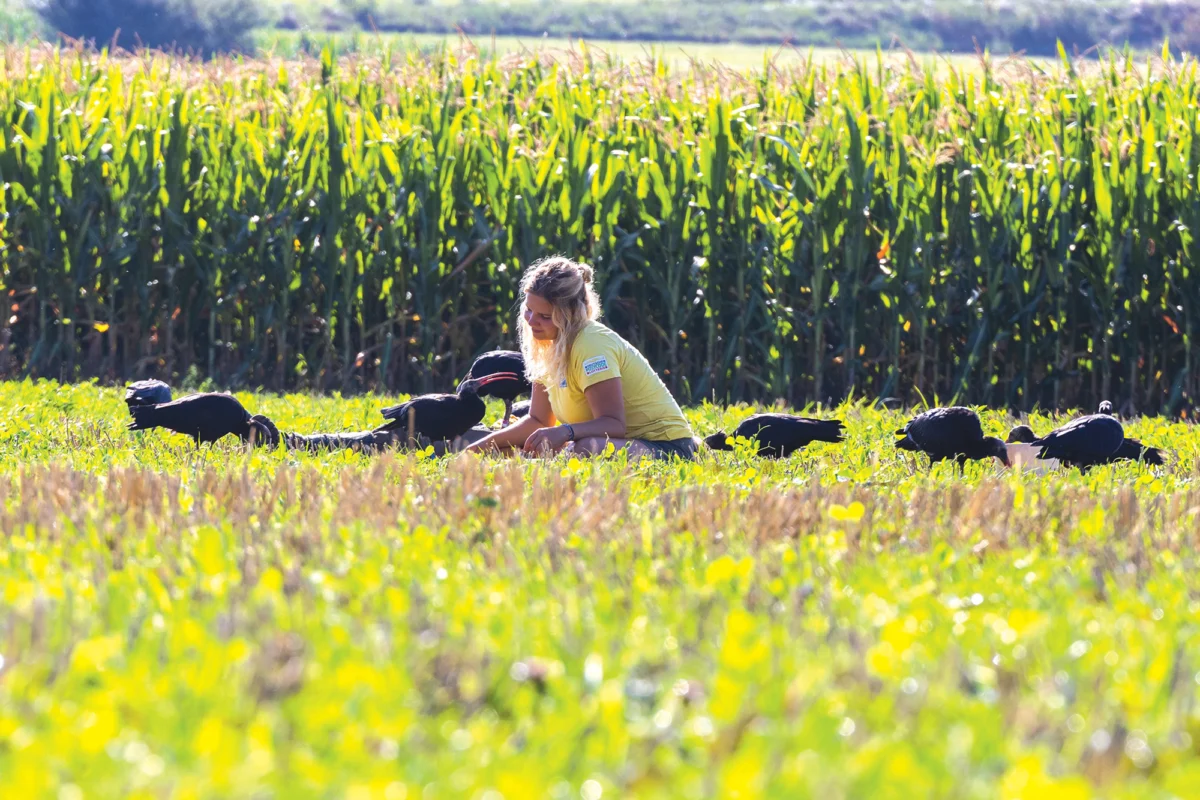
From that cool spring day forward, Steininger and her colleague, twenty-eight-year-old Helena Wehner, became the sole guardians of these fragile lives. Their role transcended that of mere caretakers; they were to be the surrogate mothers for a species teetering on the brink. The daily routine mirrored the profound commitment of human parenthood, replete with essential cuddles, constant words of encouragement, and an outpouring of adoration delivered in gentle, baby-talk tones. Eight times a day, they meticulously hand-fed each chick. "Just that it’s not breast milk or formula," Wehner explained, detailing the precise dietary regimen: a carefully prepared mix of shredded beef hearts and mice. This level of devotion, this personal investment, is reserved for the dwindling population of northern bald ibises, a testament to the urgency of their plight.
The northern bald ibis (Geronticus eremita) is a striking bird, characterized by its distinctive bald, red head and long, curved beak. Historically, these birds were widespread across Europe, North Africa, and the Middle East, undertaking extensive migrations. However, a catastrophic decline in their populations over the past centuries has rendered them one of the most endangered bird species on the planet. The primary drivers of this decline are multifaceted, including habitat loss and degradation due to agricultural expansion and urbanization, hunting and poaching, and the disruption of traditional migratory routes.
A Legacy of Decline: The Northern Bald Ibis in Peril
The northern bald ibis once graced the skies of Europe. Archaeological evidence suggests they were common in Central Europe as late as the early modern period. Their migratory patterns were well-established, connecting breeding grounds in Europe with wintering grounds in North Africa. However, by the 17th century, they had disappeared from much of their European range. The last confirmed breeding pairs in Europe were recorded in Austria in the 16th century, and by the late 17th century, they were considered extinct in the wild in Europe.
The species’ survival became increasingly reliant on isolated pockets in North Africa, primarily in Morocco and Algeria, and a small, critically endangered wild population in Syria. However, even these strongholds have faced severe pressures. The Syrian population, for instance, has been on the brink of collapse for decades, with only a handful of individuals remaining in recent years, making rescue efforts exceptionally challenging.
The "Waldrapp" Project: A Bold Conservation Strategy
The initiative spearheaded by Steininger and Wehner is part of a larger, long-term conservation effort known as the "Waldrapp" project, a German term for the northern bald ibis. This project, initiated in the early 2000s, aims to re-establish a migratory population of northern bald ibises in Europe. The core strategy involves hand-rearing chicks, imprinting them with human caretakers as their "parents," and then training them to follow a specific migratory route using ultralight aircraft.
The first successful reintroduction effort began in 2002 in Burghausen, Germany. Chicks were hand-reared and then guided by researchers in ultralight aircraft to their wintering grounds in Tuscany, Italy. This pioneering approach, led by ornithologist Dr. Johannes Fritz, proved that it was possible to teach migratory birds new routes, a feat previously thought to be impossible due to the inherent instinctual nature of migration.
The current efforts in Austria are a continuation and expansion of this groundbreaking work. The goal is not only to reintroduce the species to its former European habitats but also to establish a viable, self-sustaining migratory population that can navigate between breeding grounds in Europe and suitable wintering sites.
The Imprinting Process: Nurturing a New Generation of Migrants
The process undertaken by Steininger and Wehner is critical to the success of the Waldrapp project. Imprinting, a biological phenomenon where young animals form an attachment to the first moving object they see after hatching, is crucial for migratory birds. In this case, the human caretakers become the surrogate parents, and the chicks learn essential survival behaviors, including foraging, predator avoidance, and, most importantly, following their human "flock leaders."
The hand-feeding regimen is rigorous, ensuring the chicks receive the necessary nutrients for healthy growth. As they grow, they are introduced to increasingly complex environments within the aviary, simulating aspects of their natural habitat. The ultimate goal of this intensive nurturing is to prepare them for the arduous journey ahead.
The Critical First Flight: A Test of Resilience and Instinct
The image of northern bald ibises during a practice flight with Johannes Fritz and the "bird moms" encapsulates the essence of this conservation endeavor. These practice flights are a crucial phase in training the young ibises. Guided by ultralight aircraft flown by experienced pilots, often including Dr. Fritz himself, the young birds learn to fly in formation, mimicking the natural flocking behavior of their wild ancestors.
These flights serve multiple purposes. They help the birds build stamina and coordination, essential for long-distance migration. They also reinforce the imprinting process, as the birds learn to associate the ultralight aircraft with their human caregivers and the concept of migration. The presence of the "bird moms" on the ground, offering encouragement and support, further solidifies this bond and provides a sense of security.
The challenges are immense. The birds must overcome their innate fear of predators and navigate unfamiliar landscapes. They are vulnerable to adverse weather conditions, and the sheer physical exertion of long-distance flight is considerable. Furthermore, the risk of encountering human-related dangers, such as power lines, wind turbines, and hunting, remains a significant concern.
Supporting Data: The Dire State of the Northern Bald Ibis
The urgency of the Waldrapp project is underscored by stark statistics. The northern bald ibis is listed as Critically Endangered on the IUCN Red List of Threatened Species. Global population estimates have fluctuated but have consistently remained in the low thousands. For example, as of recent assessments, the total population is estimated to be between 2,000 and 2,500 mature individuals. The Syrian population, once a crucial stronghold, has been on the verge of extinction for years, with only a handful of individuals recorded in recent surveys.
The reintroduction efforts aim to establish a population of at least 500 breeding pairs to be considered genetically viable in the long term. The success of the Waldrapp project in Europe is thus a critical component of the overall survival strategy for the species.
Reactions and Perspectives: A Coalition of Hope
The scientific community largely views the Waldrapp project with cautious optimism. Dr. Johannes Fritz, the visionary behind the initiative, has consistently emphasized the long-term commitment required for such a complex undertaking. "We are not just teaching birds to fly a new route," he has stated in previous interviews, "we are reawakening a lost instinct, forging a connection between a species and a landscape from which it has been absent for centuries."
Conservation organizations worldwide have recognized the innovative nature of this approach. However, they also highlight the need for sustained funding and international cooperation. Representatives from organizations like BirdLife International have expressed support for the project, acknowledging its potential to inspire similar initiatives for other migratory species.
Local communities in Austria and the regions where the ibises are being reintroduced have also shown interest and support. Educational programs are often implemented alongside the reintroduction efforts to foster public awareness and appreciation for these remarkable birds. The presence of the ibises, even as they learn their new routes, can serve as a powerful symbol of successful conservation.
Broader Impact and Implications: Redefining Avian Conservation
The success of the Waldrapp project has far-reaching implications for avian conservation. It demonstrates that with intensive human intervention and a deep understanding of animal behavior, it is possible to re-establish migratory routes that have been lost due to human impact. This approach offers a potential model for reintroducing other extirpated migratory bird populations.
Furthermore, the project highlights the critical role of imprinting and surrogate parenting in conservation efforts. It underscores the fact that for some species, human intervention at the earliest stages of life is not merely beneficial but essential for survival.
However, the project also raises ethical considerations and challenges. The reliance on human caretakers and artificial migration routes raises questions about the long-term naturalness of the re-established population. Critics sometimes question whether these birds will ever truly be "wild" in the traditional sense. Project leaders counter that in a world irrevocably altered by human activity, a degree of intervention may be necessary to ensure the survival of species that would otherwise perish.
The long-term viability of the re-established population will depend on several factors: the birds’ ability to successfully breed in their new European habitats, their capacity to navigate independently without constant human guidance, and their resilience to the threats they will face in the wild. Continued monitoring, research, and adaptive management strategies will be crucial.
The journey of the northern bald ibis is far from over. The dedication of individuals like Barbara Steininger and Helena Wehner, coupled with the scientific rigor of the Waldrapp project, offers a beacon of hope. These maverick biologists are not just teaching birds to fly; they are meticulously crafting a future for a species that has been almost forgotten, proving that even in the face of seemingly insurmountable challenges, conservation can indeed take flight. The success of this ambitious endeavor will not only be measured in the number of birds that reach their wintering grounds but in the broader implications for how humanity chooses to safeguard the planet’s most vulnerable inhabitants.