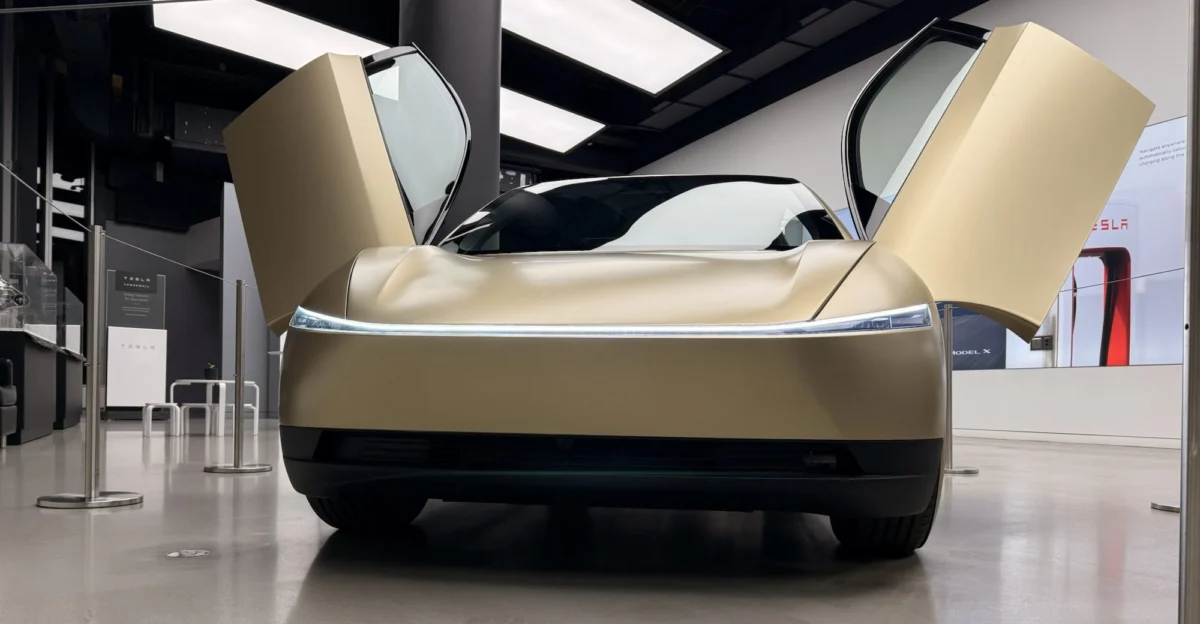
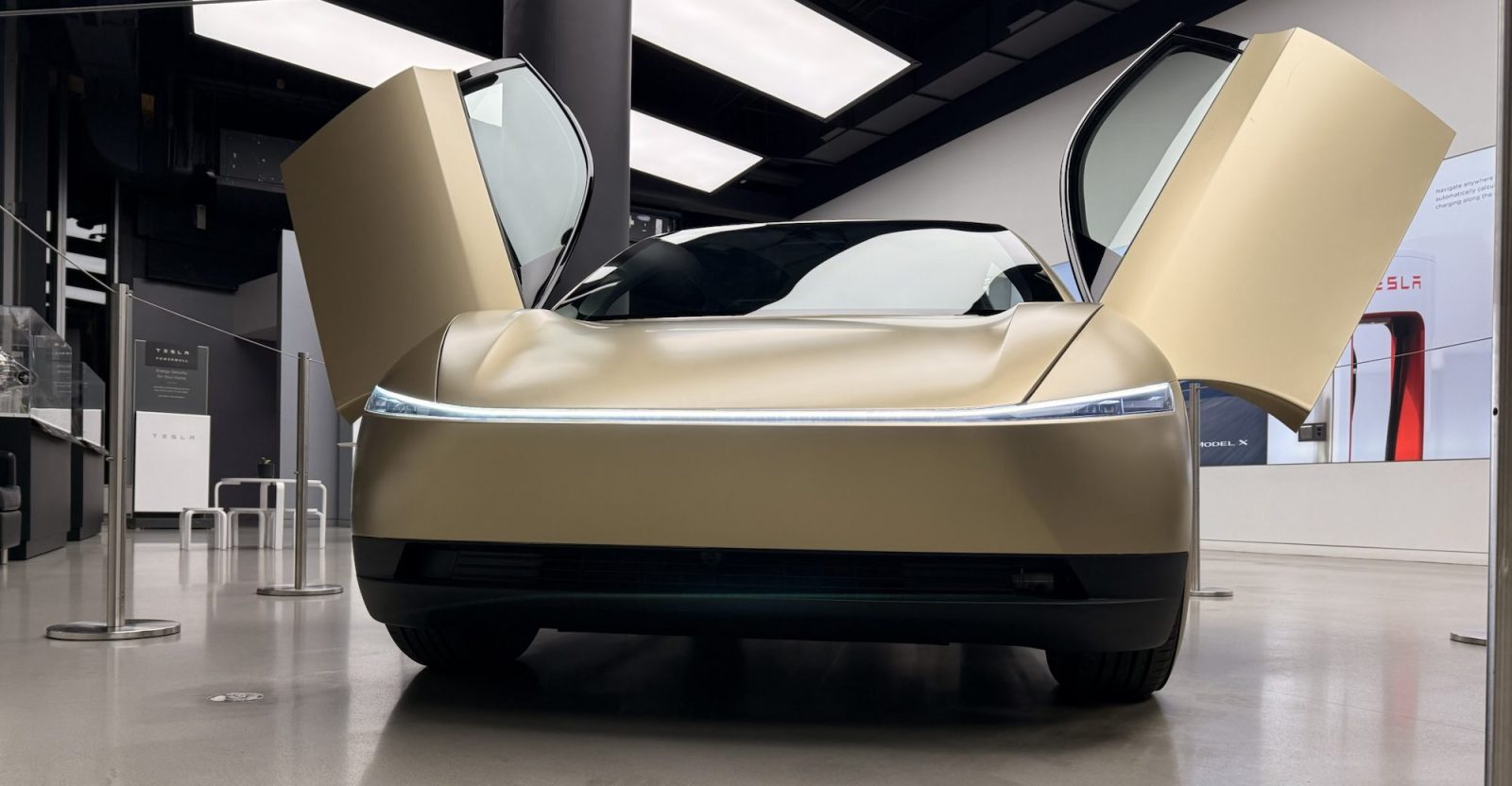
Tesla has officially brought its highly anticipated Cybercab to China for its first public appearance in the country, though the electric vehicle pioneer has made it explicitly clear that the futuristic, steering-wheel-less vehicle is not intended for the Chinese market or commercial deployment. The public showcase, which features static displays in Beijing and Shanghai, offers consumers a glimpse into Tesla’s autonomous product design and technological concepts. However, the event takes place against the backdrop of an intensely competitive Chinese autonomous vehicle market, where domestic operators are already running fully commercialized, paid robotaxi services at scale without safety drivers.
The decision by Tesla to exhibit the vehicle without any immediate plans for sale or operational launch has drawn significant attention from industry analysts and consumers alike. While the Cybercab represents Tesla’s vision of future autonomous urban mobility, regulatory hurdles and fierce local competition present substantial barriers to entry in the world’s largest automotive market.
Detailed Schedule and Exhibition Locations
The public exhibition of the Cybercab marks a milestone for Tesla in Asia, providing local enthusiasts and tech enthusiasts with their first physical look at the vehicle since its initial unveiling. The tour is structured across two major metropolitan hubs known for high concentrations of technology consumers:
- Beijing: The Cybercab is on display at Tesla’s Huamao experience store, running through September 27.
- Shanghai: The vehicle is being showcased in the LG1 north hall of the HKRI Taikoo Hui shopping center, concluding its run on September 21.
Tesla China has maintained a strict posture regarding the nature of these exhibitions. In official statements released ahead of the public openings, the company emphasized that the showcase is strictly intended to highlight product design and technological concepts. The automaker explicitly stated that the exhibition "does not involve the sale of the Cybercab in the Chinese market or any arrangement for driverless ride-hailing commercial operations."
Regulatory Hurdles and Product Design Realities
The cautious stance adopted by Tesla is rooted in both hardware limitations and strict regulatory frameworks governing public roads in China. The Cybercab is engineered as a dedicated two-seat autonomous vehicle that completely lacks a steering wheel and physical pedals. Under current Chinese transportation laws—much like regulations in the United States and European Union—vehicles lacking manual controls cannot be registered for consumer ownership or operated on public thoroughfares without specialized, hard-to-acquire permits.
Furthermore, the operational side of autonomous ride-hailing presents an even steeper climb for foreign automakers in China. Tesla introduced a limited, supervised version of its Full Self-Driving (FSD) software suite in China in early 2025, which received mixed reviews from local drivers and regulators. Despite ongoing testing and software updates, Tesla has not yet secured the necessary regulatory approvals from Chinese authorities to deploy unsupervised, fully driverless commercial fleets.
In contrast, domestic technology companies have spent years navigating these regulatory pathways, securing testing licenses, and mapping complex urban environments to achieve commercial readiness.
The Landscape of China’s Autonomous Vehicle Market
While Tesla positions a static Cybercab inside shopping malls for observational purposes, China’s domestic autonomous vehicle sector operates on an entirely different scale. The country is widely regarded as the most advanced and heavily deployed market for autonomous ride-hailing globally.

Several prominent Chinese enterprises have moved past the testing phase and are currently operating fully commercialized, paid robotaxi services across multiple tier-one and tier-two cities:
- Baidu (Apollo Go): Operating extensive commercial robotaxi fleets in major cities such as Wuhan, Beijing, and Shenzhen, completing millions of fully driverless rides annually.
- Pony.ai: Backed by major automotive and tech investors, providing commercial robotaxi services in multiple Chinese urban centers and expanding globally.
- WeRide: Operating autonomous shuttles, sweepers, and robotaxis commercially across domestic and international markets.
These competitors have achieved significant milestones by operating entirely without safety drivers behind the wheel, deploying vehicles directly into dense, complex urban traffic conditions on a daily basis. For consumers in cities like Wuhan and Beijing, summoning a driverless, paid taxi via smartphone application has transitioned from a novelty into a routine part of daily public transportation.
Strategic Implications and Showroom Traffic Drivers
Industry observers have noted that bringing the Cybercab to China serves strategic purposes beyond mere technological exhibition. With domestic electric vehicle manufacturers—such as BYD, NIO, and Xpeng—releasing advanced smart-driving features at aggressive price points, foreign automakers face mounting pressure to maintain brand visibility and consumer interest.
By drawing curious crowds into high-end retail locations like the Huamao experience store in Beijing and HKRI Taikoo Hui in Shanghai, Tesla can leverage the novelty of the Cybercab to generate substantial foot traffic. Analysts suggest that visitors attracted by the futuristic design of the steering-wheel-less vehicle may ultimately explore and purchase commercially available models, such as the Model Y or Model 3, which remain the backbone of Tesla’s sales volume in the region.
Meanwhile, in Western markets, Tesla has pursued a more permissive regulatory environment by focusing initial deployment strategies on deregulated or receptive regions, particularly within states like Texas and Florida. However, scaling these operations to match the dense, highly regulated urban ecosystems found in major Chinese municipalities remains a long-term challenge.

Outlook for Autonomous Mobility in China
As the exhibition windows in Beijing and Shanghai draw to a close, the broader implications for Tesla’s autonomous strategy in Asia remain complex. The company continues to gather data through its supervised FSD software rollout, aiming to satisfy local regulatory requirements for data security, mapping compliance, and autonomous safety validation.
Whether Tesla will eventually be able to adapt the Cybercab design to meet local legal frameworks—or introduce a variant equipped with manual controls for the Chinese consumer market—remains to be seen. For now, the presence of the Cybercab serves primarily as an ambitious statement of design intent, highlighting the widening gap between visionary automotive concepts and the reality of commercial robotaxi deployment currently unfolding on Chinese streets.