
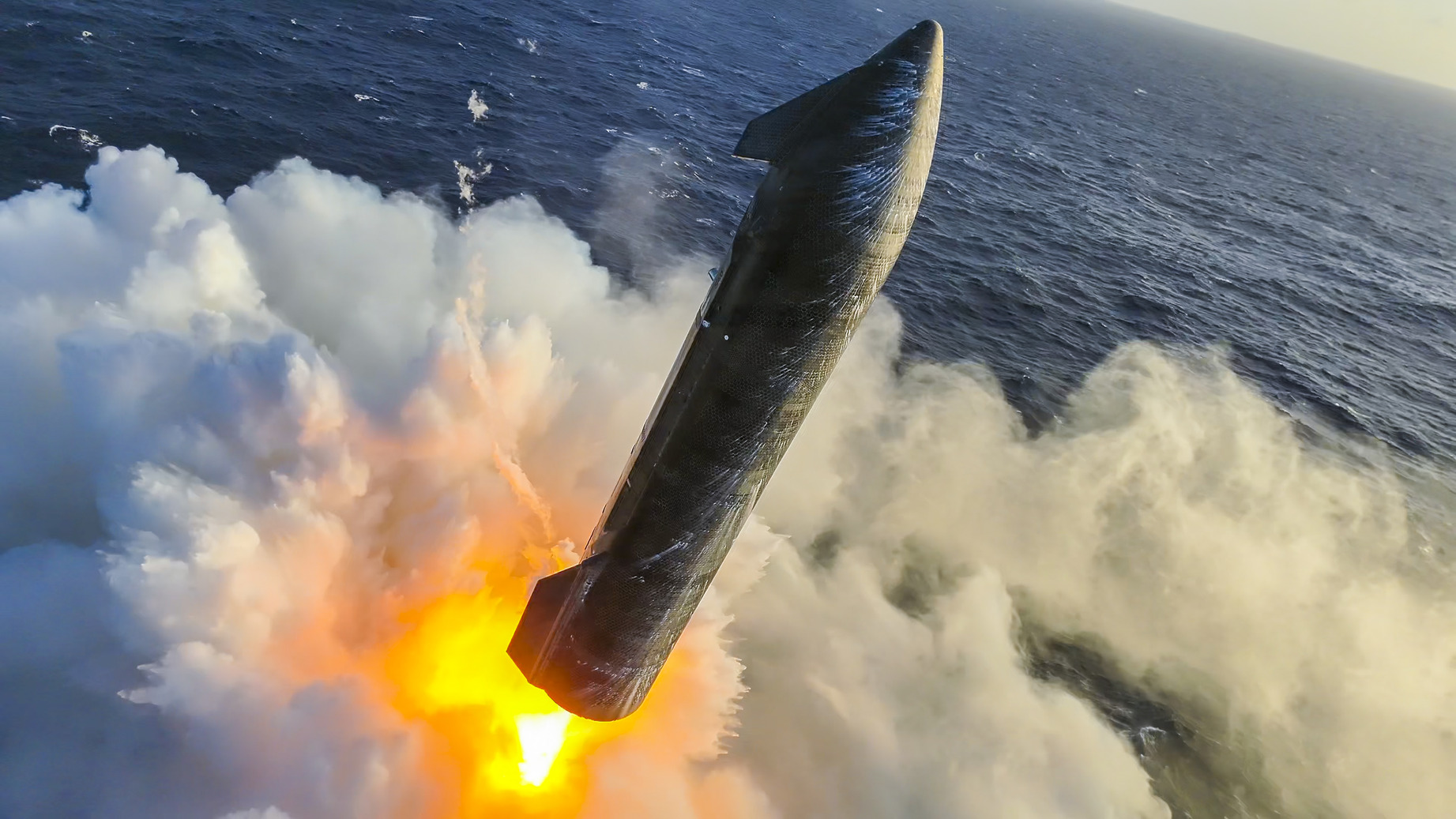
SpaceX has officially scheduled September 22, 2026, as the target launch date for the 14th integrated flight test of its massive Starship rocket system. Operating out of the Starbase facility in South Texas, the upcoming mission marks a watershed moment in the company’s development timeline. Unlike all 13 previous test flights—which deliberately followed suborbital trajectories, culminating in controlled atmospheric reentries within an hour of liftoff—Flight 14 is designed to achieve a genuine, sustained orbit around Earth.
The launch window for the ambitious mission opens at 7:15 a.m. Central Time and spans 75 minutes, contingent upon standard regulatory sign-offs from the Federal Aviation Administration (FAA) and other governing bodies. If successful, the flight will demonstrate SpaceX’s mastery of orbital insertion, long-duration spacecraft operations, and precise global telemetry tracking.
A Shift in Trajectory and Mission Profile
The primary engineering objective of Flight 14 is to transition Starship from a suborbital experimental vehicle into an operational orbital spacecraft. According to mission documentation published by SpaceX, the spacecraft will execute a series of burns designed to circularize its orbit at an altitude of approximately 275 kilometers.
Should the launch proceed without delay, Starship will complete roughly six full orbits of the planet over an operational lifespan of approximately ten hours. This extended duration will allow engineers to test critical on-orbit systems, including thermal regulation, power generation via solar arrays, and attitude control thrusters under real spaceflight conditions.
Upon completion of the orbital phase, a targeted deorbit burn will initiate the spacecraft’s return journey. In a notable departure from the Indian Ocean splashdown zones utilized during the most recent test flights, Flight 14 is programmed to execute a controlled splashdown in the Pacific Ocean west of Chile. This change provides SpaceX with expanded geographic oversight and data retrieval opportunities across a new maritime landing corridor.
First Operational Deployment of Starlink V3 Satellites
Beyond verifying orbital mechanics, Flight 14 carries a significant commercial and operational payload: an active batch of Starlink V3 satellites. While Flight 13 successfully transported 20 of these advanced next-generation satellites into space this past July, their suborbital trajectory prevented deployment. Because that previous mission reentered the atmosphere alongside the vehicle, the satellites were incinerated without ever entering service.

Flight 14 seeks to change that outcome. Each Starlink V3 satellite is engineered to deliver an estimated one terabit per second of downlink capacity. A successful deployment on this mission will represent the single largest capacity expansion in the history of the Starlink network, dwarfing previous hardware rollouts historically launched via Falcon 9 rockets. By proving that Starship can reliably transport and deploy heavy, high-capacity payloads into orbit, SpaceX will validate the primary economic engine behind its long-term interplanetary exploration goals.
Building on the Data of Flight 13
The ambitious goals of Flight 14 are made possible by the rigorous data collection achieved during Flight 13 in July 2026. That mission subjected Starship to an intentionally aggressive and thermally stressful reentry profile designed to test the limits of the vehicle’s advanced heat shield tiles and structural integrity.

The ship ultimately survived the descent, executing its softest ocean splashdown to date and remaining sufficiently intact for detailed drone inspections shortly after landing. Company founder Elon Musk later remarked that the mission delivered "all the heat shield data we needed and then some," confirming that SpaceX had largely solved the vehicle’s most daunting reusability hurdle: surviving the violent thermal environments of atmospheric entry at orbital velocities.
With those thermodynamic puzzles understood, Flight 14 effectively converts that empirical data into actionable operational capability, pushing the envelope from controlled descent to full orbital capture.
Tower Catch Canceled for Now, Booster Recovery to Continue

While Flight 14 introduces several historic milestones, it will not attempt every experimental procedure in SpaceX’s playbook. Immediately following the success of Flight 13, Musk floated the possibility of attempting a mechanical "tower catch" of the Starship upper stage using the launch tower’s "chopstick" arms. However, in August 2026, the company adjusted its timeline, indicating that a ship catch attempt would be deferred for several months to allow for further software and hardware refinements.
Consequently, the upper stage will rely on its planned ocean splashdown. Meanwhile, the Super Heavy booster will adhere to its proven recovery protocol, targeting an offshore splashdown point in the Gulf of Mexico. This incremental approach underscores SpaceX’s risk-mitigation strategy, ensuring that high-risk orbital insertion objectives are not unnecessarily complicated by simultaneous mid-air mechanical catches of the upper stage.
Regulatory Hurdles and Strategic Implications

While September 22 remains SpaceX’s internal target date, aerospace analysts and company officials emphasize that the schedule remains fluid. Starship launch campaigns are frequently subject to schedule adjustments driven by hardware readiness evaluations and the final issuance of modifications to SpaceX’s FAA launch license.
Nevertheless, the filing of orbital trajectory plans with the Federal Communications Commission (FCC) and international aviation authorities signals that SpaceX is positioning itself for an aggressive cadence of orbital testing through the remainder of the decade.
As Starship transitions from an experimental novelty into an orbital workhorse, the implications for the global aerospace industry are profound. Achieving stable Earth orbit clears the regulatory and technical runway required for eventual cargo missions to the Moon, uncrewed precursor flights to Mars, and the rapid deployment of next-generation global broadband constellations. Should Flight 14 succeed, it will permanently alter humanity’s access to space, turning the promise of rapid, full-scale reusability into an operational reality.