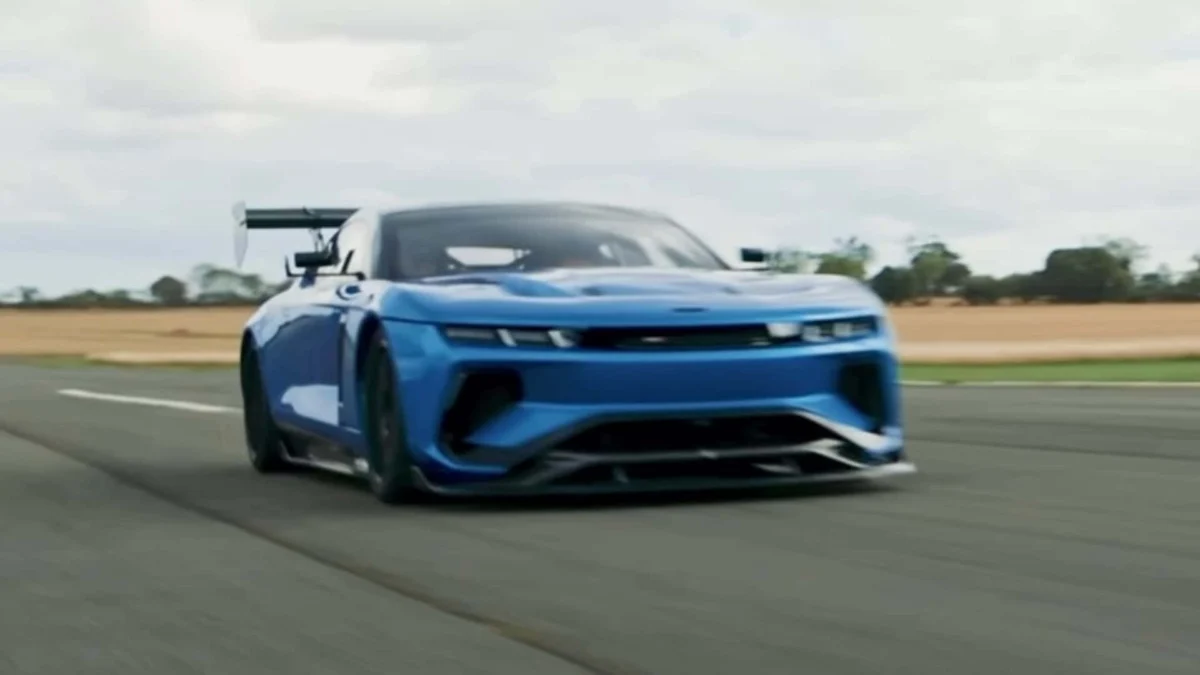
The resurgence of the Jensen brand has reached a significant milestone with the unveiling of the Interceptor GTX, a track-focused prototype that signals the return of a legendary nameplate to the automotive landscape. While currently presented as a closed-course, circuit-only machine, the development of this vehicle serves as a strategic precursor to a future line of road-legal grand tourers. By blending traditional British aesthetic sensibilities with high-output American powertrain architecture, Jensen is positioning itself to bridge the gap between classic motoring heritage and modern hyper-performance standards.
The Engineering Evolution: A Transatlantic Collaboration
At the heart of the Interceptor GTX lies a meticulously engineered 6.8-liter V8 engine. Rather than relying on off-the-shelf components, Jensen has established a technical partnership with Late Model Engines (LME) in Houston, Texas, to ensure the powertrain meets the rigorous demands of a high-performance sports car.
The process begins with a General Motors-sourced block, which undergoes a comprehensive transformation. To achieve its output of approximately 973 horsepower—with potential for up to 1,200 horsepower under specific performance tuning—the engine is stripped and rebuilt with high-specification internal components. Key modifications include the integration of CNC-machined cylinder heads, the adoption of lightweight titanium valves, and a completely overhauled rotating assembly designed to withstand extreme thermal and mechanical stress.
The integration of a MoTeC engine management system allows for precise control over the fuel, air, and ignition cycles, enabling the vehicle to sustain its power output while maintaining a level of reliability necessary for track environments. Perhaps most notable for purists is the decision to pair this massive power figure with a manual gearbox, a configuration that is increasingly rare in the contemporary era of dual-clutch and automatic transmissions.
Chronology of the Jensen Revival
The journey toward the current Interceptor GTX prototype has been a calculated, multi-year endeavor aimed at modernizing a brand that last saw mass production in the 1970s. The timeline of this revival reflects the careful approach required to modernize a heritage marque:
- Initial Announcement: Following years of speculation and intermittent rumors, the company formally initiated the development program to bring the Interceptor name back to the market, focusing on ultra-high-performance luxury.
- Design and Teasers: Throughout 2024, the manufacturer released a series of design concepts and teaser imagery, confirming that the new vehicle would maintain the iconic silhouette of the original Interceptor while utilizing modern composite materials for weight reduction and aerodynamic efficiency.
- The Prototype Reveal: In early 2025, the company officially debuted the track-only GTX prototype, shifting the narrative from conceptual design to functional engineering demonstration.
- Ongoing Development: Current operations are centered on rigorous track testing, with data gathered from these sessions being used to refine the chassis dynamics, cooling systems, and aerodynamics. This data is essential for the transition from the prototype phase to the production of consumer-ready vehicles.
Strategic Roadmap: From Track to Road
Jensen’s long-term strategy involves leveraging the data obtained from the track-only GTX to produce two distinct road-going variants: the Grand Touring (GT) and the sporting GTR. These models are intended to serve as the pillars of the new Jensen lineup.
The transition from a prototype to a road car involves overcoming significant regulatory hurdles, including emissions compliance, crash safety standards, and pedestrian protection requirements. By establishing the vehicle’s performance baseline in a track-only format, the company is effectively stress-testing its engineering solutions in the most demanding environments before subjecting them to the compromises necessary for road legality.
Industry analysts suggest that this "race-to-road" development cycle is a common tactic for boutique manufacturers, as it allows for the validation of experimental technologies—such as the high-output 6.8-liter V8—while building brand prestige through circuit success.
Performance and Market Implications
The entry of the Interceptor GTX into the high-performance sector arrives at a time when the market for "restomod" and ultra-luxury performance vehicles is expanding. Potential competitors include established names like Aston Martin and Bentley, as well as niche manufacturers that specialize in high-horsepower, low-volume production.
The decision to utilize a manual transmission is a distinct market differentiator. While competitors have largely shifted toward electrification or automated shifting systems to optimize lap times, Jensen’s focus on the manual experience appeals to a specific segment of the collector market that values driver engagement over pure, automated efficiency.
From an economic perspective, the production of the road-going Interceptor is expected to be a low-volume, high-margin endeavor. Given the extensive manual labor involved in the engine assembly at LME and the custom fabrication of the chassis, the final purchase price for the production models will likely place them in the top tier of the luxury vehicle market.
Technical Analysis: The Sound and the Fury
Beyond the raw power, the sensory experience provided by the Interceptor GTX has been a focal point of its early marketing. The sonic signature of the supercharged 6.8-liter V8 is a byproduct of the engine’s displacement and the specific tuning of the exhaust manifold. In an era where many performance engines are muted by mandatory gasoline particulate filters and stringent noise regulations, the unrestricted nature of the track-only prototype allows for an authentic acoustic profile that resonates with enthusiasts.
However, translating this sound to a road-legal vehicle will represent a significant engineering challenge. Meeting modern noise-drive-by regulations while preserving the character of the engine will require sophisticated active exhaust technology, a feature that the engineering team will likely prioritize during the upcoming development phases.
Broader Impact and Future Outlook
The return of Jensen is not merely about resurrecting a name; it is an attempt to define a new niche for the "British muscle car." By combining the tradition of the Interceptor—a car historically known for putting American V8 power into a stylish, grand-touring body—with modern engineering capabilities, the company is attempting to capture a legacy that has been dormant for decades.
As the development team moves forward, the primary focus will remain on durability testing. The ability of the chassis to handle the torque generated by the 973-horsepower engine without sacrificing handling precision will be the ultimate determinant of the car’s success. If the road-legal production versions can retain the character and intensity of the current prototype, Jensen may secure a viable position in the ultra-luxury sports car segment.
The automotive community is currently awaiting further information regarding the production timeline, interior specifications, and final pricing structures. While no official release date for the road-legal variants has been confirmed, the progress demonstrated by the GTX prototype indicates that the company is moving with intent. The industry will be watching closely to see if this British beast can successfully transition from the circuit to the showroom, providing a modern interpretation of one of the 20th century’s most intriguing automotive partnerships.
The synthesis of Texas-engineered power and British automotive design remains a compelling proposition. Whether this iteration of the Interceptor will reach the levels of cultural relevance enjoyed by its predecessors remains to be seen, but the current prototype provides a potent argument for its potential viability in a market that is increasingly seeking alternatives to the standard supercar formula.