
The United States Department of Transportation has announced that it will finalize a sweeping rollback of federal vehicle fuel economy standards, scaling back long-term efficiency targets that federal analysts project will drive up household fuel expenses, increase total petroleum consumption, and raise carbon emissions. The administration’s policy adjustment alters Corporate Average Fuel Economy targets established under previous legislative and regulatory frameworks, replacing ambitious efficiency goals with significantly lower benchmarks.
The decision marks a critical turning point in federal energy and transportation policy, drawing intense scrutiny from economists, environmental organizations, and consumer advocacy groups. While federal officials characterize the regulatory adjustments as a necessary measure to relieve pressure on the domestic auto industry and lower vehicle purchase costs, internal agency projections and independent analyses suggest the policy will introduce substantial long-term financial burdens for American drivers at the pump.

Historical Context of Corporate Average Fuel Economy Standards
To understand the weight of the current policy shift, it is essential to examine the origins of the Corporate Average Fuel Economy (CAFE) framework. Established in the aftermath of the 1973 Arab oil embargo and the subsequent global energy crisis, CAFE standards were designed to reduce American dependency on foreign petroleum by compelling automakers to improve the average fuel efficiency of their passenger car and light truck fleets.
Prior to the implementation of federal efficiency standards, the American automotive landscape was dominated by heavy, low-efficiency vehicles that consumed vast quantities of gasoline. Over the subsequent decades, successive federal administrations utilized CAFE regulations, alongside complementary state and federal clean air mandates, to drive technological innovation. These policies catalyzed the development of advanced internal combustion engines, hybrid technologies, and eventually, zero-emission electric vehicles.
Supporters of strict efficiency standards argue that these rules have historically yielded multifaceted benefits: lowering household expenditures on fuel, mitigating air pollution linked to respiratory illnesses, and reducing greenhouse gas emissions. Conversely, critics from the traditional manufacturing sector have frequently contended that aggressive efficiency mandates impose undue compliance costs on automakers, potentially pricing consumers out of the new vehicle market and restricting consumer choice regarding vehicle size and capability.
Timeline of the Regulatory Rollback
The dismantling of the existing efficiency framework has progressed through a series of administrative and legislative maneuvers over recent months. The chronology of the policy shift illustrates a concerted effort by the current administration to unwind prior environmental and energy regulations:
- January 2025: On his first day in office, Department of Transportation leadership signed an administrative memorandum initiating a comprehensive review of existing fuel economy targets, signaling an intent to reverse standards that previous economic estimates suggested would save consumers billions of dollars.
- Late 2025: The National Highway Traffic Safety Administration (NHTSA) formally proposed lowering the target average fuel economy for model year 2031 from 50.4 miles per gallon (mpg) down to 34.5 mpg.
- Early 2026: The proposed rule was opened for public comment, drawing tens of thousands of submissions from stakeholders, industry representatives, and private citizens. Simultaneously, legislative maneuvers in Congress effectively set federal CAFE non-compliance penalties to zero, neutralizing the enforcement mechanism of the standards even prior to formal administrative repeal.
- September 2026: Federal officials announced that the finalized regulatory framework will take effect, solidifying the rollback despite widespread opposition documented during the public comment period.
Projected Economic and Environmental Implications
The decision to lower fuel economy benchmarks carries profound economic and environmental consequences, as detailed by multiple federal and independent assessments.
According to projections compiled by the NHTSA and supporting analyses from the Department of Energy, the shift from a 50.4 mpg target to 34.5 mpg for future fleets will fundamentally alter consumer fuel consumption patterns. Because lower efficiency standards necessitate the burning of more fuel to travel equivalent distances, average fuel demand is projected to rise significantly. Simple mathematical modeling indicates that a drop from 50.4 mpg to 34.5 mpg requires approximately 45 percent more fuel for the same mileage, directly translating to higher cumulative fuel expenditures for motorists.

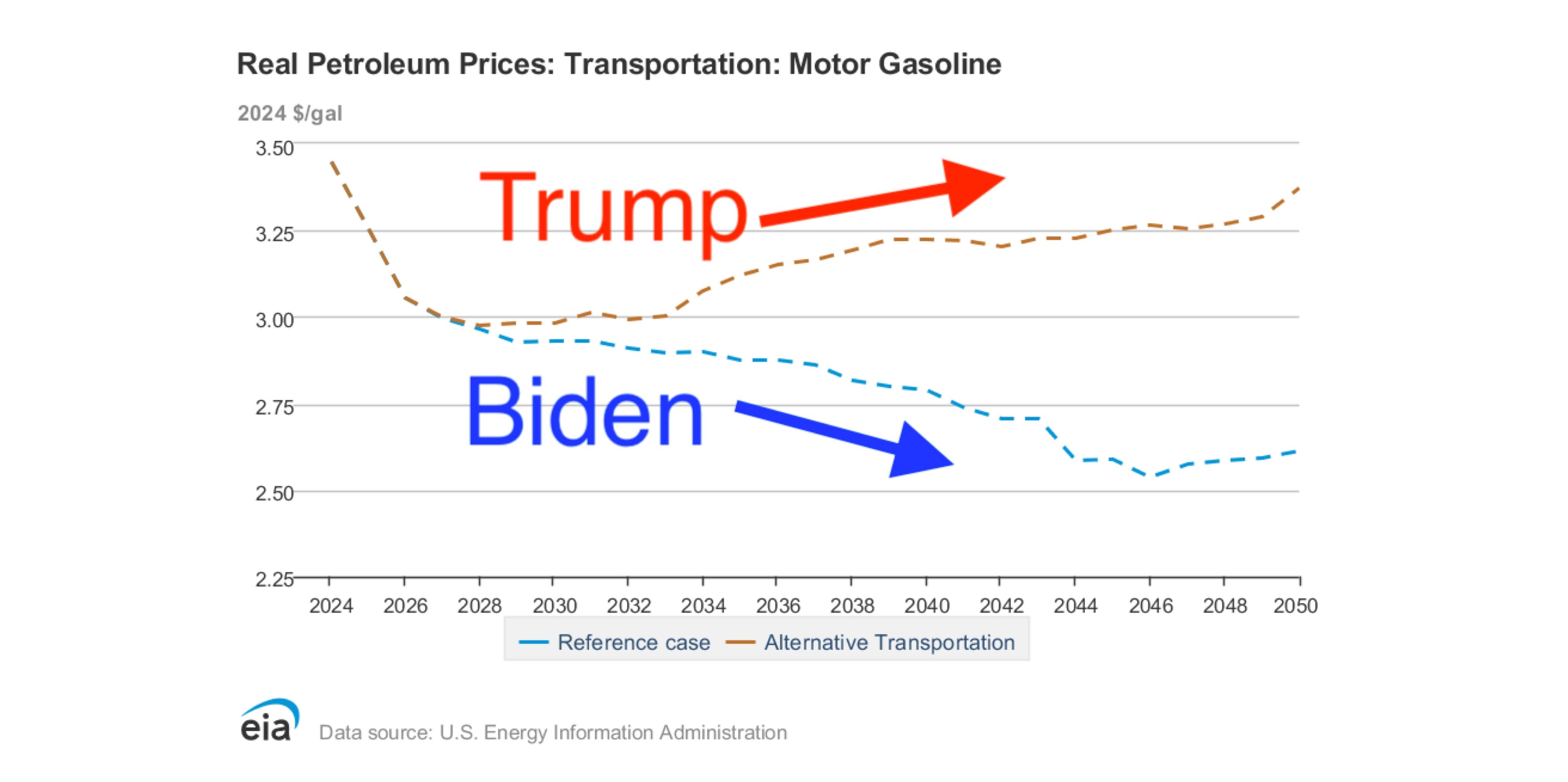
Furthermore, economic modeling released by the Department of Energy suggests that the broader energy policies associated with these rollbacks could increase retail gasoline prices by an estimated 76 cents per gallon. This price increase is expected to be driven largely by a rebound in domestic petroleum demand as vehicle fleets become less efficient. When combined with increased fuel usage, American drivers face the prospect of paying higher prices per gallon while simultaneously purchasing a greater overall volume of gasoline.
From an environmental perspective, federal estimates indicate that the relaxed standards will lead to a measurable increase in carbon emissions over the coming decades. Critics note that these projections primarily account for direct tailpipe emissions and frequently exclude ancillary public health costs associated with degraded air quality, though administration officials have maintained that regulatory relief for the automotive sector remains the primary objective.
Industry Reactions and Political Divisions
The policy change has exposed deep ideological and economic divisions regarding the future of American transportation.

Administration officials and supporters of the rollback argue that easing regulatory burdens on traditional internal combustion engine manufacturing will lower upfront vehicle acquisition costs for consumers facing broader economic affordability pressures. Proponents contend that rigid fuel economy targets force automakers to rely heavily on expensive technologies or mandate the rapid adoption of electric vehicles before consumer demand and infrastructure are fully mature.
Conversely, clean energy advocates and representatives from the burgeoning electric vehicle sector argue that weakening efficiency standards harms American long-term competitiveness. They point to substantial private and public investments made under previous federal frameworks to modernize domestic manufacturing, warning that artificial suppression of fuel economy standards risks ceding global leadership in advanced automotive technologies to international competitors, particularly in Asia and Europe.
Legal challenges are widely anticipated. Similar regulatory rollbacks enacted by the administration have frequently faced scrutiny in federal courts, where plaintiffs have challenged administrative actions on grounds of arbitrary and capricious rulemaking. Legal experts suggest that protracted litigation could delay the implementation of specific provisions, keeping the ultimate trajectory of federal fuel economy standards uncertain as advocacy groups mobilize to contest the changes in court.