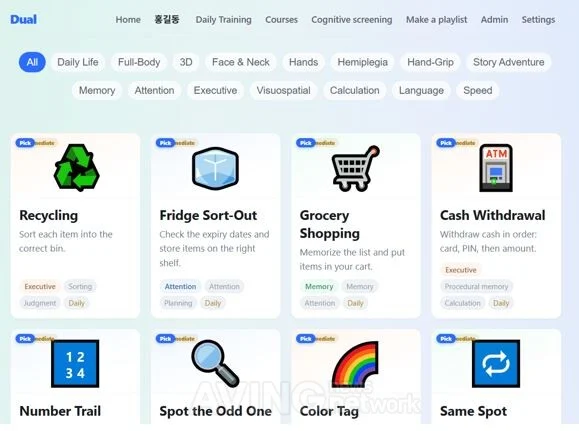
Daily tasks that many take for granted—such as grocery shopping, sorting household recyclables, or organizing a pantry—are complex cognitive and physical endeavors. They require a sophisticated interplay of object recognition, executive decision-making, and precise motor coordination. For the millions of individuals worldwide suffering from cognitive decline, stroke-related impairments, or neurodegenerative diseases, these routine actions can transform from unconscious habits into significant obstacles. South Korean health-tech firm InTheTech is aiming to bridge this gap between cognitive therapy and physical rehabilitation with its latest innovation, EYAS Dual, a platform designed to turn standard consumer electronics into clinical-grade rehabilitation tools.
The Mechanism of Dual-Task Training
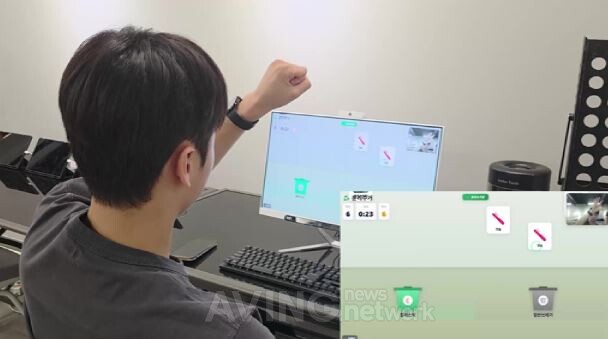
The core philosophy behind EYAS Dual is "dual-task training." This clinical approach operates on the principle that the human brain benefits significantly when physical movement is coupled with mental effort. Rather than isolating cognitive exercises to a screen or physical therapy to a gym, the system asks users to engage both simultaneously. By using the standard webcams found on laptops, tablets, or smartphones, the software tracks the user’s upper-body movements as they perform simulated tasks on screen.
For instance, a user might be presented with a digital shelf of groceries. The software prompts the user to identify specific items—a task requiring visual recognition and memory—and then execute a physical reach-and-grasp motion to "place" those items in a virtual cart. This method forces the brain to allocate neural resources to two different streams of information, a process that researchers believe helps strengthen neuroplasticity and functional independence. Unlike traditional touchscreen-based rehab, which often relies on fine motor skills alone, the EYAS Dual system necessitates reaching, stretching, and broader postural engagement, mirroring the demands of real-world environments.
Evolution of the EYAS Ecosystem
InTheTech is not a newcomer to the rehabilitation sector. The company has spent years building a portfolio of digital health solutions, most notably its existing "EYAS" family of products. Historically, these systems were largely tethered to dedicated hardware, often requiring specialized sensors, controlled environments, or immersive virtual reality headsets within a hospital or rehabilitation center.
The introduction of EYAS Dual marks a strategic pivot toward accessibility. By leveraging the ubiquity of hardware already present in most homes—such as a modern smartphone or a laptop with an integrated camera—InTheTech intends to remove the barrier to entry for patients who cannot travel frequently to clinics. During an interview, InTheTech representative Lucy Lee emphasized that the goal is to shift from a "facility-first" model to a "patient-first" model. By removing the requirement for specialized proprietary hardware, the company aims to facilitate consistent, long-term rehabilitation therapy that can be integrated into the user’s daily home life.

Clinical Foundations and Research Data
The shift toward digital, remote rehabilitation is supported by a growing body of evidence. In August 2026, a comprehensive review published in PLOS Digital Health examined 23 randomized controlled trials involving 1,674 older adults suffering from various forms of cognitive decline. The data indicated that dual-task intervention programs administered outside of traditional clinical settings resulted in measurable improvements in cognitive performance. Crucially, the review noted that these home-based digital interventions provided a modest but statistically significant advantage over standard, non-interactive active interventions.
Furthermore, the technology driving EYAS Dual builds upon the company’s internal research. In 2023, a randomized clinical study involving 60 stroke patients demonstrated that incorporating InTheTech’s virtual-reality-based cognitive training into an eight-week rehabilitation regimen led to improved functional outcomes compared to traditional workbook-only methods. While the 2023 study focused on controlled hospital settings and the current 2026 review covers a broader spectrum of interventions, the underlying premise suggests that interactive, sensor-based training is a viable path forward for stroke and dementia recovery.
It is important to note, however, that while the methodology is backed by clinical research, the specific EYAS Dual software is currently undergoing its own validation processes. As Lee clarified, the existing research supports the general category of dual-task training, but the clinical efficacy of this specific iteration is currently the subject of ongoing internal and external testing.
Impact on Healthcare Providers and Caregivers
One of the most significant challenges in modern rehabilitation is the administrative burden placed on therapists. Monitoring progress, documenting response times, and tracking physical movement accuracy for every patient can be a time-consuming process. EYAS Dual addresses this by automating data collection.
The platform is designed to provide therapists and caregivers with a comprehensive dashboard that tracks a user’s performance metrics over time. By measuring how quickly a patient identifies an object and how fluidly they move their arm to complete the task, the software generates automated reports. This allows clinicians to adjust the difficulty of the training sessions dynamically, ensuring that the patient is always challenged at the appropriate level—a concept known in rehabilitation as "progressive overload." For the caregiver, this means reduced paperwork and a more objective way to monitor a patient’s recovery trajectory without needing to be physically present for every minute of the exercise.
Implications for Consumer Health Technology
The use of consumer hardware for medical-grade applications is an emerging trend that has gained traction with the success of products like EndeavorRx, which received FDA authorization as a digital therapeutic for children with ADHD. By utilizing the same devices people use for video calls and social media, InTheTech is tapping into a market that favors convenience and low overhead.
However, moving into the home environment brings unique challenges, such as ensuring user compliance and maintaining the technical accuracy of the movement tracking in non-ideal lighting or space conditions. Pricing, while still provisional, is expected to be roughly $50 per month for institutional use and $30 per month for home users. These figures, while competitive with subscription-based fitness or wellness platforms, are still subject to change as the business model matures.
Future Outlook and CES 2027
As the healthcare industry continues to embrace digital transformation, the success of platforms like EYAS Dual will likely depend on the company’s ability to demonstrate real-world clinical utility. Following the demonstration of the platform, the company has confirmed its participation in the upcoming Consumer Electronics Show (CES) 2027.
InTheTech is slated to showcase the software at the event, where it will compete for a CES Innovation Award. The event will serve as a critical milestone for the company, providing a global stage to present the software to industry experts, potential clinical partners, and the public. As of the latest updates, the official public release date for the platform remains unconfirmed, but the industry interest suggests that the integration of artificial intelligence and computer vision into standard hardware is quickly becoming the new frontier for neurological recovery.
By leveraging the technology already in our pockets and on our desks, InTheTech aims to provide a scalable solution to one of the most pressing health challenges of an aging population. If the company can successfully prove that its software translates into measurable quality-of-life improvements, it could set a new standard for how we approach stroke and dementia rehabilitation in the digital age.