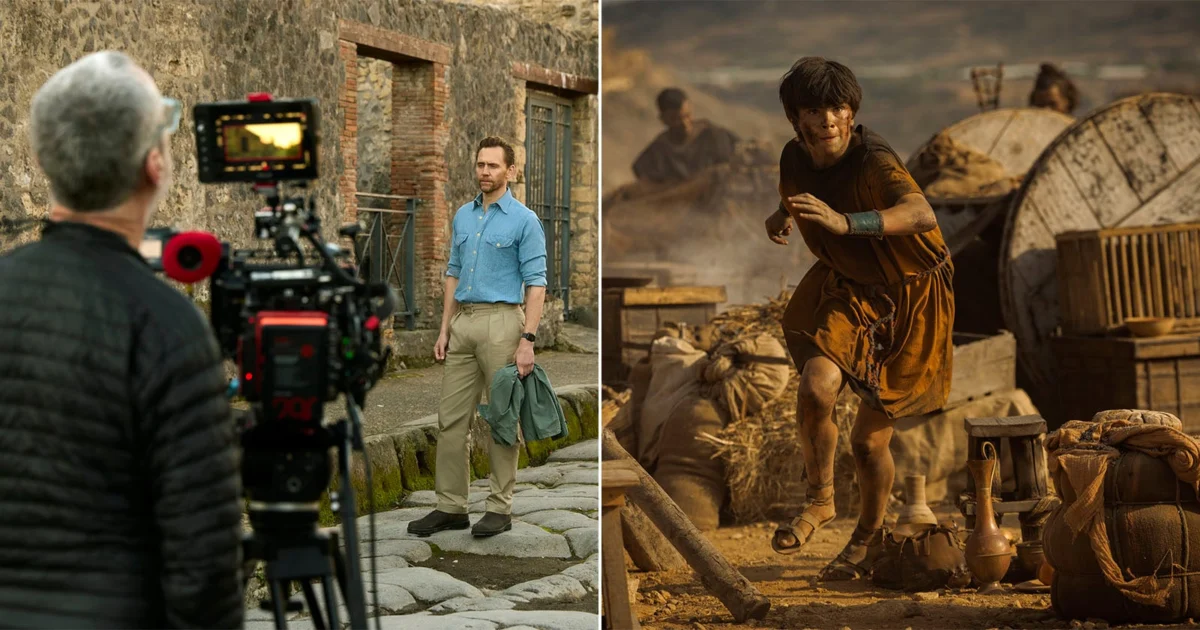
National Geographic’s highly anticipated three-part docudrama series, Pompeii: Out of Time, embarks on a captivating journey to reconstruct the final hours of the ancient Roman city of Pompeii before its catastrophic destruction by the eruption of Mount Vesuvius in 79 A.D. The series masterfully intertwines the charismatic presence of host and executive producer Tom Hiddleston with sophisticated cinematic techniques and a profound respect for historical detail. This ambitious production aims to offer viewers an unparalleled immersive experience, bringing to life the vibrant city and the tragic events that befell its inhabitants.
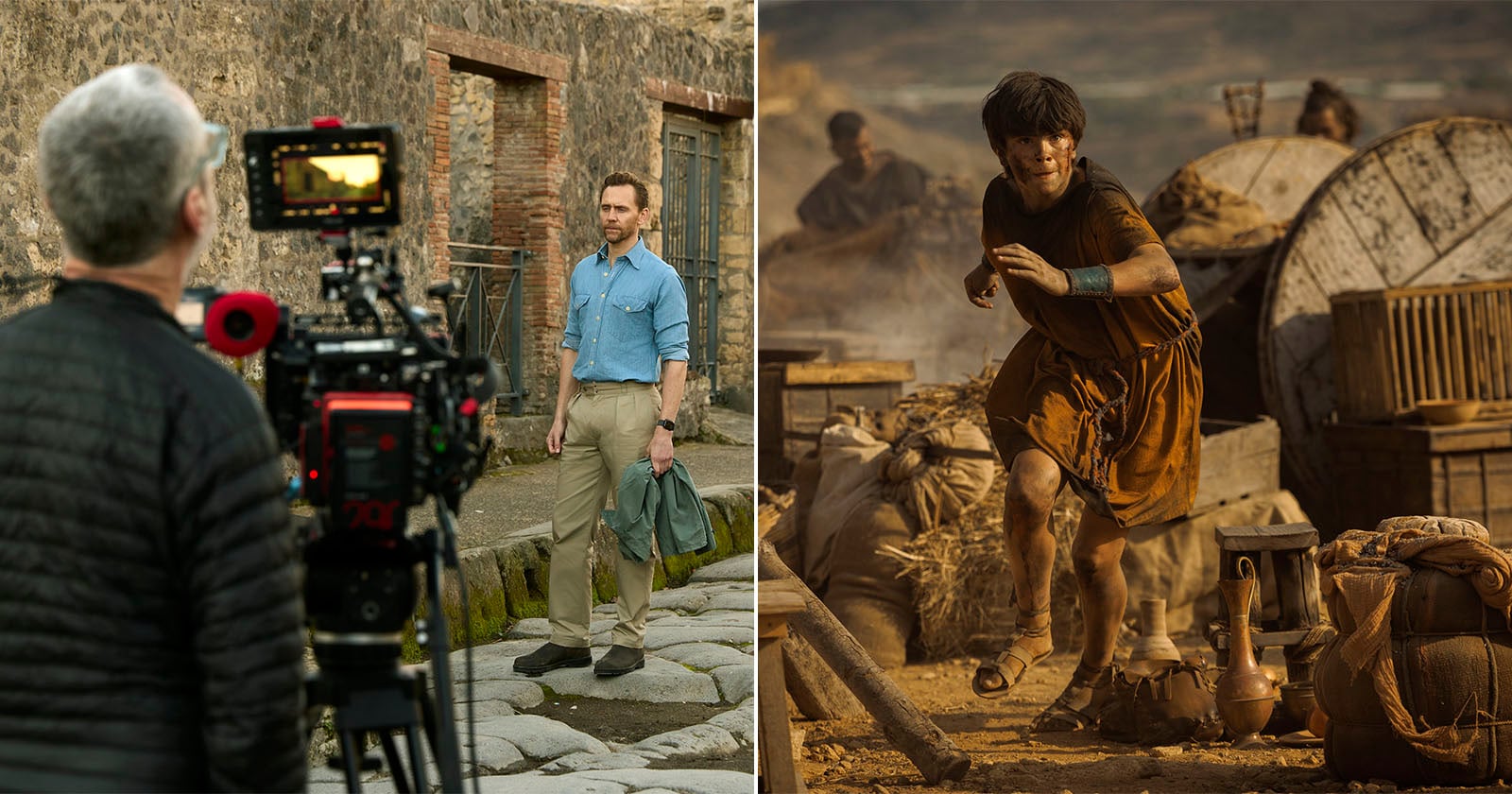
The enduring fascination with Pompeii is palpable, drawing nearly 2.5 million visitors annually to the UNESCO World Heritage Site. This remarkably preserved ancient Roman city continues to captivate the modern imagination, offering a unique window into daily life nearly two millennia ago. The series taps into this enduring interest, promising to explore the human stories behind the ashes and ruins.
A Personal Connection to Vesuvius
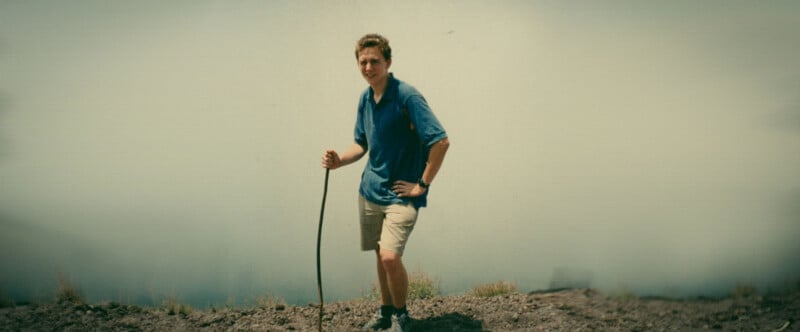
The series benefits from the personal connection of its host, Tom Hiddleston, to the region. Hiddleston, a celebrated actor known for his roles in the Marvel Cinematic Universe, has a long-standing fascination with Pompeii. An archival photograph from 1998 reveals a seventeen-year-old Hiddleston standing atop Mount Vesuvius, a testament to his early interest in the historical and geological significance of the area. This early exposure to the site likely fueled his passion for the project, allowing him to approach the narrative with a genuine understanding and enthusiasm that resonates throughout the series.
Cinematic Storytelling Meets Historical Rigor
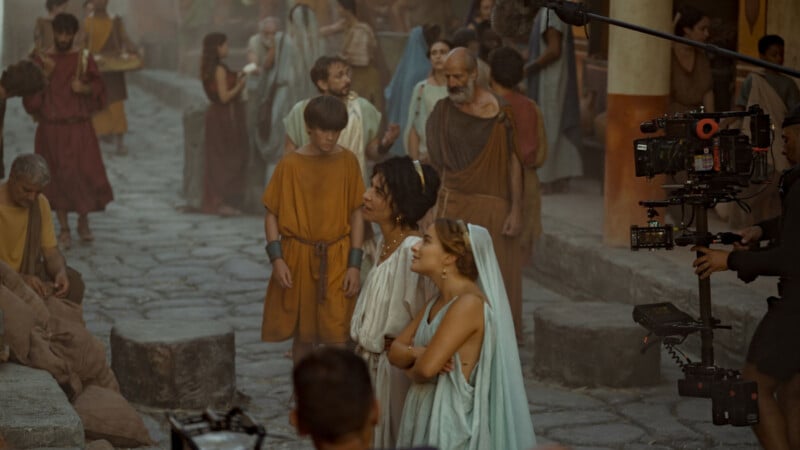
Pompeii: Out of Time distinguishes itself through its innovative approach, seamlessly blending dramatic reenactments with expert historical analysis. Cinematographer Jim Jolliffe, working alongside director Tom Barbor-Might and Hiddleston, employed a strategy that elevated the historical segments beyond typical docudrama conventions.
"The first thing we thought was that we both wanted to shoot on anamorphic lenses," Jolliffe shared in an interview. "We thought, first, it’s obviously great for the drama, and second, it would be a great way to visually tie the drama-world into the present-day with Tom and his interviews and stuff."
This deliberate choice to use anamorphic lenses imbues the entire series with a cinematic quality, creating a visual continuity between the past and present-day explorations. The lenses offer a distinctive widescreen aspect ratio and unique lens flares, contributing to the film’s aesthetic appeal and enhancing the immersive experience for viewers. This visual language helps to bridge the temporal gap, making the ancient world feel more immediate and relatable.
A Visual Timeline of Disaster
The visual approach of Pompeii: Out of Time is meticulously crafted to reflect the unfolding tragedy. Jolliffe and his team intentionally varied the visual tone and pacing to correspond with the different stages of the eruption.
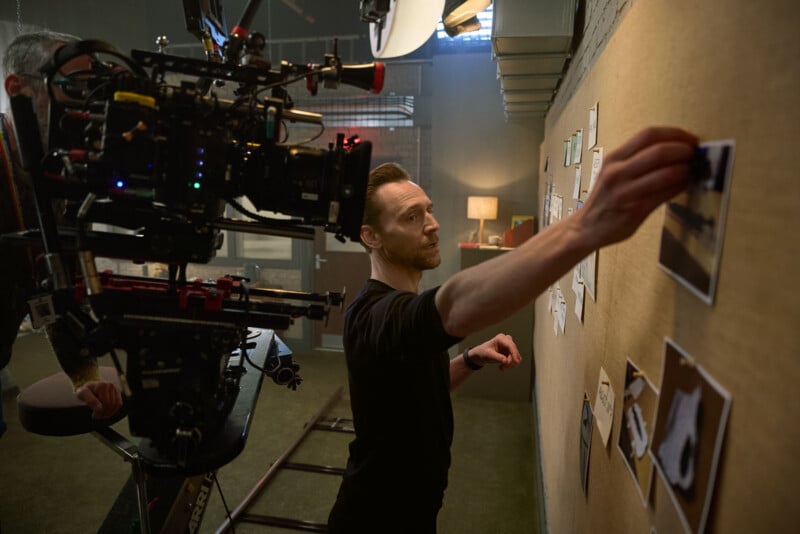
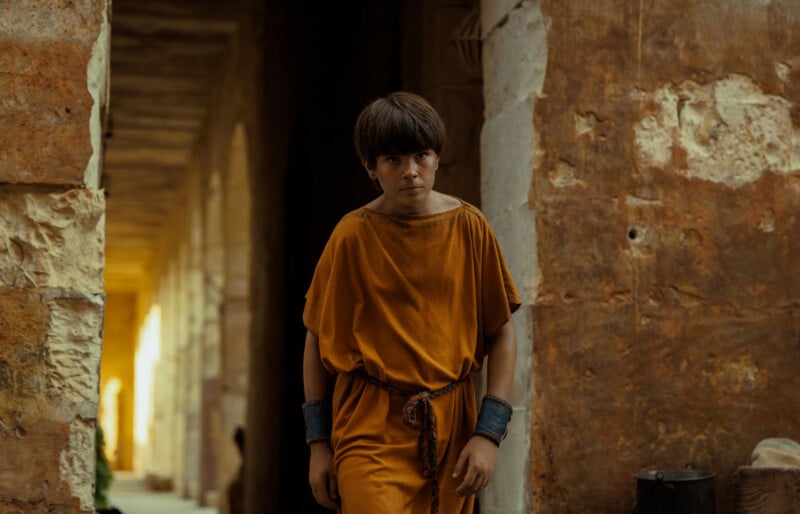
- Pre-Eruption: Sequences depicting life before the catastrophe are bathed in a warmer color palette, mirroring the vibrancy and normalcy of daily life in Pompeii. This warmth extends to the present-day interview segments featuring Hiddleston, creating a sense of comfortable exploration and historical inquiry.
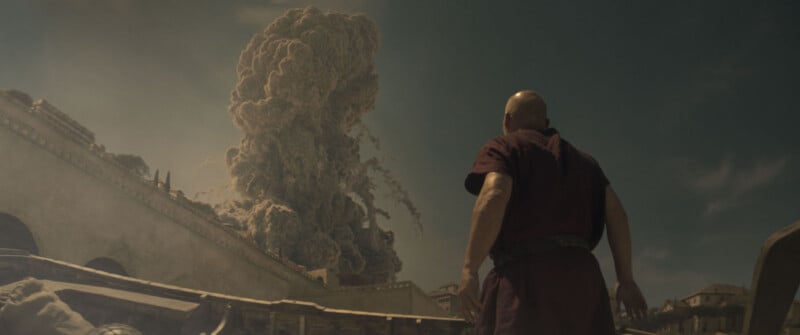
- During the Eruption: As the volcanic activity escalates, the visual style shifts to cooler tones, reflecting the increasing chaos, fear, and destruction. The cinematography becomes more dynamic, employing camera shake and a more "run-and-gun" style to convey the frantic nature of the evacuation and the overwhelming power of the natural disaster. This deliberate shift in visual language serves to heighten the dramatic impact and immerse the audience in the visceral experience of the eruption.
- Post-Eruption: The aftermath sequences, focusing on survivors and the buried city, adopt a somber and muted aesthetic, emphasizing the profound loss and devastation.
Jolliffe expressed his enjoyment in executing these distinct visual styles within a single project, noting the crucial role of the colorists and editors in realizing his pre-production vision. "They did an incredible job bringing the pre-shooting ‘look’ he envisioned to life in the final cut," he commented.
Technical Prowess Behind the Lens
For the visual execution of Pompeii: Out of Time, Jolliffe selected Caldwell Chameleon prime lenses. These 1.79x anamorphic lenses are known for their adaptability, featuring interchangeable rear groups that allow them to function with various sensor sizes. Jolliffe utilized the Arri Alexa 35, a high-end cinema camera renowned for its Super35 format sensor, to capture the series.
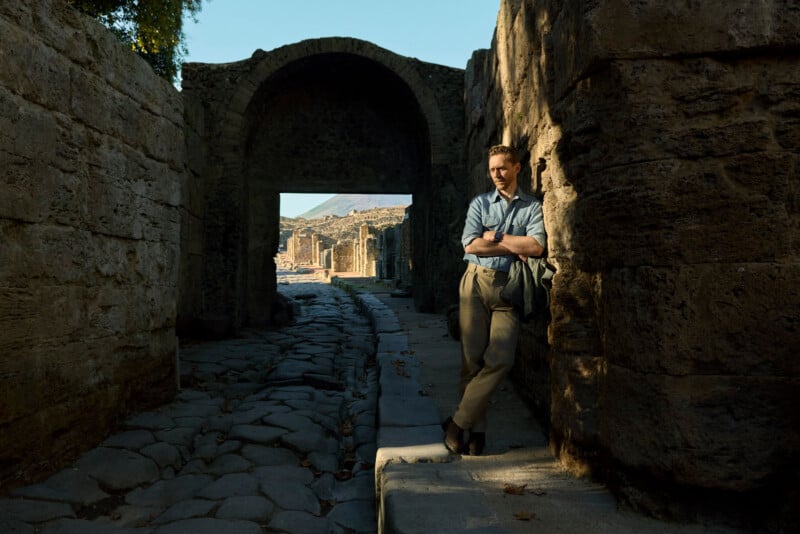
"They flare beautifully, but because of the nature of this job, there weren’t many lights on the edge of the frame," Jolliffe remarked, referring to the series’ deliberate use of naturalistic lighting. This often meant working with limited artificial light sources, particularly in the historical reenactment segments.
Lighting the Ancient World
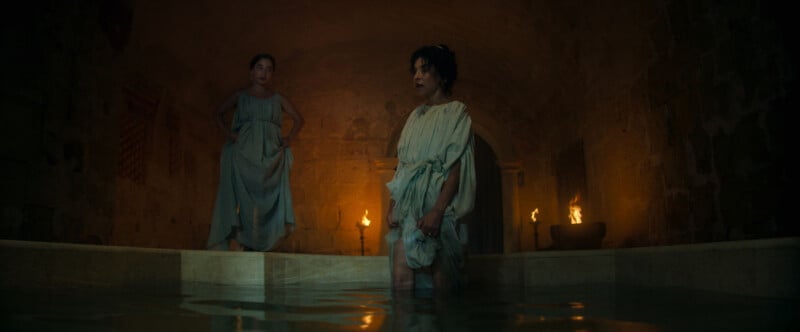
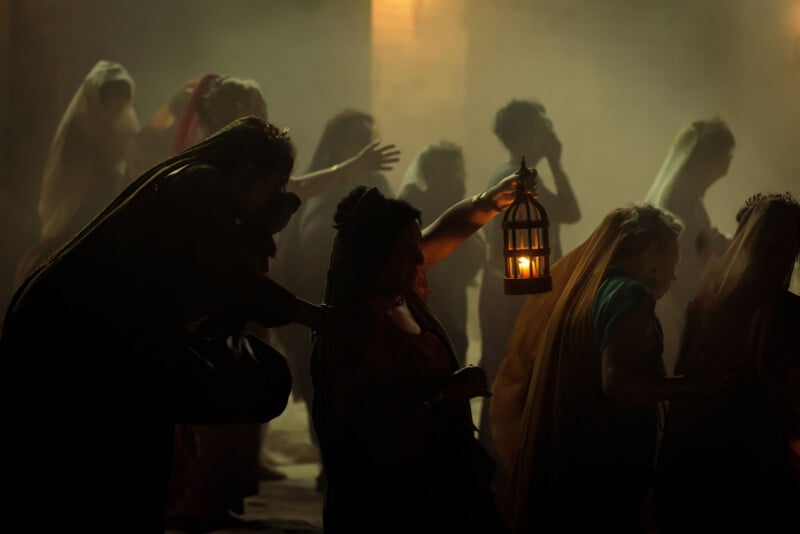
The lighting design in Pompeii: Out of Time is a critical element in its authenticity. For the dramatic historical components, lighting is deliberately kept low, with characters often illuminated by flickering torches or candles. This technique not only enhances the period accuracy but also creates an intimate and atmospheric visual experience.
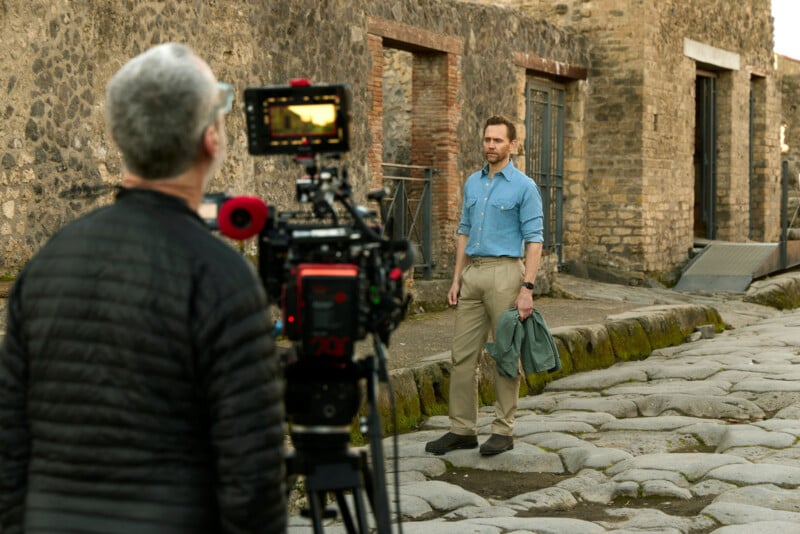
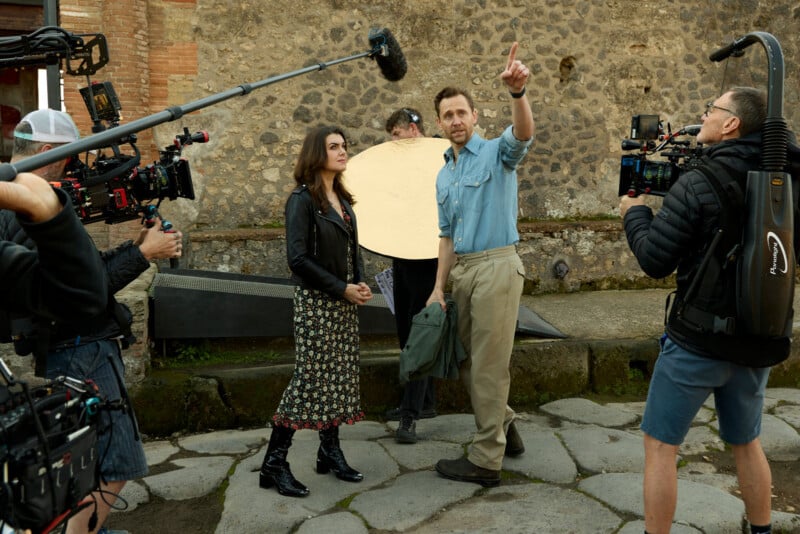
In the actual ruins of Pompeii, the production faced constraints due to the small size of the crew, often comprising only Jolliffe, an audio technician, director Tom Barbor-Might, and Tom Hiddleston. The inability to bring in extensive lighting equipment necessitated a reliance on natural light. The crew ingeniously employed bounce boards and diffusion filters to manipulate and enhance the available light, ensuring that both the historical reenactments and the present-day footage maintained a cohesive and aesthetically pleasing look.
"We used a little bit of diffusion as just make them various filters control the overall look and tone moving from warmer shots cooler ones," Jolliffe explained. While artificial lights were used sparingly, they were typically straightforward LED fixtures that complemented, rather than overpowered, the natural illumination. This commitment to working with natural light was a consistent theme throughout the shooting process, contributing to the series’ authentic and grounded feel.
The Eruption of Vesuvius: A Historical Context
Mount Vesuvius, a stratovolcano located on the Gulf of Naples in Campania, Italy, has a long and destructive history. Its eruption in 79 A.D. is one of the most famous volcanic events in history, primarily due to its impact on the Roman cities of Pompeii, Herculaneum, and Stabiae.
Timeline of the Eruption:
- August 24, 79 A.D. (approximate date, though recent evidence suggests it may have occurred in October): Initial tremors and seismic activity precede the main eruption.
- Mid-day: Vesuvius begins its catastrophic eruption, ejecting a massive column of volcanic ash, pumice, and gas high into the atmosphere. This initial phase is characterized by falling ash and pumice stones.
- Night: Pyroclastic flows, superheated avalanches of gas and volcanic matter, begin to descend the volcano’s slopes. These flows are the primary cause of death for many inhabitants.
- Following Days: Further pyroclastic surges and ashfall continue to bury the surrounding areas, completely engulfing Pompeii and Herculaneum.
The eruption was so powerful that it created its own weather system, and the ash cloud could be seen from as far away as Rome. The city of Pompeii was buried under approximately 13 to 20 feet of ash and pumice, while Herculaneum was inundated by mudflows and pyroclastic deposits. This rapid burial, while devastating for the inhabitants, preserved the cities remarkably well, providing invaluable archaeological insights into Roman life.
The Significance of Pompeii’s Preservation
The archaeological significance of Pompeii cannot be overstated. The layers of volcanic material acted as a protective seal, preserving buildings, artifacts, and even the forms of victims in astonishing detail. Excavations, which began in earnest in the 18th century, have unearthed:
- Intact Buildings: Homes, shops, temples, and public baths provide a blueprint of Roman urban planning and architecture.
- Everyday Objects: Pottery, tools, furniture, and artwork offer insights into the daily lives, crafts, and social customs of the inhabitants.
- Human Remains: Plaster casts of victims, created by pouring plaster into the voids left by their decomposed bodies, offer poignant and tragic glimpses of their final moments. These casts have been instrumental in understanding the human impact of the disaster.
- Frescoes and Mosaics: Elaborate wall paintings and intricate floor mosaics reveal the artistic sensibilities and cultural values of the time.
Pompeii serves as a unique time capsule, allowing historians and archaeologists to reconstruct a remarkably complete picture of Roman civilization at a specific moment in time.
Expert Insights and Reactions
The series features interviews with leading archaeologists, historians, and academics who provide critical context and analysis. These experts lend credibility to the dramatic reenactments, grounding the narrative in scientific and historical evidence. Tom Hiddleston, as host, excels at facilitating these discussions, making complex historical and scientific information accessible to a broad audience.
"Host and Executive Producer Tom Hiddleston is filmed in studio, behind-the-scenes of Pompeii: Out of Time with Tom Hiddleston," noted a behind-the-scenes caption. His ability to connect with these experts and translate their knowledge into engaging television is a key strength of the series.
Broader Implications and National Geographic’s Legacy
National Geographic’s commitment to historical storytelling is deeply ingrained in its mission. As Tom McDonald, EVP of Content at National Geographic, stated, "National Geographic has spent more than a century bringing the past to life through groundbreaking discoveries, exploration and world-class storytelling. Working with Tom and Kevin, alongside the team at Plimsoll led by showrunner Tom Barbor-Might, has been a process of inventing an entirely new genre of history programming – one which brings evidence and imagination together in a way which feels distinctive."
This sentiment highlights the network’s ambition to push the boundaries of historical documentary filmmaking. Pompeii: Out of Time exemplifies this drive, offering a viewing experience that is both educational and profoundly entertaining. The series not only educates about a pivotal historical event but also explores universal themes of life, loss, and the enduring power of human resilience.
The series’ premiere coincides with a major feature story on the three Roman cities buried by Mount Vesuvius’ eruption, published by National Geographic and appearing in the August issue of their magazine. This multi-platform approach ensures a comprehensive engagement with the subject matter.
Conclusion
Pompeii: Out of Time promises to be a landmark production in historical docudrama. By combining the visual artistry of cinematic filmmaking with the insights of leading historical experts and the compelling presence of Tom Hiddleston, the series offers an immersive and unforgettable exploration of one of history’s most dramatic events. The meticulous attention to detail, from the anamorphic lenses to the nuanced lighting, creates a visual tapestry that brings the ancient world to vivid life, ensuring that the story of Pompeii continues to resonate with audiences for generations to come.
The series premiered on National Geographic on July 22 at 9/8c, and became available on Disney+ and Hulu on July 23.