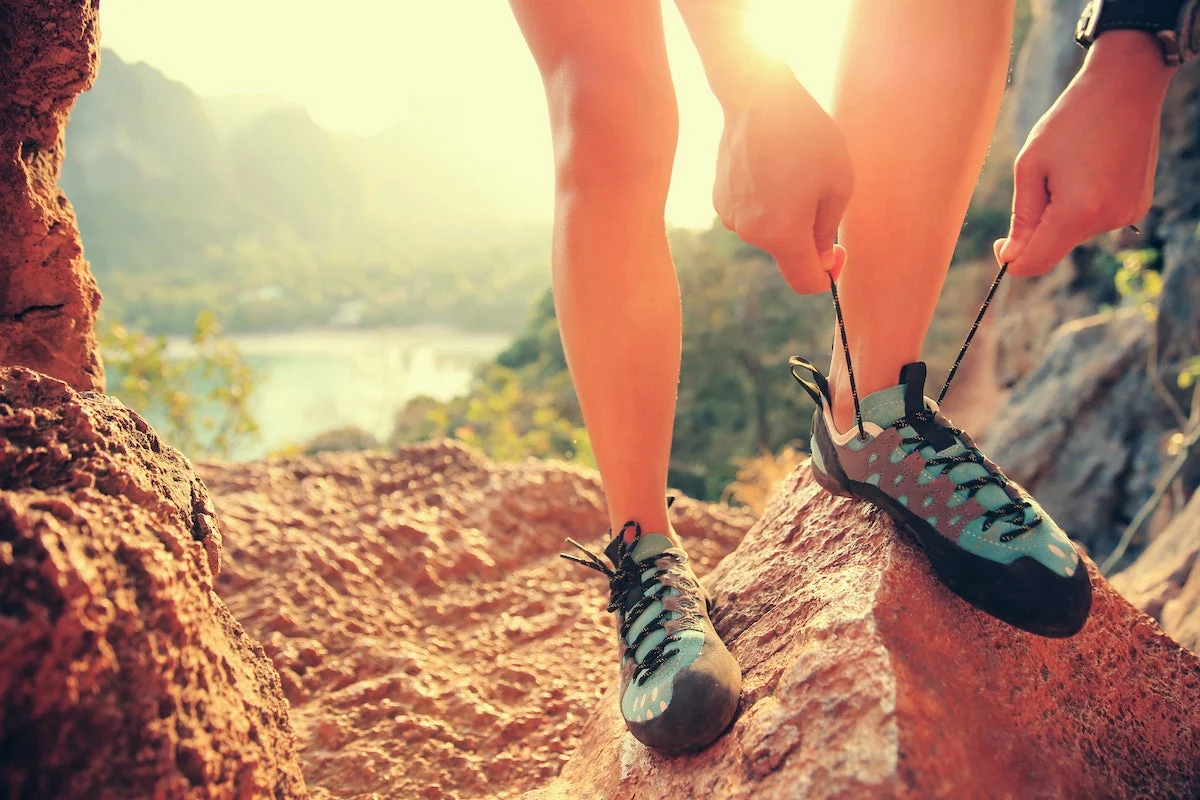
On a crisp Columbus Day Weekend in 2004, a pivotal moment in my nascent climbing journey unfolded at the Eastern Mountain Sports in West Lebanon, New Hampshire. At fifteen, I stood on the precipice of becoming a "real climber," a title I felt I was inching towards after a few outdoor top-roping experiences and some hours spent traversing a school gymnasium’s wooden wall. My experience with leading a route was nil, commercial climbing gyms were uncharted territory, and the esoteric language of the sport – terms like "drop knee," "heel hook," or "crimp" – remained a mystery. The shoe rack before me was a bewildering array of unfamiliar names: "Miura," "Moccasym," "Anasazi Velcro." Beyond simple aesthetic differences like color, I was utterly lost. The subtle yet crucial distinctions between stiff and soft soles, or aggressively downturned versus flat profiles, were completely opaque. These varying attributes, I would later learn, dictated a shoe’s performance across different climbing disciplines.
A lanky young salesman, sporting blond dreadlocks, eventually intervened. His inquiry about my desired climbing style – "The adventure kind!" I enthusiastically replied – led him to select a pair of Five Ten Asyms for me. They were blue, aggressively upturned at the front, and felt as rigid as planks. My understanding of proper sizing was rudimentary at best. I treated them like everyday sneakers, ensuring they were snug but with enough toe room to avoid discomfort on descents and loose enough for wool socks in cooler weather. I was elated with my purchase. However, my friend, the one who had introduced me to climbing, offered a starkly different assessment upon my return to school. "You just wasted a hundred bucks, dude," he declared, shaking his head. My defense, "They’re Tens! Same size as my sneakers," was met with a challenge: "Try climbing in them, you’ll see."
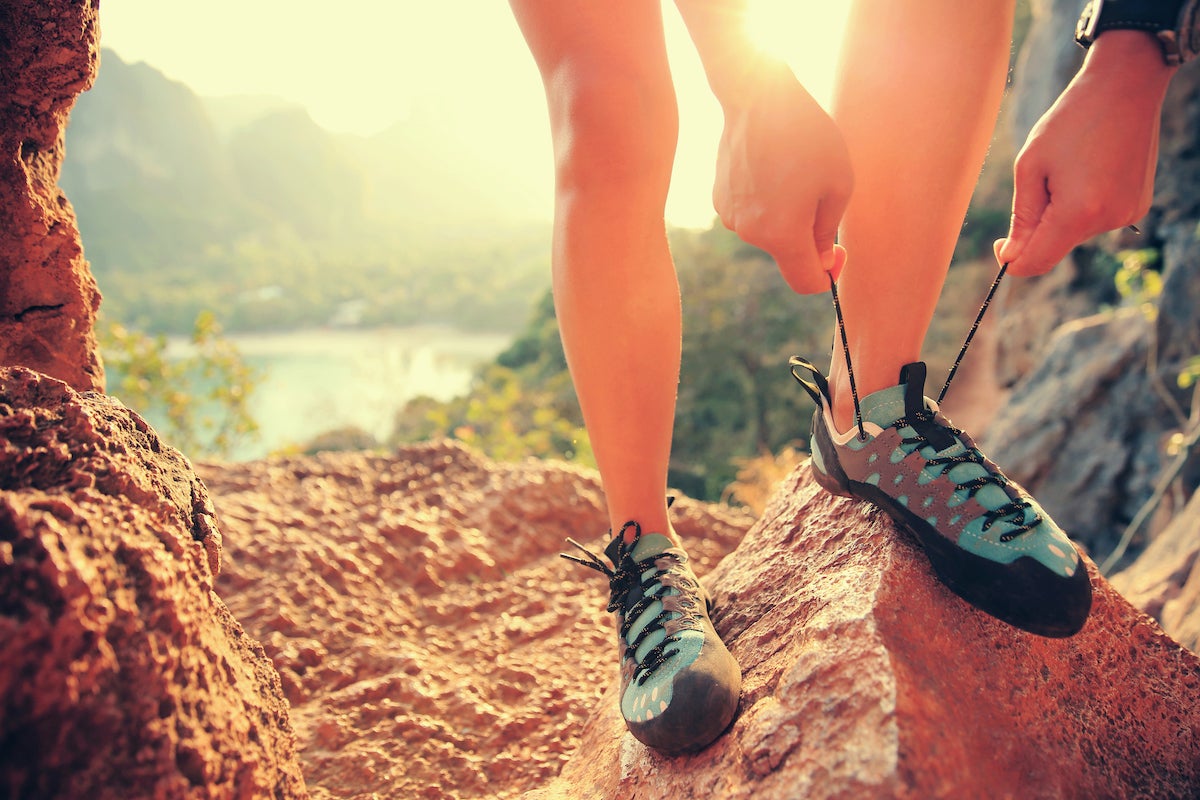
He was right. My "Tens," as I’d mistakenly called them, were approximately six sizes too large. Designed for extended ascents on smear-intensive big walls, they were wholly inadequate for the steep schist sport climbing and indoor bouldering I was beginning to explore. After weeks of frustrated denial, I found myself back at EMS, seeking my second pair of climbing shoes. This experience, I discovered, was not unique. Like novice cyclists or backpackers, beginner climbers often face significant purchasing decisions without the foundational knowledge to make informed choices. To spare others the same costly missteps, this comprehensive guide aims to demystify the world of climbing shoes, detailing their various designs and functions, and offering recommendations for a suitable first pair.
What Beginners Need to Know About Climbing Shoes
Selecting the right climbing shoe can feel akin to choosing a single dessert for a lifetime – a daunting prospect given the specialized nature of many designs. Climbing shoes are engineered for specific climbing styles. Steep roofs and caves demand soft, aggressive shoes; vertical granite favors stiffer, flatter shoes with exceptional edging support; and crack climbing calls for supple, flat, and flexible options. The concept of a true "all-arounder" is largely absent in the realm of performance climbing shoes, leading experienced climbers who engage in multiple disciplines (such as trad, bouldering, and sport climbing) to own several pairs. Further complicating matters are individual body types and climbing styles, both of which influence shoe selection.
However, every climber must start somewhere. As a beginner, you are still developing fundamental body positioning and footwork techniques, and you are yet to discover which shoe characteristics best complement your emerging climbing style. Therefore, prioritizing a shoe that offers adequate performance across various disciplines at an accessible price point is a pragmatic approach. Once your technique has advanced and you’ve gained a better understanding of how to utilize your feet effectively, you’ll be better equipped to appreciate the nuanced benefits of specialized performance shoes and make more informed purchasing decisions.
The complexity of climbing shoe design is significant, with manufacturers employing diverse strategies to imbue, for instance, soft shoes with superior edging capabilities or stiff shoes with enhanced sensitivity. Nonetheless, four fundamental aspects of shoe design are crucial for beginners to understand.
1. Flat Shoes vs. Downturned Shoes
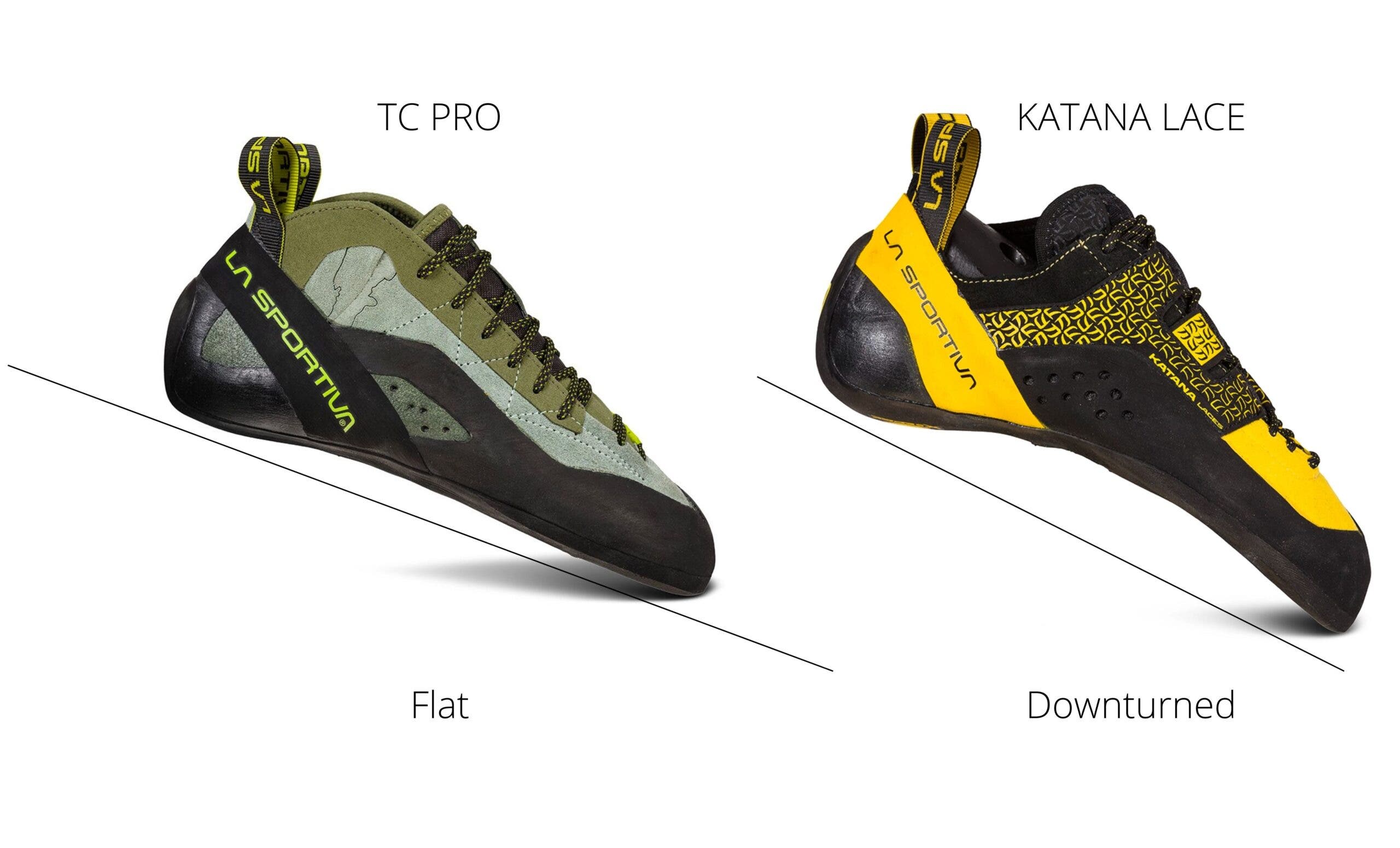
Flat shoes are designed primarily for slab and vertical climbing. In these scenarios, climbers often rely on minuscule edges, supporting most of their body weight with their big toes. As the name suggests, these shoes feature a flat sole. Typically, they are sized so that the toes are not severely cramped, a stark contrast to the aggressive curvature of downturned shoes. Most flat shoes are relatively stiff; the greater the stiffness, the easier it is to stand on small edges. However, some models, like the classic Five Ten Moccasym, are exceptionally soft. This flexibility allows them to torque effectively into cracks and smear adeptly on slabs. Due to their often superior comfort, flat shoes are a popular choice for beginners and children. Nevertheless, they offer limited performance on steeper climbs. If your primary focus is gym bouldering, a slightly downturned shoe might be a more advantageous starting point.
Downturned shoes are engineered for overhanging routes, concentrating your foot’s power into the big toe. These shoes exhibit a pronounced "bird-beak" shape and are frequently, though not exclusively, quite soft. Softness enhances toe sensitivity, enabling climbers to feel the nuances of the rock. Conversely, stiffness provides essential support and facilitates power transfer through the toes. Unless your climbing is exclusively confined to slabby or vertical terrain, acquiring a pair of downturned shoes will eventually become necessary.
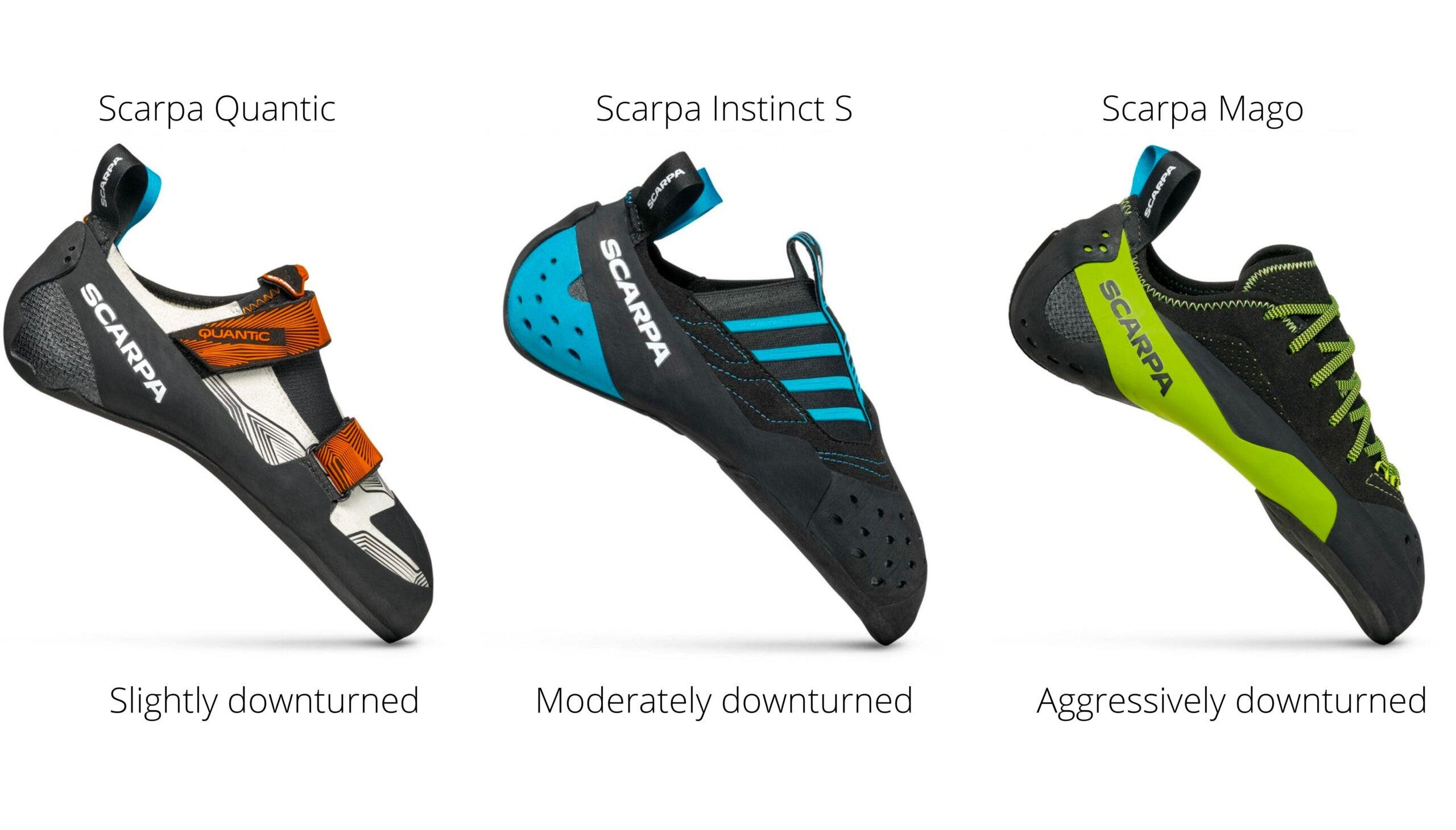
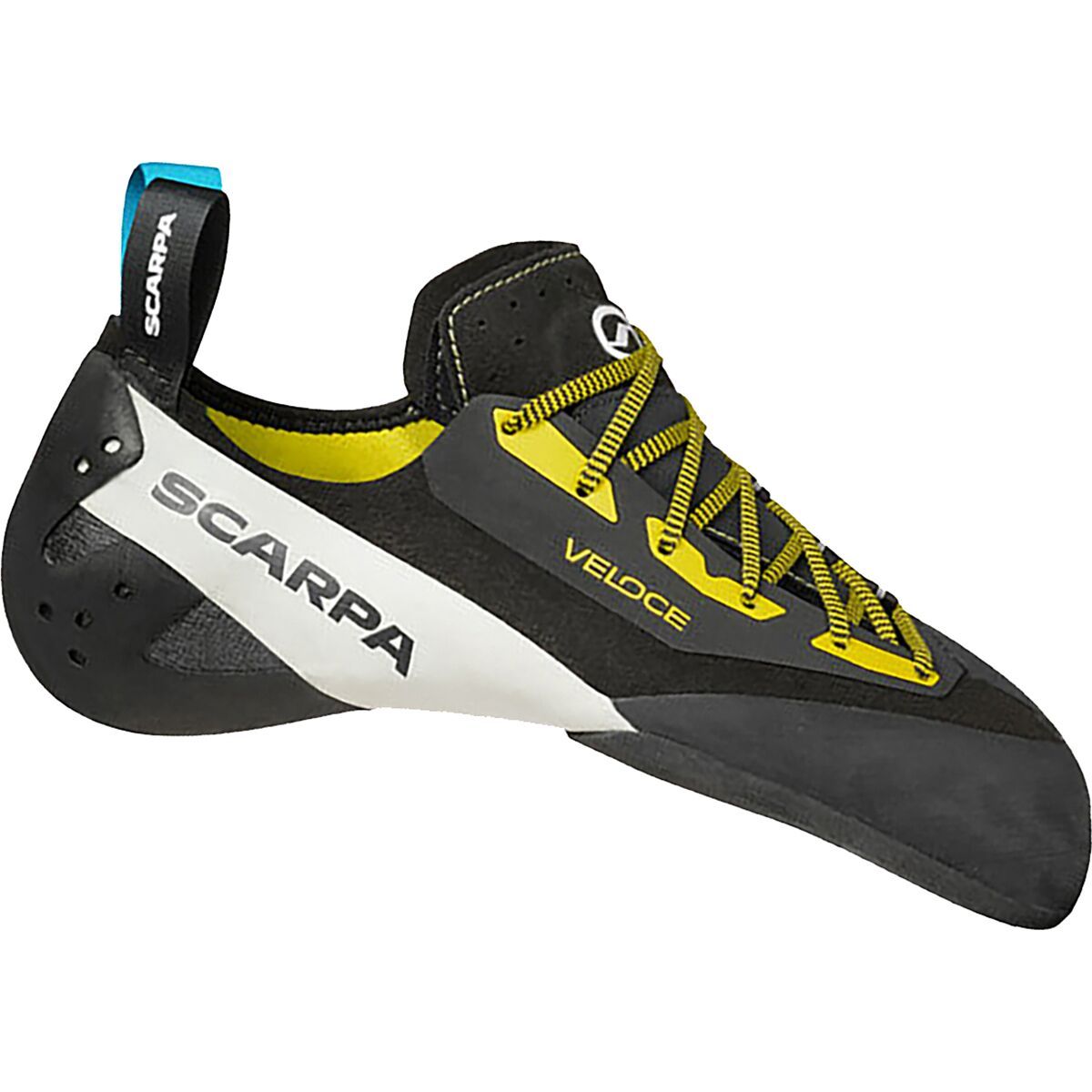
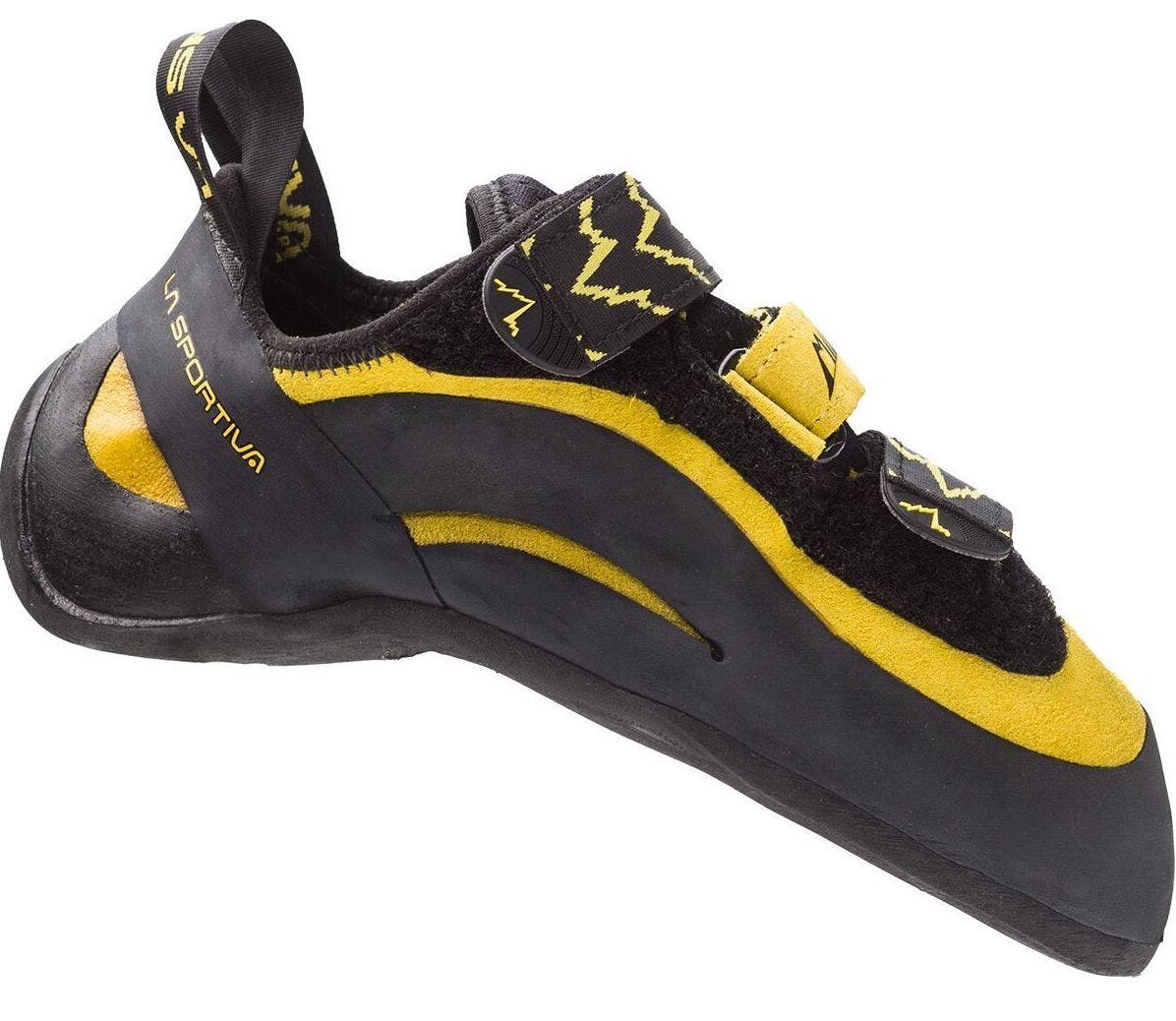
The degree of downturn varies significantly, ranging from subtle to moderate to aggressive. Slightly and moderately downturned shoes are often considered workhorses, representing the closest approximation to true all-arounders. Stiffer variants, such as the La Sportiva Miura VS, perform well on vertical terrain while also allowing for precise toe placement on crimps and pockets on steeper walls. Softer options, like the Scarpa Quantic and Veloce L, offer the sensitivity required for effective smearing without compromising performance on steeper angles. Extremely downturned shoes, on the other hand, are more specialized, designed almost exclusively for aggressive toeing-in on overhangs.
2. Stiff Shoes vs. Soft Shoes
Stiff shoes can feature either a flat or downturned profile, as exemplified by the La Sportiva TC Pro (flat) and the La Sportiva Katana (downturned). Their rigid midsoles provide substantial foot support, enabling climbers to stand on smaller holds and generate more power through their toes. However, stiff shoes present two primary drawbacks: they are less adaptable for intricate foot manipulation, and they lack the sensitivity of softer shoes, which allows the shoe to conform to the surface being stood upon.
Soft shoes, like their stiff counterparts, can also be flat (e.g., the Five Ten Moccasym) or downturned (e.g., Scarpa Veloce L). Soft, flat shoes are particularly well-suited for crack climbing, while soft downturned shoes excel on steep walls and in indoor climbing environments where smearing on large volumes is a common technique. Neither type typically offers peak performance for vertical edging.
3. Asymmetrical Shoes
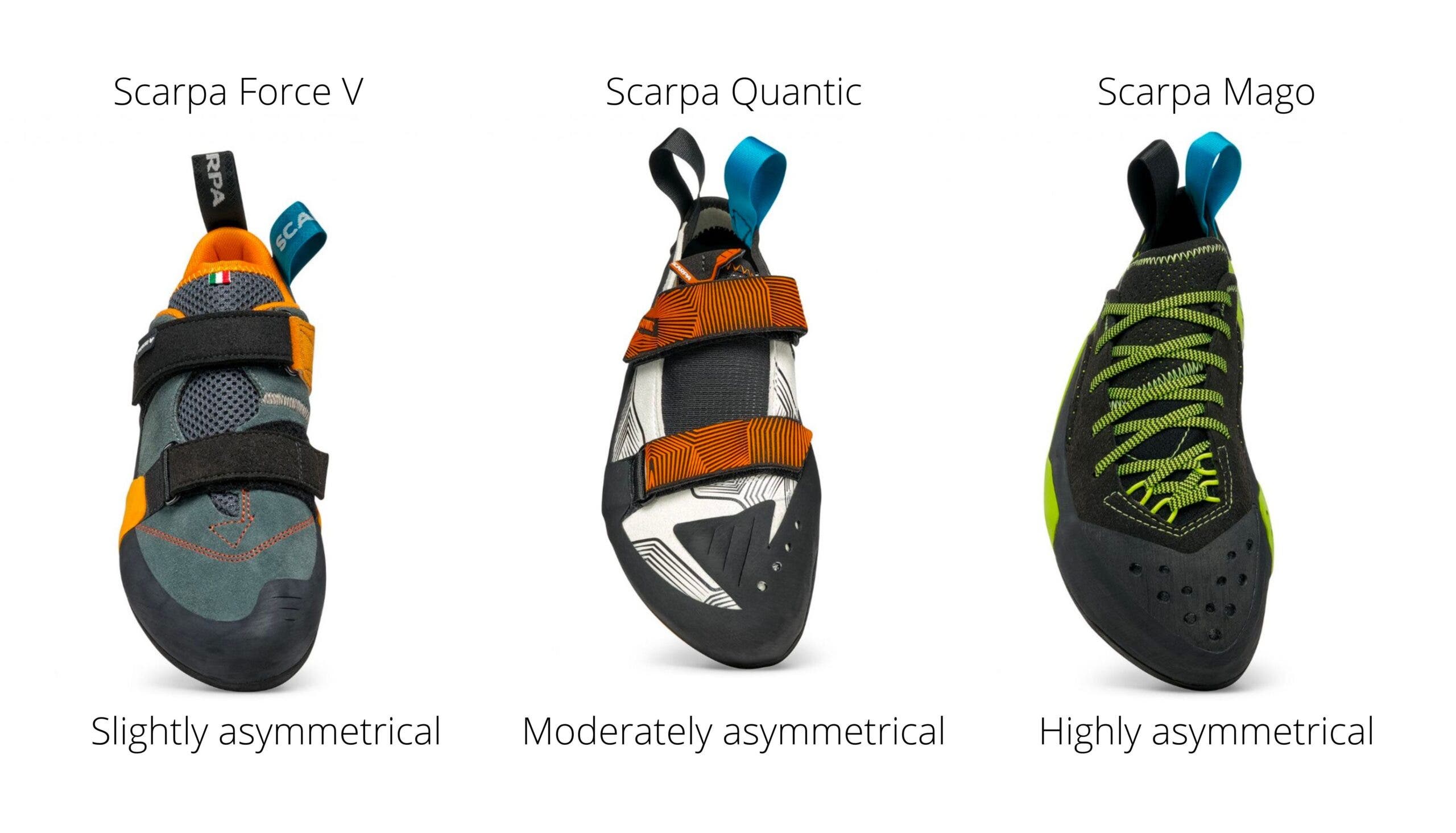
Virtually all climbing shoes exhibit some degree of asymmetry, meaning they curve inward towards the big toe. This design is intended to direct more pressure and, consequently, more power to the big toe. The greater the inward curve of the shoe’s tip relative to its centerline, the more asymmetrical the shoe. Flat shoes generally tend to be more symmetrical than their downturned counterparts. The purpose of asymmetry is to maintain the toes in a "crimp" position, similar to a ballet slipper, which aids in curling the toes over holds on steep routes and, in some models, provides support on small holds on vertical terrain.
4. Closure Systems
Beginner climbers are often surprised to learn that closure systems—typically categorized as laces, Velcro, or slippers—are more than just a means of fastening the shoe to the foot; they fundamentally alter the shoe’s performance characteristics.
Lace-ups offer the wearer precise control over how the shoe flexes or remains rigid. However, they are less effective for toe-hooking and require more time to put on and take off.
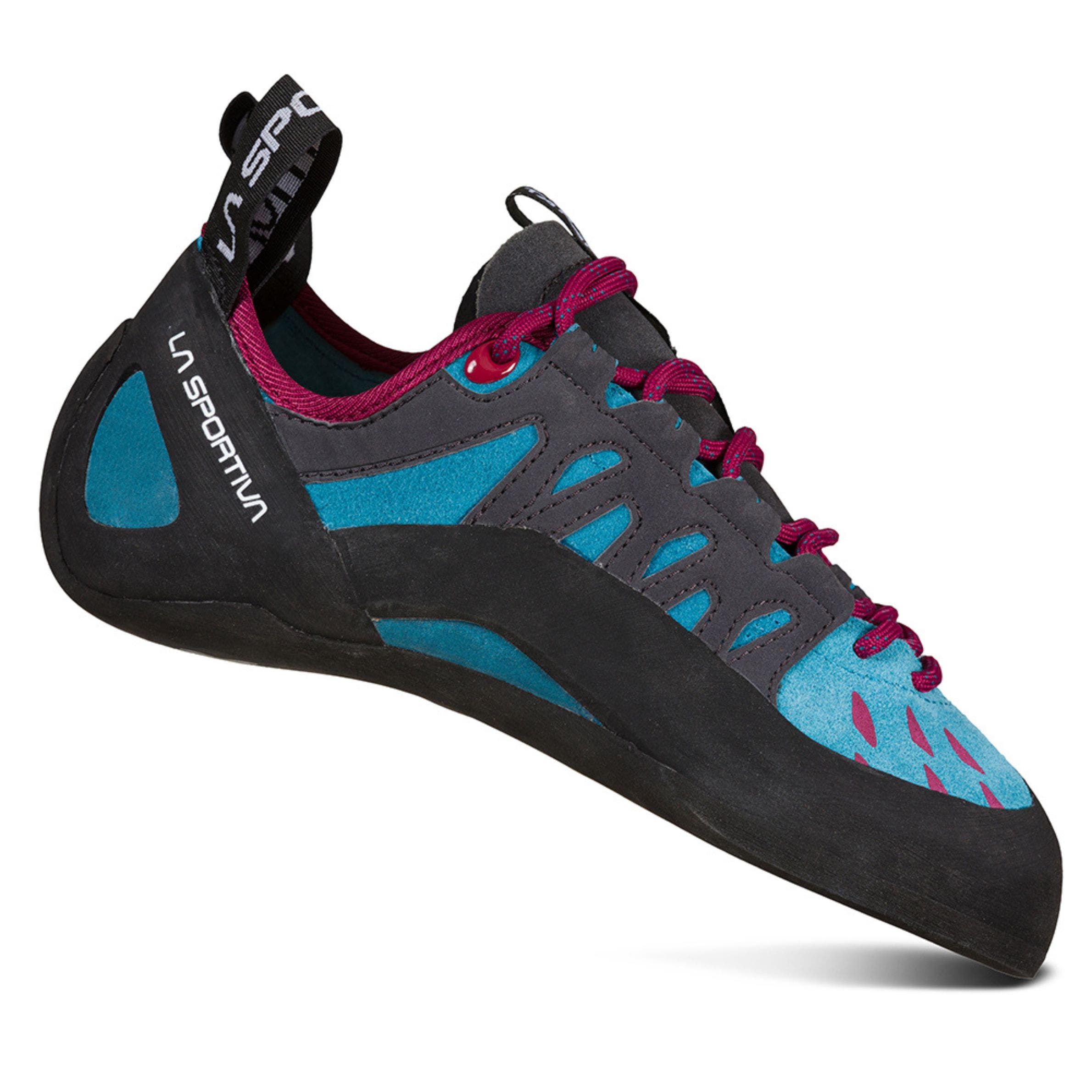
Slippers are generally soft and conform tightly to the foot. They are well-suited for gym climbing and steep bouldering, and when flat, for crack climbing. However, they tend to perform less optimally on slabby and vertical terrain where supported edging is paramount. The disadvantages include the need for a very snug fit, as there’s no adjustability, and the risk of the shoe coming off during aggressive heel hooks. Many modern slippers incorporate a single high Velcro strap near the ankle to mitigate this issue.
Velcro offers a compromise: more support and adjustability than a slipper, with greater ease of use than lace-ups. The primary drawback is that the Velcro straps can interfere with toe-hooking maneuvers, making slipper-style shoes often preferable when intense toe hooks are anticipated. For beginners, this particular drawback may not be a significant concern, but it’s worth considering if your climbing predominantly occurs in a gym environment.
The Best Shoes for Beginners
The following recommendations are organized by price, from lowest to highest. While there’s a general correlation between price and performance, these are not strictly ranked by performance level. Shoes at the lower end of this list are primarily beginner-focused but can also serve intermediate climbers well, and even advanced climbers in specific training scenarios.
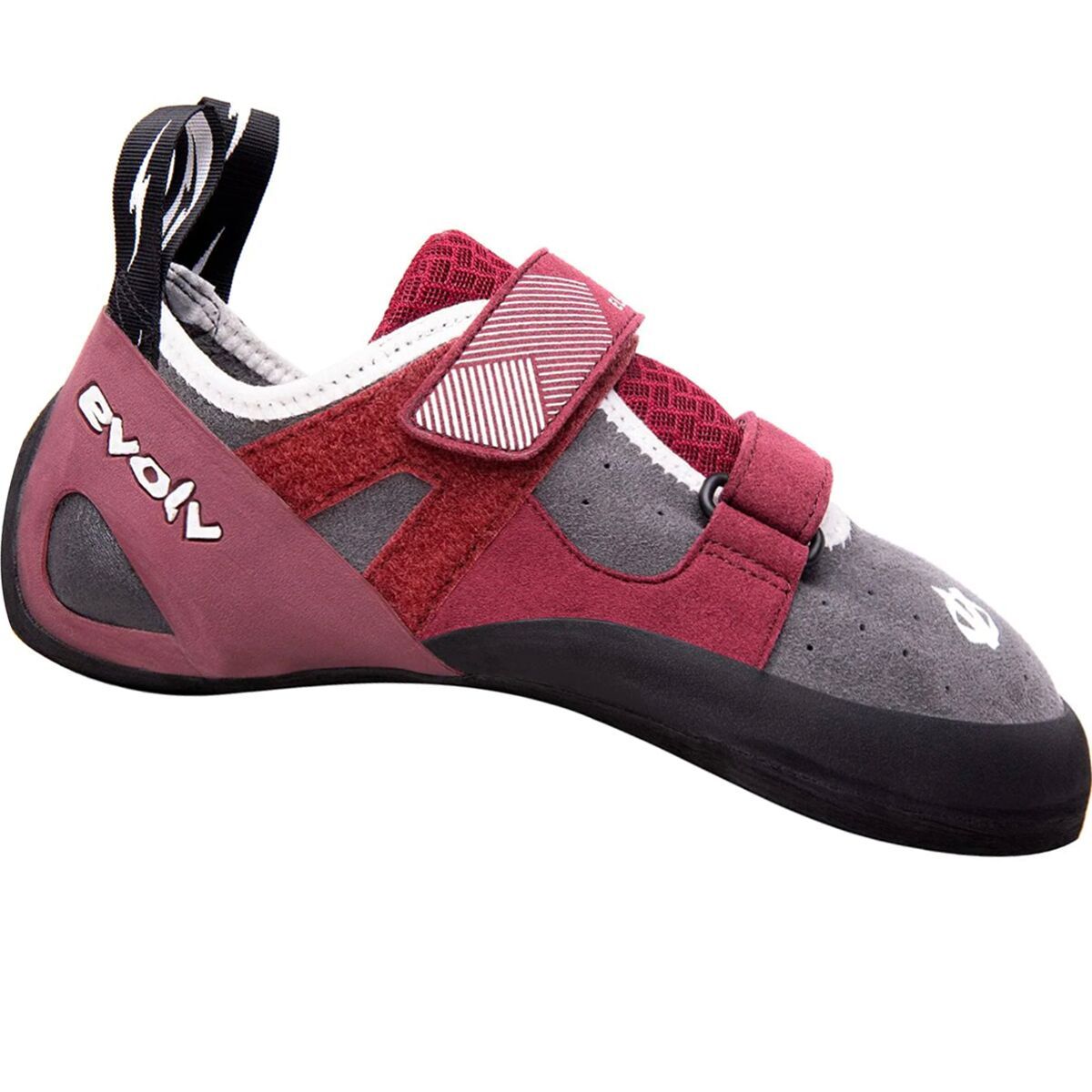
La Sportiva Tarantulace
- Pros: Affordable, durable, decent performance on less-than-vertical outdoor walls.
- Cons: Lacks sensitivity, a shoe you will likely outgrow quickly.
As the most budget-friendly option on this list, the La Sportiva Tarantulace is also one of the best-selling climbing shoes in the U.S. It prioritizes comfort with an unlined leather upper, a mildly asymmetric shape, a stiff last, and a relatively spacious toe box. The leather uppers will stretch over time, and the thick 5mm FriXion rubber soles increase the likelihood of developing good footwork before the rubber wears down completely.
If your climbing plans involve long multi-pitch routes, the Tarantulace’s emphasis on comfort and durability is advantageous. However, these attributes come at the direct expense of performance. The Tarantulace’s stiff toe box is notoriously insensitive, hindering the ability to "feel" the holds. Furthermore, its stiff, flat last compromises its effectiveness on steeper climbs. For beginners anticipating gym bouldering or outdoor sport climbing, a more performance-oriented shoe is strongly recommended. This shoe essentially represents a modern iteration of the Five Ten Asyms that were my initial, misguided purchase. Its inclusion here is due to its accessible price point, which offers significant value.
Black Diamond Momentum
- Pros: Comfortable, affordable.
- Cons: Limited performance on steep terrain.
A perennial favorite for beginners seeking a comfortable, quality all-around shoe at a reasonable price, the Black Diamond Momentum is well-constructed. Reviewers have noted its suitability for beginners, capable of handling routes from 5.6 to 5.11 across various terrains. Despite its soft, slipper-like flat last, it offers decent edging capabilities, largely due to a straighter profile on the shoe’s interior that allows the big toe to bear most of the load. The extended arch on the outside rand also enhances backstepping performance.
A notable limitation, however, is its design. Unlike newer generations of beginner shoes, the Momentum is not specifically optimized for indoor climbing. It lacks toe-hooking rubber, a feature that bouldering gym enthusiasts will soon come to appreciate, and its performance on steep angles is suboptimal. In essence, like the Tarantulace, the Momentum is a commendable shoe that most climbers will quickly outgrow.
Scarpa Reflex V
- Pros: Good value.
- Cons: Limited edging and steep-terrain performance.
The Scarpa Reflex V is a flat-lasted Velcro shoe designed for all-day wear. It is a robustly constructed shoe featuring two Velcro straps, leather uppers that conform to the foot, and a solid, symmetrical footbed that ensures a relaxed fit. The Reflex V does not excel on small holds or overhangs, nor does it offer significant sensitivity or edging power. Beginners aiming for rapid progression might benefit from a more aggressive shoe. However, for those prioritizing value and comfort, these shoes are an excellent choice.
Evolv Defy & Elektra
- Pros: Surprisingly comfortable, breathable for long sessions.
- Cons: Like most all-arounders, the Defy/Elektra doesn’t excel at any single discipline.
The Evolv Defy, and its lower-volume women’s counterpart, the Elektra, represent remarkably comfortable shoes offering decent beginner performance for jamming, smearing, and edging. With a perforated synthetic upper, nylon lining, and padded tongue, they offer a sock-like feel. The flat, slightly asymmetric last is soft and sensitive, while a half-midsole provides some edging capability.
As is typical of all-day shoes, the Defy and Elektra lack specialization. If climbing becomes a significant part of your life, and you are prepared to invest in footwear that will eventually wear out, a more specialized shoe might be a better long-term investment. However, they are comfortable, reasonably priced, and effectively serve their purpose. Notably, the Evolv Defy is the shoe of choice for Olympic Speed Climbing bronze medalist and world record holder Sam Watson, having been featured in lists of climbing shoes from the Paris Olympics.
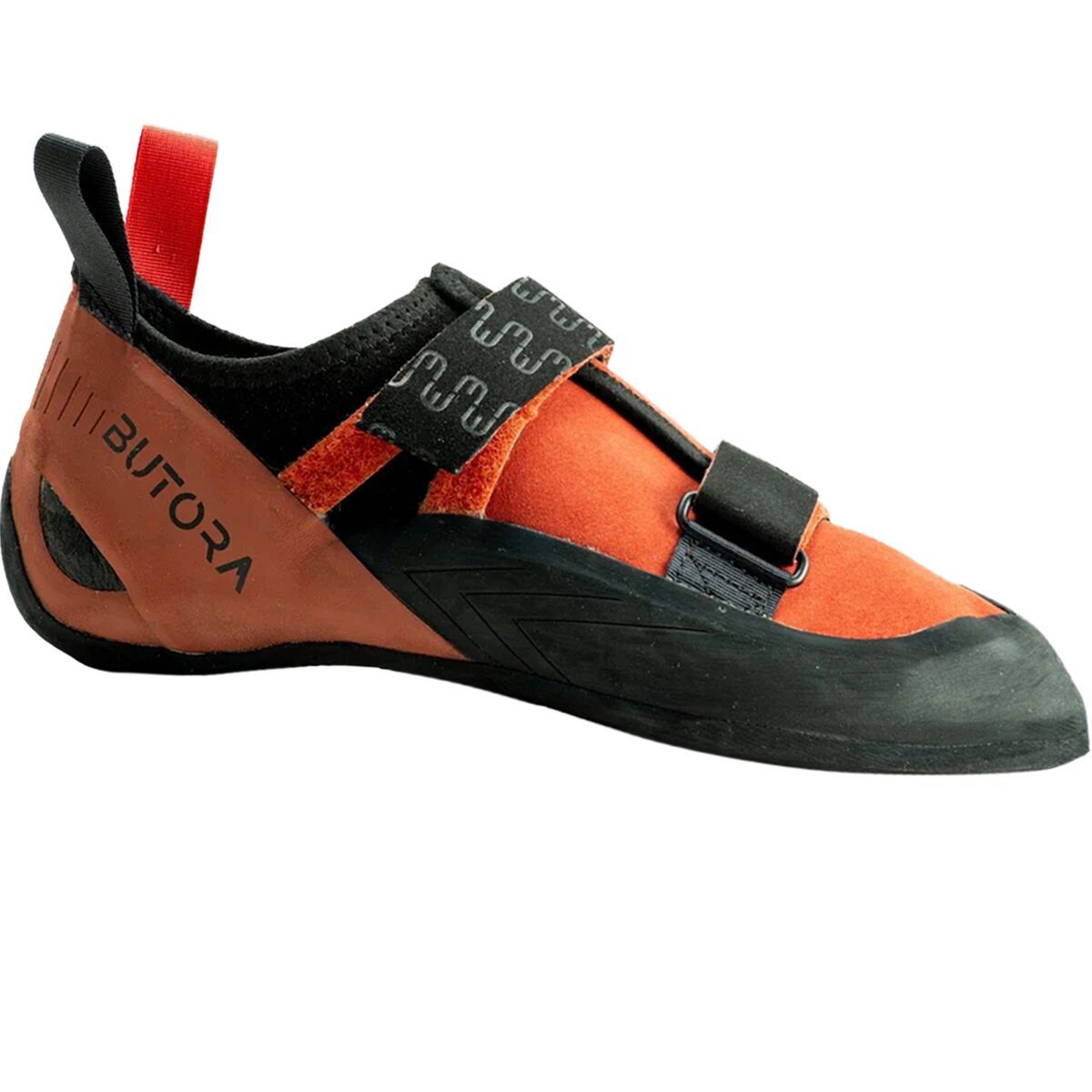
Butora Endeavor
- Pros: Well-rounded performance, multiple fit options (wide and narrow), odor-blocking hemp lining.
- Cons: Limited performance on steeper climbs requiring toe "grabbing."
The Butora Endeavor functions as a versatile option within Butora’s shoe line. It is a durable, medium-stiff, medium-flex shoe with sticky rubber, suitable for vertical, slabby, and even slightly overhanging terrain. The Endeavor delivers commendable performance without necessitating painful down-sizing. Its relatively low price makes it an excellent choice for beginner gym climbers or for mileage training. However, as with many shoes on this list, reviewers note that while good at many things, the Endeavor doesn’t particularly excel in any one area.
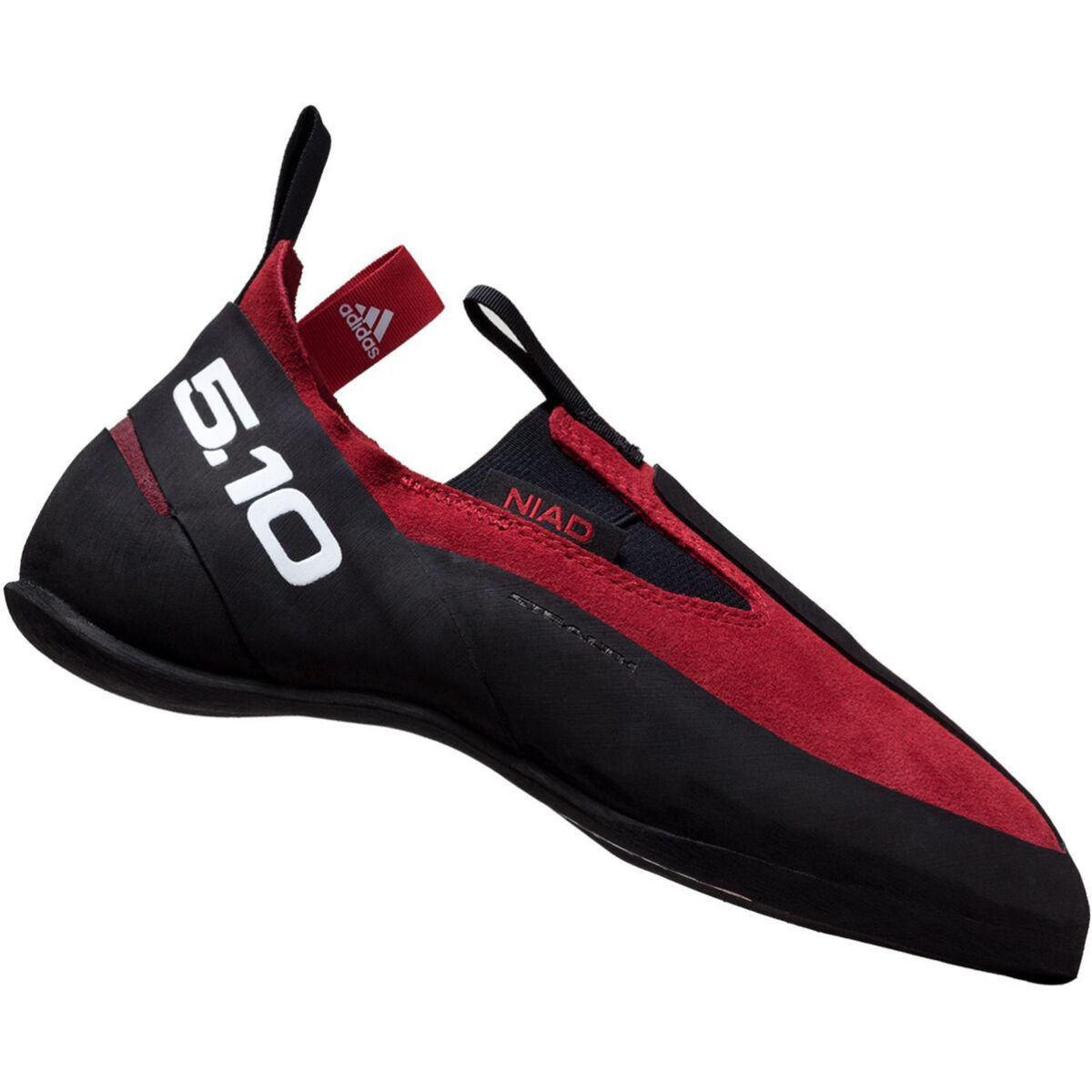
Five Ten Niad Moccasym
- Pros: Thin profile ideal for finger-sized crack climbing, enhanced toe-hooking performance due to an updated toe-rubber cap.
- Cons: Strapless closure results in less secure heel hooking.
For decades, the Five Ten Moccasym has been a staple among elite crack climbers, but it also serves as an excellent beginner shoe. The author personally used Moccasyms for warm-ups and gym training sessions during the first five years of their climbing career. These shoes feature a soft, flat rand ideal for smearing and torquing into cracks. Recent updates, including rubber over the big toe, have increased their functionality for beginners who are likely to climb in a gym environment. It is important to note that these shoes stretch considerably during the break-in period, so a snug initial fit is recommended.
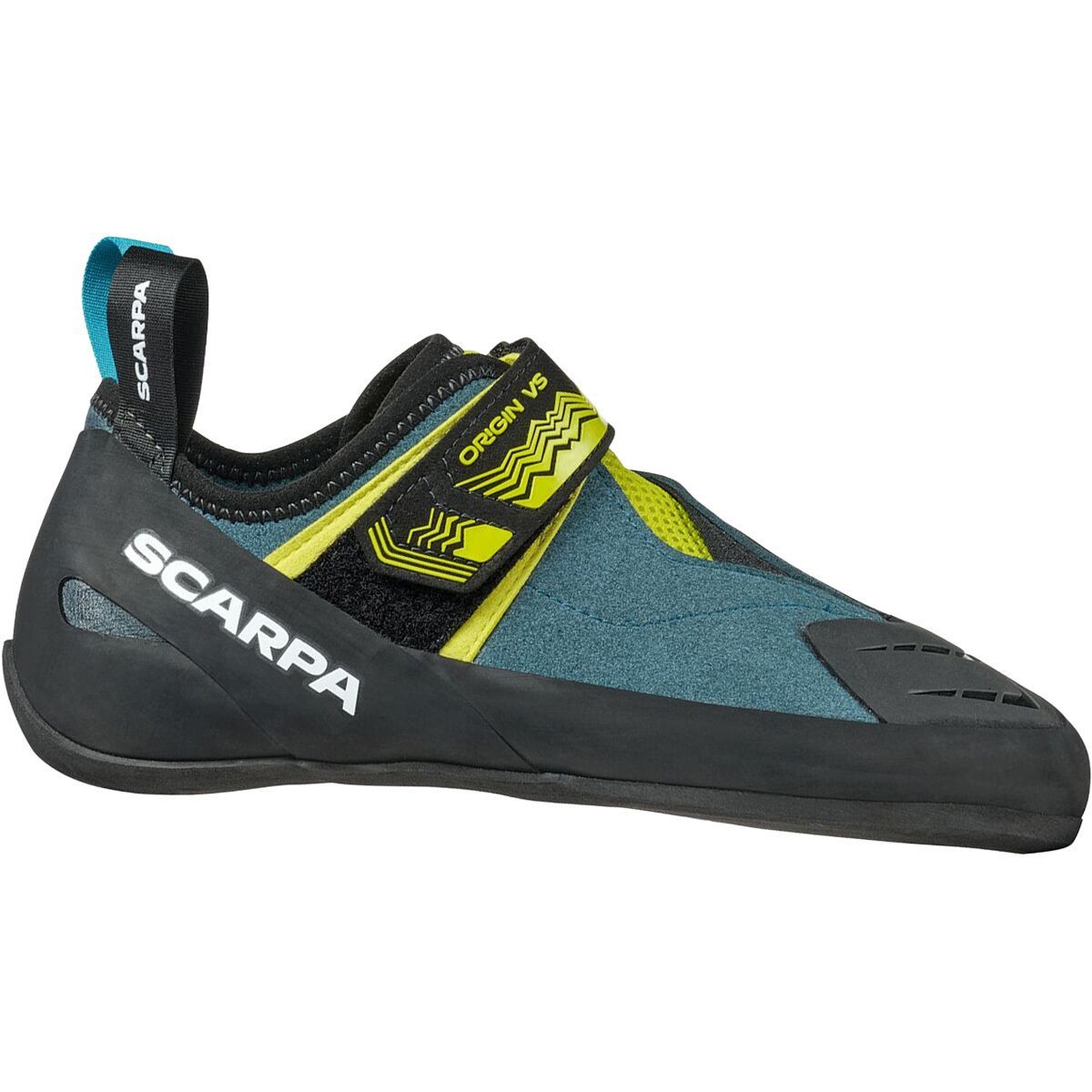
Scarpa Origin VS
- Pros: Highly comfortable even when downsized, easy on/off.
- Cons: Not particularly durable for outdoor climbing.
Scarpa’s Origin VS represents a new category of rock shoe: a "gym-focused all-arounder." It is akin to a reliable daily driver rather than a high-performance sports car. While initial impressions might be underwhelming, the Origin VS breaks in over time, becoming a shoe you’ll find yourself wearing for longer sessions. Its primary strength lies in its comfort; even when sized down significantly, it remains comfortable, making it easy to forget you’re wearing them. The single Velcro strap closure over a padded tongue facilitates quick on and off, a valuable attribute in climbing shoes. The shoe also performs well, offering enough softness for smearing on steep climbs and volumes, yet sufficient stiffness (thanks to a full-length midsole) for smedging on slabs.
However, its versatility outdoors is somewhat limited. During outdoor testing, the S72 rubber proved softer than the shoe’s structure, leading to the toe rubber tearing under focused pressure on small edges. In summary, the Origin VS is a compromise: it’s affordable, comfortable, excels at all gym climbing needs, and can accommodate progression to more advanced routes. While experienced climbers might use it as an all-day training shoe, for those already climbing at a V5 or 5.12 level, or planning significant outdoor use, investing in a more advanced option is advisable.
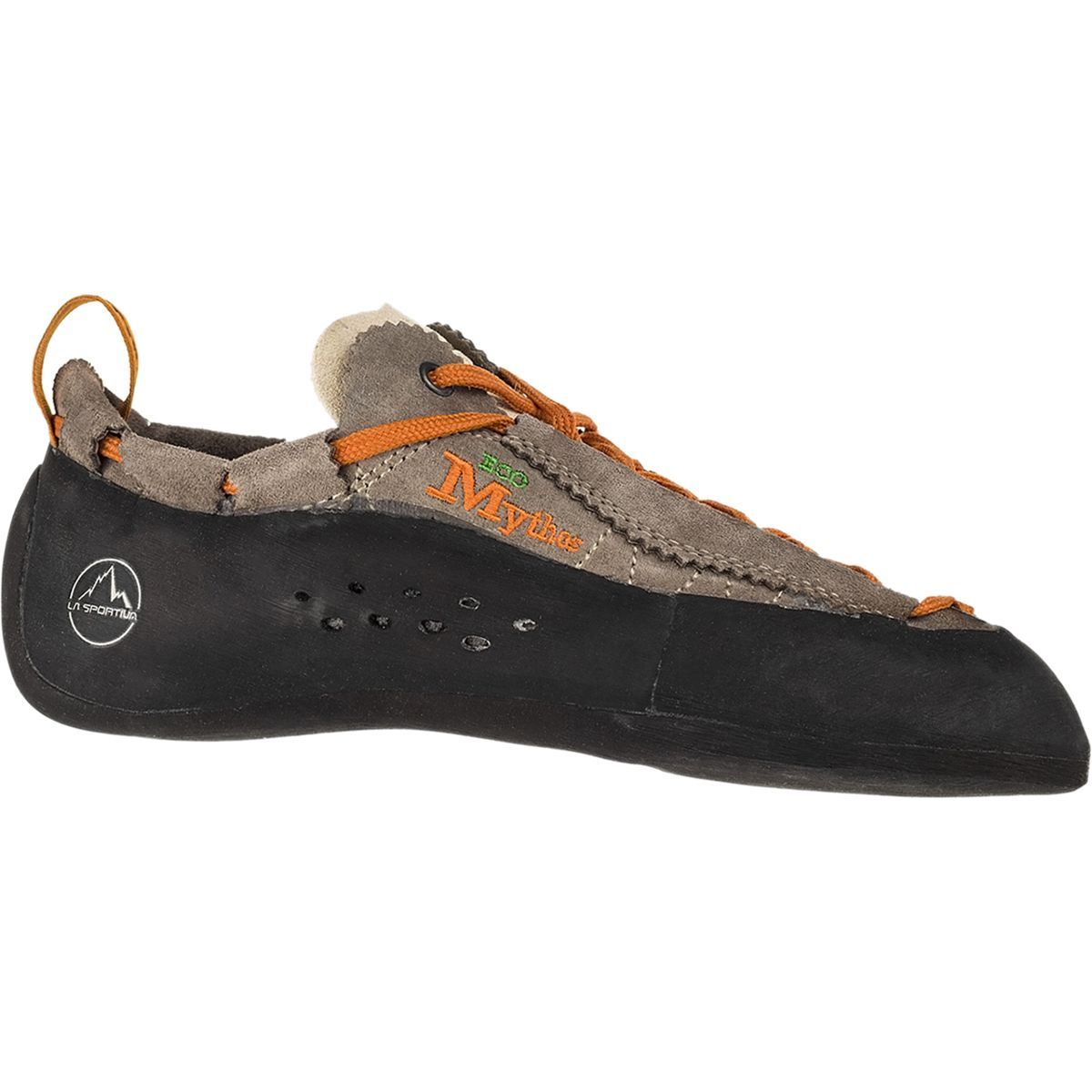
La Sportiva Mythos Eco
- Pros: Sensitive on small holds, all-day comfort.
- Cons: Flat last limits peak performance on steep terrain.
Since 1991, the La Sportiva Mythos has been a genre-bending climbing shoe, utilized by climbers for everything from bouldering to plastic routes. The Mythos Eco, a "green" iteration, is constructed from 95% recycled components, with the rubber derived from recycled floor scraps. Performance-wise, it is indistinguishable from the original. Initially stiff, the shoe softens with use, achieving a balance of stability for edging and softness for sensitivity on micro-features. Notably, legendary climbers have used the Mythos for high-difficulty ascents, including first ascents of 5.14s and Alexander Huber’s famous free solo of "The Communist" (5.14a).
Leveling Up
The following shoes represent more intermediate or advanced models that could also be suitable for first-time shoe buyers. This is not an exhaustive list.
La Sportiva Miura VS
This high-performance shoe excels across multiple disciplines and has become a popular choice for both beginners and experts. Its versatility makes it an all-around tool that can enhance any climber’s performance, regardless of their preferred discipline. It performs exceptionally well on dime-edges, heel hooks, and finger cracks, while its downturned and soft construction also makes it suitable for steeper terrain. The shoe does stretch, but not excessively; a snug fit is recommended, but not to the point of extreme discomfort. The Miura VS features La Sportiva’s P3 midsole, an asymmetric and downturned last, Dentex lining, a leather upper, 4mm Vibram XS Grip2 rubber, and three opposing Velcro straps for a secure fit. A low-volume/women’s version is also available. The Miura VS received a subtle update in 2023, with minimal changes to its lauded design.
La Sportiva Skwama
A winner of the editor’s choice award, the Skwama is described as a paradox in the high-end shoe market: offering elite performance with remarkable comfort. Its slipper design allows for easy on and off, while its stiffness facilitates toeing-in, yet it remains soft and sensitive for smearing. This true all-arounder can excel in various climbing scenarios, from bouldering and sport routes to crack climbing and big wall ascents, depending on sizing. It delivers sensitive and powerful performance at a slightly lower price point and higher comfort level than many comparable shoes. The primary caveat is that, as a performance shoe, it requires a break-in period of two to three sessions.
FAQs About Beginner Shoes
What Kind of Shoe is Right for Me?
A beginner shoe’s primary function is to facilitate enjoyment while learning fundamental footwork and body positioning. To maximize this learning process, opt for a relatively flat shoe with ample midsole support, sized slightly smaller than your street shoes. It should feel snug, perhaps even a bit too snug, but not painful. Remember that all climbing shoes, especially leather ones, will stretch with wear. Shoes that feel perfect initially may become loose after a few weeks. As you explore different climbing disciplines and refine your technique, you may wish to upgrade to a shoe specifically designed for your preferred style. Boulderers might opt for aggressive slippers; sport climbers might choose aggressive yet supportive shoes suitable for edging and steeper routes; and trad climbers may seek shoes that excel in crack climbing or edging on long vertical terrain.
For a more detailed guide, pro climber Paige Claassen’s flowchart offers excellent advice on choosing the best climbing shoe.
How Should I Size My Shoes?
While highly aggressive climbing shoes are often designed for an uncomfortably tight fit, discomfort can hinder a beginner’s progress. You will improve faster if you can move freely without being distracted by foot pain. However, comfort should not be the sole determinant. Your first climbing shoes should be just a bit too tight—significantly tighter than your street shoes. Your big toe should reach the end of the toe box (trim your nails short), but your toes should not be excessively curled unless you are wearing a hyper-downturned shoe. If your toes are severely scrunched, if your arch feels cramped, if you experience pins and needles, or if your heel doesn’t sit fully in the heel cup, try a half-size larger until you achieve a snug, near-comfortable fit. There should be no air pockets under your arch or around your heel. Consider the material: leather shoes stretch more than synthetics, and shoes with rubber strips over the toe may stretch less.
It’s important to note that many performance shoes require a more involved break-in process. Your foot may not fully seat in the heel cup initially, and putting them on might feel like a strenuous effort. These shoes are generally not recommended for beginners and often require an extended break-in period, sometimes involving wearing them around the house to stretch them out.
How Much Money Should I Spend?
The shoes listed in this guide range in price from approximately $89 to $199, which is relatively modest for climbing shoes. When considering your first pair, several factors come into play:
- Durability: Beginner shoes are often designed with thicker rubber and more robust construction to withstand the learning process.
- Performance vs. Comfort: Early on, comfort is key to enjoying the sport and learning effectively. As you progress, performance features become more critical.
- Progression: Your initial shoe might be outgrown as your technique and strength develop. Investing too heavily in a highly specialized shoe early on might not be the most cost-effective approach.
What are the Five Most Common Mistakes Beginners Make When Purchasing Their First Climbing Shoes?
- Sizing too loosely: Assuming climbing shoes should fit like street shoes.
- Prioritizing comfort over fit: Opting for shoes that are too loose, hindering performance.
- Choosing overly aggressive shoes: Selecting highly downturned or stiff shoes that are uncomfortable and difficult to use for learning basic techniques.
- Not trying on multiple pairs: Failing to compare different brands and models to find the best fit and feel.
- Buying based on aesthetics: Selecting shoes based solely on color or brand without considering their intended purpose and performance characteristics.
For a deeper understanding of climbing shoe terminology, sizing, and history, consult "The Rock Shoe Bible" by Matt Samet, former Editor-in-Chief of Climbing magazine.