









For millions of American parents, the weekday afternoon commute has evolved into a logistical burden defined by congested arterials, idling engines, and the persistent anxiety of tardiness. In Albuquerque, New Mexico, where urban sprawl and ongoing freeway construction projects have exacerbated traffic delays, one household recently attempted to break the cycle of dependence on traditional internal combustion vehicles. By trading a gas-powered minivan and pickup truck for an electric-powered transport solution, the family’s experiment highlights both the promise of micro-mobility and the complex, often confusing regulatory landscape governing high-powered e-bikes in the United States.
The Anatomy of a Daily Commute
The reliance on personal motor vehicles for short-distance youth activities—such as soccer practices and cross-country meets—is a standard, if inefficient, facet of modern suburban life. In the case of the Albuquerque-based family, the commute involved three days a week navigating heavy traffic to deliver a 10-year-old to a 5:00 p.m. soccer session, alongside intermittent trips for a 13-year-old’s cross-country training.
The financial and environmental toll of this routine is significant. With two vehicles averaging approximately 18 miles per gallon and fuel prices hovering near $5 per gallon in the region, the cumulative cost of fuel, maintenance, and vehicle depreciation represents a substantial household expense. Beyond the economics, the psychological impact of navigating peak-hour congestion—often characterized by aggressive driving and unpredictable delays—has led many families to seek alternatives that offer more predictability and a reduced carbon footprint.
The Aotos Flux X26 Pro: A Technical and Legal Pivot
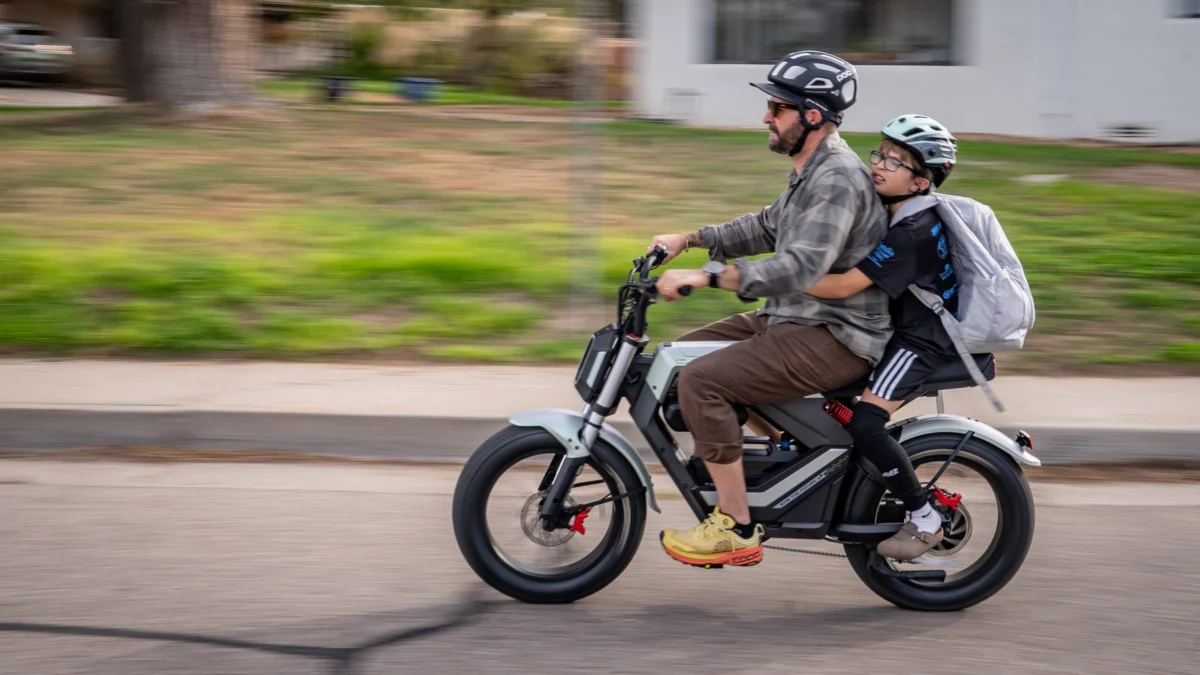
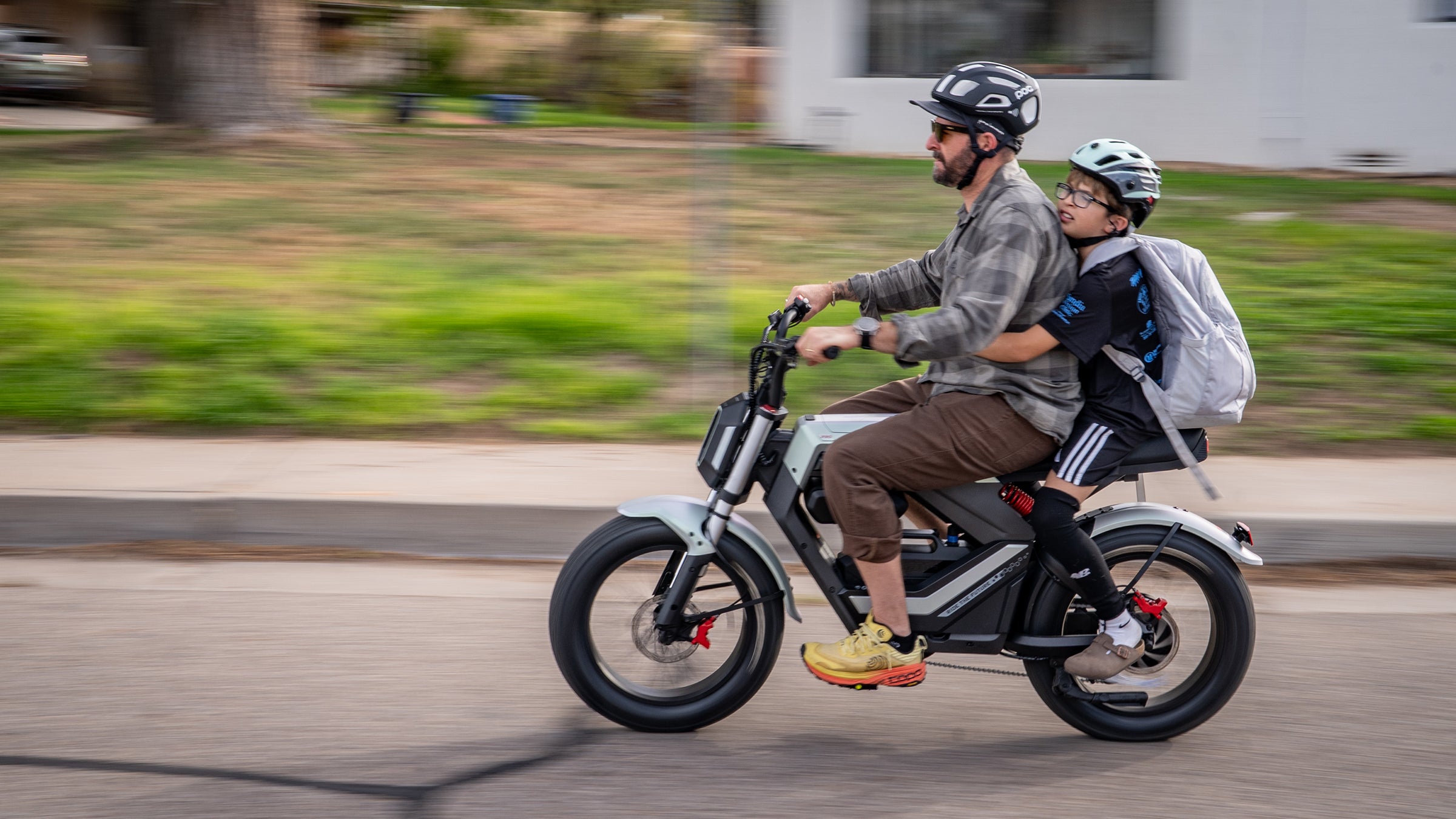
To test the viability of replacing automotive transport with a two-wheeled alternative, the family acquired an Aotos Flux X26 Pro, an e-bike marketed for its heavy-duty utility. The vehicle features a dual-capacity seat and an advertised range of 50 to 70 miles per charge. However, the testing phase immediately exposed a significant regulatory disconnect between consumer-facing marketing and federal law.
Under the classification standards established by the Consumer Product Safety Commission (CPSC) and reinforced by the federal government, an "e-bike" is strictly defined as a two- or three-wheeled vehicle with fully operable pedals and an electric motor of less than 750 watts. The Aotos Flux X26 Pro presents a nuanced case: while it can function within these parameters, it features a secondary, high-performance mode—activated by a manual override button—that elevates the output to 2,000 watts and increases the top speed to 28 miles per hour.
Because of this 2,000-watt threshold, the vehicle legally qualifies as a "motor-driven cycle" rather than an e-bike. This distinction carries legal consequences for municipal use. In Albuquerque, as in many cities across the United States, motor-driven cycles are restricted from traditional bicycle paths and multi-use trails, where the speed and power differentials pose potential risks to pedestrians and non-motorized cyclists.
Chronology of the Transition
The transition from a four-wheeled vehicle to a two-wheeled e-mobility platform occurred over a period of several weeks in the autumn of 2026. The initial phase involved a trial run to assess safety, particularly in light of a previous, unrelated accident involving the family. Once the users were equipped with safety gear and became accustomed to the handling of the fat-tired, hydraulically suspended vehicle, the transition moved to a daily schedule.
By October 2026, the family had integrated the e-bike into their routine, often prioritizing neighborhood routes to avoid arterial congestion. Observations from the test period indicated that while the travel time was approximately five minutes slower than a traditional automobile trip, the reduction in stress levels and the increased interaction between parent and child were noted as significant qualitative improvements. The integration of the vehicle into the school and extracurricular schedule required a staggered approach—dropping off the older child before proceeding to the younger child’s practice—which proved feasible within the established time constraints.
Regulatory and Industry Perspectives
The ambiguity surrounding vehicles like the Aotos Flux X26 Pro is a subject of growing concern within the cycling and urban planning communities. Brian Park, executive director at the cycling publication Pinkbike, notes that the rise of "mopeds in disguise" creates a perception problem for the legitimate e-bike industry.
"When a vehicle is designed to be used primarily with a throttle rather than human-powered input, it ceases to be a bicycle in the traditional sense," Park explains. "The industry is seeing a shift where performance specifications are being pushed to satisfy consumer demand for speed and power, but this often pushes these devices into a legal gray area where they are neither regulated as motor vehicles nor safely integrated into bicycle infrastructure."
The broader implications are significant. As cities attempt to reduce traffic density, the adoption of e-mobility is encouraged. However, if the current infrastructure—designed for bicycles moving at 10 to 15 miles per hour—is populated by high-torque, 2,000-watt vehicles capable of 28 miles per hour, municipalities may face an increase in liability and public safety incidents. Consequently, organizations such as PeopleForBikes are advocating for stricter adherence to the three-class e-bike system, which clearly delineates speed and motor-output limits to ensure safer coexistence on public paths.
Economic and Environmental Implications
Data regarding the adoption of e-bikes for short-trip replacement suggests that such shifts, if scaled, could lead to a measurable reduction in urban traffic volume. According to the U.S. Department of Transportation, nearly 60% of all vehicle trips in the United States are less than six miles in length. Replacing these specific trips with e-mobility platforms would theoretically alleviate the strain on existing road infrastructure and decrease urban carbon emissions.
However, the cost of entry remains a barrier. While the Aotos Flux X26 Pro and similar models are cheaper than the average cost of a new passenger vehicle (which exceeded $48,000 in late 2026), they still require a significant upfront investment and specialized maintenance. Furthermore, the reliance on lithium-ion batteries presents a long-term challenge regarding battery disposal and the sustainability of the supply chain.
The Path Forward: Cold Weather and Future Testing
As the experiment entered November 2026, the impact of seasonal changes became a factor. With temperatures in Albuquerque dropping into the 40s and 50s (Fahrenheit), the family had to invest in specialized weather-resistant apparel. While the equipment proved adequate for short commutes, the onset of freezing temperatures and potential snow in the coming months highlights the seasonal limitations of e-mobility in regions with significant winter weather.
The family’s next phase of the experiment will involve testing purpose-built, lighter-weight e-bikes that adhere strictly to the 750-watt limit. This shift, suggested by industry experts, aims to determine whether a more agile, legally compliant vehicle can offer the same utility for child transport while providing greater long-term reliability and safety.
Ultimately, the family’s experience serves as a microcosm of a larger national conversation. The move away from the "minivan-and-pickup" lifestyle toward a more fluid, e-mobility-centric routine is both a practical response to local traffic conditions and a test of the current legal infrastructure. Whether these high-performance e-vehicles are viewed as a temporary trend or the future of urban transport will depend on how cities balance the demand for faster, more powerful personal transport with the necessity of maintaining safe and accessible public pathways.
As the spring of 2027 approaches, the data collected from this domestic trial will likely inform the family’s final decision on whether to permanently divest from their second motor vehicle, marking a definitive shift in how they navigate their urban environment. For now, the experiment stands as a testament to the fact that while the technology exists to bypass the gridlock, the regulatory and safety frameworks are still catching up to the speed of innovation.