The concept of Everyday Carry, or EDC, has evolved from a niche hobbyist pursuit into a fundamental aspect of professional efficiency for those working in construction and field-based industries. At its core, EDC is the curation of a select group of items that are carried on one’s person daily to ensure preparedness for both routine tasks and unforeseen emergencies. For construction professionals operating in diverse environments—ranging from residential job sites in Wisconsin to remote outdoor locations—the selection of gear is defined by a rigorous balance of durability, multi-functionality, and weight optimization.
Recent industry trends suggest that workers are increasingly moving away from bulky, specialized tool belts in favor of streamlined, high-performance pocket tools. This shift is driven by the necessity for rapid deployment and the reduction of physical fatigue during long shifts. By examining the equipment choices of experienced professionals like @rippinraps, a construction worker and outdoorsman based in Wisconsin, one gains insight into the modern synthesis of professional trade tools and recreational outdoor gear.
Chronology of the Everyday Carry Movement
The EDC movement gained significant momentum in the early 2010s, catalyzed by the proliferation of online forums and social media platforms. Initially, the focus was heavily weighted toward tactical gear and self-defense implements. However, the demographic has shifted toward a more practical, utility-driven focus.
The professional adoption of these tools follows a historical trajectory of modularity. In the mid-20th century, a worker’s primary daily tool was often limited to a fixed-blade knife and perhaps a basic mechanical watch. The late 1990s and early 2000s saw the democratization of the multi-tool, pioneered by brands like Leatherman. This period marked the beginning of the "all-in-one" philosophy, which sought to condense a traditional toolbox into a format compatible with urban and industrial mobility.
Today, the standard kit typically includes a multi-tool, a high-lumen flashlight, a dedicated cutting implement, and a reliable timepiece. This progression reflects a broader technological advancement in battery density, metallurgy, and material science, allowing for high-performance capabilities in increasingly compact packages.
Technical Analysis of Essential Field Equipment
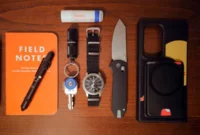
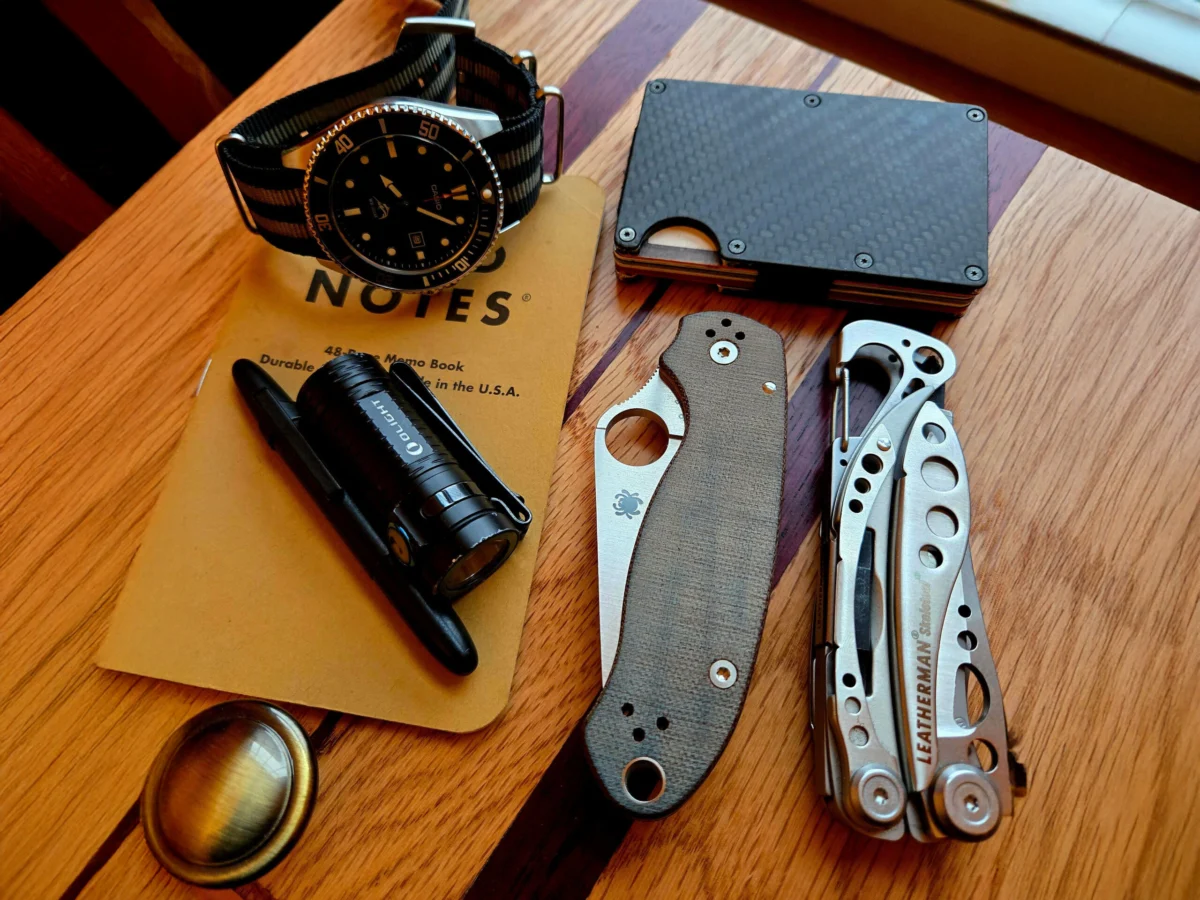
The selection of specific tools requires an understanding of technical specifications. In the case of the Leatherman Skeletool, for example, the focus is on the "essentialist" approach. By skeletonizing the frame, the manufacturer reduces weight without compromising the structural integrity of the pliers and wire cutters—two tools that are indispensable for electrical work, framing, and general assembly.
The Olight S1 Mini Baton represents a similar advancement in portable illumination. The shift toward 16340 and CR123 lithium batteries has allowed for power outputs reaching 1,200 lumens in a device less than three inches long. From an engineering perspective, the inclusion of a magnetic tail cap provides a distinct advantage for construction professionals. By allowing the light to be affixed to steel studs or machinery, the user gains a hands-free lighting solution that is critical in low-light environments, such as attics or during nighttime outdoor activities like fishing.
The Casio MDV-106, commonly referred to in the horology community as the "Duro," serves as a case study in market value. With a 200-meter water resistance rating, it meets the ISO 6425 standard for diver’s watches. Its prevalence among both blue-collar workers and high-profile figures—notably Bill Gates—highlights a market preference for mechanical or quartz reliability over fragile "smart" alternatives in environments where shock, vibration, and moisture are constant variables.
Market Data and Consumer Behavior in the EDC Sector
Market research indicates that the demand for professional-grade, portable tools is rising. According to data from the Bureau of Labor Statistics and industry-specific trade reports, the construction industry continues to face labor shortages, placing a premium on worker efficiency. Tools that reduce the time spent retrieving items from a truck or tool chest directly correlate to increased productivity.
Consumer behavior patterns show that brand loyalty in the EDC sector is largely driven by "proven reliability." Professionals prioritize equipment that carries lifetime warranties or, at minimum, a reputation for surviving extreme temperatures. In regions like Wisconsin, where seasonal temperatures fluctuate from sub-zero winters to humid summers, the thermal stability of equipment is a non-negotiable factor. Lithium-ion batteries, for instance, must be selected based on their discharge rates in cold weather, which is a frequent topic of discussion among professionals working in northern climates.
Official Perspectives and Expert Consensus
Industry experts from the American Society of Safety Professionals (ASSP) have noted that while the EDC movement is largely driven by personal preference, it has significant implications for workplace safety. A worker equipped with a high-quality, sharp knife is statistically less likely to exert excessive force—a leading cause of slip-and-cut injuries—compared to a worker using a dull or improvised tool.
"The professionalization of personal gear is a positive development for workplace safety," states a spokesperson for a regional construction trade association. "When workers invest in their own high-quality gear, they tend to maintain it better. A well-maintained tool is a safe tool. The challenge remains in standardization; ensuring that all personal tools meet site-specific safety regulations regarding blade length and locking mechanisms is the responsibility of both the employer and the employee."
Broader Implications for Industrial Design
The synthesis of construction-grade durability and outdoor-recreation portability has forced a change in how manufacturers approach product design. Companies are no longer designing tools solely for "the job site" or "the campsite." Instead, they are designing for the "hybrid user"—a demographic that moves fluidly between professional labor and rugged recreation.
This hybrid approach has led to the integration of materials like titanium, carbon fiber, and high-impact polymers into everyday products. These materials were once reserved for aerospace or elite tactical use. Their presence in the pocket of a construction worker is a testament to the democratization of advanced manufacturing.
Furthermore, the rise of "value engineering" is evident in the current market. As seen with the Casio MDV-106, consumers are increasingly capable of identifying products that offer high performance at a lower price point. This trend is putting pressure on legacy brands to justify higher price tags through innovation rather than just brand heritage.
Conclusion: The Future of Personal Preparedness
The modern EDC kit is more than a collection of gadgets; it is a specialized utility system designed to enhance the human operator’s capability. For the construction worker, these items represent a commitment to readiness, efficiency, and safety. As technology continues to improve, the next iteration of these tools will likely focus on even greater power-to-weight ratios and perhaps the integration of smart-tracking capabilities for inventory management on the job site.
However, the core philosophy remains unchanged: the most valuable tool is the one that is available when the need arises. Whether it is tightening a doorknob in a suburban home, snipping wire in a commercial facility, or navigating the outdoors, the modern professional understands that their equipment is a direct extension of their professional skill set. By maintaining a curated, reliable, and high-performance kit, workers ensure that they are prepared for the variables of an unpredictable work environment. The ongoing dialogue between users and manufacturers will continue to shape this segment of the industry, ensuring that the tools of the trade remain as robust as the work being performed.