Apple has implemented a price hike across its popular Apple Music streaming service, affecting individual, family, and student subscription tiers in key markets including the United States, the United Kingdom, and across Europe. The adjustments, which took effect immediately for new subscribers, signify a notable shift in the pricing landscape for one of the world’s leading music streaming platforms. Existing subscribers will observe the updated rates upon the conclusion of their current billing cycles.
This move by Apple Music follows a broader trend within the digital music industry, where several major players have recently adjusted their subscription fees. The company has not provided an extensive explanation for the increase, but a statement attributed to Apple and shared with MusicBusinessWorldwide indicated that "rising licensing costs" are the primary driver behind the price adjustments. This suggests that the financial burden of securing rights to a vast catalog of music from record labels and publishers has escalated, necessitating a recalibration of subscription revenue to maintain profitability and service offerings.
Understanding the New Pricing Structure
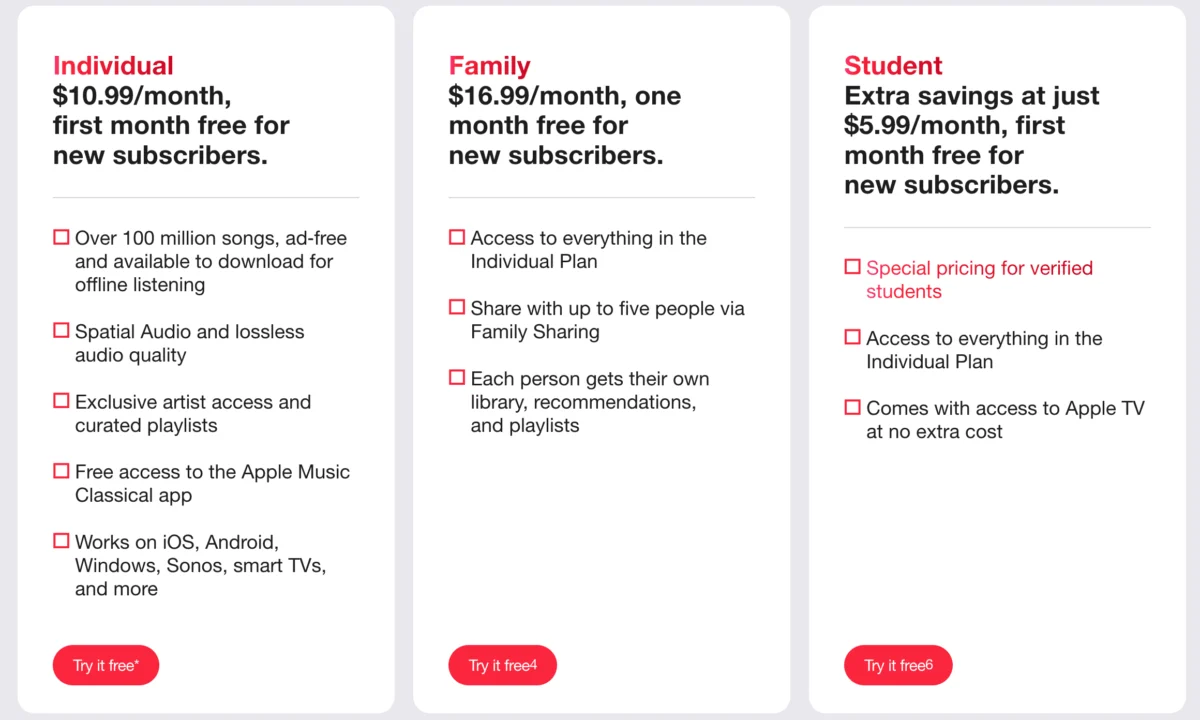
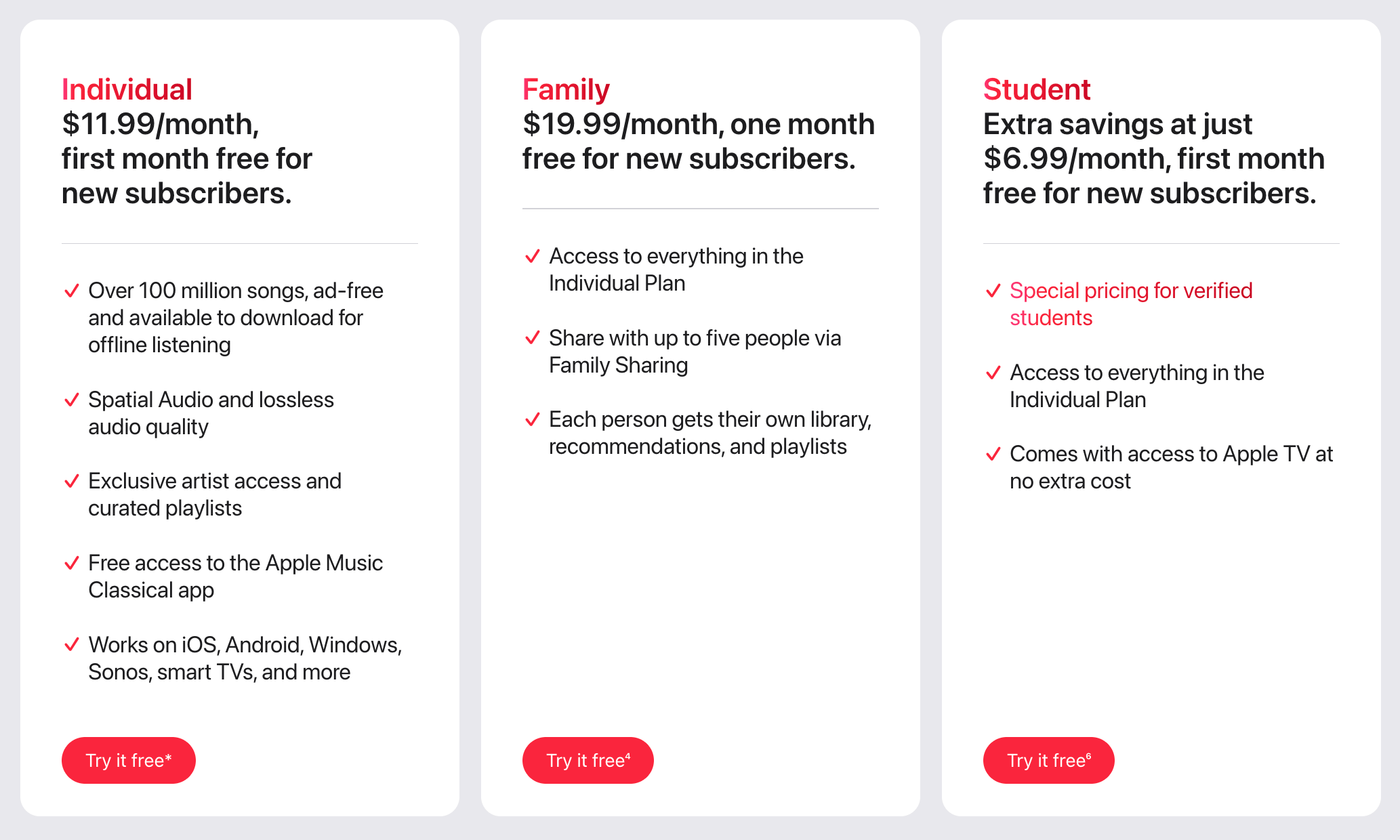
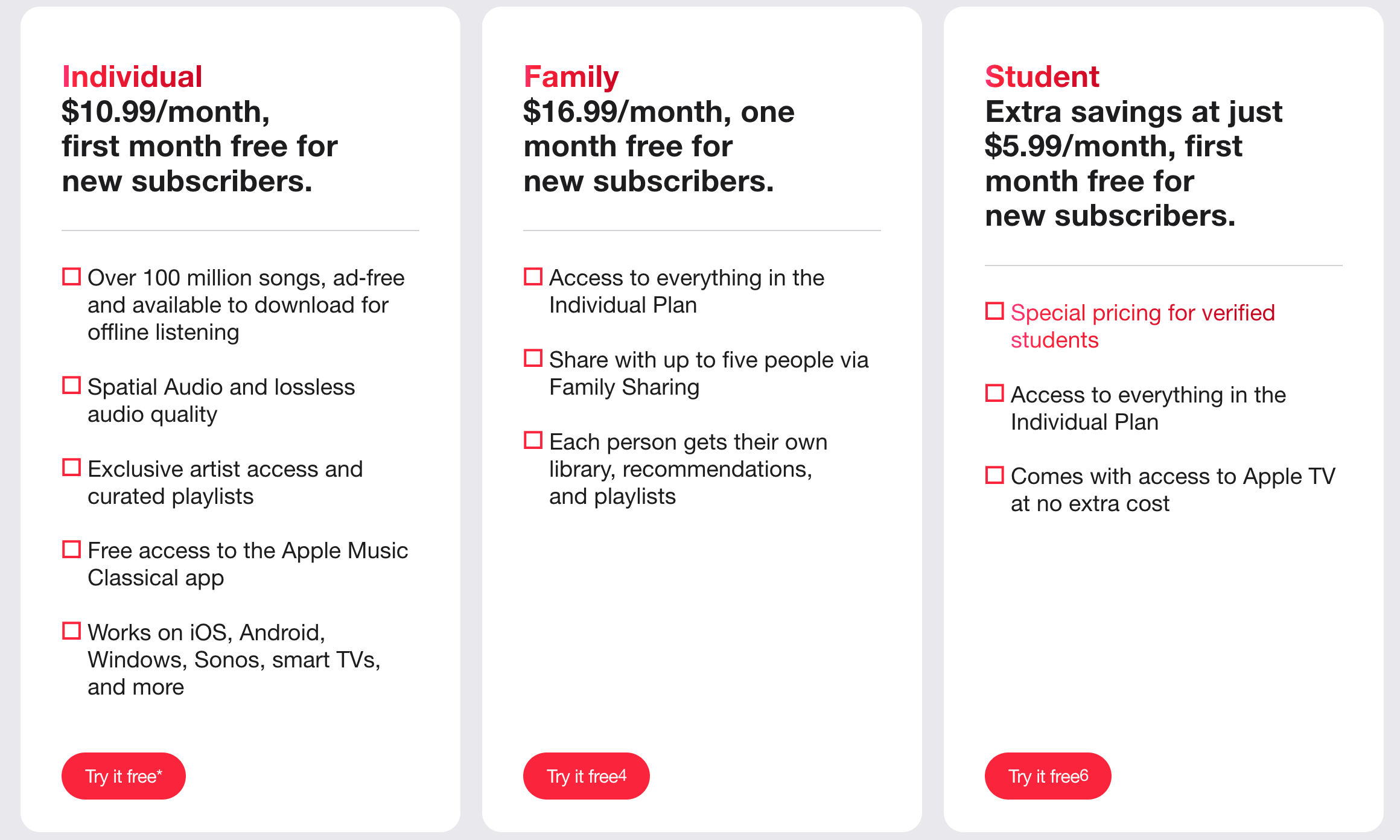
In the United States, the revised pricing sees the individual monthly subscription climb from $10.99 to $11.99, representing a $1 increase. The student plan, historically positioned as an accessible entry point for younger users, also experiences a $1 increment, moving from $5.99 to $6.99 per month. Perhaps the most significant jump is observed in the family plan, which has been raised by $3, bringing the new monthly cost to $19.99. This plan allows for up to six users to share a single subscription, making it a popular choice for households. The benefits and features associated with each plan, such as access to lossless audio, spatial audio with Dolby Atmos, and offline listening, remain unchanged.
The price adjustments extend to other major markets. In the United Kingdom, individual plans have risen to £10.99 per month, up from £9.99. Family plans in the UK now cost £16.99 per month, an increase from £14.99. Student plans have also seen an upward adjustment. Similar increases have been reported across various European countries, reflecting a coordinated strategy to align subscription revenues with the evolving operational costs.
A Comparative Look at the Price Evolution
To illustrate the extent of these changes, a direct comparison of the old and new monthly pricing in the US highlights the updated financial commitment for subscribers:
| Plan | Old Price (per month) | New Price (per month) |
|---|---|---|
| Individual | $10.99 | $11.99 |
| Family | $16.99 | $19.99 |
| Student | $5.99 | $6.99 |
These figures demonstrate a consistent pattern of upward revision across all subscription tiers. The increases, while seemingly modest on an individual basis, can accumulate significantly for long-term subscribers, particularly those opting for family plans.
The Industry-Wide Context: A Trend of Rising Costs
Apple Music’s decision to increase subscription fees is not an isolated incident but rather an acceleration of a discernible trend across the music streaming industry. Over the past few years, major competitors such as Spotify and Amazon Music have also implemented price hikes, signaling a shift in the economic model of digital music consumption.
Spotify, for instance, has raised its subscription costs on multiple occasions. Earlier in the year, the platform increased prices for its individual and family bundles, with individual plans now starting at $12.99 per month. Amazon Music has also seen its pricing evolve, with Prime members paying $11 per month and non-Prime subscribers $12 per month for its unlimited tier, following previous increases. These adjustments suggest a collective recognition within the industry that current subscription revenues may not be adequately covering the escalating operational expenditures.
The Underlying Drivers: Licensing Costs and Evolving Market Dynamics

The primary rationale cited by Apple and other streaming services for these price increases revolves around the persistent issue of rising licensing costs. The music industry operates on a complex web of agreements with record labels, music publishers, and independent artists, each requiring remuneration for the use of their intellectual property. These licensing fees constitute a significant portion of a streaming service’s operating budget. As the value of music catalog rights fluctuates and demand for premium audio experiences like lossless and spatial audio grows, these costs are likely to continue their upward trajectory.
Beyond licensing, the streaming landscape is grappling with other significant challenges and opportunities that may indirectly influence pricing strategies. The burgeoning field of AI-generated music presents both a potential new avenue for content creation and a complex ethical and economic dilemma. Artists and industry stakeholders are increasingly vocal about ensuring fair compensation and transparency in an era where artificial intelligence can be used to create music. Tidal, for example, has taken a more proactive stance by exploring alternative monetization models and ensuring clarity around AI-generated content. The push for an industry-wide AI labeling system, aimed at informing listeners about the origin of music, underscores the growing need for established players to navigate these emerging technologies responsibly.
Furthermore, the constant investment required to maintain and enhance user experience, develop new features, and compete in a crowded market necessitates a robust revenue stream. Apple Music’s commitment to offering high-fidelity audio options, curated playlists, and integration with its broader ecosystem of devices and services demands ongoing financial resources.

Implications for Consumers and the Future of Music Streaming
The recent price increases by Apple Music are likely to have several implications for its subscriber base. For dedicated users who value the platform’s extensive library, audio quality, and integration with Apple devices, the increased cost may be an acceptable trade-off for continued access to these features. However, for more price-sensitive consumers, particularly students or those on tighter budgets, the hikes could prompt a re-evaluation of their subscriptions or a search for more economical alternatives.
The trend of rising subscription costs across multiple platforms also raises questions about the long-term sustainability of the current music streaming model. As prices continue to ascend, the market may eventually reach a point of saturation, where consumers are unwilling or unable to bear further increases. This could spur innovation in alternative revenue streams, such as tiered subscription models with different feature sets, direct artist support mechanisms, or expanded merchandise and live event integration.

The industry’s response to the challenges posed by AI music and the ongoing negotiations over licensing fees will also play a crucial role in shaping the future of music streaming. The ability of platforms to balance the demands of rights holders with the expectations of consumers, while simultaneously adapting to technological advancements, will be paramount to their continued success.
As Apple Music solidifies its position in the market with these adjusted prices, the broader music streaming ecosystem will undoubtedly continue to evolve. Consumers can anticipate further discussions around value, affordability, and the ethical considerations of music consumption in an increasingly digital and AI-influenced world. The current price adjustments serve as a clear indicator that the era of perpetually low-cost music streaming may be giving way to a more sustainable, albeit more expensive, future.