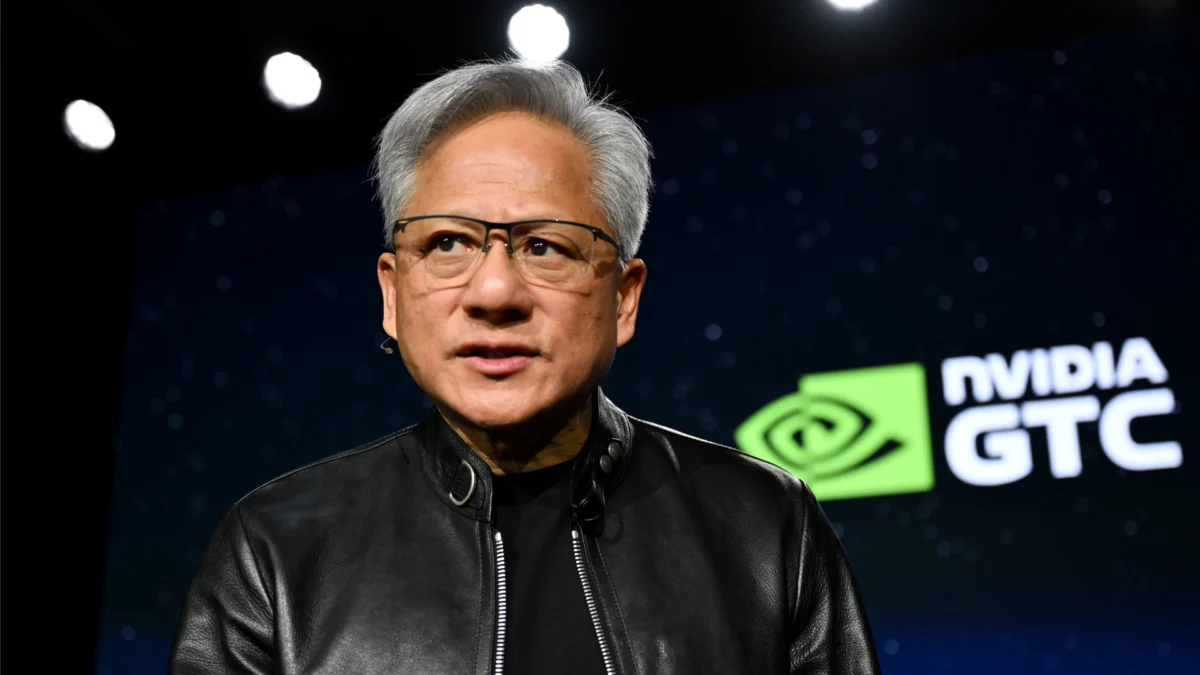
A recent podcast featuring Nvidia CEO Jensen Huang and host Dwarkesh Patel ignited a vigorous debate concerning the contentious issue of whether the United States should continue selling advanced artificial intelligence (AI) chips to China. The discussion, which saw Huang passionately defending his company’s strategy amidst U.S. export controls, underscored the profound geopolitical and economic complexities at the heart of the burgeoning AI industry. Patel, adopting his characteristic "devil’s advocate" stance, pressed Huang on the potential national security risks posed by providing China access to cutting-edge AI capabilities, prompting a nuanced yet firm response from the leader of the world’s most dominant AI chipmaker.
The National Security Conundrum: A Devil’s Advocate’s Stance
Dwarkesh Patel initiated the debate by questioning the prudence of supplying China with powerful AI chips, framing it as a potential threat to American companies and national security. He cited the theoretical example of Anthropic’s Claude Mythos, an AI model that reportedly uncovered thousands of zero-day vulnerabilities across major operating systems and web browsers. Patel posited that if China possessed the immense computational power delivered by Nvidia’s chips, it could leverage such AI models to develop sophisticated cyber-offensive capabilities, directly endangering U.S. interests. This concern echoes the broader apprehension within U.S. policy circles that advanced AI could be weaponized for surveillance, military applications, or critical infrastructure attacks.
Huang, known for his direct and often philosophical approach to business and technology, immediately countered Patel’s specific example. He pointed out that Mythos was reportedly trained on "fairly mundane capacity, and a fairly mundane amount of it," implying that the scale of compute power was not the sole determinant of such a model’s efficacy, nor was it necessarily indicative of the threat posed by China’s access to Nvidia’s most advanced hardware. However, this initial deflection quickly transitioned into a deeper articulation of Nvidia’s strategic rationale.
Jensen Huang’s Counter-Arguments: Brute Force, Ecosystems, and Innovation
Huang’s primary argument revolved around two critical pillars: China’s inherent capacity for "brute force" AI development and the strategic imperative of keeping China integrated within the "American tech stack." He asserted that China already commands significant computational resources, and even without Nvidia’s absolute latest and most efficient chips, it possesses the capability to achieve advanced AI models through sheer scale and persistence. He referenced Huawei’s AI CloudMatrix cluster as an example, reportedly demonstrating capabilities that could rival Nvidia’s GB200 through massive deployment and power consumption.
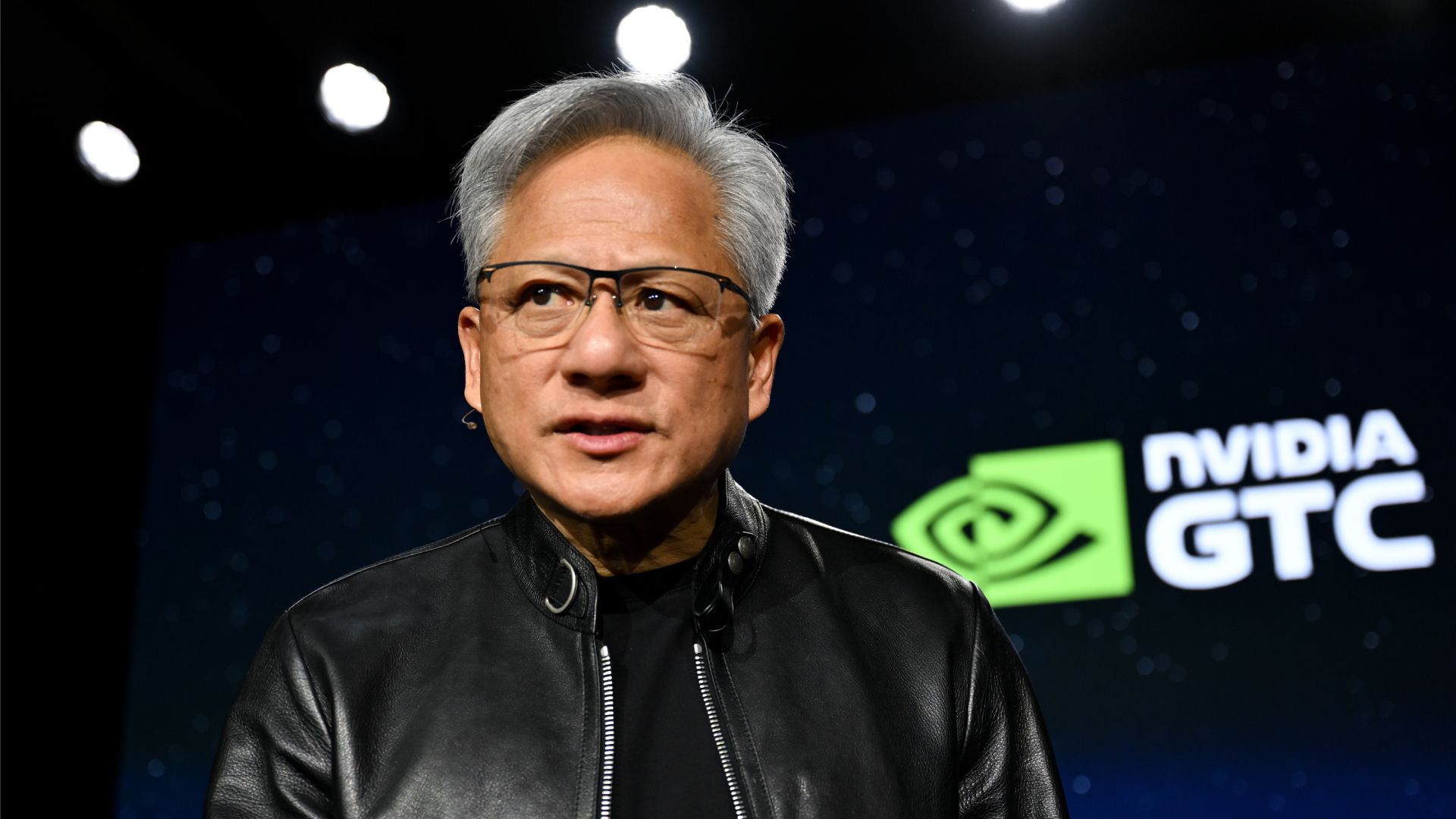
"China already has access to a lot of compute power," Huang stated. He further elaborated that attempts to restrict the sale of Nvidia’s most advanced chips would not halt China’s AI progress but would instead compel it to develop frontier AI models entirely outside the American technological ecosystem. This, he argued, would be a "horrible outcome for the United States."
Huang emphasized: "We want to make sure that all the AI developers in the world are developing on the American tech stack, and making the contributions, the advancements of AI — especially when it’s open source — available to the American ecosystem. It would be extremely foolish to create two ecosystems: the open-source ecosystem, and it only runs on a foreign tech stack, and a closed ecosystem that runs on the American tech stack." This perspective highlights a fundamental tension between national security-driven export controls and the desire for global technological dominance through pervasive adoption of American platforms and standards.
Chronology of U.S. Export Controls and Nvidia’s Adaptations
The debate takes place against a backdrop of escalating U.S. efforts to restrict China’s access to advanced semiconductor technology. These efforts intensified significantly in October 2022, when the Biden administration imposed sweeping export controls targeting China’s ability to obtain high-end AI chips and chip manufacturing equipment. These initial rules specifically restricted the export of Nvidia’s A100 and H100 GPUs, designed for data centers and AI training, along with similar chips from competitors like AMD.
In response, Nvidia quickly developed "detuned" versions of its chips, such as the A800 and H800, specifically designed to comply with U.S. export regulations while still offering substantial AI processing power to the Chinese market. These chips met the technical thresholds set by the Commerce Department, allowing Nvidia to continue some level of business in China.
However, the U.S. government further tightened these restrictions in October 2023, expanding the scope of chips covered and closing loopholes. This led to Nvidia introducing even more compliant chips, like the L40S, and continuing to navigate a complex regulatory landscape. These measures aim to slow China’s progress in developing advanced AI for military applications and to prevent it from achieving technological parity or superiority in critical sectors.
The "Loser" Mindset: Ecosystem Stickiness vs. Domestic Competition
Patel also raised a different line of argument, suggesting that even if Nvidia continued selling chips to China, the country might eventually replicate the pattern seen with products like iPhones and Tesla. In these instances, Chinese companies initially relied on foreign technology but eventually developed competitive domestic alternatives that could challenge global leaders on price, features, and quality. The implication was that Chinese AI companies could eventually switch to domestically produced AI chips, potentially rendering Nvidia’s current market position in China unsustainable.
Huang reacted strongly to this proposition, rejecting what he termed a "loser attitude" and a "loser premise." "You’re not talking to somebody who woke up a loser," he declared. "That loser attitude, that loser premise makes no sense to me."
He then elaborated on why computing ecosystems, particularly in advanced hardware like AI chips, differ fundamentally from consumer goods like vehicles. "AI chips aren’t as simple as vehicles, where users can easily swap one brand for another daily. Computing is not like that. There’s a reason why the x86 deal exists. There’s a reason why ARM is so sticky. These ecosystems are hard to replace; it costs an enormous amount of time and energy, and most people don’t want to do it."
Huang’s point underscores the concept of "ecosystem lock-in," where the significant investment in software, development tools, training, and expertise built around a particular hardware architecture (like Nvidia’s CUDA platform) creates powerful switching costs. He asserted that Nvidia’s strategy is to "continue to nurture that ecosystem, to keep advancing the technology so that we can compete in the marketplace," rather than conceding market share based on speculative future competition.
The Five Layers of AI and Holistic Strategy
A crucial part of Huang’s argument for a nuanced approach to China trade involves his concept of the "five layers" of the AI industry: energy, chips, infrastructure, models, and applications. He contended that policymakers and analysts often become overly fixated on one layer, such as AI models or the chips themselves, at the expense of understanding the interconnectedness and success required across all layers.
"Why are you causing one layer of the AI industry to lose an entire market so that you could benefit from another layer of the AI industry?" Huang questioned. "There are five layers, and every single layer has to succeed. The layer that has to succeed most is actually the AI applications. Why are you so fixated on that AI model? That one company? For what reason?"
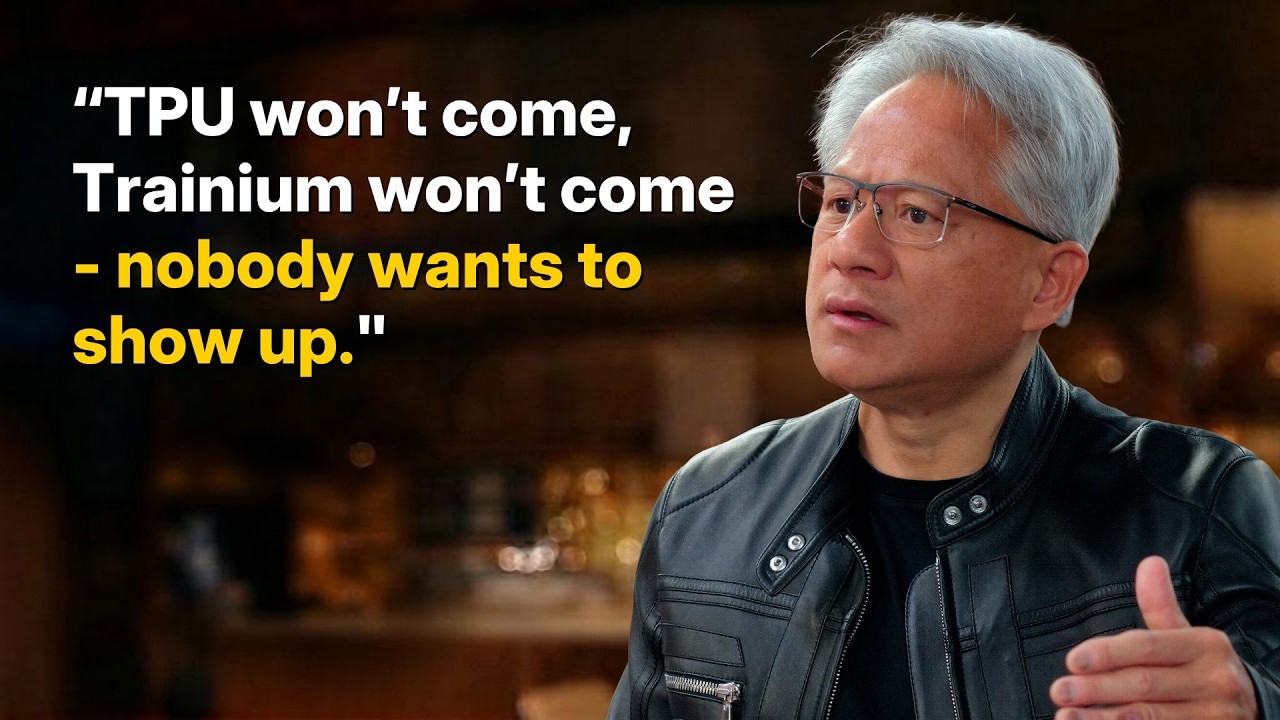
This holistic view suggests that stifling chip sales to China might weaken the U.S. chip industry (one layer) without necessarily guaranteeing success in other layers, such as AI applications, especially if China develops its own parallel ecosystem. By selling compliant chips, Nvidia maintains a foothold, ensures its technology is part of China’s development, and potentially influences the direction of China’s AI stack to remain somewhat compatible or integrated with global standards.
Broader Impact and Implications
The debate between Huang and Patel reflects a microcosm of the larger U.S.-China technology rivalry. The implications of the U.S. approach to AI chip exports are far-reaching:
- For Nvidia and the U.S. Tech Industry: While export controls are intended to slow China, they also represent a significant lost revenue opportunity for U.S. companies. China is a massive market for AI chips, and Nvidia’s adaptations reflect its efforts to balance compliance with business imperatives. Continued restrictions could prompt U.S. companies to shift R&D or manufacturing outside the U.S. to access global markets, or could accelerate China’s efforts to achieve self-sufficiency, ultimately creating a formidable competitor.
- For China’s AI Development: U.S. restrictions undoubtedly create immediate challenges for China in accessing the most advanced AI hardware. This has spurred massive domestic investment in indigenous chip design and manufacturing, exemplified by companies like Huawei and its Ascend series processors. While still trailing Nvidia in certain performance metrics, China’s "brute force" approach, combined with state support, could lead to significant advancements over time, potentially creating a fully independent AI tech stack.
- Geopolitical Decoupling: The debate highlights the ongoing trend towards technological decoupling between the U.S. and China. If two entirely separate and incompatible AI ecosystems emerge – one built on American technology and the other on Chinese – it could lead to fragmentation in global AI development, higher costs for multinational corporations, and potential standardization conflicts. Such a scenario could also have profound implications for global security, intelligence sharing, and economic collaboration.
- The Future of AI Innovation: Huang’s argument for an integrated "American tech stack" suggests that restricting access could paradoxically hinder global AI progress by fragmenting research and development efforts. Open collaboration, even with strategic rivals, has historically driven rapid technological advancement. The challenge for policymakers is to find a balance between fostering innovation and safeguarding national security interests in a rapidly evolving technological landscape.
Jensen Huang’s passionate defense of Nvidia’s strategy in China is not merely about quarterly earnings; it encapsulates a complex vision for how the U.S. can maintain its technological leadership in AI. By emphasizing the "five layers" of AI, the "stickiness" of computing ecosystems, and the inevitability of China’s brute-force capabilities, Huang argues that a complete withdrawal from the Chinese market might be a short-sighted approach that ultimately undermines American interests by fostering a self-sufficient, non-American-aligned technological superpower. The ongoing tension between these perspectives will continue to shape the future of AI and the global tech landscape.