The intersection of high-performance sports, heritage horology, and bespoke automotive engineering defines the latest developments in the global luxury and technology sectors. This week’s headlines are dominated by the Spanish National Team’s innovative use of wearable technology during their FIFA World Cup victory celebrations, the strategic revival of foundational timepieces by the independent watchmaker Lorier, and the expansion of Mercedes-Benz’s experiential retail footprint into the North American market via a new studio concept in Beverly Hills. These disparate events underscore a broader shift toward personalization and immersive consumer experiences across the lifestyle spectrum.
Digital Immersive Celebrations: The Spanish National Team and Oakley Meta
In a move that signals a new era for sports broadcasting and fan engagement, the Spanish National Team integrated advanced wearable technology into their post-match celebrations. Following their victory on the world stage, players were seen utilizing Oakley Meta smartglasses to capture and share first-person perspective (POV) footage of the festivities. This activation allowed fans to experience the raw emotion of the on-field celebration through the eyes of the athletes themselves, bridging the gap between the pitch and the digital audience.
The collaboration featured exclusive, customized iterations of the Oakley Meta frames. These units were delivered in bespoke packaging and featured lenses etched with the official FIFA World Cup Champions mark, signifying a permanent record of the achievement. High-profile players, including midfielder Pablo Gavi and defender Pedro Porro, were instrumental in the rollout, capturing high-definition video that was subsequently shared across global social media platforms.
The use of smartglasses in this context represents a significant departure from traditional handheld recording. By utilizing a hands-free, head-mounted camera system, the players were able to remain fully present in the celebration while simultaneously documenting it. This reflects a growing trend in the sports industry where "athlete-generated content" is becoming a primary driver of brand value and fan loyalty.
The Technical Specifications of the Oakley Meta Smartglasses
The hardware utilized by the Spanish National Team is the result of a multi-year partnership between Meta (formerly Facebook) and Luxottica, the parent company of Oakley and Ray-Ban. The glasses are equipped with a 12-megapixel camera capable of capturing high-resolution photos and 1080p video. The integration of a five-microphone system ensures that the spatial audio of the stadium environment—from the roar of the crowd to the chants of the players—is recorded with high fidelity.

Beyond simple recording, these devices are capable of livestreaming directly to platforms such as Instagram and Facebook. While the Spanish team primarily focused on recorded POV clips, the potential for real-time, interactive victory parades is now a technical reality. The glasses are powered by the Qualcomm Snapdragon AR1 Gen 1 Platform, which is specifically designed to handle high-quality photo and video processing in a lightweight form factor, ensuring that the athletes were not encumbered by heavy equipment during their physical celebrations.
From a marketing perspective, Oakley’s involvement reinforces its position as a leader in sports optics. By moving beyond traditional eyewear into the "smart" category, the brand is positioning itself to capture a younger, tech-savvy demographic that prioritizes content creation as much as physical performance.
The Renaissance of Neo-Vintage Horology: Lorier’s Core Collection Revival
In the world of horology, the independent brand Lorier has announced the highly anticipated re-release of its "Core Collection." This revival includes four of the brand’s most successful models: the Astra, Falcon, Hyperion, and Neptune. Based in New York, Lorier has built a significant following among watch enthusiasts for its commitment to "neo-vintage" design—creating modern watches that capture the aesthetic and ergonomic spirit of the mid-20th century.
The return of these models comes at a time when the "microbrand" sector of the watch industry is experiencing unprecedented growth. Consumers are increasingly seeking alternatives to mass-produced luxury watches, favoring brands that offer transparent pricing, specific design narratives, and high-quality mechanical movements. Lorier’s decision to restock these four pillars of its catalog is a response to sustained market demand and the secondary market’s high valuation of previous iterations.
Engineering the Hyperion: A Deep Dive into Lorier’s GMT Excellence
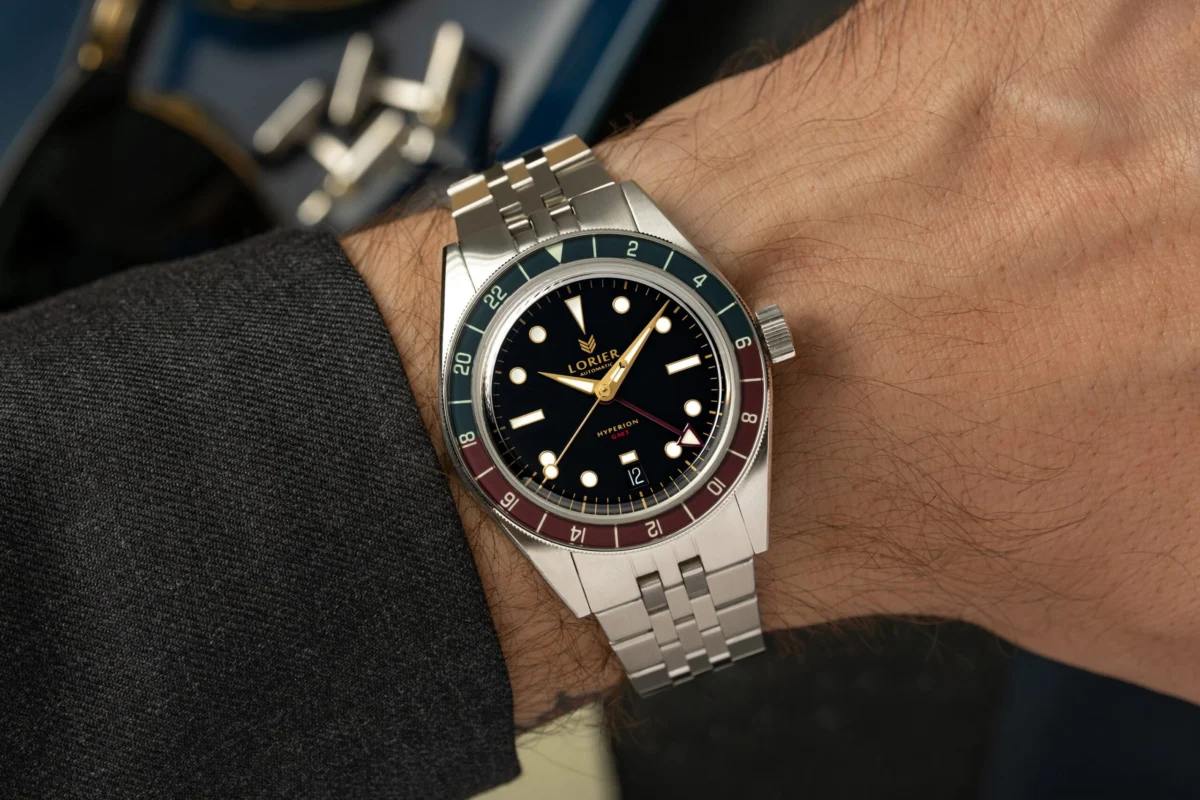
Among the revived collection, the Hyperion stands out as the technical flagship. Priced at $799, the Hyperion is a "true" or "flyer" GMT, a complication highly prized by travelers and collectors. Unlike "caller" GMTs, where the 24-hour hand is adjusted independently, a "flyer" GMT allows the wearer to adjust the local hour hand in one-hour increments without stopping the movement. This functionality is typically reserved for much higher price points in the luxury market.
The Hyperion’s design is a direct homage to the "Jet Age" of the 1950s and 60s. It features a bidirectional 24-hour bezel in a classic red-and-blue "Pepsi" colorway, paired with a glossy black dial and gilt accents. To maintain its vintage authenticity, Lorier utilizes a domed acrylic crystal rather than modern sapphire. While sapphire is more scratch-resistant, acrylic provides a specific optical warmth and "halo" effect that is central to the vintage aesthetic.

The watch is powered by the Miyota 9075, an automatic movement that has revolutionized the accessible GMT market. By providing a reliable, Japanese-made "flyer" GMT movement to independent brands, Miyota has enabled Lorier to compete with heritage Swiss brands that charge significantly more for similar functionality.
The Evolution of Luxury Retail: Mercedes-Benz Opens Studio Los Angeles
In the automotive sector, Mercedes-Benz is redefining the customer acquisition journey with the opening of "Mercedes Studio" in Beverly Hills, California. Located at 242 N Beverly Drive, this facility is the first of its kind in the United States, signaling a shift away from the traditional dealership model toward a boutique, lifestyle-oriented retail experience.
The opening of the Los Angeles studio coincides with the North American debut of the Mercedes-Maybach GLS 680, a vehicle that represents the pinnacle of the brand’s SUV luxury. The studio is not intended for high-volume sales in the traditional sense; rather, it serves as a "brand embassy" where current and prospective clients can engage with the Mercedes-Benz universe in a low-pressure, highly curated environment.
The choice of Beverly Hills is strategic. Los Angeles remains one of the largest markets for luxury vehicles globally, and the 90210 ZIP code represents a concentration of the brand’s core demographic: high-net-worth individuals who demand high levels of personalization and service.
MANUFAKTUR: Redefining Automotive Personalization in Beverly Hills
The centerpiece of the new Mercedes Studio is the MANUFAKTUR Made to Measure Hub. This dedicated space allows clients to explore the limits of the Mercedes-Benz personalization program. As the luxury market moves toward "individualization," the MANUFAKTUR program offers a library of bespoke paint finishes, interior leathers, and wood trims that are not available in the standard configuration tools.
The Studio provides a tactile experience that digital configurators cannot replicate. Clients can handle physical samples of Nappa leather, examine the grain of open-pore wood, and see how specific MANUFAKTUR paint colors react to different lighting conditions. This level of "bespoke" service is a direct response to the increasing competition from other ultra-luxury manufacturers like Rolls-Royce and Bentley, who have long offered extensive customization options.

The Studio also serves as a hub for the Mercedes-Maybach line. The GLS 680, with its emphasis on rear-cabin comfort and opulence, is the primary focus of the initial launch. By showcasing the Maybach alongside the MANUFAKTUR program, Mercedes-Benz is positioning itself as a coachbuilder for the modern era, capable of delivering a vehicle that is as unique as its owner.
Synthesis: The Convergence of Personalization, Technology, and Heritage
The three developments highlighted this week—the Oakley Meta sports activation, the Lorier collection revival, and the Mercedes Studio launch—reveal a common thread in the current consumer landscape: the desire for "meaningful connection."
In sports, that connection is achieved through immersive technology. The Spanish National Team’s use of Oakley Meta glasses transformed a distant celebration into a personal experience for millions of fans. In horology, Lorier provides a connection to the past through meticulously crafted mechanical objects that reject the "disposable" nature of modern smartwatches. In the automotive world, Mercedes-Benz is fostering connection through physical spaces and personalization, ensuring that the relationship between the driver and the machine is deeply individual.
These events also highlight the changing role of physical retail and live events. Whether it is a watch on a wrist, a car in a Beverly Hills studio, or a POV video from a football pitch, the emphasis is on the "moment." For brands, the challenge is no longer just about selling a product, but about facilitating an experience that remains "worth noting" in an increasingly crowded digital and physical marketplace. As we move further into the decade, the integration of high-tech tools with high-touch service will likely become the standard for any brand seeking to maintain relevance in the luxury and lifestyle sectors.