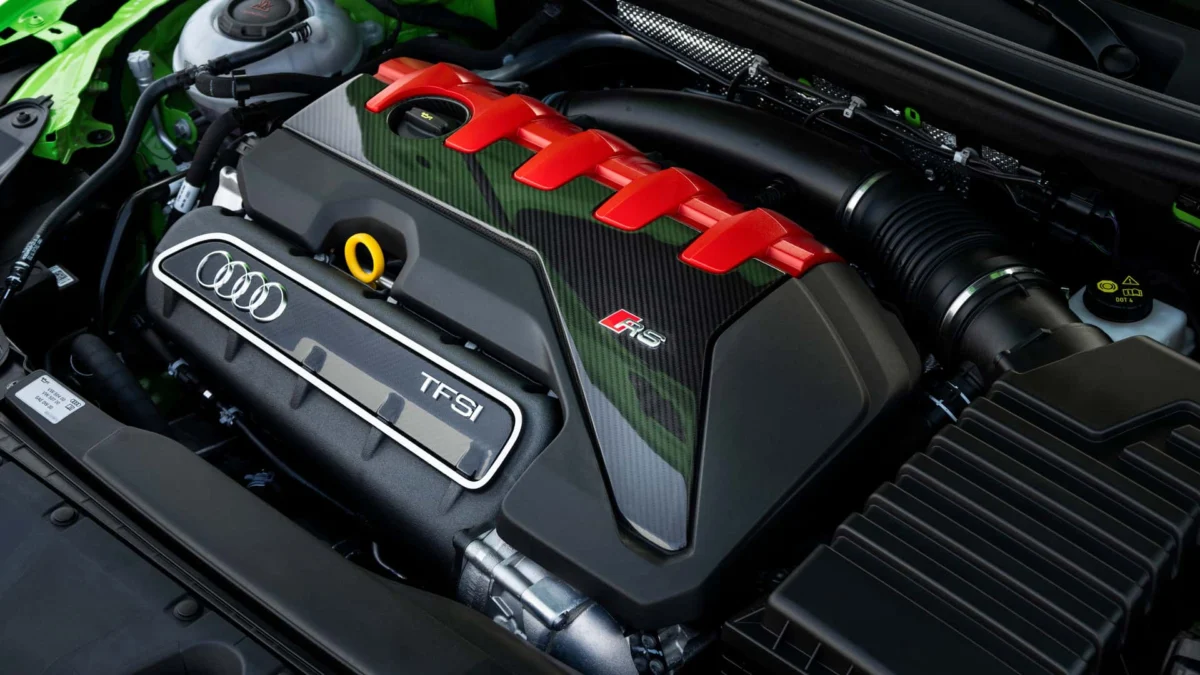
The distinctive roar of Audi’s five-cylinder engine, a hallmark of performance and a symbol of the brand’s engineering prowess, is set to fall silent on the European continent. Increasingly stringent emissions regulations, particularly the forthcoming Euro 7 standards, have created a significant hurdle for the German automaker, making it challenging to continue offering this beloved powertrain within Europe. However, in a development that will undoubtedly excite enthusiasts, Audi Sport boss Rolf Michl has signaled an openness to exploring innovative solutions, including hybridization, to preserve the engine’s future.
The Imminent End of an Era in Europe
For decades, the inline-five-cylinder engine has been an integral part of Audi’s identity, most notably featured in its performance-oriented RS models. Its unique firing order and characteristic sound have cultivated a loyal following. The current iteration, a potent 2.5-liter turbocharged unit, powers iconic vehicles like the RS3 Sportback and RS3 Sedan. However, the evolving regulatory landscape in Europe, driven by a global push for cleaner transportation and a reduction in greenhouse gas emissions, has placed these engines under intense scrutiny.
The Euro 7 emissions standards, expected to be implemented later this year, represent a significant tightening of permissible pollutant levels for internal combustion engines. These regulations are designed to reduce emissions of nitrogen oxides (NOx), particulate matter (PM), and other harmful substances to levels previously considered unattainable for many gasoline and diesel powertrains. For manufacturers like Audi, meeting these stringent requirements for engines that are not part of their core electrification strategy poses a considerable engineering and financial challenge. The complex exhaust after-treatment systems required to meet Euro 7 standards can add substantial cost and weight, potentially compromising the performance characteristics that enthusiasts cherish.
A Glimmer of Hope: Hybridization as a Lifeline
While the immediate outlook for the five-cylinder in Europe appears bleak, Audi Sport boss Rolf Michl has offered a ray of hope in a recent interview with Autocar. When directly questioned about the possibility of hybridizing the powertrain to keep it on sale in Europe, Michl stated, "We are open to every possibility." He further elaborated, "I can tell you we are still thinking in different technological possibilities."
This statement strongly suggests that Audi is actively investigating the integration of hybrid technology into its famed five-cylinder engine. Such a move would involve a substantial re-engineering effort. The 2.5-liter unit would likely need significant internal modifications to improve its efficiency and reduce its inherent emissions footprint before even considering the addition of electric components. The goal would be to pair the existing internal combustion engine with an electric motor and battery system, allowing for periods of electric-only driving, regenerative braking to recapture energy, and an overall reduction in fuel consumption and tailpipe emissions.
Sources familiar with Audi’s development plans indicate that a substantial overhaul would be necessary to align the engine with the Euro 7 regulations. This could involve advancements in combustion technology, improved turbocharging, and the integration of sophisticated exhaust gas treatment systems. The addition of a mild-hybrid or plug-in hybrid system would then serve as the final piece of the puzzle to meet the stringent European standards. The challenge for Audi engineers will be to implement this hybridization without significantly impacting the engine’s renowned performance and driving dynamics, particularly the characteristic responsiveness and torque delivery that have made it a favorite among performance car aficionados.
Global Availability: A Different Story
For markets outside of Europe, the future of Audi’s five-cylinder engine remains more secure. The automaker has confirmed its intention to continue producing models equipped with this distinctive powertrain for regions where emissions regulations are less restrictive or where there is still a strong market demand for such engines. This includes the popular RS3 Sportback and RS3 Sedan, which will continue to be offered in markets such as North America and Asia. This bifurcated strategy highlights the global disparity in automotive regulatory environments and consumer preferences.
The decision to focus hybrid development for the five-cylinder on Europe underscores the immense pressure manufacturers face from the continent’s aggressive environmental agenda. While other regions may not have the same immediate need for such powertrain modifications, the technological advancements developed for Europe could potentially find their way into global markets in the future, albeit perhaps in different configurations.
Historical Context of the Five-Cylinder
Audi’s relationship with the five-cylinder engine dates back to the 1970s. Its debut in the Audi 50 and later in the iconic Audi Quattro rally car cemented its place in automotive history. The engine’s compact design, relative to a V6 or V8, and its inherent balance, contributed to its suitability for performance applications. Over the years, it has evolved significantly, becoming more powerful, efficient, and refined. The current 2.5-liter unit, produced by Audi Sport, is a testament to this continuous development, delivering impressive horsepower and torque figures that rival larger displacement engines.
The Quattro all-wheel-drive system, often paired with the five-cylinder engine, became synonymous with Audi’s performance image, particularly after its dominance in the World Rally Championship. This potent combination created a legendary reputation for grip, agility, and thrilling driving experiences. The engine’s unique character, often described as having a "growl" or a "thrum," is instantly recognizable to car enthusiasts.
The Broader Implications of Emissions Regulations
The situation with Audi’s five-cylinder engine is indicative of a larger trend impacting the automotive industry worldwide. As emissions standards become more rigorous, manufacturers are being forced to re-evaluate their entire powertrain portfolios. This has accelerated the transition towards electrification, with many brands committing to phasing out internal combustion engines altogether in the coming decades.
For performance manufacturers, the challenge is particularly acute. Retaining the character and performance appeal of their iconic engines while meeting stringent environmental targets requires significant investment in new technologies and substantial re-engineering. Hybridization, as Audi is exploring, represents a middle ground, allowing for the retention of some of the familiar combustion engine characteristics while incorporating the benefits of electric power.
However, the addition of hybrid components inevitably adds weight and complexity to a vehicle. The concern, as noted by Motor1.com, is whether these additions will compromise the driving experience. The agile and responsive nature of the RS3, for instance, is a key selling point. Engineers will need to strike a delicate balance between compliance and performance, ensuring that the hybrid system enhances rather than detracts from the car’s character.
Looking Ahead: A Glimpse into Audi’s Future
Audi’s exploration of hybridizing its five-cylinder engine signals a proactive approach to navigating the evolving regulatory and market landscape. It demonstrates a commitment to preserving its heritage while embracing future technologies. The success of this endeavor will likely hinge on the effectiveness of the hybrid integration and the ability to maintain the engine’s unique appeal.
The timeline for any potential hybrid five-cylinder in Europe remains unclear. However, the fact that Audi is publicly discussing such possibilities suggests that research and development are well underway. Enthusiasts around the globe will be watching closely, eager to see if this legendary engine can successfully transition into a new era of sustainable performance. The European market, with its demanding emissions standards, serves as a critical testing ground for such innovations, and the outcomes here will undoubtedly influence the future of performance powertrains across the automotive industry.
The decision to continue offering the five-cylinder outside of Europe for models like the RS3 also speaks to the diverse global automotive market. While Europe leads the charge on emissions, other regions may have different priorities and timelines for adopting electrification and stringent emissions controls. This allows manufacturers to cater to a wider range of customer preferences and regulatory environments, ensuring the longevity of certain powertrain technologies in specific markets.
The ongoing dialogue surrounding the five-cylinder’s future is a microcosm of the broader challenges and opportunities facing the automotive industry. As manufacturers strive to balance performance, efficiency, and environmental responsibility, innovative solutions like hybridization will become increasingly crucial. Audi’s willingness to explore these avenues for its iconic five-cylinder engine underscores the company’s dedication to both its heritage and its future in the competitive automotive landscape.