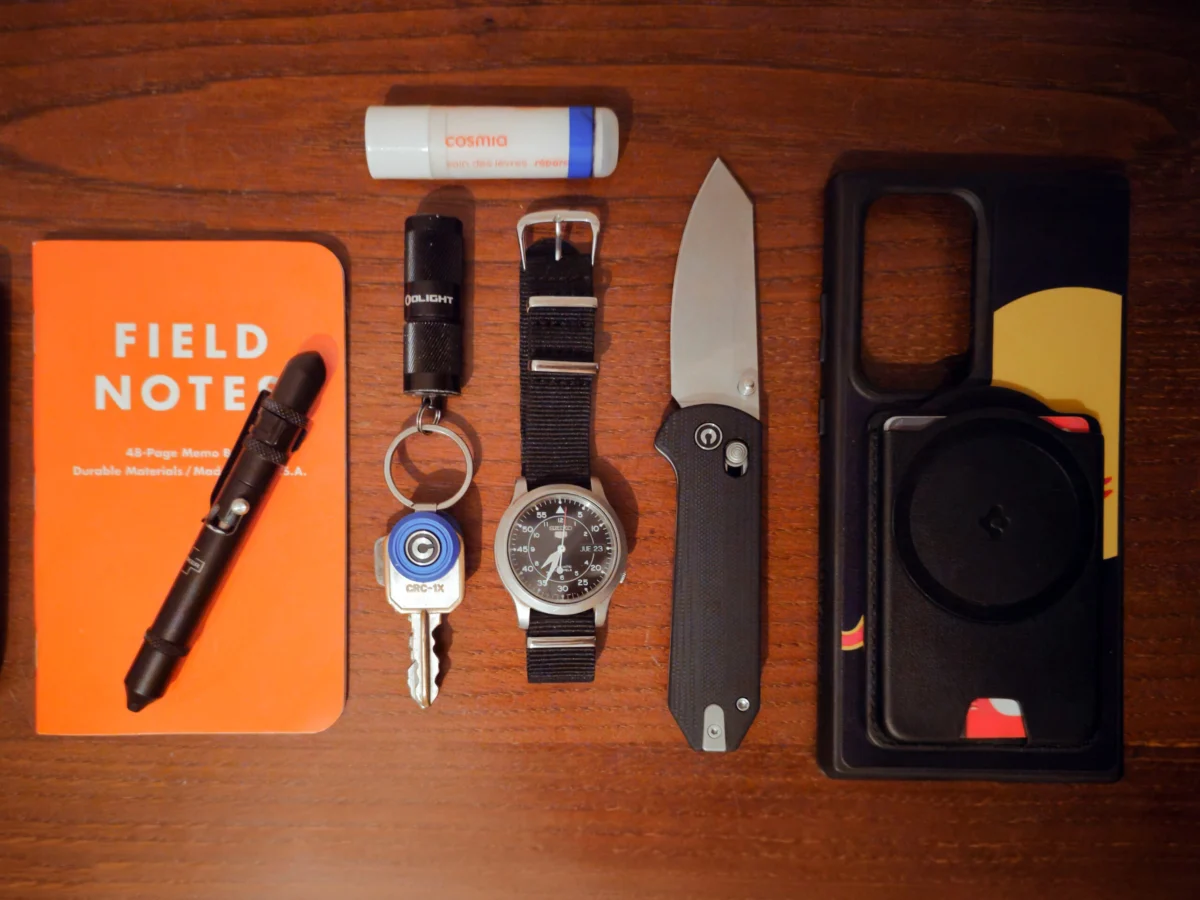
In the high-stakes environment of aeronautical automation, where precision, reliability, and situational awareness are paramount, the tools an individual chooses to carry often reflect the rigors of their professional life. Ruben, an aeronautical automation operator based in Portugal, offers a compelling study in minimalist utility. His daily carry (EDC) kit serves as a bridge between the high-tech requirements of his workplace and the practical necessities of life outside the terminal. By analyzing his selection of gear, one gains insight into the modern philosophy of "preparedness-per-ounce," a trend that has gained significant traction among professionals who prioritize efficiency and long-term value in their personal equipment.
The Philosophy of Minimalist Utility
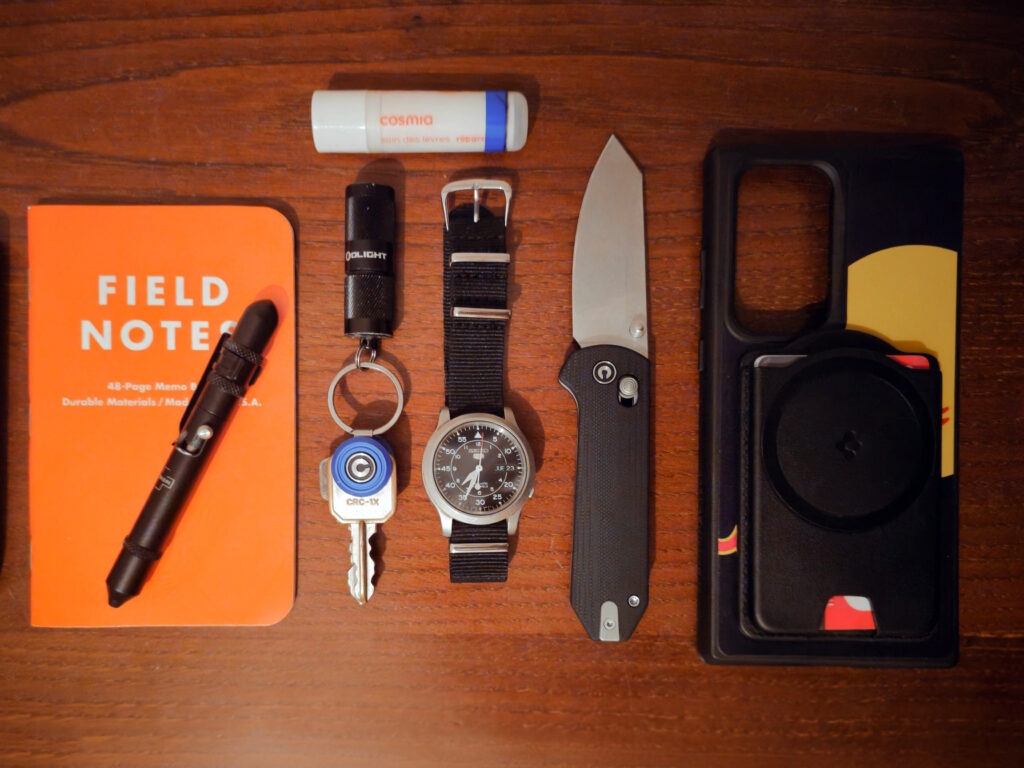
At its core, Ruben’s carry setup is an exercise in intentionality. In a professional setting governed by automated systems and complex instrumentation, his personal gear emphasizes accessibility and lightweight design. The inclusion of a magnetic wallet integrated with a smartphone, an ultra-compact key organizer, and high-utility items such as a mini bolt-action pen and a keychain flashlight demonstrates a systematic approach to pocket management.
The shift toward minimalism in EDC circles is not merely aesthetic; it is a response to the increasing ubiquity of digital and physical clutter. By consolidating essential tools, professionals like Ruben reduce the "cognitive load" associated with managing a large array of disparate items. For those working in technical fields, the ability to access a writing instrument or a light source instantly without navigating a crowded pocket is a functional advantage.
Chronology of Gear Selection and Evolution
The evolution of Ruben’s kit follows a trajectory often seen in veteran gear enthusiasts: starting with functional basics and refining them based on ergonomics and performance metrics. His recent acquisition of a Field Notes notebook and the CIVIVI Yonder marks a pivot toward more refined, specialized tools.
The timeline of his current setup reflects a balanced transition:
- Phase 1 (Foundational): Establishing a baseline with integrated smartphone-wallet solutions and compact keychain tools for daily mobility.
- Phase 2 (Specialization): The introduction of the CIVIVI Yonder, a crossbar-locked knife designed by Zac Whitmore. This transition highlights a move toward gear that is not only functional but also recognized for its design pedigree.
- Phase 3 (Strategic Rotation): Ruben’s stated intention to rotate between his work-standard setup and a "dressier" configuration—incorporating the Kizer Feist and a Casio Edifice Tiffany-dial watch—suggests a mature understanding of context-appropriate carry.
Technical Analysis: The CIVIVI Yonder
The centerpiece of Ruben’s recent upgrade is the CIVIVI Yonder. Understanding why this specific tool has been selected requires looking at the broader market trends in folding knives. The Yonder, which secured the "Best Buy of the Year" accolade at the 2024 Blade Show, is emblematic of a shift toward high-performance materials at accessible price points.
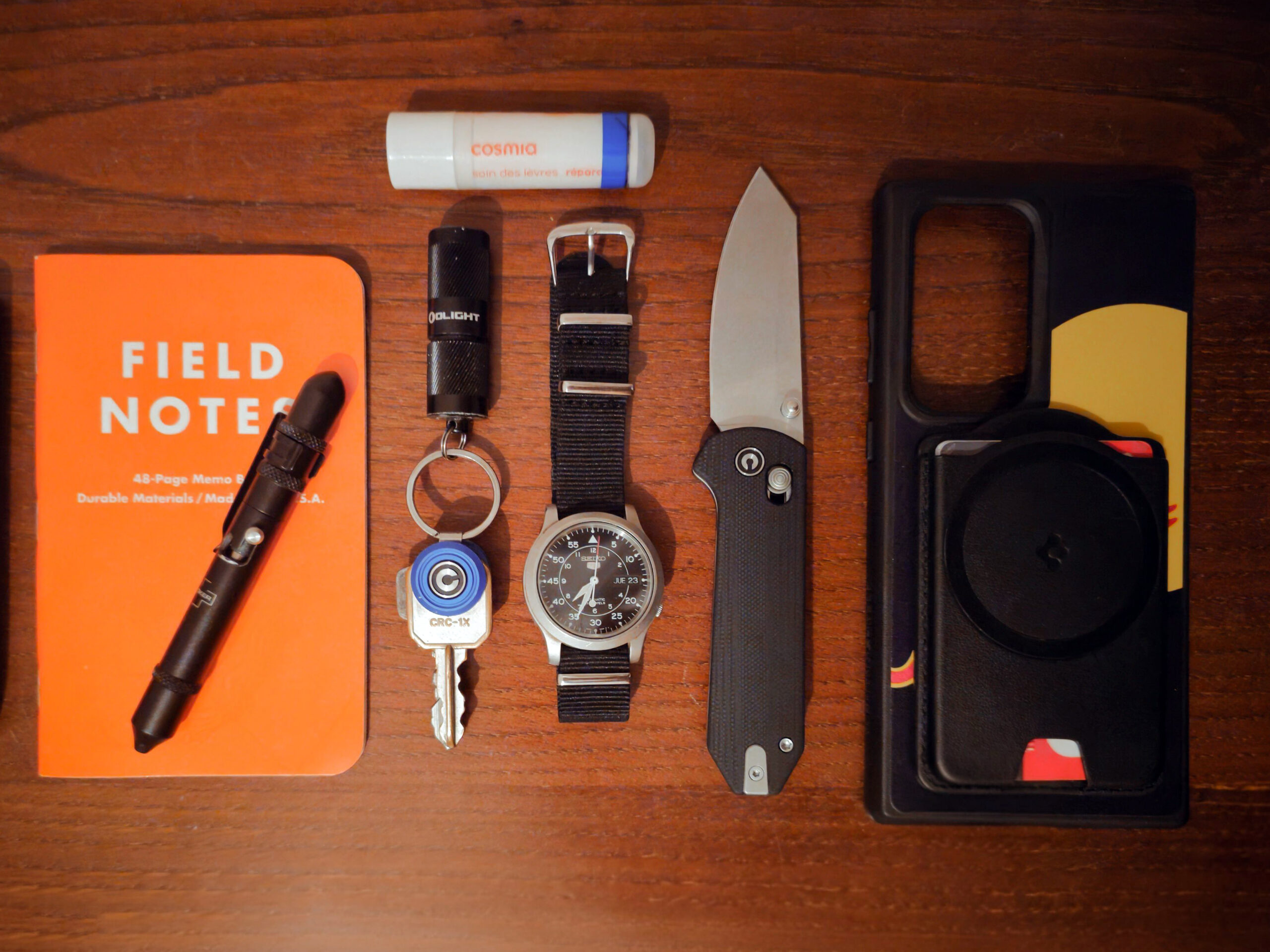
From an engineering perspective, the Yonder utilizes a crossbar-locking mechanism. Historically, this type of lock was reserved for premium, high-cost cutlery due to the complexity of the spring and track systems. However, advancements in manufacturing—specifically CNC machining and injection molding—have allowed manufacturers like CIVIVI to provide this level of mechanical security at a fraction of the historical cost.
For an aeronautical operator, the ambidextrous nature of the crossbar lock is particularly relevant. It allows for one-handed operation regardless of which hand is free, a critical feature for individuals who frequently operate in environments where multitasking is the norm. Furthermore, its lightweight profile ensures that it does not become a hindrance during long shifts, adhering to the principle that an EDC tool is only useful if it is comfortable enough to be carried consistently.
Broader Context and Market Implications
The "Everyday Carry" movement has evolved from a niche hobbyist subculture into a significant market segment. According to industry analysts, the global market for multi-tools and pocket knives has seen steady growth, driven by an increased consumer focus on self-reliance and the "preparedness" lifestyle.
This trend is not isolated to outdoor enthusiasts. Professionals in high-tech, medical, and aviation sectors are increasingly adopting these tools as part of their standard attire. The implication for manufacturers is clear: there is a growing demand for "professional-grade" gear that balances high-end material science (such as S35VN or 14C28N blade steels) with discreet, office-appropriate aesthetics.
The shift toward the "dressier" rotation mentioned by Ruben—pairing the Kizer Feist with a Casio Edifice—further illustrates this professionalization. The Kizer Feist, a front-flipper design, offers a slim profile that disappears into a pocket, while the Casio Edifice line represents a segment of the watch market that offers sapphire crystal and high water resistance without the prohibitive cost of luxury mechanical watches. This combination signals a desire for durability that can withstand the rigors of an active lifestyle while maintaining a polished appearance.
The Role of Analog Tools in an Automated World
While Ruben works in a field defined by aeronautical automation, his insistence on carrying a notebook—specifically Field Notes—is telling. In an era where digital tablets and smartphones have become the primary interface for information, there remains a tangible value to analog note-taking.
Cognitive research has frequently suggested that the act of writing by hand improves information retention and clarity of thought. For an operator in a technical environment, the ability to quickly sketch a diagram, record a fleeting observation, or jot down a non-digital reference is a capability that no software update can replace. This "hybrid" approach—using the most advanced digital communication tools alongside fundamental analog aids—is a hallmark of high-functioning technical professionals.
Official Perspectives on EDC Standards
Industry experts and ergonomics consultants often point to the "EDC audit" as a best practice for professionals. This involves a periodic review of carried items to ensure they remain relevant to the user’s daily environment.
"The goal of a well-curated carry is to remove friction from the user’s day," says one industry consultant. "When you observe a professional like Ruben, you aren’t just seeing a collection of objects; you are seeing a customized support system. The addition of the Yonder is not just a knife purchase; it is a tactical decision to replace a less efficient tool with one that offers faster deployment and better locking stability."
The feedback from the community regarding Ruben’s choices has been largely positive, focusing on the accessibility of his gear. By opting for high-value items rather than prohibitively expensive "grail" items, Ruben highlights a pragmatic approach that prioritizes utility over status. This has become a recurring theme in contemporary EDC discourse, where the community increasingly rewards those who can demonstrate a well-thought-out kit that is accessible to the average worker.
Conclusion and Future Outlook
The carry profile provided by Ruben offers a snapshot of modern professional preparedness. By combining high-value, high-performance tools with a clear understanding of the need for both work-appropriate and leisure-appropriate gear, he provides a template for others looking to streamline their daily equipment.
As we look toward the future, the integration of technology into EDC gear will likely continue to accelerate. We can expect to see further innovations in battery density for small-form-factor flashlights, the miniaturization of digital diagnostic tools, and the continued refinement of ergonomic cutlery. However, as Ruben’s choices demonstrate, the most effective EDC remains that which is tailored to the specific, repetitive needs of the individual. Whether he is on the clock managing complex automated systems or navigating his personal life, the focus remains on the same fundamental principles: reliability, readiness, and the constant pursuit of operational efficiency.
By sharing his setup, Ruben contributes to a growing body of anecdotal data that helps others refine their own kits, proving that even in a world of complex automation, the simple, well-chosen tool remains the most powerful asset in a professional’s pocket.