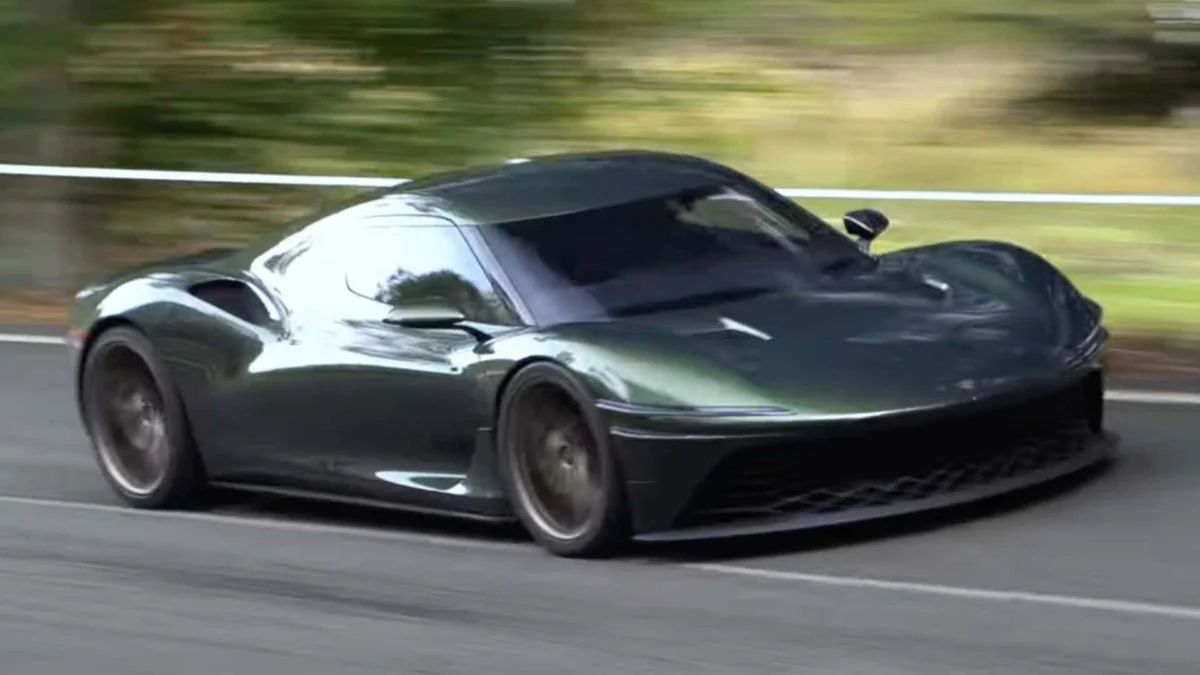
It has been less than a year since the luxury division of Hyundai Motor Group, Genesis, first pulled the covers off its Magma GT Concept, a striking mid-engine supercar design study that signaled the brand’s ambition to ascend into the rarified air of high-performance exotics. While the manufacturer has remained cautious regarding an official production timeline, the frequency of public sightings—most recently captured in a high-definition video from the NM2255 YouTube channel—suggests that the project is far more than a mere design exercise. The footage, filmed at a hill climb event, offers a rare glimpse of the vehicle’s mechanical character, showcasing its twin-turbocharged V8 engine during real-world acceleration.
The Hill Climb Appearance and Mechanical Dynamics
The recent video footage provides the most tangible evidence to date of the Magma GT’s development status. At the hill climb, the concept was observed accelerating from a standstill, displaying a raw, visceral quality that is often sanitized in studio environments. The vehicle appeared to struggle for traction on the greasy, cold asphalt of the course, with the rear wheels hunting for grip under the torque of the powertrain.
Despite the driver maintaining a conservative pace rather than pushing the prototype to its mechanical limits, the car’s agility and responsiveness were evident. Most notable was the auditory profile: the twin-turbocharged V8 emitted a deep, authoritative burble that distinguishes it from the high-pitched, manic exhaust notes of many modern European supercars. This acoustic signature suggests a deliberate tuning choice by Genesis engineers, likely intended to align with the brand’s "athletic elegance" philosophy, which prioritizes a refined yet powerful driving experience.
Chronology of the Magma Project
The journey of the Magma GT began as an ambitious design pivot for the brand, which had previously focused primarily on luxury sedans and SUVs.
- Initial Concept Reveal: Genesis introduced the Magma GT Concept in early 2024, emphasizing its intent to explore a halo car that could serve as a brand flagship.
- Interior Disclosure: In June 2024, the automaker offered a look inside the cabin, revealing a departure from the screen-heavy trend seen in contemporary luxury vehicles. The interior features a leather-wrapped environment with a focus on tactile switchgear and an analog gauge cluster, underscoring a design language rooted in traditional grand touring luxury.
- GT3 Variant Unveiling: Shortly after the interior reveal, Genesis surprised industry observers by showcasing a GT3-spec variant of the Magma. This iteration featured aggressive aerodynamic modifications, including a widened track, oversized air intakes, and a fixed rear wing, signaling a commitment to pure track performance.
- Strategic Messaging: Following the GT3 reveal, internal stakeholders began to clarify the role of the Magma. Charles Fuster, the Brand Director for Genesis in Italy and France, confirmed in a July interview that the project is not a temporary diversion but a core part of the brand’s future product roadmap.
Technical Specifications and Performance Targets
While technical details remain closely guarded by Hyundai’s engineering teams, the information provided by Genesis to date points to a vehicle capable of competing with established marques like Porsche, Aston Martin, and Ferrari. The manufacturer has explicitly cited a power output of 800 horsepower for the coupe.
Achieving this figure through a twin-turbocharged V8 layout places the Magma in the supercar category, demanding sophisticated cooling and chassis management systems. Industry analysts have noted that the mid-engine architecture is a departure from the brand’s current front-engine, rear-wheel-drive platform strategy, implying that the Magma may utilize a bespoke or heavily modified chassis. Speculation regarding the platform—ranging from a ground-up development to collaborations with existing high-performance architectures—has become a focal point of automotive engineering circles, though Genesis has yet to confirm the technical provenance of the frame.
The Strategic Importance of a Halo Car
For a brand as relatively young as Genesis, the creation of a halo car is a critical milestone in establishing market legitimacy. A halo car serves three primary functions: it attracts foot traffic to showrooms, elevates the brand’s perception in the minds of affluent consumers, and provides a platform for testing innovative technologies that will eventually filter down to mass-market models.
By focusing on a V8-powered grand tourer, Genesis is positioning itself against the established performance guard. The decision to prioritize an analog-focused cabin and a naturally visceral driving experience suggests a target demographic that values the mechanical purity of the driving experience over the digital integration common in modern electric vehicles.
Official Stance and Future Outlook
While Genesis representatives, including Charles Fuster, have declined to provide a "precise date" for a potential commercial release, the language surrounding the project has shifted from "concept" to "future performance vehicle." Fuster’s statement that the company would "like to get there soon" indicates that the internal project status has likely transitioned from feasibility studies to early-stage development or production planning.
The "independent study" label applied to the GT3 variant suggests that the development team is testing the limits of the chassis and aerodynamics, likely to inform the final production configuration. Whether the final production model will mirror the GT concept or lean into the extreme nature of the GT3 remains to be seen, but the ongoing testing on public roads and at performance events indicates that the development cycle is well underway.
Analysis: Market Implications and Challenges
The entry of Genesis into the supercar segment brings significant implications for the luxury market. Currently, the segment is dominated by brands with deep historical legacies. To successfully compete, Genesis must overcome the "prestige gap"—the inherent value placed on a brand’s history of racing and high-performance engineering.
However, the brand has several advantages. The financial backing of the Hyundai Motor Group provides the R&D resources necessary to sustain such an expensive endeavor. Furthermore, the brand’s rapid growth and reputation for high-quality interiors and bold design language have already earned it a seat at the table. If the production version of the Magma retains the 800-horsepower target and the aesthetic appeal of the concept, it will likely be viewed as a formidable challenger.
The primary hurdle for the brand will be the regulatory environment. As global emissions standards tighten, the choice of a twin-turbocharged V8 engine—while highly desirable for performance enthusiasts—will require sophisticated emissions control technology to remain compliant in key markets like Europe and California. If Genesis can integrate these technologies without diluting the car’s performance or sound, they will have successfully bridged the gap between traditional enthusiast desires and modern corporate responsibility.
Conclusion: The Road Ahead
The sight of the Magma GT Concept on a hill climb course serves as a poignant reminder that the brand is committed to proving its mettle in the performance sector. Each public appearance serves to build anticipation and keep the brand in the spotlight, effectively managing public interest while the engineering teams finalize the complex task of bringing a mid-engine supercar to market.
As the automotive industry continues to transition toward electrification, the Genesis Magma represents a defiant celebration of the internal combustion engine. Whether it arrives as a limited-run special or a permanent fixture in the luxury lineup, the Magma is already achieving its primary goal: it has forced the industry to take Genesis seriously as a manufacturer of high-performance machines. For now, enthusiasts and potential buyers must wait for the next official update, but the evidence suggests that the wait for a production-ready Genesis halo car may be shorter than many initially anticipated. As the brand continues to refine its "Magma" performance sub-brand, the GT will undoubtedly remain the crown jewel of its future portfolio, serving as a beacon of what the company is capable of achieving when it decides to aim for the absolute top of the automotive hierarchy.